Benedictine spread represents one of the South’s most enduring culinary traditions, a delicate blend of creamy and fresh ingredients that has graced Southern tables for generations. This iconic appetizer transcends simple food preparation—it embodies hospitality, tradition, and the refined sensibilities of Southern entertaining. Whether you’re hosting a Derby Day celebration or preparing for a sophisticated tea, understanding this spread transforms your culinary repertoire and connects you to a rich gastronomic heritage.
Historical Roots and Cultural Significance
The story of Benedictine spread originates in Louisville, Kentucky, during the twentieth century, created by Jennie Carter Benedict, a pioneering caterer whose innovations shaped Southern cuisine. Originally conceived for elegant cucumber sandwiches, the early recipes utilized only the juice extracted from fresh cucumbers and onions, creating a refined paste-like consistency. This inventive approach reflected the resourcefulness and sophistication of early twentieth-century Southern hospitality, where presentation and flavor combined to create memorable dining experiences.
Over the decades, the recipe evolved, with contemporary versions incorporating the actual cucumber and onion pieces rather than solely their essences. This adaptation maintained the spirit of Benedict’s original creation while offering greater textural complexity and visual appeal. The spread became intrinsically connected to Kentucky Derby festivities, transforming from a regional specialty into a symbol of Southern celebration and refined entertaining traditions.
Essential Ingredients and Quality Selection
Creating authentic Benedictine spread begins with understanding each component’s role in the final product. The foundation rests on quality cream cheese, which provides the rich, spreadable base that unites all other elements. Softened to room temperature before preparation, the cream cheese ensures smooth integration and prevents lumpy textures that compromise the final result.
Fresh English cucumbers are preferred over standard varieties because they contain significantly fewer seeds, reducing excess moisture that could dilute the spread’s consistency. The peeling and seeding process becomes essential, as removing these components prevents the unwanted wateriness that plagues inferior versions. Many experienced cooks grate the cucumber and then press it between paper towels to extract additional moisture, a technique that elevates the final product considerably.
Onion selection matters equally; white onions provide a subtle sharpness that complements rather than overwhelms the delicate cucumber flavor. Some variations introduce green onions for additional brightness, while others employ purple onions for visual distinction. The quantity should remain moderate, allowing the cucumber character to remain the dominant vegetable presence.
Building Layers of Flavor Through Careful Preparation
The preparation methodology significantly influences the finished spread’s quality and texture. Combining softened cream cheese with mayonnaise or sour cream creates a base that holds all subsequent ingredients in harmonious suspension. The proportions typically follow a general framework: one eight-ounce block of cream cheese paired with one to four tablespoons of mayonnaise or sour cream, though individual preferences may dictate adjustments.
The vegetables require meticulous preparation to achieve proper consistency. Finely dicing the cucumber ensures even distribution throughout the mixture, preventing large chunks that interrupt the smooth eating experience. Similarly, mincing the onion into small pieces allows its flavor to permeate the entire spread without creating pungent bursts that dominate individual bites. This attention to vegetable preparation separates admirable spreads from exceptional ones.
Seasoning represents the final frontier in flavor development. Salt enhances all other tastes while cayenne pepper introduces subtle heat that builds depth without creating obvious spiciness. Fresh dill, when available, contributes herbaceous notes that brighten the overall profile. Some recipes incorporate hot sauce—whether traditional Tabasco or jalapeño varieties—for an additional dimension of warmth and complexity. Fresh herbs like chives or parsley provide garnish options that enhance both visual appeal and subtle flavor.
Ingredient Variations and Customization Options
| Ingredient Option | Purpose | When to Use |
|---|---|---|
| Sour Cream vs. Mayonnaise | Adjusts tanginess and richness levels | Sour cream for tang; mayo for mild creaminess |
| Greek Yogurt | Lighter alternative with similar creaminess | Health-conscious preparations |
| Green Food Coloring | Creates visual appeal and traditional appearance | Formal gatherings and presentations |
| Fresh Herbs | Adds complexity and sophistication | Based on flavor preferences and availability |
| Garlic | Introduces savory depth | When stronger flavor profiles are desired |
Regional preferences and individual tastes have generated numerous Benedictine spread variations, each maintaining fidelity to the original concept while introducing personal touches. Some enthusiasts prefer Duke’s Mayonnaise specifically, claiming its unique composition produces superior results compared to national brands. Others substitute Greek yogurt for traditional sour cream, creating a lighter version that appeals to contemporary health consciousness without sacrificing essential character.
The optional green food coloring, while seemingly superficial, plays an important role in traditional presentation. A subtle pale green hue has become synonymous with authentic Benedictine spread, evoking freshness and sophistication. However, modern preparations increasingly omit this element, allowing the natural colors to prevail.
Step-by-Step Preparation Methodology
Successful Benedictine spread preparation follows a logical sequence that maximizes flavor development and texture quality. Begin by preparing your vegetables: peel the English cucumber, cut it lengthwise, and remove seeds using a small spoon. Finely dice the prepared cucumber and place it in a colander to drain excess moisture for several minutes. Similarly, finely mince the onion, removing excess juice if particularly watery. This preparatory attention prevents the finished spread from becoming thin and watery.
While vegetables drain, remove cream cheese from the refrigerator, allowing it to soften at room temperature for several minutes. Using an electric mixer on medium speed, combine softened cream cheese with your chosen dairy component—mayonnaise, sour cream, or Greek yogurt. Beat until the mixture becomes smooth and uniform, typically requiring one to two minutes of continuous mixing. This step incorporates air, creating a lighter, more pleasant texture.
Add your drained vegetables to the cream cheese mixture, folding gently rather than beating forcefully. This preservation of vegetable integrity prevents over-processing that creates mushy consistency. Introduce salt, pepper, cayenne, and any desired herbs, stirring thoroughly to distribute seasonings evenly. Taste and adjust seasoning as needed, remembering that flavors often intensify after refrigeration.
For the optional green food coloring, add only a few drops initially, stirring thoroughly before adding more. This gradual approach prevents over-coloring that produces artificial appearance. The finished spread should display a subtle pale green that suggests freshness rather than announcing artificial enhancement.
Storage, Serving, and Presentation Techniques
Proper storage preservation extends Benedictine spread’s utility and maintains optimal flavor. Refrigerate the finished preparation in an airtight container for up to five days, though most versions taste freshest within three days of preparation. The spreading can also be prepared several hours in advance, allowing flavors to meld and intensify—an advantage when hosting gatherings.
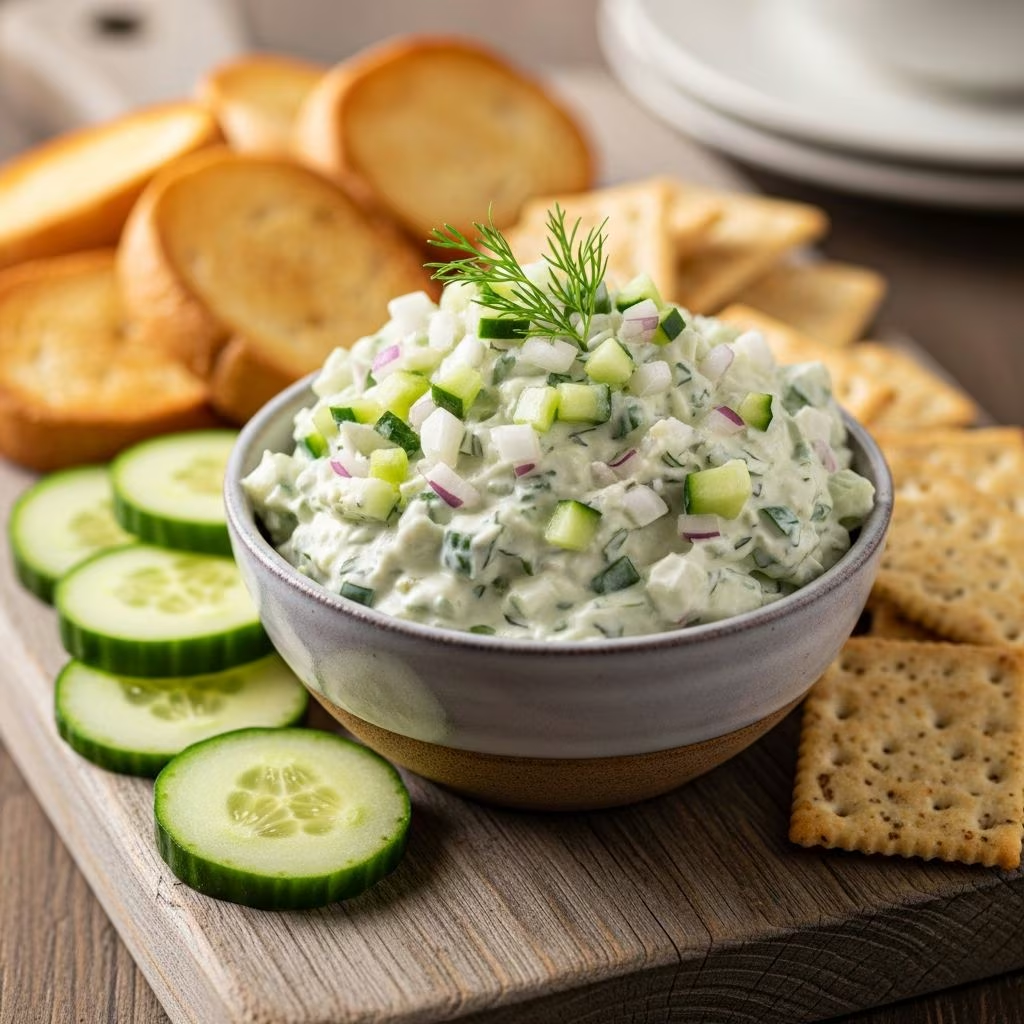
Serving presentations dramatically influence how guests perceive and enjoy this classic spread. Traditional serving methods include spreading the mixture onto delicate tea sandwiches using thinly sliced bread, creating elegant finger sandwiches that epitomize refined entertaining. Alternatively, serve the spread with pumpernickel toasts, which provide textural contrast and complement the spread’s creamy richness.
For casual entertaining or larger gatherings, pair Benedictine spread with an assortment of crackers, vegetable crudités, and fresh bread slices. The spread’s versatility accommodates diverse serving formats without requiring preparation modifications. Some hosts thin the mixture slightly with additional sour cream or mayonnaise, creating a dip consistency suitable for chips or vegetable dipping applications.
Presentation bowls should remain chilled until the moment of serving, maintaining optimal temperature and preventing separation. Garnishing with fresh herbs, thin cucumber slices, or paprika adds visual sophistication that elevates the simple spread into impressive entertaining centerpiece.
Troubleshooting Common Preparation Challenges
Despite straightforward preparation, several common issues occasionally emerge. Excessive moisture represents the most frequent complaint, resulting from inadequate vegetable drainage or excess cucumber juice. Solution: drain vegetables thoroughly in a fine-mesh colander lined with cheesecloth, pressing gently to extract maximum moisture without pulverizing the vegetables.
Separation or graininess indicates insufficient mixing or cream cheese that wasn’t properly softened before combining. Solution: ensure cream cheese reaches room temperature before preparation, and combine ingredients more thoroughly using an electric mixer rather than hand stirring.
Bland flavor suggests insufficient seasoning or the need for additional salt and pepper. Solution: taste before serving and adjust seasonings gradually, as refrigeration intensifies flavors. Consider adding fresh lemon juice, which brightens the overall profile without introducing dominant flavors.
Unpleasant pungency from overwhelming onion or garlic indicates overuse or inadequate mixing. Solution: employ finely minced vegetables in modest quantities, distributed evenly throughout the spread rather than concentrated in specific areas.
Frequently Asked Questions
Can I prepare Benedictine spread in advance?
Yes, Benedictine spread actually improves when prepared several hours ahead, allowing flavors to meld and intensify. Store in an airtight container refrigerated for up to five days. Prepare the day before serving for optimal flavor development and convenient entertaining.
What cucumber varieties work best?
English cucumbers are preferred because they contain fewer seeds than standard varieties, requiring less moisture removal. However, regular cucumbers work acceptably with more thorough seed removal and moisture extraction. Seedless cucumber varieties also perform well if available.
Is the green food coloring necessary?
The traditional pale green hue created by food coloring is optional and purely aesthetic. Contemporary versions frequently omit it, allowing natural colors to prevail. Use sparingly if including, as even a few drops dramatically affect the final color.
Can I substitute dairy components?
Yes, Greek yogurt effectively replaces sour cream or mayonnaise, creating lighter versions without compromising essential character. Experiment with ratios based on desired creaminess and tang levels. Some cooks combine two dairy options for balanced flavor profiles.
How long does Benedictine spread remain fresh?
Properly stored in airtight containers, Benedictine spread maintains quality for three to five days refrigerated. The flavor peaks within the first two days. Don’t freeze, as the texture becomes compromised upon thawing.
What serving options exist beyond tea sandwiches?
Serve with pumpernickel toasts, various crackers, vegetable crudités, or as a dip when thinned with additional sour cream. The spread accommodates diverse serving formats without requiring preparation modifications.
Elevating Your Benedictine Spread Experience
Mastering traditional Benedictine spread preparation opens doors to entertaining with Southern grace and sophisticated simplicity. This classic recipe transcends seasons and occasions, remaining equally appropriate for Kentucky Derby celebrations, formal tea gatherings, casual entertaining, or elegant luncheons. The combination of straightforward ingredients and methodical preparation creates results that appear far more complex than the actual effort required.
Whether you’re reconnecting with family traditions or discovering this culinary treasure for the first time, Benedictine spread represents Southern hospitality at its finest. The spread’s enduring popularity across generations testifies to its timeless appeal and versatility. By understanding ingredient selection, preparation techniques, and presentation options, you’ll create versions that impress guests and establish your reputation as someone who embraces culinary tradition with thoughtful execution.
References
- Benedictine Spread – Best Appetizers — Best Appetizers. Accessed April 2026. https://bestappetizers.com/benedictine-spread/
- Kentucky Benedictine Spread — The Southern Lady Cooks. Accessed April 2026. https://thesouthernladycooks.com/kentucky-benedictine-spread/
- Benedictine Spread – A Derby Classic — The Kitchen Prep Blog. Accessed April 2026. https://thekitchenprepblog.com/benedictine-spread-derby-classic/
- Benedictine Spread — Duke’s Mayo. Accessed April 2026. https://dukesmayo.com/blogs/recipes/benedictine-spread
- 10 Minute Kentucky Benedictine Spread — Fueling a Southern Soul. Accessed April 2026. https://www.fuelingasouthernsoul.com/10-minute-kentucky-benedictine-spread/