Transform everyday fruits, juices, and basic pantry staples into your own bottles of wine through the timeless process of fermentation. This guide explores accessible techniques for beginners, emphasizing clean practices, simple recipes, and patient monitoring to produce rewarding results without specialized gear.
Why Make Wine at Home?
Home winemaking offers control over flavors, cost savings, and the satisfaction of creation. Using seasonal fruits or store-bought juices, you can experiment with sweetness levels and varieties, yielding batches that rival commercial options. Fermentation harnesses natural yeasts to convert sugars into alcohol, creating unique profiles tailored to your taste.
Benefits include affordability—often under $10 per gallon—and customization. Unlike store-bought wines, homemade versions avoid preservatives, allowing pure fruit expressions. Start small with one-gallon batches to build confidence.15
Essential Ingredients for Success
Core components drive fermentation: fruits or juices for flavor and natural sugars, added sweeteners for alcohol potential, yeast for conversion, and water to dilute. Select ripe, unwashed fruits to preserve wild yeasts, though commercial strains ensure consistency.
- Fruits/Juices: Grapes, berries, or 100% juices provide base flavors and nutrients.
- Sugar: Cane, honey, or white granulated boosts alcohol content; aim for 2-4 pounds per gallon.
- Yeast: Wine or bread yeast (1/4 tsp per gallon) initiates fermentation.
- Water: Non-chlorinated to avoid killing yeast.
- Additives (optional): Pectic enzyme clarifies, tannins add structure, acid blend balances taste.
| Ingredient | Quantity (1 Gallon Batch) | Purpose |
|---|---|---|
| Fruit/Juice | 3-5 lbs or 1 gallon | Flavor base |
| Sugar/Honey | 2-3 lbs | Alcohol source |
| Yeast | 1/4 tsp | Fermentation starter |
| Water | To 1.3 gallons total | Dilution |
Adjust sugar for dry (less) or sweet (more) wines; test with a hydrometer for precision.25
Gathering Basic Equipment
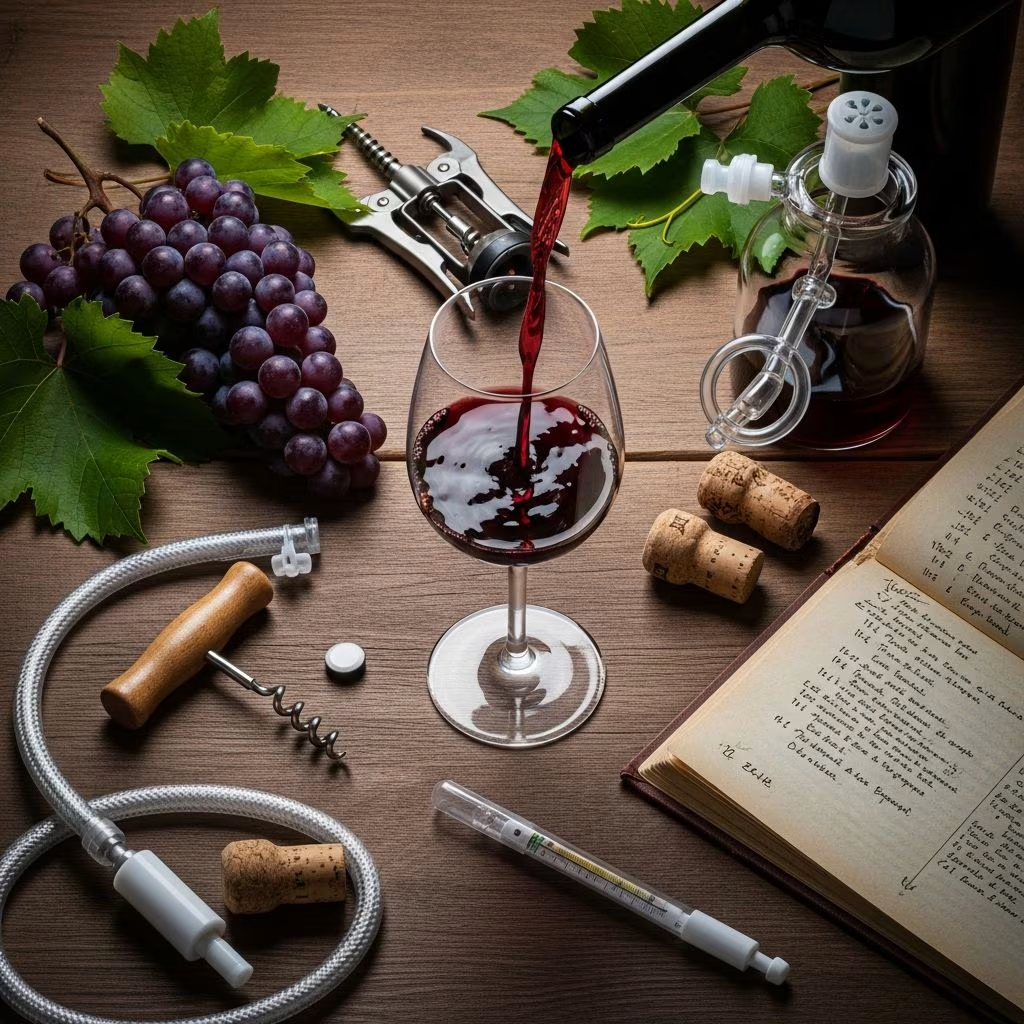
Minimal tools suffice: a food-grade bucket or jug for primary fermentation, carboy for secondary, airlock or balloon to block oxygen, siphon hose, and bottles. Sanitize everything with a no-rinse solution to prevent spoilage.
- Primary fermenter: 2-gallon bucket/jug.
- Secondary: 1-gallon carboy.
- Siphon and bottles: Reuse clean wine bottles.
- Airlock: Prevents contamination while allowing CO2 escape.
Glass is ideal for clarity; plastic works for beginners. Total setup: under $20 if recycling bottles.3
Step-by-Step Grape Wine Recipe
This beginner recipe uses grapes for a classic profile, yielding semi-sweet wine.
- Prepare Grapes: Destem 500g-1kg ripe grapes, wash lightly, dry thoroughly.
- Layer in Jar: In a clean 2-quart jar, alternate crushed grapes and 250-500g sugar layers, ending with sugar. Add cinnamon/cloves for spice.
- Ferment Primary: Seal, store dark/cool. Shake daily for 5-7 days to mix; vent foam.
- Rack: Strain to carboy, top with non-chlorinated water. Fit airlock; ferment 2-4 weeks until bubbling slows.
- Secondary: Siphon to clean carboy, age 1-3 months, tasting periodically.
- Bottle: Siphon into sterilized bottles, cork, age 3-6 months.
Expect 10-14% ABV; yields 4-5 bottles. Monitor with hydrometer: start at 1.080 SG, finish below 1.000.2
Fruit Wine Variations
Adapt for berries, apples, or peaches by substituting equal fruit volumes.
Strawberry Wine
Thaw 3lbs frozen strawberries, mash with 2.5lbs sugar, add enzyme/tannin. Ferment as above; yields vibrant red wine.5
Juice-Based ‘Hillbilly’ Wine
Simplest: 1 gallon 100% grape juice, remove 2 cups, add 1 cup sugar + 1/4 tsp yeast. Ferment in jug with balloon airlock. Ready in 4 weeks.4
Honey Mead
Replace fruit with 1.5-2 pints honey in water; ferment 4-6 weeks for lighter ‘melomels’ with fruit.1
Each variation ferments similarly; experiment post-primary to refine.
Mastering the Fermentation Process
Fermentation divides into primary (active, 7-14 days) and secondary (slow, 1-3 months). Bubbles indicate yeast activity; temperature 65-75°F optimal. Rack every 2-4 weeks to clarify, removing sediment (lees).
Troubleshoot: Stuck fermentation? Warm slightly, add yeast nutrient. Off flavors? Ensure sanitation. Patience yields clarity and balance.36
Sweetness and Alcohol Control
Sugar determines ABV: 2lbs/gallon ~10%, 4lbs ~16%. For sweeter wine, stabilize with potassium sorbate post-fermentation, back-sweeten. Use hydrometer for accuracy—potential alcohol scales guide adjustments.
Storing and Aging Your Creation
Bottle in dark glass, store cool (55-65°F), upright initially then horizontal. Age 3-12 months for smoothness; taste monthly after 3. Proper aging melds flavors, reducing harshness.1
Common Mistakes to Avoid
- Poor Sanitation: Kills yeast, invites bacteria.
- Chlorinated Water: Inhibits fermentation.
- Overhandling: Oxidizes wine; rack gently.
- Impatience: Rush aging for cloudy, yeasty results.
Start simple, scale up. Legal note: Check local homebrew laws; small batches typically allowed.7
Advanced Techniques for Flavor Enhancement
Elevate with oak chips for tannin, spices during primary, or blending batches. Secondary additions like vanilla or citrus peels customize. Track recipes in a journal for repeatability.
Frequently Asked Questions
Can I use bread yeast?
Yes, for simple wines; it ferments reliably but may impart bready notes. Wine yeast offers cleaner profiles.4
How long until drinkable?
1 month minimum, 6+ optimal. Peaks at 1 year.
What if it doesn’t bubble?
Check temperature, re-pitch yeast, ensure sugar presence.
Is equipment expensive?
Basic kit ~$30; improvise with household items.
Can I make it non-alcoholic?
Arrest fermentation early by chilling/filtering, but true wine requires alcohol.
Scaling Up Production
From 1 to 5 gallons: Multiply ingredients proportionally, use larger fermenters. Invest in auto-siphon for ease. Join homebrew communities for tips.
Homemade wine rewards experimentation and time, delivering personalized bottles that impress. Begin with one batch, refine through practice.
References
- A Cheap and Easy Homemade Wine Recipe — MyFermentation. 2015. https://www.myfermentation.com/wine/homemade-wine-recipe-zmpz70sozols/
- Homemade Grape Wine — Oventales. 2023. https://oventales.com/home-made-grape-wine/
- Easy Homemade Wine Recipe — Rough Draft Farmstead. 2012-05-24. https://roughdraftfarmstead.com/1wmuyznbhatmf629zruj48mbnvrysz/2012/05/24/easy-homemade-wine-recipe
- Simple Homemade Wine with Only 3 Ingredients! — YouTube (TRE RUNS-WILD). Accessed 2026. https://www.youtube.com/watch?v=zTdEKIVE_6w
- How to Make Fruit Wines + Strawberry Wine Recipe — Wholefully. 2023. https://wholefully.com/homemade-strawberry-wine-recipe/
- Make Your Own ‘Hillbilly’ Wine — Edible Cape Cod. 2022. https://ediblecapecod.ediblecommunities.com/drink/drink-make-your-own-hillbilly-wine/
- Easy Homemade Natural Wine — YouTube. Accessed 2026. https://www.youtube.com/watch?v=5RPGQc1AMR4