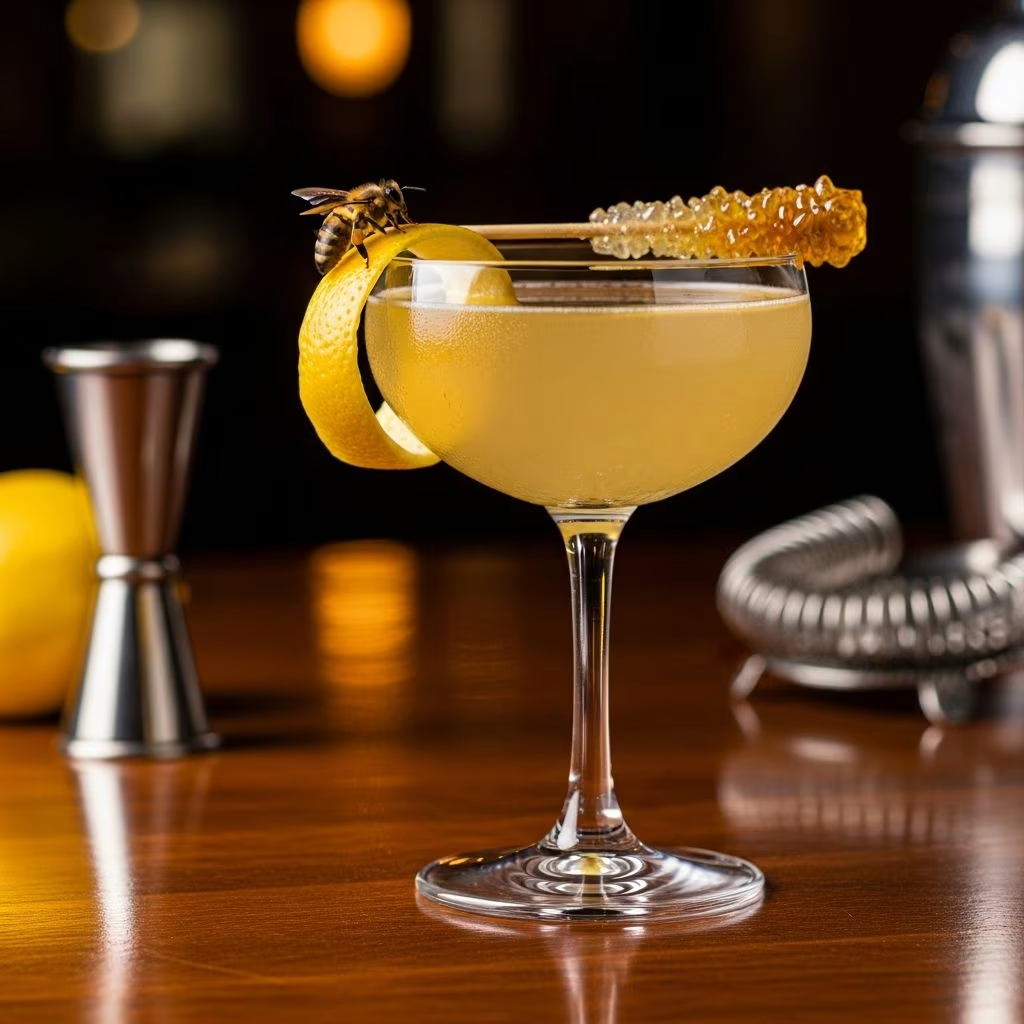
The Bee’s Knees stands as a timeless emblem of cocktail elegance, merging the herbal depth of gin with the bright tang of fresh lemon juice and the subtle floral sweetness of honey. This Prohibition-era creation continues to captivate modern drinkers with its straightforward yet balanced profile.
Origins in the Roaring Twenties
Emerging during the 1920s, a decade defined by speakeasies and defiance of alcohol bans, the Bee’s Knees cocktail arose as a clever solution to subpar spirits. Home-distilled gin, often harsh and ‘bathtub’ quality, needed masking, and honey’s richness provided just that while harmonizing with lemon’s acidity. Credited to Frank Meier, bartender at the Hotel Ritz Paris, this drink captured the era’s slang for ‘the best’—truly living up to its name.
Bartenders innovated with simple ingredients to elevate everyday hooch, birthing sours like this one. The 2:1:1 ratio—spirit, sour, sweet—forms the backbone of many classics, but honey distinguished the Bee’s Knees from sugar syrup peers. Its revival today stems from quality craft gins and a nod to nostalgic simplicity.
Essential Ingredients Breakdown
Mastering this cocktail hinges on fresh, high-quality components. Here’s what defines it:
- Gin (2 oz): Opt for citrus-forward or London Dry styles to amplify lemon notes. Juniper berries shine through, balancing sweetness.
- Fresh Lemon Juice (¾-1 oz): Squeeze from ripe lemons for vibrant acidity; bottled lacks punch.
- Honey Syrup (½-1 oz): Equal parts honey and warm water, stirred until smooth. Raw honey adds complexity.
- Garnish: Lemon twist releases essential oils for aroma.
Honey syrup prevents cloying thickness, ensuring even distribution in the shaker.
Classic Recipe: Step-by-Step
Yield: 1 cocktail. Prep time: 5 minutes.
- Warm 1 tbsp honey with 1 tbsp water until dissolved. Cool slightly.
- Fill shaker halfway with ice. Add 2 oz gin, ¾ oz lemon juice, ½ oz honey syrup.
- Shake vigorously 15-30 seconds until frosty.
- Double-strain into chilled coupe glass.
- Express lemon twist over drink; drop in.
Serve ice-cold for optimal balance—tart upfront, honey lingering.
| Ingredient | Amount | Notes |
|---|---|---|
| Gin | 2 oz | Quality botanical gin |
| Lemon Juice | ¾ oz | Freshly squeezed |
| Honey Syrup | ½ oz | 1:1 honey:water |
| Lemon Twist | 1 | For garnish |
Pro Mixing Techniques
Chill glassware beforehand. Use a Hawthorne strainer for pulp-free pour. Shake hard to aerate and dilute properly—aim for 20-25% dilution. Fresh citrus peaks within hours of juicing.
For batches: Scale up syrup (¼ cup honey + ¼ cup water yields multiple drinks). Pre-mix base sans ice; shake individuals fresh.
Modern Twists and Variations
Elevate the classic with these adaptations:
- Lavender Infusion: Steep dried lavender in honey syrup for floral notes that enhance gin’s botanicals.
- Spicy Kick: Add pinch of cayenne to syrup for subtle heat.
- Amaretto Accent: Splash (½ oz) for nutty depth.
- Herbal Bee: Basil or rosemary muddle for green freshness.
- Non-Alcoholic: Swap gin for tonic or seedlip; keep syrup and juice ratios.
Experiment seasonally—peach honey in summer, ginger in winter.
Pairing Suggestions
This versatile sipper complements light fare:
- Seafood: Oysters or shrimp cocktail—lemon cuts richness.
- Cheese: Goat cheese or brie; honey bridges sweet-savory.
- Salads: Citrus-dressed greens echo flavors.
- Desserts: Lemon tarts or shortbread for harmony.
Avoid heavy reds; it shines with whites or aperitifs.
Common Mistakes and Fixes
| Mistake | Issue | Fix |
|---|---|---|
| Undissolved Honey | Grainy texture | Make syrup first |
| Stale Lemon | Flat flavor | Juice same-day |
| Weak Shake | Warm, watery | Shake 20+ seconds |
| Wrong Glass | Quick warm-up | Chill coupe/martini |
Why It Endures: Flavor Science
Honey’s fructose tempers gin’s botanicals without overpowering. Lemon’s citric acid brightens, preventing cloy. The sour family leverages taste bud synergy—sweet-sour amplifies each. Modern gins, juniper-light, let honey lead, unlike Prohibition’s masking role.
Home Bar Essentials
Stock these for endless Bees:
- Cocktail shaker
- Jigger
- Strainers (Hawthorne + fine mesh)
- Coupe glasses
- Quality peeler for twists
Invest in a citrus juicer for efficiency.
Seasonal Hosting Ideas
Spring: Lavender Bee’s Knees pitcher for brunches.
Summer: Batch with muddled berries.
Fall: Cinnamon honey syrup variant.
Winter: Warm mulled version (stovetop, no ice).
Pair with themed parties—1920s Gatsby nights elevate the vibe.
FAQs
What makes the Bee’s Knees a sour?
It follows the 2:1:1 spirit:sour:sweet formula, with gin as base, lemon as sour, honey as sweet.
Best gin for beginners?
Tanqueray or Hendrick’s—citrusy without overwhelming botanicals.
Can I use regular simple syrup?
Yes, but honey’s nuanced flavor is key to authenticity.
How far ahead can I prep syrup?
Up to a week in fridge; remix if separated.
Alcohol-free version?
Use non-alcoholic gin, keep ratios—refreshing mocktail.
Nutritional Snapshot (Per Cocktail)
| Nutrient | Amount |
|---|---|
| Calories | ~180 |
| Carbs | 10g |
| Sugar | 8g |
| Alcohol | ~20% |
Estimates vary by gin/honey; enjoy responsibly.
References
- Bee’s Knees Cocktail – David Lebovitz — David Lebovitz. 2023. https://www.davidlebovitz.com/bees-knees-cocktail-gin-audemus-spirits-lemon-juice-recipe/
- Bee’s Knees Cocktail Recipe – Cookie and Kate — Cookie and Kate. 2023. https://cookieandkate.com/bees-knees-cocktail-recipe/
- The Bee’s Knees Vintage Cocktail – Artful Dishes — Artful Dishes. 2023. https://www.artfuldishes.com/the-bees-knees-vintage-cocktail/
- How To Make The Perfect Bee’s Knees Cocktail – YouTube — Booze On The Rocks. 2023. https://www.youtube.com/watch?v=Vror9wQMmt4
- Lavender Bee’s Knees Cocktail – Simple Seasonal — Simple Seasonal. 2023. https://simpleseasonal.com/recipes/meal-types/beverages/lavender-bees-knees-cocktail
- How to Make a Bee’s Knees Cocktail – Lovely Indeed — Lovely Indeed. 2023. https://lovelyindeed.com/how-to-make-a-bees-knees-cocktail/
- The Bee’s Knees Cocktail – Barr Hill — Barr Hill. 2023. https://www.barrhill.com/blogs/cocktails/the-bees-knees-cocktail