Understanding This Classic European Dish
Beef rouladen represents one of the most elegant yet approachable techniques in home cooking, combining simple ingredients with straightforward methodology to create impressive results. This German preparation demonstrates how affordable cuts of meat, when properly seasoned and rolled with complementary fillings, can transform into a sophisticated dinner centerpiece. The dish traces its origins to traditional European cooking practices where cooks developed methods to maximize flavor and tenderness in less tender meat cuts through careful preparation and braising techniques.
The beauty of this preparation lies in its accessibility. Unlike many traditional European dishes requiring specialty ingredients or advanced culinary skills, beef rouladen utilizes pantry staples and straightforward rolling techniques that home cooks can master with basic knife skills and attention to detail. The finished dish impresses family and guests while remaining economical and practical for everyday cooking.
Selecting and Preparing Your Meat
The foundation of successful rouladen begins with choosing the appropriate beef cut. Budget-friendly options work exceptionally well for this preparation because the braising process breaks down muscle fibers, creating tender results regardless of initial meat tenderness. Round steak serves as an excellent choice, though rump roast, chuck steak, flap meat, and similar long-cooking cuts deliver equally satisfactory outcomes.
Thickness proves critical to rouladen preparation. Each slice should measure approximately one-quarter inch thick, providing adequate surface area for filling distribution while maintaining structural integrity during rolling. A typical serving consists of two slices, each weighing approximately six ounces. If your butcher cannot provide pre-sliced meat at the desired thickness, purchase slightly thicker cuts and carefully pound them to the appropriate thinness using a meat mallet.
Meat Preparation Process
- Request slices approximately one-quarter inch thick from your butcher
- If needed, pound meat gently between plastic wrap to achieve uniform thickness
- Inspect for muscle seams or connective tissue and trim away excessive silver skin
- Pat meat dry with paper towels before seasoning
- Season both sides generously with kosher salt and freshly ground black pepper
Building Layers of Flavor: The Filling Strategy
Traditional rouladen construction follows a specific layering approach that ensures balanced flavor distribution throughout each bite. Understanding the purpose of each component helps clarify why this particular arrangement produces superior results compared to random filling placement.
The Mustard Foundation
Dijon mustard serves as the foundational layer, applied directly to the seasoned meat surface. This pungent condiment contributes essential acidity and sharpness that cuts through the richness of the braising liquid and meat. Plan to use approximately one tablespoon of Dijon mustard per rouladen, spreading it evenly across the meat surface while leaving a small margin at the bottom edge to facilitate rolling without filling escape.
Bacon Integration
Quality bacon contributes both flavor and textural contrast within the finished rouladen. Use thick-cut bacon rather than standard supermarket varieties, as thinner bacon can become excessively crispy or disappear entirely during the extended braising process. Arrange two strips per rouladen in parallel lines across the mustard layer, leaving the bottom edge clear of bacon to ensure a plain beef finish when rolling.
Paprika Application
Generous amounts of paprika serve dual purposes in this preparation. Beyond flavor contribution, paprika creates a distinctive reddish hue that transfers to the bacon and gravy, creating visual appeal and indicating traditional preparation. This spice adds subtle sweetness and mild heat that complements the pork and mustard elements.
Onion and Pickle Components
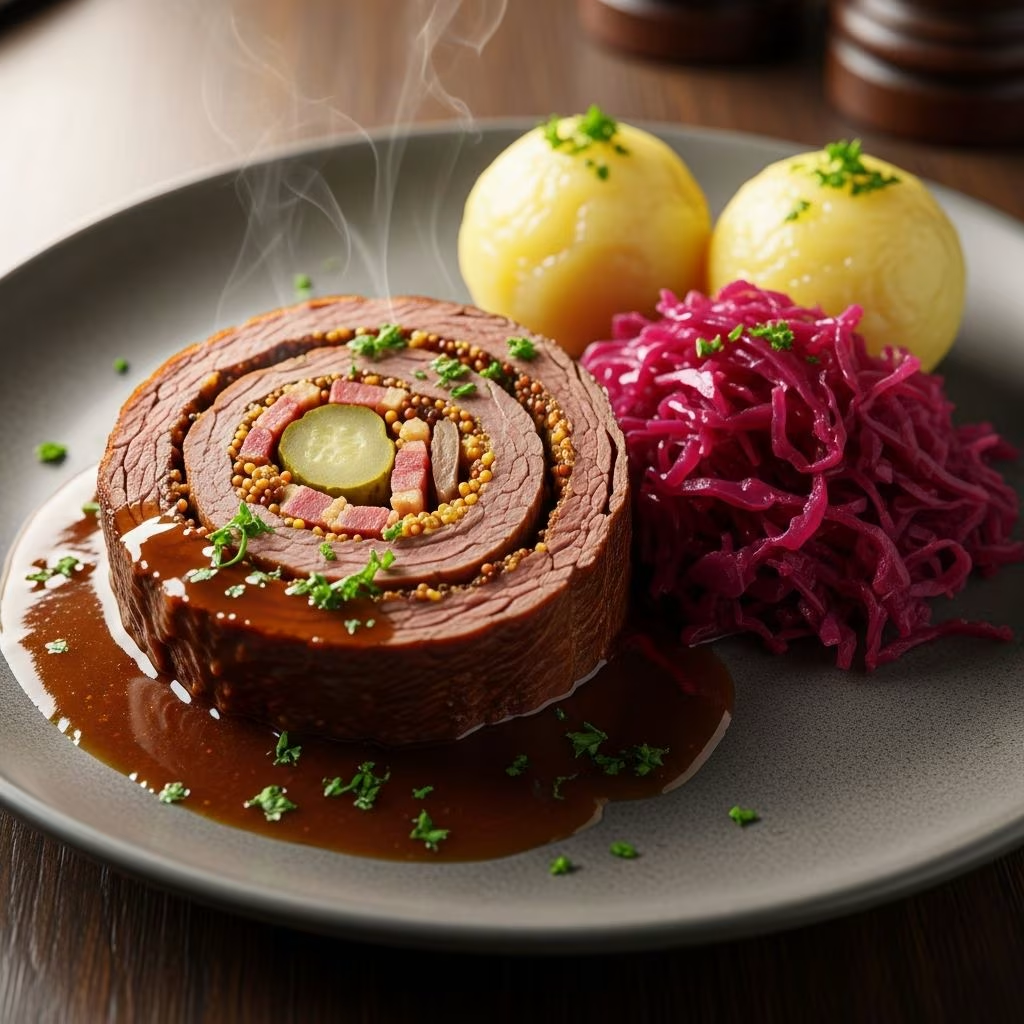
Thinly sliced onions distributed perpendicular to the rolling direction ensure even distribution throughout the finished rouladen. Arrange three dill pickle slices per rouladen—one near the top, one at the center, and one near the bottom—to guarantee pickle presence in every bite. This methodical arrangement prevents empty sections where filling concentrated in certain areas only.
Rolling and Securing Techniques
Proper rolling technique ensures fillings remain contained during browning and braising rather than escaping into the cooking liquid. Begin rolling from the larger end of each meat slice, progressing toward the narrower end while maintaining tension to keep fillings enclosed. Rolling tightly creates structural integrity that withstands extended cooking times.
After rolling, secure each rouladen with kitchen twine wrapped around the circumference two or three times, with additional tie placed vertically if needed. Alternatively, use toothpicks inserted through the roll to prevent unraveling. These securing methods remain invisible to diners while providing essential mechanical integrity during cooking.
Browning: Developing the Crust
Before braising, rouladen require browning in hot oil to develop the flavorful browned exterior through Maillard reactions. Heat vegetable oil in an appropriately sized pan over medium-high heat, ensuring adequate space between rouladen for even heat exposure. Brown each rouladen on all sides, approximately three to four minutes total, creating a caramelized exterior that seals in juices and contributes depth to the finished dish.
Remove browned rouladen from the pan and set aside temporarily while you prepare the braising liquid. Do not discard the flavorful browned bits remaining in the pan, as these fond particles form the foundation for the braising sauce.
Crafting the Perfect Braising Sauce
The sauce represents the final component that elevates rouladen from simple rolled meat into a complete dish worthy of special occasions. This gravy should possess body and richness while providing moisture for extended braising.
Roux Preparation
Reduce heat to medium-low and add butter to the pan containing browned bits. Once melted, sprinkle flour evenly across the butter and stir constantly for approximately one minute to cook the flour slightly, creating a roux. This combination of fat and flour will thicken the braising liquid while incorporating the pan’s flavorful browned particles.
Liquid Addition and Thickening
Gradually add beef broth, veal stock, or chicken stock while whisking constantly to prevent lumps from forming. Three cups of liquid provides adequate coverage for two rouladen with enough sauce for serving. Increase heat to medium-high and bring the mixture to a simmer. The sauce will not thicken appreciably until active bubbling begins, so maintain simmer for approximately two minutes until noticeable thickening occurs. The finished sauce should possess body without becoming pasty.
The Braising Process and Timing
Return browned rouladen to the pan, nestling them into the simmering sauce. Reduce heat to very low, maintaining barely perceptible bubbling rather than active simmer. This gentle cooking environment prevents meat toughening while allowing gradual collagen breakdown that creates tender results.
Cover the pan and allow rouladen to cook for approximately one and one-half hours, though timing varies based on meat thickness and exact temperature maintenance. The rouladen achieves proper doneness when meat slides easily from the bone (if applicable) or yields to gentle fork pressure without resistance. Cooking longer than necessary may create dry results, while undercooking leaves the meat tough and unpleasant.
Serving and Presentation Suggestions
Remove rouladen from the braising liquid and transfer to serving plates. Slice twine or remove toothpicks before presenting to diners. Spoon braising sauce generously over each rouladen, allowing liquid to pool around the meat.
Traditional German accompaniments enhance the rouladen experience significantly. Egg noodles, spaetzle, or simple buttered egg noodles provide excellent sauce-absorbing companions. Pickled red cabbage offers acidic contrast, while a simple green salad or steamed vegetables rounds out the meal nutritionally.
Storage and Leftover Considerations
Rouladen actually improve when made ahead, as flavors meld during refrigeration. Store cooled rouladen and sauce together in airtight containers for up to four days. Reheat gently over low heat to prevent meat toughening. The dish freezes successfully for up to three months, though sauce consistency may change slightly during thawing. Thaw frozen rouladen in the refrigerator overnight before reheating.
Cold leftover rouladen sliced thinly makes excellent sandwich filling or salad topping, offering an alternative serving method that transforms the dish into casual fare.
Common Questions About Beef Rouladen
Can I prepare rouladen in advance?
Yes, rouladen can be assembled, wrapped, and refrigerated for up to twenty-four hours before browning and braising. This advance preparation simplifies meal timing and allows flavors to meld before cooking.
What alternatives exist for filling ingredients?
While the classic preparation uses bacon, onions, pickles, and mustard, regional variations include sautéed mushrooms, horseradish, breadcrumbs mixed with herbs, or bell pepper strips. German traditions sometimes incorporate carrots into the braising liquid for additional flavor development.
Which beef cuts work best?
Round steak, rump roast, chuck steak, and flap meat all excel due to their ability to become tender through braising. Avoid premium cuts like tenderloin or ribeye, as their cost cannot be justified by this preparation method.
How do I know when rouladen reaches proper doneness?
Pierce the rouladen with a fork—properly cooked meat should slide easily without resistance. The braising liquid should register approximately one hundred eighty-five degrees Fahrenheit at the thickest point, though visual and textural cues prove more reliable than temperature.
Can I use slow cooker preparation?
Yes, rouladen adapt well to slow cooker cooking. Brown them conventionally, prepare the sauce in a skillet, then transfer both to a slow cooker set on low for approximately five to six hours. The extended gentle heat produces exceptionally tender results.
Scaling the Recipe
This preparation scales efficiently for larger gatherings. Double the ingredient quantities for four rouladen, triple for six, and so forth. Simply increase your cooking vessel size accordingly and add minimal additional cooking time, as the braising process depends more on meat thickness than quantity. A six-quart oval slow cooker accommodates four to six rouladen comfortably, making large-batch preparation practical.
Wine and Seasoning Variations
Some regional German traditions incorporate red wine or German Riesling into the braising liquid for added complexity. Replace one cup of stock with wine if desired, maintaining the three-cup total liquid volume. Additional seasonings like bay leaves, juniper berries, caraway seeds, or thyme may enhance the braising liquid according to personal preference and regional tradition.
Beef rouladen exemplifies how thoughtful ingredient selection, careful technique, and patient cooking transform economical ingredients into memorable cuisine. This accessible preparation deserves a permanent place in any home cook’s repertoire, offering impressive results with minimal specialty equipment or advanced skills.
References
- Food Wishes: Beef Rouladen – German Engineering You Can Eat — Food Wishes Blog. 2015. https://foodwishes.blogspot.com/2015/05/beef-rouladen-german-engineering-you.html
- Beef Stuffed with Bacon, Onions & Pickles – How to Make Rouladen — Food Wishes YouTube Channel. https://www.youtube.com/watch?v=AjziYjd2gpc