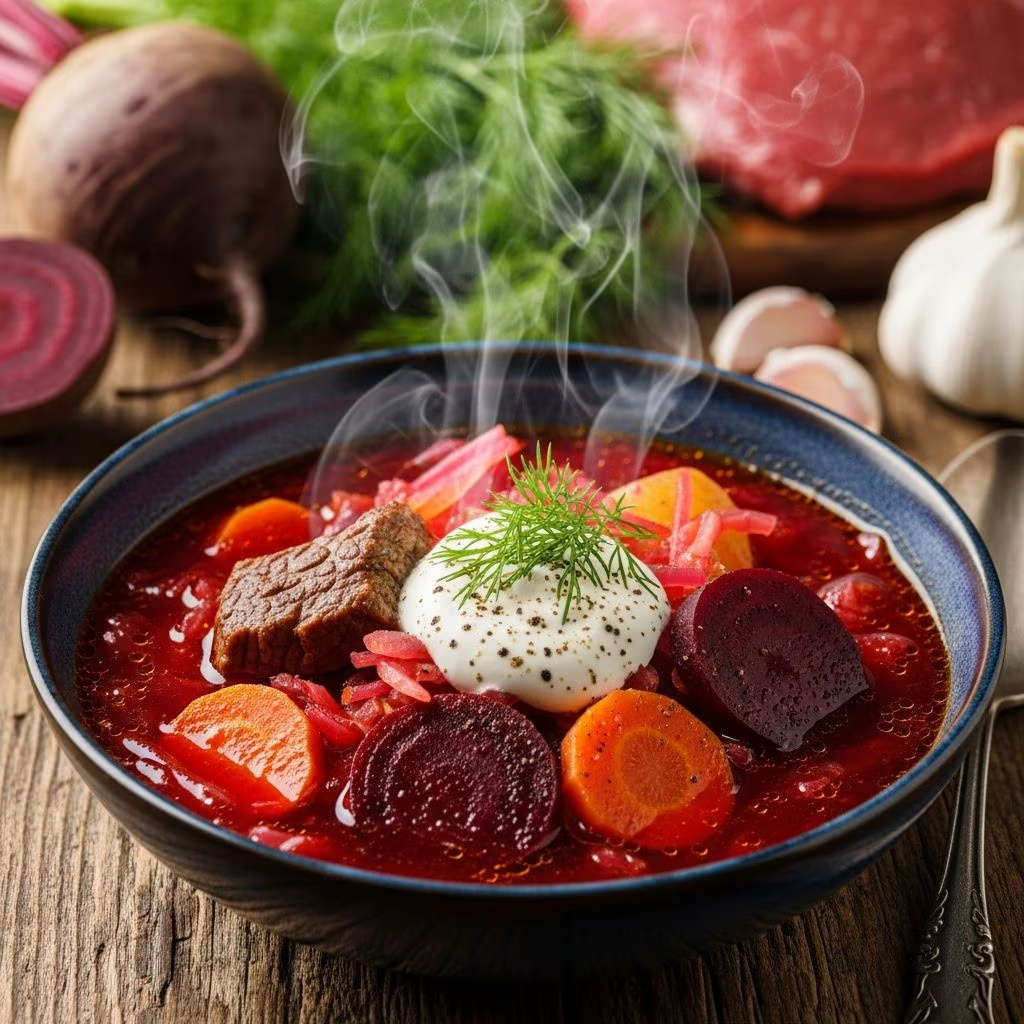
Borscht stands as one of the most iconic soups in Eastern European cuisine, celebrated for its vibrant color, complex flavors, and nourishing qualities. This traditional dish combines tender beef with earthy beets, creating a warming bowl that has been passed down through generations. Whether you’re seeking comfort on a cold evening or looking to explore classic culinary traditions, beef and beet borscht offers both satisfaction and cultural significance.
Understanding Borscht and Its Origins
Borscht represents more than just a soup—it embodies centuries of Eastern European culinary heritage. The dish’s foundation rests on the combination of beef and beets, though regional variations exist throughout countries like Ukraine, Poland, and Russia. The deep crimson color comes from the beets, which provide natural sweetness and earthiness that balances the richness of the beef.
The preparation of borscht emphasizes building layers of flavor through careful ingredient selection and cooking techniques. Unlike quick soups, traditional borscht requires patience and attention to detail to achieve its characteristic depth and complexity.
Essential Ingredients for Authentic Preparation
Creating a successful beef and beet borscht begins with understanding each ingredient’s role in the final dish.
The Protein Foundation
The beef selection significantly impacts the soup’s final character. **Stew meat** works exceptionally well, offering tender results after extended simmering. **Chuck roast** provides excellent flavor and creates a rich broth. **Beef with bones** adds gelatin and depth, though boneless options work equally effectively. Most recipes call for approximately 1 pound of beef, though you can adjust based on how hearty you prefer your soup.
Vegetable Components
The vegetable lineup creates the soup’s structural integrity and flavor profile:
- Beets (2-3 large or medium ones) serve as the star ingredient, providing color, sweetness, and distinctive flavor
- Cabbage (approximately half a head) adds textural variety and subtle sweetness
- Potatoes (2-3 large ones) contribute heartiness and help thicken the broth naturally
- Carrots (2 medium ones) introduce subtle sweetness and nutritional value
- Onions (1 medium) form the aromatic base alongside garlic
- Tomatoes (2 fresh or canned) provide acidity and umami depth
Flavor Enhancers
Several ingredients work together to balance and amplify the soup’s taste profile. **Olive oil** serves as the cooking medium, while **vinegar** (typically 1 tablespoon) adds brightness and complexity. **Tomato sauce or paste** concentrates flavor and enriches the broth. **Bay leaves** contribute subtle herbaceous notes, and **fresh parsley** or **dill** offer finishing touches of freshness.
**Salt and pepper** require careful attention throughout cooking, as you’ll adjust these seasonings multiple times to achieve proper balance.
Preparation Techniques for Optimal Results
Building the Beef Broth
Begin by cutting your beef into 1-inch pieces and placing them in a large heavy-bottomed pot with 14 cups of cold water and 1 tablespoon of salt. Bringing the water gradually to a boil allows the beef to release impurities, which you should skim from the surface using a slotted spoon. This step, though sometimes overlooked, creates a clearer, more refined broth.
Allow the beef to simmer for at least 45 minutes before adding other vegetables. This extended cooking time ensures the beef becomes tender while the broth develops sufficient body and flavor.
The Beet Preparation Method
Rather than adding raw beets directly to the pot, most traditional recipes call for a preliminary cooking step. Grate the beets on large grater holes—a food processor accelerates this task considerably. Heat 4 tablespoons of olive oil in a large skillet and add the grated beets along with 1 tablespoon of vinegar. Sauté for approximately 5 minutes over medium heat, then reduce to medium-low.
Add 1 tablespoon of sugar and 2 tablespoons of tomato sauce, mixing thoroughly. Continue sautéing for another 10 minutes, stirring occasionally. The sugar helps balance the beets’ earthiness, while the vinegar and tomato sauce add complexity. This preparatory cooking allows the beets to develop deeper flavor and soften before joining the soup.
Aromatic Vegetable Preparation
In the same skillet used for the beets, melt 1 tablespoon of butter and sauté the diced onion for approximately 2 minutes. Add the grated carrots and continue cooking for 5 minutes or until softened, adding more oil if the mixture appears too dry. This technique creates what some traditions call a “zajarka”—a flavor base that concentrates and develops the vegetables’ natural sweetness before incorporating them into the broth.
Combining Components
Once the beef has cooked for at least 45 minutes, add the sliced potatoes to the broth and cook for 10 minutes. Then add the cabbage, sautéed beets, onion-carrot mixture, and chopped tomatoes. Continue simmering for another 10 minutes or until the potatoes become easily pierced with a fork.
Season with bay leaves, freshly ground pepper, and additional salt to taste. Many recipes require about 1/2 teaspoon additional salt at this stage. Allow the soup to simmer gently for 5 more minutes so flavors meld together harmoniously.
Cooking Timeline and Servings
| Stage | Duration | Key Actions |
|---|---|---|
| Beef broth preparation | 45 minutes minimum | Skim impurities, allow beef to tenderize |
| Beet sautéing | 15 minutes | Develop flavor through preliminary cooking |
| Aromatic vegetable preparation | 7 minutes | Create flavor base for remaining vegetables |
| Potato and cabbage cooking | 10 minutes | Add potatoes and cabbage to broth |
| Final integration | 10-15 minutes | Add beet mixture and tomatoes, finish seasoning |
| Total cooking time | Approximately 90 minutes | Yields 6-8 servings |
Serving Suggestions and Garnishes
Traditional presentation emphasizes simple, complementary accompaniments that enhance rather than overshadow the soup’s natural flavors. **Sour cream** serves as the classic garnish, creating a cooling contrast to the soup’s warmth and richness. A generous dollop stirred into each bowl softens the beets’ earthiness and adds creamy texture.
**Fresh dill** or **fresh parsley** provides herbaceous brightness and visual appeal. The fresh herbs’ clean flavor cuts through the soup’s heaviness, leaving a pleasant finish on the palate. Some regions prefer **chopped fresh dill**, while others favor **parsley**—both work equally well depending on personal preference.
**Crusty bread** complements the soup beautifully, serving as a vehicle for soaking up the flavorful broth. Some traditions pair the soup with **boiled potatoes** served on the side, creating a more substantial meal.
Ingredient Variations and Substitutions
While traditional recipes maintain core components, flexibility exists for accommodating dietary preferences and ingredient availability.
Beef Alternatives
Though beef defines classic borscht, **pork** (particularly shoulder or butt) works beautifully when beef isn’t available. Some regions incorporate **chicken** or **lamb**, though these create distinctly different flavor profiles. **Vegetarian versions** using vegetable broth replace the meat entirely, though you’ll lose the soup’s characteristic richness.
Vegetable Adjustments
**Root vegetables** like **rutabaga** or **celeriac** add interesting textural and flavor variations. Some recipes include **celery** alongside carrots for additional aromatic depth. **Fresh spinach** or **kale** can be stirred in during final minutes for additional nutrition.
Flavor Modifications
**Red wine vinegar** can replace standard vinegar for additional complexity. Some traditions add **red wine** to the broth, creating deeper, more sophisticated flavors. **Horseradish** grated into individual bowls adds pleasant heat for those preferring spicier preparations.
Storage and Make-Ahead Considerations
Borscht exemplifies the concept of “better the next day,” as flavors continue developing after cooking concludes. Store cooled soup in airtight containers in the refrigerator for up to 5 days, or freeze portions for up to 3 months.
The soup actually improves with time as ingredients continue melding together. Many cooks deliberately prepare borscht a day ahead for this reason. When reheating, use low to medium heat to prevent excessive evaporation, adding water if the consistency seems too thick.
Nutritional Profile and Health Benefits
Beyond its comforting taste, beef and beet borscht offers meaningful nutritional value. The beef provides **high-quality protein** and **iron**, essential for energy and oxygen transport. **Beets** contribute **folate**, **manganese**, and **dietary fiber** alongside their distinctive flavor.
**Cabbage** and other cruciferous vegetables supply **vitamins C and K** plus beneficial **phytonutrients**. The broth-based preparation makes nutrients readily bioavailable, allowing the body to efficiently absorb these beneficial compounds. The moderate fat content from olive oil and beef supports satiety while providing essential fatty acids.
Frequently Asked Questions
How long does beef and beet borscht take to prepare?
Total cooking time typically ranges from 90 minutes to 2 hours, depending on how tender you prefer the beef and vegetables. Most of this time involves simmering rather than active preparation.
Can I use canned beets instead of fresh ones?
While canned beets offer convenience, fresh beets provide superior flavor development through the preliminary sautéing step. If using canned beets, reduce their cooking time and skip the preliminary sautéing stage.
What’s the best way to achieve the soup’s characteristic color?
The deep crimson color comes naturally from the beets during cooking. Avoiding excessive cooking of the beets preserves their vibrant hue. If the color seems too pale, ensure you’re using sufficient beets and allowing adequate cooking time.
Is borscht better served hot or cold?
Traditional preparations serve borscht hot, though some Eastern European regions enjoy cold versions during summer months. Cold borscht requires specific preparations and works best when served immediately after chilling.
How can I make borscht less acidic if it tastes too sour?
Add small amounts of sugar or reduce the vinegar quantity in future batches. You can also add more potatoes or vegetables to dilute the acidity while increasing overall volume.
Tips for Success
- Use a **heavy-bottomed pot** to ensure even heat distribution and prevent sticking
- Don’t rush the initial beef cooking stage—this creates the flavorful foundation
- Taste and adjust seasonings multiple times during cooking rather than once at the end
- Keep ingredients in roughly equal-sized pieces for uniform cooking
- Consider preparing the soup a day ahead to allow flavors to fully develop
- Serve in heated bowls to maintain proper temperature throughout the meal
Conclusion
Beef and beet borscht represents a magnificent convergence of simple ingredients transformed through patient cooking into a dish of remarkable depth and satisfaction. The combination of tender beef, earthy beets, and fresh vegetables creates a soup that nourishes both body and spirit. Whether you’re connecting with cultural heritage or simply seeking excellent comfort food, mastering this classic preparation rewards the effort with memorable meals that improve with each successive pot you prepare.
References
- Natasha’s Kitchen – Borscht Recipe with Beef — Natasha’s Kitchen. 2024. https://natashaskitchen.com/borscht-recipe-with-meat/
- Beef and Beet Borscht — Canadian Beef. 2024. https://canadabeef.ca/wp-recipe/beef-and-beet-borscht/
- Classic Beef Borscht — Sweet and Savory by Shinee. 2024. https://www.sweetandsavorybyshinee.com/classic-beef-borscht/
- Beef, Beet & Cabbage Borscht — Andrew Zimmern. Food & Wine. 2024. https://andrewzimmern.com/recipes/beef-beet-cabbage-borscht/
- Beef Borscht – Beetroot and Cabbage Soup — Venturists. 2024. https://www.venturists.net/beef-borscht-beetroot-cabbage-soup/