Indulge in the refined elegance of **Bavarian cream**, a dessert that marries the smoothness of custard with the lightness of whipped cream, all held together by gelatin. This classic treat, also known as crème bavarois, has captivated palates since its invention in the 19th century by French chefs. Whether served in individual molds or layered in parfaits, it offers a versatile canvas for flavors like vanilla, chocolate, or fruit infusions. In this comprehensive guide, we explore its origins, essential techniques, and creative adaptations to elevate your baking repertoire.
Understanding the Essence of Bavarian Cream
Bavarian cream stands out for its unique texture: firm yet yielding, thanks to a base of crème anglaise—a poured custard—enriched with whipped cream and set with gelatin. Unlike panna cotta, which relies solely on milk and gelatin, or mousse, which incorporates more air, Bavarian cream achieves balance through precise temperature control and folding techniques. The process demands patience, but the result is a dessert that melts luxuriously in the mouth.
Key components include full-fat milk or cream for richness, egg yolks for silkiness, sugar for sweetness, and unflavored gelatin to provide structure without altering taste. Vanilla is the traditional flavor, but its adaptability shines in modern kitchens.
Gathering Premium Ingredients
Success begins with quality ingredients. Opt for fresh, high-fat dairy to ensure creaminess. Here’s a breakdown of a foundational recipe yielding about 6-8 servings:
| Ingredient | Quantity | Purpose |
|---|---|---|
| Gelatin powder (unflavored) | 2-3 tsp (about 10g) | Sets the mixture without flavor interference |
| Cold water | 1/4 cup | Blooms the gelatin for even dissolution |
| Whole milk | 2 cups | Base for the custard |
| Egg yolks (large) | 4-6 | Provides emulsification and richness |
| Granulated sugar | 1/2 – 3/4 cup | Sweetens and aids in thickening |
| Vanilla extract or bean paste | 1-2 tsp | Infuses aromatic depth |
| Heavy whipping cream (35% fat) | 1 1/2 – 2 cups, chilled | Creates airy volume when whipped |
| Optional: Salt, butter | Pinch / 2 tbsp | Balances flavors / Adds gloss |
These proportions draw from traditional methods, scalable for larger batches. Source eggs from pasture-raised hens for superior flavor and color.
Mastering the Step-by-Step Process
Creating Bavarian cream involves three phases: blooming gelatin, preparing custard, and folding in whipped cream. Precision in heating prevents curdling, a common pitfall.
Blooming the Gelatin
- Sprinkle gelatin over cold water in a small bowl. Avoid stirring initially to prevent lumps.
- Let it sit 5-10 minutes until it swells and gels. For faster results, use ice water.
- Melt gently over simmering water or with hot liquid later—never boil, as high heat weakens gelatin.
Crafting the Crème Anglaise Base
- Heat milk in a saucepan over medium heat until steaming (about 180°F/82°C), stirring to avoid scorching. Infuse with a split vanilla bean for authenticity.
- Whisk egg yolks, sugar, and salt until pale and ribbony (2-3 minutes).
- Temper by slowly pouring hot milk into eggs while whisking vigorously. Return to low heat.
- Cook, stirring constantly with a spatula, until it thickens to coat the spoon (nappe stage, 160-170°F/71-77°C). Do not exceed 180°F to avoid scrambling.
- Strain through a fine mesh sieve into a bowl. Stir in bloomed gelatin until dissolved, then add butter if using. Cool to room temperature or slightly above (about 85°F/29°C).
Folding and Setting
- Whip chilled heavy cream to soft peaks—overwhipping leads to butter.
- Gently fold one-third of whipped cream into cooled custard to lighten, then incorporate the rest in two additions. Use a spatula for minimal deflation.
- Pour into lightly oiled molds, ramekins, or a large dish. Refrigerate 4+ hours until firm.
Temperature control is crucial: custard too hot melts whipped cream; too cold resists folding.
Flavor Innovations and Variations
Bavarian cream’s neutral profile invites experimentation. Here are tested enhancements:
- Chocolate: Melt 4-6 oz dark chocolate into the custard base. Pair with raspberry coulis.
- Fruit: Infuse custard with berry puree or citrus zest. Swirl in fruit compote before setting.
- Coffee: Add espresso powder to milk. Top with cocoa dust.
- Nutty: Incorporate almond extract or praline paste. Layer with caramelized nuts.
- Light Version: Reduce yolks, use half-and-half instead of cream, but expect less stability.
For layered desserts, pipe into ladyfingers or chocolate sponge for a charlotte-style presentation.
Essential Tools and Troubleshooting
Equip your kitchen with:
- Digital thermometer for accuracy.
- Heavy-bottomed saucepan to prevent scorching.
- Fine sieve and rubber spatula.
- Molds: silicone for easy unmolding, metal for sharp edges (chill first).
Common issues and fixes:
| Problem | Cause | Solution |
|---|---|---|
| Lumpy texture | Overcooked custard or poor gelatin bloom | Strain thoroughly; bloom properly |
| Doesn’t set | Insufficient gelatin or warm mixture | Bloom extra 1 tsp; chill fully |
| Weeps liquid | Fruit acidity or vibration | Stabilize fruit puree; set undisturbed |
| Grainy | Sugar not dissolved | Whisk longer before heating |
Artful Presentation and Pairings
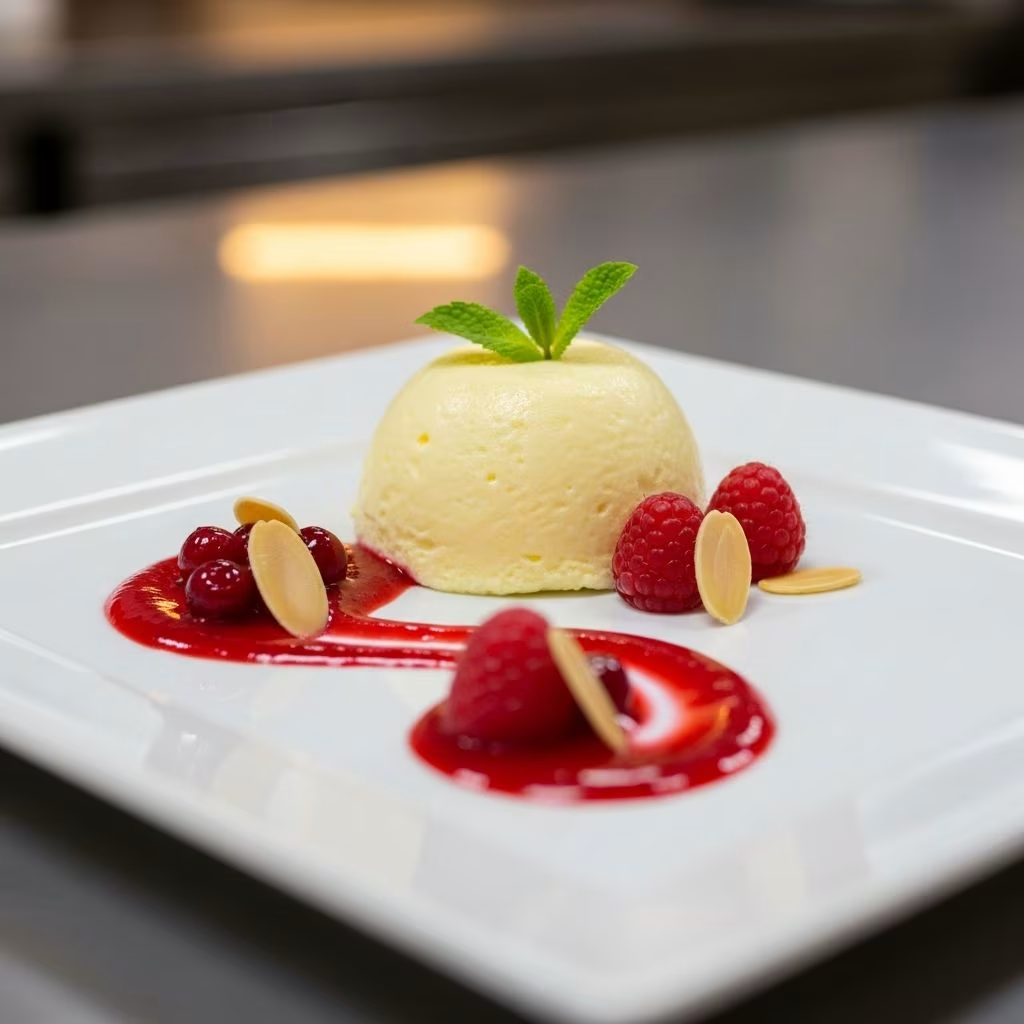
Unmold by dipping molds briefly in hot water, then invert onto plates. Garnish with fresh berries, mint, chocolate shavings, or coulis. For glasses, layer with cookie crumbs or fruit for a parfait effect.
Pair with:
- Sparkling wine or champagne for contrast.
- Shortbread or sable cookies.
- Seasonal fruits like mango or passionfruit.
Serves beautifully at dinner parties, holding shape for hours at room temperature.
Storage and Make-Ahead Tips
Covered in the fridge, Bavarian cream lasts 3-5 days. Freezing alters texture—avoid if possible. Make ahead up to 48 hours; flavor deepens slightly. Avoid plastic wrap directly on surface to prevent condensation.
Frequently Asked Questions
Can I use agar-agar instead of gelatin?
Yes, for vegetarian versions. Use half the amount, as it’s stronger, and boil briefly to activate. Texture will be firmer.
Is sheet gelatin interchangeable with powder?
Absolutely. 1 sheet (2g) equals 1 tsp powder. Soften in cold water, squeeze dry, then dissolve.
How do I fix runny Bavarian cream?
Melt down, add more bloomed gelatin (1 tsp per cup), re-cool, and re-whip cream before folding.
Can I make it alcohol-infused?
Yes—add liqueurs like Grand Marnier or rum to cooled custard. Reduce sugar slightly.
What’s the difference from pastry cream?
Pastry cream is denser, cooked with cornstarch; Bavarian is lighter, no starch, set cold.
Scaling for Crowds and Special Diets
Double ingredients seamlessly, but chill in batches to maintain coolness. For gluten-free, it’s naturally so. Dairy-free adaptations use coconut cream and agar, though flavor shifts.
With practice, Bavarian cream becomes a signature dish, blending technique with creativity for unforgettable desserts.
References
- Bavarian Cream Recipe (Crème Bavarois) — The Flavor Bender. 2023-05-15. https://www.theflavorbender.com/bavarian-cream-recipe-creme-bavarois/
- Rich and Silky Bavarian Cream Recipe with Cherry Sauce — An Edible Mosaic. 2022-11-10. https://www.anediblemosaic.com/bavarian-cream-recipe/
- Homemade Bavarian Cream Recipe — Chef Billy Parisi. 2024-02-20. https://www.billyparisi.com/bavarian-cream/
- Authentic Bavarian Cream — Recipes From Europe. 2023-08-05. https://www.recipesfromeurope.com/bavarian-cream/
- Easy Bavarian Cream Puff Recipe — Happy Money Saver. 2021-06-12. https://happymoneysaver.com/easy-bavarian-cream-puff-recipe/