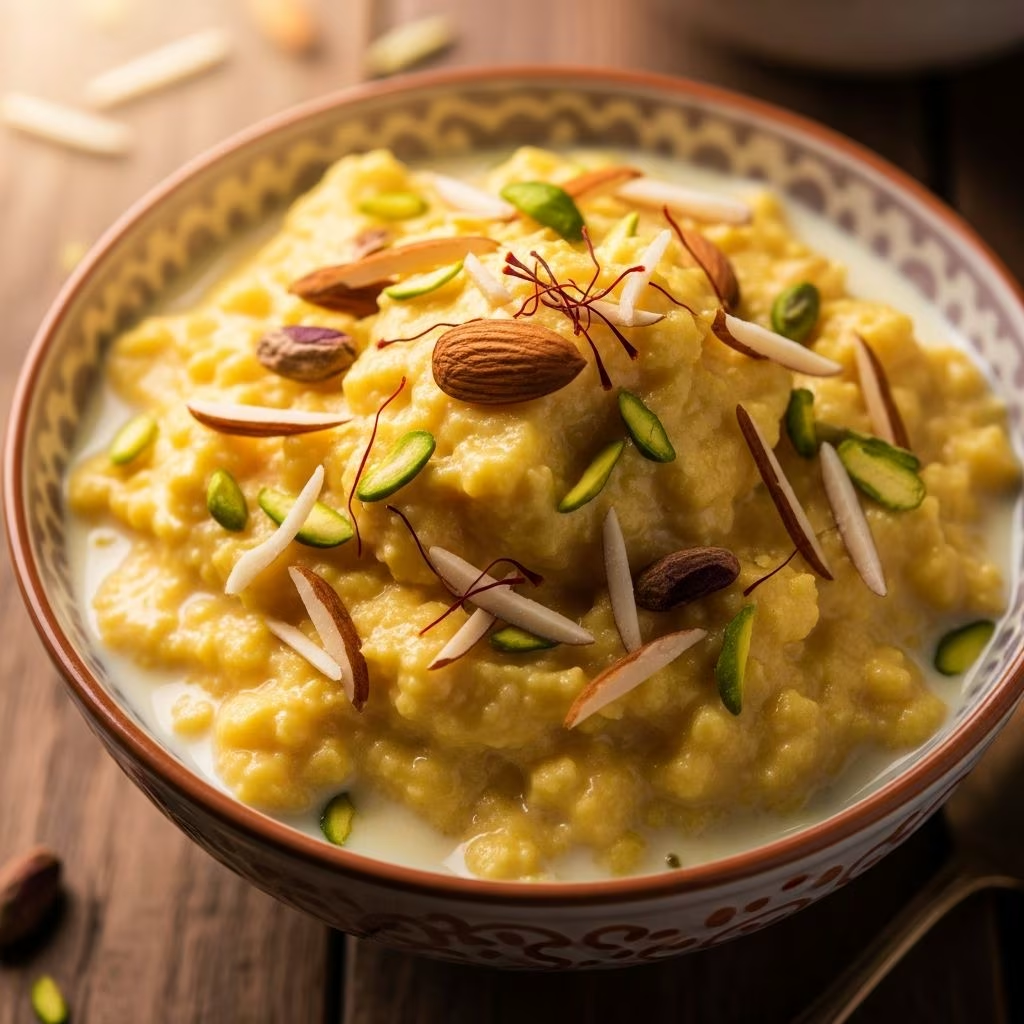
Basundi stands as a timeless treasure in Indian culinary traditions, offering a symphony of creamy textures and subtle flavors derived from patiently reduced milk. This dessert, popular across Maharashtra and Gujarat, captures the essence of simplicity elevated through careful preparation. Unlike denser sweets, basundi boasts a light, pudding-like consistency that makes it ideal for festive occasions or as a soothing end to any meal.
The Allure of Basundi in Indian Cuisine
Rooted in the rich dairy heritage of India, basundi exemplifies how everyday ingredients like full-fat milk can become extraordinary. Its preparation involves simmering milk over low heat, allowing natural evaporation to concentrate its flavors and create a velvety base. A touch of saffron imparts a golden hue and floral notes, while nuts and cardamom add crunch and warmth. This dessert shines during festivals like Diwali, where its auspicious sweetness symbolizes prosperity.
Historically, basundi has been a staple in celebratory feasts, often served chilled to balance spicy mains. Its versatility extends to pairings with pooris or as a base for falooda, blending tradition with innovation. What sets basundi apart is its minimalistic approach—no artificial thickeners needed, just time and technique to achieve perfection.
Essential Ingredients for Authentic Basundi
Crafting basundi begins with selecting high-quality components. Full-fat milk forms the foundation, providing the creaminess essential for reduction. Here’s a breakdown of key elements:
- Full-fat milk: 1-2 liters, preferably buffalo or cow’s milk for richness.
- Saffron strands: A pinch (8-10 strands), soaked in warm milk for vibrant color and aroma.
- Sugar: ¼ to ¾ cup, adjusted to taste; add after reduction to prevent scorching.
- Nuts: Slivered almonds, pistachios, and cashews (4-8 each) for texture.
- Spices: Cardamom pods (2-4, powdered) and a pinch of nutmeg for depth.
Opt for unsalted nuts and fresh spices to ensure purity. Variations might include rose water or charoli seeds, but classics stick to these staples.
Step-by-Step Guide to Making Basundi at Home
Patience is the key to basundi’s magic. Use a wide, heavy-bottomed pan to maximize surface area for evaporation and prevent sticking. Follow these detailed steps for foolproof results:
- Boil the milk: Pour milk into the pan and heat on high, stirring occasionally. Place a small heat-safe plate or wooden spoon in the center to curb overflow and bottom scorching.
- Infuse saffron: Meanwhile, soak saffron in 1-2 tablespoons of warm milk. This releases its essence without overpowering.
- Simmer patiently: Reduce to low-medium heat. Stir every few minutes, scraping sides and incorporating any malai (cream layer) that forms. Aim for 20-50 minutes until milk halves in volume, turning pale golden.
- Sweeten and flavor: Stir in sugar and saffron milk. Boil briefly until sugar dissolves, then add chopped nuts.
- Final touches: Mix in cardamom and nutmeg. Simmer 5-10 more minutes for flavors to meld. Cool naturally; a malai layer will form, which you can stir back in.
Total time: 45-60 minutes. Yields 4-6 servings. Pro tip: Constant vigilance prevents burnt bits, ensuring a smooth finish.
Pro Tips for Flawless Basundi Every Time
Achieving restaurant-quality basundi relies on technique. Consider these insights:
- Choose a wide vessel to speed reduction and even cooking.
- Stir clockwise in intervals, focusing on edges where milk thickens first.
- Use full-cream milk; low-fat versions yield watery results.
- Add sugar late—early addition dilutes and extends cooking time.
- Chill for 2-4 hours post-cooling; flavors intensify overnight.
- Avoid over-thickening; basundi should pour like thin custard.
For saffron maximization, crush strands lightly before soaking. If nuts are tough, blanch pistachios and almonds for easy peeling and slivering.
Variations to Elevate Your Basundi
While traditional basundi is pure, creative twists abound. Experiment responsibly to honor its roots:
| Variation | Key Additions | Best For |
|---|---|---|
| Fruit Basundi | Chopped apple, banana, pomegranate | Festive platters |
| Chocolate Basundi | Cocoa powder (2 tbsp), vanilla | Modern fusion |
| Kesar Pista Basundi | Extra pistachios, rose petals | Weddings |
| Dry Fruit Overload | Charoli, raisins, walnuts | Nut lovers |
Fruit versions pair post-meal fruits with the creamy base, while chocolate appeals to global palates. Always add extras post-reduction to preserve balance.
Perfect Pairings and Serving Suggestions
Basundi’s mild sweetness complements bold dishes. Serve chilled in earthen kulhads for authenticity, garnished with slivered nuts or rose petals. Ideal matches:
- With breads: Warm pooris or bhakri soak up the creaminess.
- Falooda fusion: Layer with vermicelli and ice cream.
- Festival thali: Alongside puran poli or modak.
- Modern twists: Drizzle on waffles or mix into yogurt parfaits.
Hot basundi suits winter evenings, while iced versions refresh summers. Portion ½-¾ cup per serving for satisfaction without excess.
Nutrition and Health Considerations
Basundi is indulgent yet nutritious in moderation. A 150ml serving offers:
- Calories: ~250-300
- Protein: 8-10g from milk
- Calcium: High for bone health
- Fats: Natural from full-fat milk, supporting satiety
Saffron provides antioxidants; nuts add healthy fats. Diabetics can use low-gi sweeteners like stevia, reducing sugar by half. Lactose-intolerant? Coconut milk mimics texture adequately.
Common Mistakes and How to Avoid Them
Novices often rush reduction, leading to grainy or scorched results. Other pitfalls:
- Too much saffron: Results in bitterness; stick to pinches.
- Ignoring malai: Stir it in for extra creaminess.
- Over-sweetening: Taste incrementally.
- Thin consistency: Extend simmer time on low heat.
Practice with small batches to master timing.
Frequently Asked Questions (FAQs)
What is the ideal consistency for basundi?
Basundi should be slightly thick like a pouring custard, thickening further upon cooling.
Can I make basundi in advance?
Yes, refrigerate up to 3 days. Stir before serving.
Is a pressure cooker suitable?
No; open simmering allows evaporation. Use stovetop only.
How to veganize basundi?
Substitute with almond or coconut milk, adjusting reduction time.
Why does my basundi curdle?
Avoid high heat post-sugar; maintain gentle simmer.
Storing and Shelf Life
Cool completely before refrigerating in airtight containers. Lasts 2-3 days chilled; freeze portions up to a week, thawing slowly. Discard if malai darkens or off-smells develop.
Basundi’s journey from milk to masterpiece rewards the dedicated cook with a dessert that’s both humble and regal. Whether for Diwali feasts or quiet evenings, it embodies India’s sweet soul.
References
- Basundi Recipe, How to make Basundi — Raks Kitchen. 2023-05-15. https://rakskitchen.net/basundi-recipe-how-to-make-basundi/
- Basundi Recipe | दिवाली पर बनाइये बासुंदी की रेसिपी | Chef Sanjyot Keer — YouTube (Your Food Lab). 2023-11-10. https://www.youtube.com/watch?v=3dF4pBYiRAs
- Traditional Indian Sweets and Desserts — Ministry of Tourism, Government of India. 2024-02-20. https://tourism.gov.in/sites/default/files/2021-09/Indian%20Sweets.pdf