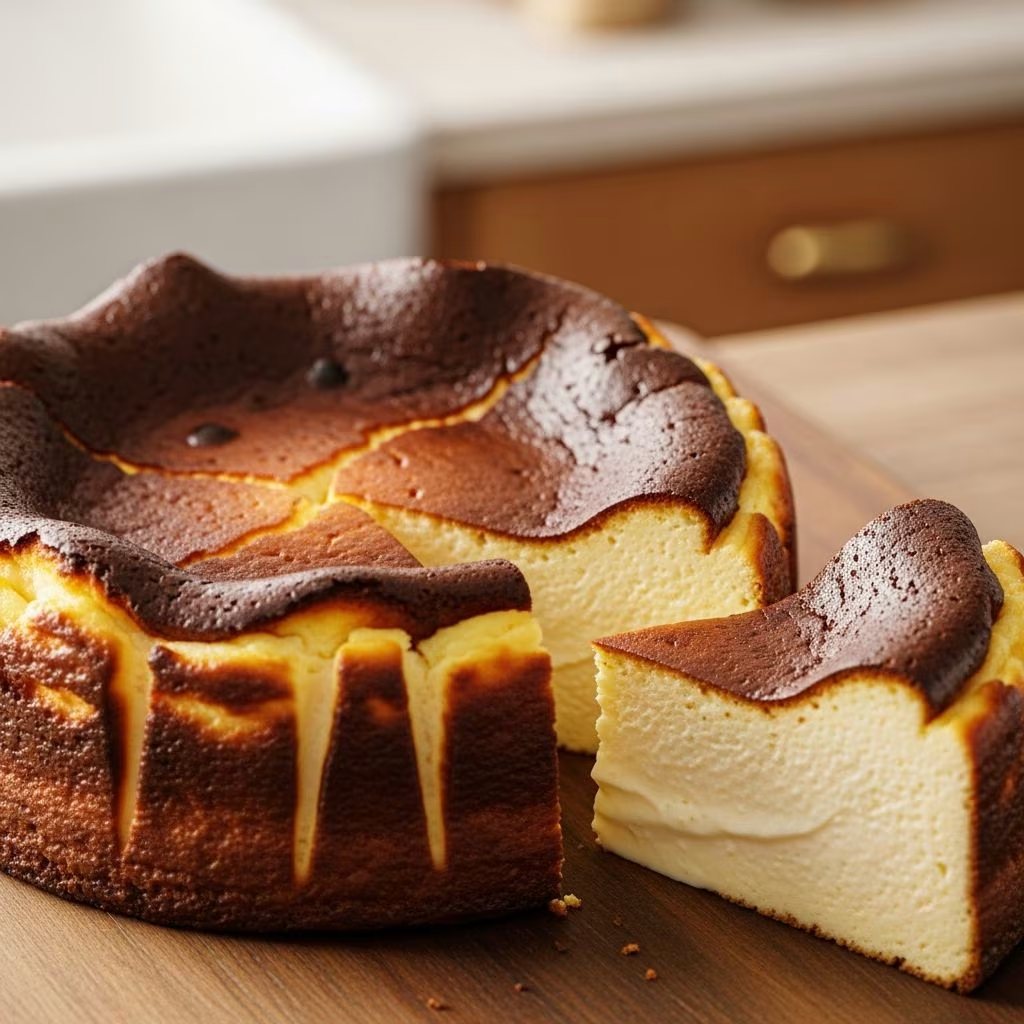
The Basque cheesecake has captured the attention of dessert enthusiasts worldwide, earning a reputation as one of the most accessible yet impressive baked creations. Unlike traditional American cheesecakes that rely on graham cracker crusts and precise temperature control, this Spanish-inspired dessert embraces rustic simplicity. The defining characteristic is its dramatically caramelized, cracked top that conceals a custard-like interior with minimal structural support. This distinctive appearance comes not from decoration but from deliberate baking choices that prioritize flavor and texture over presentation perfection.
Understanding the Historical Context and Origins
This style of cheesecake emerged from the Basque Country in northern Spain, though its exact creation story remains debated among culinary historians. The dessert gained international prominence relatively recently, becoming particularly popular in cosmopolitan areas through word-of-mouth recommendations and social media exposure. What makes this cheesecake distinct from its predecessors is the abandonment of traditional constraints. Bakers in the Basque region developed this recipe by prioritizing ingredient quality and honest technique over technological precision, resulting in a dessert that celebrates rather than conceals its rustic nature.
The beauty of this approach lies in its accessibility. The recipe requires no special equipment beyond basic baking tools, and the ingredient list remains remarkably concise. This simplicity, combined with forgiving preparation methods, makes it an ideal project for both novice and experienced bakers seeking to expand their repertoire.
Essential Ingredients and Quality Considerations
Creating an exceptional Basque cheesecake begins with understanding each ingredient’s role and selecting appropriate products. The foundation rests on several key components that work in concert to produce the desired texture and flavor profile.
Cream Cheese: The Primary Building Block
High-quality cream cheese forms the structural and flavor foundation of this dessert. Most recipes specify between 1.5 to 2 pounds of cream cheese, depending on desired richness and serving size. The cream cheese should be at room temperature before mixing, as this facilitates smooth blending and prevents lumps that could compromise texture. Room temperature cream cheese incorporates more evenly with other ingredients, creating a homogeneous batter that bakes uniformly. Cold cream cheese can result in an uneven crumb structure and potential voids in the finished product.
Supporting Dairy Components
Heavy cream contributes moisture and richness while affecting the final texture. Recipes typically incorporate between 1.75 to 2 cups of heavy cream, added in stages during the mixing process. Some variations incorporate mascarpone cheese alongside or in place of a portion of cream cheese, adding subtle complexity and additional creaminess. When mascarpone is used, approximately 8 ounces complements 1.5 pounds of cream cheese effectively.
Sweetening Agents
Sugar content varies based on personal preference, typically ranging from 1.25 to 1.5 cups for a 9-inch pan. Some bakers prefer the lower end to emphasize the caramelized, slightly bitter notes on the top, while others favor additional sweetness. The sugar should dissolve completely during the initial mixing phase, contributing to a smooth, uniform batter.
Binding and Structure
Eggs provide both binding and lift, with recipes calling for 4 to 6 large eggs depending on proportions. Some versions include additional egg yolks for extra richness and a more custardy texture. Additional egg yolks (typically 2) can be incorporated alongside whole eggs for enhanced creaminess. All eggs should be at room temperature to blend seamlessly without creating temperature differentials in the batter.
Minimal Dry Ingredients
All-purpose flour (typically 1 to 1.5 tablespoons) prevents excessive spreading during baking while remaining subtle enough to avoid a cake-like crumb. Salt (approximately ½ teaspoon) enhances overall flavor perception and balances sweetness. Vanilla extract (typically 1 teaspoon) adds aromatic depth without overwhelming the natural dairy flavors.
Critical Equipment and Pan Preparation
Success depends significantly on proper setup before mixing begins. The choice of mixing equipment affects both preparation time and final texture quality. A large food processor with minimum 12-cup capacity offers efficiency, though stand mixers and hand mixers work equally well when operated at low speed. Low-speed mixing is crucial regardless of equipment choice, as high-speed mixing incorporates excessive air, leading to dome formation and potential collapse during cooling.
Parchment Paper Technique
The parchment paper setup serves multiple purposes: it prevents sticking, facilitates removal, and rises with the expanding cheesecake. Two sheets should be crossed in the bottom of a 9-inch springform pan, with edges overhanging by 2 to 3 inches around all sides. The parchment should rise at least 2 inches up the pan sides when pleated. This height accommodation proves essential, as the cheesecake rises significantly during baking before settling as it cools. Proper parchment placement prevents batter from leaking around pan edges while supporting the expanding mass.
Oven Preparation
The oven rack should be positioned in the center, with no rack above it. This spacing allows the cheesecake adequate room to rise without touching upper elements. Preheat the oven to between 400 and 425 degrees Fahrenheit, depending on the specific recipe variation. The higher temperature, combined with extended baking time, creates the characteristic caramelization and cracking without drying the interior.
Step-by-Step Preparation Process
Mixing Methodology
Combine room-temperature cream cheese, sugar, and approximately ½ cup of heavy cream in the selected mixing vessel. Process or mix on low speed until the mixture achieves complete smoothness and the sugar dissolves fully, typically requiring about 2 minutes. Pause periodically to scrape down bowl sides, ensuring all ingredients incorporate evenly.
Crack all eggs into a measuring cup before adding to the mixture. This pre-cracking method allows for simultaneous addition of all eggs, promoting even distribution. Pour all eggs at once while continuing to blend on low speed until the mixture achieves smoothness again.
Pause once more to scrape the bowl sides thoroughly. Add the remaining heavy cream along with vanilla extract and salt. Process for approximately 30 seconds to combine, taking care not to over-mix. Finally, add the flour and blend briefly until just incorporated. The batter should appear smooth, homogeneous, and pourable without visible lumps.
Batter Transfer and Baking
Pour the prepared batter into the parchment-lined springform pan, being careful to fill evenly. If desired, the parchment edges can be pulled slightly upward to help contain the batter. Transfer the pan carefully to the preheated oven and bake for 45 to 55 minutes. The cheesecake will expand noticeably during baking, with the top developing deep brown caramelization and visible cracks as it rises. When fully baked, the center should maintain slight jiggle when the pan is gently moved, indicating a custard-like interior beneath the set exterior.
Cooling and Storage Protocols
After removal from the oven, allow the cheesecake to cool on a wire rack for approximately 1 hour at room temperature. This gradual cooling prevents thermal shock that could cause excessive cracking beyond the desired surface cracks. Following this rest period, transfer the pan to the refrigerator for minimum 6 hours, though overnight cooling improves texture and flavor development. The cold also helps the cheesecake set properly, making slicing cleaner and easier.
Before serving, loosen the springform pan sides and carefully transfer the cheesecake to a serving plate using the overhanging parchment edges as handles. The cheesecake can be stored covered in the refrigerator for up to 5 days. Some bakers prefer serving the cheesecake at room temperature after removing it from the refrigerator approximately 30 to 60 minutes before slicing.
Troubleshooting Common Challenges
| Challenge | Potential Cause | Solution |
|---|---|---|
| Excessive dome formation | Oven too hot or mixing speed too high | Lower oven temperature slightly; mix on low speed throughout |
| Sunken center after cooling | Overbaking or rapid cooling | Reduce baking time; allow longer gradual cooling at room temperature |
| Grainy texture | Cream cheese not fully room temperature or sugar incompletely dissolved | Allow all ingredients to reach room temperature; mix longer initially |
| Minimal caramelization | Oven temperature too low | Ensure oven temperature reaches target; consider rack position |
| Batter leaking from pan | Parchment height insufficient | Use two overlapping parchment sheets with at least 2-inch edges |
Customization and Variation Options
The fundamental Basque cheesecake recipe accommodates various modifications based on dietary preferences and flavor preferences. Some bakers reduce sugar to 1 cup for a less sweet dessert that emphasizes caramelized notes. Others incorporate dulce de leche, salted caramel, or fruit compotes as toppings after baking. Gluten-free flour can substitute all-purpose flour without significantly affecting results, though the blend should be a 1:1 replacement.
Sour cream or Greek yogurt can replace up to ½ cup of heavy cream for tangier flavor profiles. Espresso powder or coffee extract can be added for depth without overwhelming sweetness. Citrus zest (lemon or orange) brightens the heavy cream elements. These variations remain true to the rustic spirit of the original while allowing personalization.
Serving Suggestions and Pairings
Basque cheesecake is sufficiently rich to require only simple accompaniments. A dusting of powdered sugar emphasizes the caramelized top without adding additional sweetness. Fresh berries—particularly raspberries, blackberries, or strawberries—provide textural contrast and bright acidity. A small dollop of whipped cream or crème fraîche complements the creamy interior without overwhelming it.
For beverage pairings, strong coffee or espresso cuts through the richness effectively. Spanish dessert wines, particularly those from the Basque region, create harmonious combinations. A simple herbal tea offers a lighter alternative for those preferring subtle accompaniment.
Frequently Asked Questions
Can I make this cheesecake without a springform pan?
Yes, though a springform pan significantly simplifies removal. Alternative approaches include using a cake pan lined heavily with parchment, or a removable-bottom tart pan. The parchment paper edges become more critical for removal success when using non-springform vessels.
How does this cheesecake differ from traditional New York-style cheesecake?
Basque cheesecake contains no graham cracker crust, uses minimal flour, and embraces rustic appearance over precision. It prioritizes custardy texture over firm structure and intentionally develops dramatic caramelization rather than preventing browning.
Can I freeze this cheesecake?
Yes, freezing is successfully possible after complete cooling and refrigeration. Wrap the entire cheesecake (still in the pan) with plastic wrap and aluminum foil before freezing for up to 2 months. Thaw overnight in the refrigerator before serving.
Why does my cheesecake crack so dramatically?
Cracking results from rapid cooling after removal from the oven’s heat. This is intentional and characteristic of the style. Allowing longer room-temperature cooling reduces cracking, but some cracking is desirable and adds to the rustic appearance.
References
- Foolproof Basque Cheesecake Recipe — Cookie and Kate. Accessed April 2026. https://cookieandkate.com/basque-cheesecake-recipe/
- Basque Cheesecake Recipe: A Culinary Gift From San Sebastián, Spain — 30Seconds. Accessed April 2026. https://30seconds.com/food/tip/95277/Basque-Cheesecake-Recipe-A-Culinary-Gift-From-San-Sebastian-Spain-7-Ingredients
- Delicious Basque Cheesecake Recipe: Creamy and Easy to Make — Drew Frederic. Accessed April 2026. https://drewfrederic.com/?p=14461
- Basque Cheesecake Recipe & The History Of Basque Cheesecake — The Nibble. Updated July 29, 2025. https://blog.thenibble.com/2025/07/29/basque-cheesecake-recipe-the-history-of-basque-cheesecake/