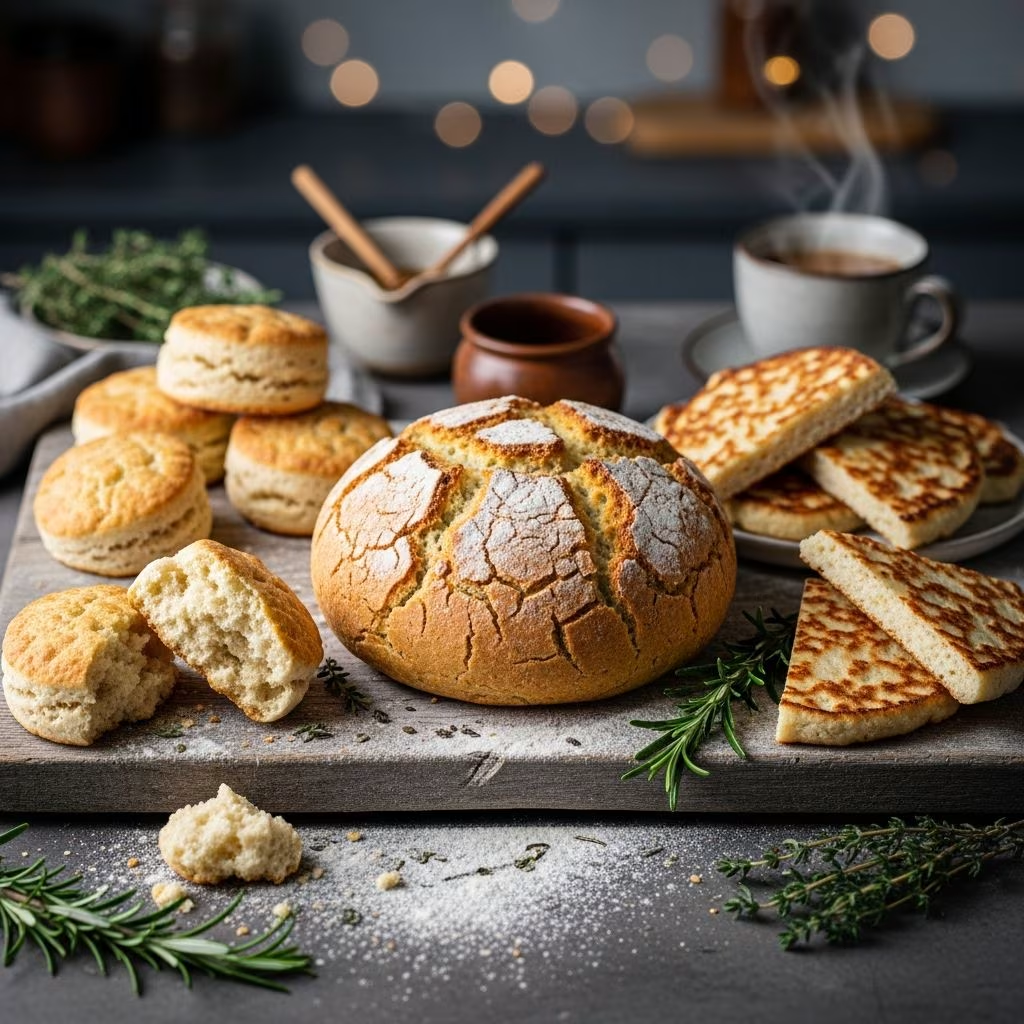
Bannock bread stands as a cornerstone of simple, satisfying baking, blending everyday pantry staples into a versatile flatbread that’s quick to prepare and endlessly adaptable. Originating from Scottish settlers and embraced by Indigenous communities across North America, this unleavened bread relies on baking powder for its light texture, making it ideal for home cooks, campers, or anyone seeking rustic comfort food without yeast or long rising times.
The Enduring Legacy of Bannock
Bannock’s journey traces back to Scottish explorers who introduced an unleavened oat-based bread to North America in the 18th century. Initially a basic mixture of flour, water, and salt cooked on griddles, it evolved through cultural exchanges. Indigenous peoples adapted it using local ingredients like bear fat or lard, transforming it into a staple for travelers, trappers, and families. Over time, additions such as baking powder, sugar, milk, or buttermilk enhanced its rise and flavor, turning it into the fluffy fry bread known today.
In northern regions like the Northwest Territories, bannock became synonymous with comfort, often baked in ovens or fried over campfires. Its portability made it essential for long journeys, where it could be wrapped around sticks or shaped into rounds for easy cooking. Today, it symbolizes resilience and shared heritage, appearing at gatherings, breakfasts, or alongside stews.
Essential Ingredients for Perfect Bannock
The beauty of bannock lies in its minimalism—typically just four to six ingredients. Core components include all-purpose flour for structure, baking powder as the leavening agent (essential for fluffiness without yeast), salt for flavor, a fat like oil, lard, or butter for tenderness, and a liquid such as water, milk, or buttermilk for hydration.
| Ingredient | Role | Common Substitutes |
|---|---|---|
| All-Purpose Flour | Base structure (2-4 cups) | Oat flour (grind rolled oats) |
| Baking Powder | Leavening (1-3 Tbsp) | Baking soda + acidic liquid |
| Salt | Flavor enhancer (½-1½ tsp) | None |
| Fat (Oil/Lard) | Tenderness (⅓-½ cup) | Butter, canola oil |
| Liquid (Water/Milk) | Hydration (1-2½ cups) | Buttermilk, soda water |
Variations shine here: Scottish styles favor oats for a nutty taste, while First Nations recipes might incorporate sugar for subtle sweetness.
Step-by-Step: Frying Bannock on the Stovetop
Frying yields the classic golden, crispy exterior with a soft interior. This method suits skillets or cast-iron pans and takes under 30 minutes.
- Combine Dry Ingredients: In a large bowl, whisk 4 cups flour, 2 Tbsp baking powder, and 1 tsp salt.
- Incorporate Fat: Cut in ⅓ cup lard using forks or fingers until pea-sized bits form.
- Add Liquid: Gradually stir in 1½ cups water to form a sticky dough. Knead lightly 5-10 times on a floured surface—avoid overworking to prevent toughness.
- Shape: Divide into 8 balls, flatten to ½-1 inch thick.
- Fry: Heat 2 Tbsp lard in a skillet over medium heat (350°F). Cook 3-5 minutes per side until golden. Drain on paper towels.
Serve warm with butter, jam, honey, or maple syrup. Yields 8 pieces; stores 2-3 days at room temp or 1 week refrigerated.
Baking Bannock in the Oven for Even Results
For a hands-off approach, oven-baking produces a loaf-like bannock with uniform browning. Preheat to 375°F.
- Mix 4 cups flour, 2 Tbsp baking powder, 1 tsp salt.
- Pour in ½ cup oil and 2½ cups warm milk; stir until dough forms.
- Knead 5 minutes into a smooth ball on floured surface.
- Shape into a 1-2 inch thick oval on a greased sheet; prick with fork.
- Bake 30-35 minutes until golden. Cool slightly before slicing.
This version pairs well with soups or as sandwich bread.
Campfire Bannock: Outdoor Cooking Mastery
Traditionalists cook bannock over open flames, evoking 18th-century methods.
- Stick Method: Wrap dough around a greased stick; rotate over coals 10-15 minutes until hollow-sounding when tapped.
- Skillet or Rock: Fry in a greased pan on embers or on a hot stone. Flip as needed for even char.
- Pro Tip: Use bear fat or lard for authenticity; keep dough sticky for best rise.
Ideal for backcountry trips—light, packable, and fuel-efficient.
Recipe Variations to Suit Every Palate
Bannock’s flexibility invites creativity:
- Scottish Oat Bannock: Grind 2 cups oats into flour, mix with 1 cup AP flour, 1 tsp baking soda, ¾ tsp salt, ¾ cup buttermilk. Skillet-cook as a disc.
- First Nations Style: 2 cups flour, 1½ Tbsp baking powder, 1½ tsp each salt/sugar, 1 cup water + ½ cup soda water, 3 tsp oil.
- Sweet Version: Add 2 Tbsp sugar; top with cinnamon or berries post-fry.
- Gluten-Free: Swap flour for GF blend; increase liquid slightly.
- Herbed: Mix in chives, garlic powder, or cheese for savory twists.
Experiment with liquids—buttermilk adds tang, soda water lightness.
Troubleshooting Common Bannock Pitfalls
Achieve flawless results with these fixes:
- Dough Too Sticky? Add flour sparingly during kneading.
- Flat or Dense? Ensure fresh baking powder; don’t over-knead.
- Not Browning? Increase oil heat gradually; medium is key.
- Dry Interior? Use more liquid or fat for moisture.
- Storage Woes: Airtight containers prevent staleness; reheat in skillet.
Test baking powder by fizzing in hot water—active if bubbly.
Nutritional Profile and Serving Ideas
A standard serving (1 piece, ~150g) offers ~300 calories, mostly from carbs (50g), with 8g protein and 8g fat. It’s a good source of iron and B vitamins from enriched flour. Pair with eggs for breakfast, chili for dinner, or fruit for dessert. Healthier tweaks: whole wheat flour or less fat.
Frequently Asked Questions
What is the difference between bannock and fry bread?
Bannock is the Canadian/Scottish term for this quick bread; fry bread is a similar Native American adaptation, often sweeter and thicker.
Can I make bannock without lard?
Yes, substitute oil or butter seamlessly for frying or mixing.
How long does bannock last?
2-3 days at room temp, up to a week chilled; freeze for months.
Is bannock gluten-free?
Not traditionally, but use GF flour and verify baking powder.
Why use cast-iron for bannock?
Retains even heat for perfect browning without hot spots.
Conclusion: Bannock for Every Occasion
From skillet to campfire, bannock embodies simplicity and tradition. Master these techniques, and you’ll have a go-to bread for any meal or adventure.
References
- Easy Bannock Bread Recipe — An Italian in my Kitchen. 2023. https://anitalianinmykitchen.com/bannock/
- Rustic Scottish Bannock Recipe — Gemma’s Bigger Bolder Baking. 2023. https://www.biggerbolderbaking.com/scottish-bannock-recipe/
- Traditional Bannock Recipe — 2 Nerds in a Truck. 2023. https://2nerdsinatruck.com/traditional-bannock/
- Bannock – First Nations Style — Eat Drink Breathe. 2023. https://www.eatdrinkbreathe.com/bannock-first-nations-style/
- Jodi’s Best Bannock — Canadian Food Focus. 2023. https://canadianfoodfocus.org/recipes/jodis-best-bannock/
- Bannock: Back Country’s Best Bread — YouTube (The Woodland Escape). 2023. https://www.youtube.com/watch?v=fT_fsyl4VjQ
- Bannock: The North’s Comfort Food — Spectacular NWT. 2023. https://spectacularnwt.com/story/bannock-the-norths-comfort-food/