Banana cream pie stands as one of America’s most cherished desserts, combining layers of buttery crust, velvety custard, fresh fruit, and clouds of whipped cream. This classic treat has graced American tables for over a century, evolving from a simple fruit-based dessert into the sophisticated creation we know today. Whether you’re a seasoned baker or attempting this dessert for the first time, understanding the components and techniques involved will help you achieve professional results in your own kitchen.
Understanding the Foundation: Selecting Your Crust
The crust forms the structural base of your banana cream pie and contributes significantly to the overall flavor profile. Several options exist, each offering distinct advantages depending on your skill level and preferences.
Graham Cracker Foundation
Graham cracker crusts represent the most accessible option for home bakers. This no-bake or minimal-bake approach requires combining finely crushed graham crackers with melted butter and sugar, then pressing the mixture into a pie plate. The resulting texture provides a crisp, slightly sweet base that complements the creamy filling. Pre-baking at 350 degrees Fahrenheit for approximately eight minutes sets the crust and prevents a soggy bottom layer from developing.
Traditional Pie Dough
For those seeking a more sophisticated presentation, homemade or store-bought pie dough offers a classic alternative. This option requires blind baking—partially baking the crust with pie weights before adding the filling. The blind-baking process typically involves baking at temperatures around 425 degrees Fahrenheit until the crust turns light golden, usually requiring 12 to 15 minutes of additional baking after removing the weights. This technique ensures a flaky, fully-cooked crust that maintains structural integrity throughout the refrigeration period.
Vanilla Wafer Selection
Vanilla wafer crusts provide a middle ground between convenience and sophistication. These prepared crusts maintain the crisp quality necessary for layered desserts while adding subtle vanilla notes that enhance the overall flavor composition. Many bakers prefer this option for time-conscious preparations without sacrificing quality.
Mastering the Custard: The Creamy Heart of Your Pie
The custard filling separates exceptional banana cream pie from mediocre versions. This component requires attention to technique and ingredient selection to achieve the proper consistency and flavor intensity.
Essential Custard Ingredients
Quality custard begins with whole milk as the base liquid, though some recipes incorporate heavy cream for enhanced richness. Egg yolks serve as the primary thickening agent, with cornstarch providing additional structure to prevent separation during refrigeration. Sugar sweetens the mixture, while vanilla extract or fresh vanilla bean seeds infuse complex aromatic notes. Salt heightens all flavor components and prevents the custard from tasting one-dimensional.
Preparation Methodology
Successful custard preparation follows a specific sequence. First, whisk together sugar, cornstarch, and salt in a medium saucepan to eliminate lumps. Gradually add whole milk while whisking constantly to prevent clump formation. Place the mixture over medium-high heat and stir frequently until the mixture bubbles and thickens, typically requiring 5 to 6 minutes. Remove from heat before the mixture reaches a rolling boil to prevent curdling.
In a separate bowl, whisk egg yolks until well combined. Slowly pour a portion of the hot milk mixture into the eggs while whisking constantly—this process, called tempering, gradually elevates the egg temperature without scrambling them. Once the egg mixture reaches a warm temperature, combine it with the remaining hot custard mixture. Return the entire mixture to the saucepan and cook over low heat for one additional minute, stirring constantly, to ensure the eggs cook through safely.
Flavor Enhancement Techniques
Beyond standard vanilla extract, some recipes employ innovative methods to intensify banana flavor. Creating a banana milk by blending fresh banana slices with whole milk before incorporating into the custard infuses the filling with concentrated fruit flavor that standard methods cannot achieve. Straining this mixture before using removes any pulp while retaining the essence. Additionally, using both vanilla extract and vanilla bean seeds creates layered aromatic complexity that complements fresh fruit notes without overwhelming them.
Selecting and Preparing Fresh Bananas
Banana selection timing critically impacts both flavor and texture in the finished pie. The fruit’s ripeness level influences sweetness and starch content, directly affecting how well it integrates with other components.
Ripeness Assessment
Ideal bananas for cream pie display slight yellow coloration with minimal brown spotting—a stage indicating peak sweetness and creamy texture. Overly green bananas taste starchy and lack the necessary sweetness, while brown-spotted bananas may be too soft to maintain shape during assembly. Some recipes employ multiple bananas at different ripeness stages, using less-ripe fruit for the custard layer and slightly riper bananas for visible garnish layers.
Preventing Discoloration
Fresh-cut banana slices rapidly oxidize and darken when exposed to air. Preventing this discoloration requires treating prepared banana slices with lemon juice immediately after cutting. Coating banana pieces by stirring them in fresh lemon juice preserves their bright color while adding subtle citrus notes that enhance the overall flavor profile. After one minute of coating, drain the lemon juice, rinse slices with fresh cold water, and pat them dry on paper towels before arranging in the pie.
Strategic Layering
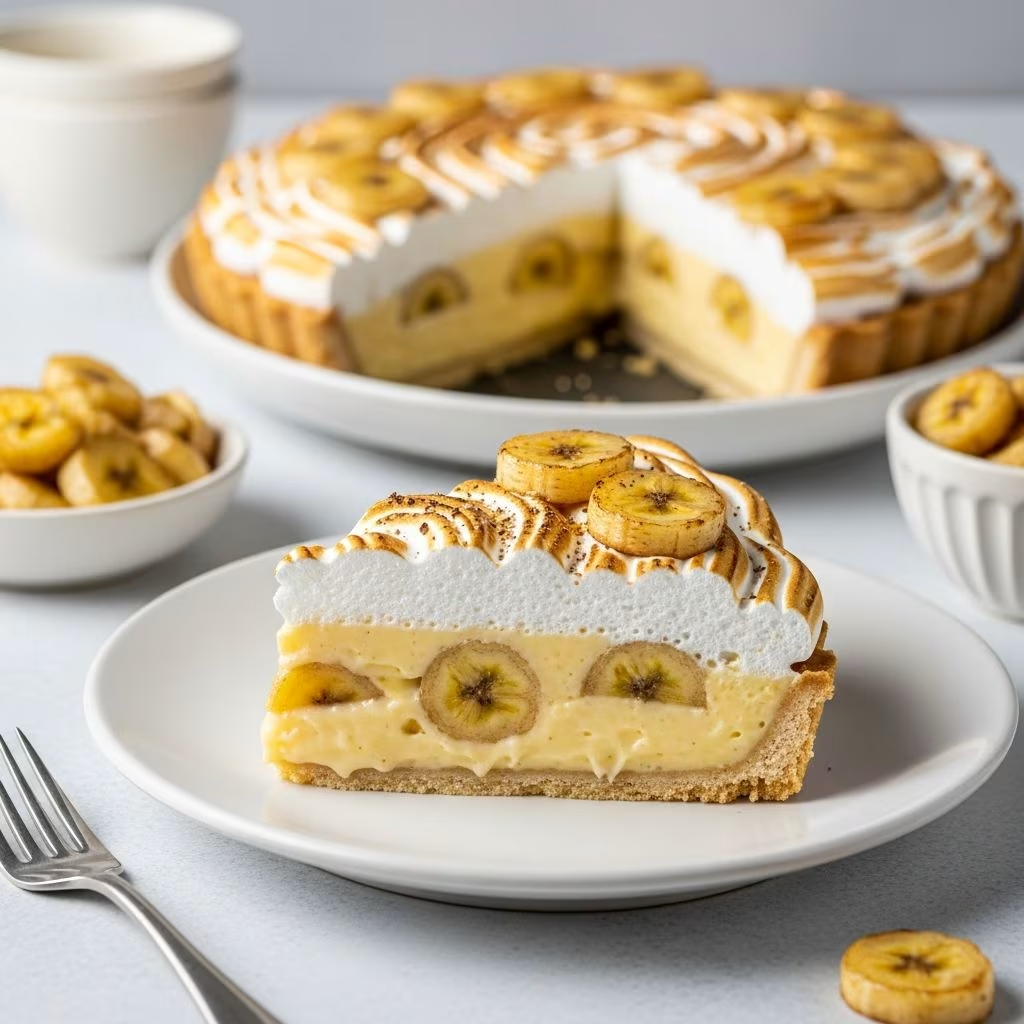
Professional pie construction involves arranging banana slices in distinct layers rather than mixing them uniformly throughout. The first layer of banana slices rests directly on the cooled crust, providing a foundation that prevents custard from directly contacting the crust base. Approximately half the custard mixture spreads over these initial banana slices. The remaining custard goes into the shell in a final layer, creating distinct flavor zones that allow tasters to appreciate each component individually.
Assembly and Refrigeration Protocol
Proper assembly and chilling determine whether the pie maintains structural integrity or collapses into a soggy mess when sliced.
Layer-by-Layer Construction
Begin with a completely cooled pie crust—residual heat can warm the custard and compromise its setting process. Spread approximately one cup of cooled custard evenly across the crust base using a spatula. Arrange prepared banana slices over this custard layer, overlapping them slightly if necessary to ensure complete coverage. Pour the remaining custard over the bananas, smoothing the surface to create an even, professional appearance.
Setting Time Requirements
Refrigeration transforms liquid custard into the proper sliceable consistency. Most recipes require a minimum of six hours for the custard to set completely, though overnight refrigeration produces superior results. This extended chilling period allows the custard to firm up fully while permitting banana flavor to infuse throughout the filling, enhancing overall taste complexity.
Surface Protection
Covering the pie with plastic wrap pressed directly onto the custard surface prevents the formation of an unappetizing skin during chilling. This protective barrier maintains moisture and creates a smoother surface when the whipped cream topping is eventually applied.
Creating the Whipped Cream Topping
The final crowning element requires proper technique to achieve the ideal texture and appearance.
Ingredient Selection and Preparation
Heavy whipping cream produces superior results compared to lighter cream varieties, holding peaks more effectively and providing luxurious mouthfeel. Using cold equipment—refrigerate the mixing bowl and beaters beforehand—facilitates faster whipping and more stable peaks. Powdered sugar incorporates smoothly into cream without the grittiness sometimes associated with granulated sugar. A small quantity of vanilla extract adds subtle flavor that complements both bananas and custard.
Achieving Proper Consistency
Begin beating the cold cream with powdered sugar on medium speed. As the mixture begins thickening, watch carefully for the transition from liquid to soft peaks—the point where peaks form but curl over when the whisk is lifted. Stopping at soft peaks rather than continuing to stiff peaks prevents overbeating, which can separate the cream and produce a grainy, watery texture. This stage typically occurs within two minutes of continuous beating.
Application Strategy
Spread or dollop whipped cream over the chilled pie’s surface, leaving approximately one-inch border around the edges for visual appeal. Some bakers prefer piping whipped cream using a pastry bag fitted with a decorative tip for restaurant-quality presentation.
Garnishing and Final Presentation
Thoughtful garnishing elevates the pie from delicious to visually stunning.
Banana Slice Arrangement
After whipped cream application, arrange fresh banana slices on the cream layer using the same bias-cut technique employed earlier. Overlapping the slices and arranging them in decorative patterns creates visual interest while reinforcing the pie’s primary flavor component.
Complementary Toppings
Graham cracker crumbs scattered across the surface add textural contrast and reinforce the crust’s flavor profile. Toasted coconut chips provide tropical notes and additional crunch. Some variations incorporate chocolate shavings or a light dusting of nutmeg for unexpected flavor dimensions.
Troubleshooting Common Issues
Watery or Separated Custard
This typically results from inadequate cooking time or egg overcooking. Ensure the milk mixture reaches a gentle boil before adding tempered eggs, and avoid cooking the final custard mixture at excessively high temperatures. Incorporating eggs too quickly without proper tempering can cause curdling.
Soggy Crust
Pre-baking the crust adequately prevents moisture absorption from the filling. Ensure graham cracker crusts bake for the full recommended time, and blind-bake traditional pie dough until truly golden. Creating a protective layer by spreading cooled custard thinly across the crust before the banana layer adds an additional moisture barrier.
Cracks in Whipped Cream
Overbeating the cream causes separation and visible cracks. Beat only until soft peaks form, then stop immediately. If overbeating occurs, discard and begin with fresh cream.
Make-Ahead Strategies and Storage
Banana cream pie’s layered composition makes it ideal for advance preparation. The pie can be completely assembled and refrigerated for up to one day before serving, with the custard actually improving in flavor as ingredients meld. Add the whipped cream topping within two hours of serving for optimal texture and appearance. Store leftovers covered in the refrigerator for up to two days, though the crust gradually softens and the banana slices darken with extended storage.
Variations and Creative Adaptations
Once mastering the classic version, consider exploring variations that maintain the essential formula while introducing new flavor elements. Substituting part of the milk with coconut milk creates subtle tropical notes. Adding rum or bourbon extract to either the custard or whipped cream introduces sophisticated depth. Replacing traditional pie dough with a chocolate wafer crust creates unexpected flavor contrast. Some bakers incorporate mashed banana into the whipped cream topping for intensified banana presence throughout.
Serving Suggestions and Complementary Accompaniments
Serve banana cream pie well-chilled directly from the refrigerator, allowing several minutes at room temperature before serving to soften the crust slightly and warm the filling to optimal flavor intensity. A hot cup of coffee or cold glass of milk provides classic pairings. For more elaborate presentations, a small spoonful of homemade caramel sauce drizzled on the plate adds visual appeal and flavor complexity.
Frequently Asked Questions
Can I use instant pudding mix instead of making custard from scratch?
Yes, instant vanilla pudding mixed with cold milk provides a quick alternative, though the flavor and texture differ from homemade custard. Combining instant pudding with whipped cream before spreading creates a lighter, airier filling that may not set as firmly during refrigeration.
How far in advance can I bake the pie crust?
Pie crusts can be baked up to two days ahead and stored in an airtight container at room temperature. This allows you to focus on custard preparation and assembly when ready to complete the pie.
What is the best way to slice the pie cleanly?
Use a long, thin, sharp knife dipped in hot water and wiped clean between each slice. The heat prevents the custard from sticking to the blade, resulting in clean cuts and attractive presentation.
Can I freeze banana cream pie?
Freezing is not recommended due to texture changes in both the custard and whipped cream. The filling may become grainy, and fresh banana slices deteriorate when frozen and thawed.
What causes a crust to become soggy?
Insufficient pre-baking is the primary culprit. Additionally, assemble the pie only when both the crust and custard are completely cooled, as residual heat promotes moisture transfer to the crust base.
References
- Banana Cream Pie Recipe — Blue Ribbon Group. 2024. https://www.blueribbongroup.net/blue-ribbon-foodies/best-banana-cream-pie-recipe/
- Homemade Banana Cream Pie — Preppy Kitchen. 2024. https://preppykitchen.com/banana-cream-pie/
- Best Banana Cream Pie Recipe — Delish. 2024. https://www.delish.com/cooking/recipe-ideas/a41093683/classic-banana-cream-pie-recipe/
- Easy Banana Cream Pie — Spend With Pennies. 2024. https://www.spendwithpennies.com/banana-cream-pie/
- Homemade Banana Cream Pie — Sally’s Baking Addiction. 2024. https://sallysbakingaddiction.com/homemade-banana-cream-pie/