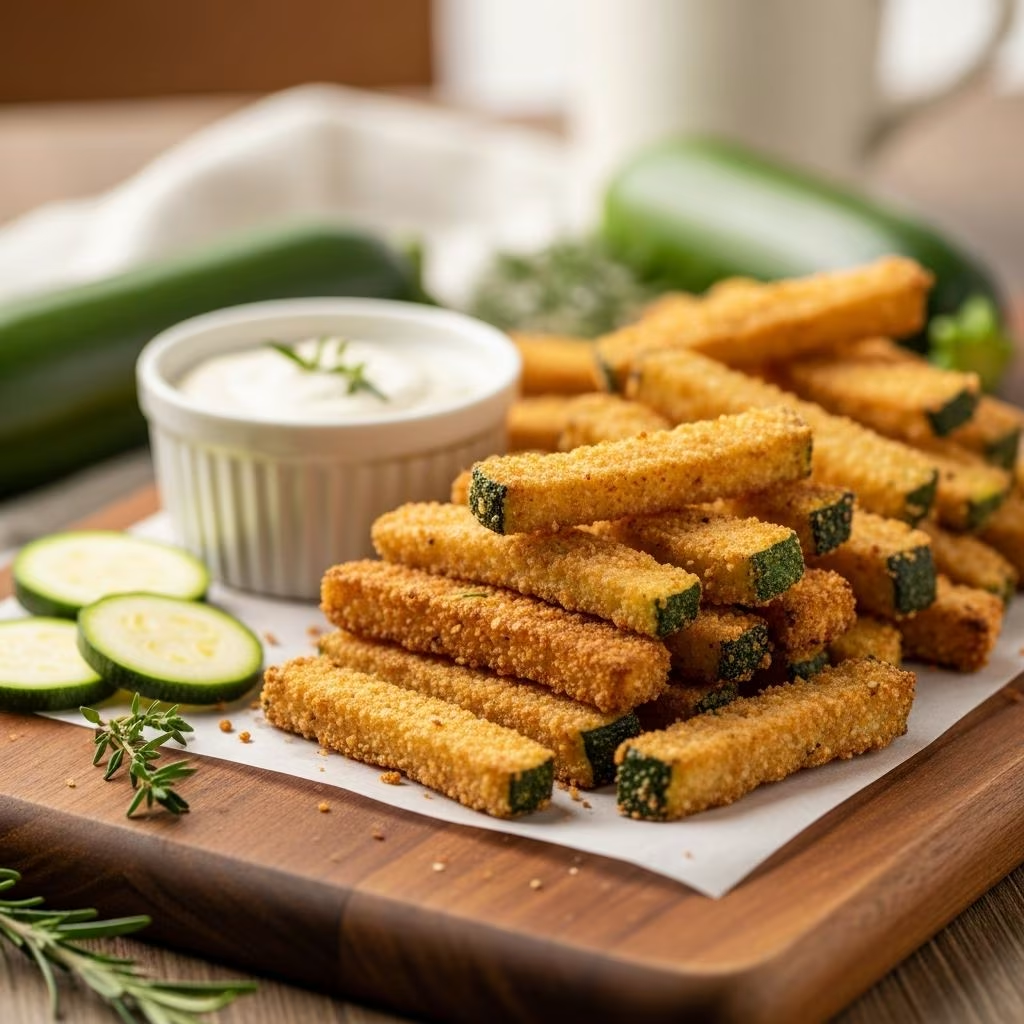
Zucchini fries represent one of the most versatile and satisfying vegetable preparations that can grace any dinner table. Whether served as a light appetizer, a nutritious side dish, or a standalone snack, these golden-brown delights offer the perfect balance between wholesome vegetables and indulgent comfort food. The beauty of this dish lies in its simplicity—requiring only basic pantry staples and straightforward preparation methods—while delivering restaurant-quality results in your own kitchen.
Understanding Your Key Ingredients
Creating exceptional baked zucchini fries begins with understanding the role each ingredient plays in the final product. The foundation of this dish rests upon selecting medium-sized zucchini, which provide an ideal balance between tender flesh and manageable moisture content. When zucchini become too large, their interior tends to contain excessive water and larger seeds, which can compromise the texture of the finished fries.
The breading system comprises three distinct layers, each serving a critical function. All-purpose flour acts as an adhesive base, creating a foundation upon which subsequent layers bond securely. Panko breadcrumbs deliver the characteristic crispiness that distinguishes well-executed zucchini fries from soggy alternatives. These Japanese-style breadcrumbs contain larger air pockets than conventional breadcrumbs, promoting superior crunchiness during the baking process. Freshly grated Parmesan cheese contributes umami depth while complementing the vegetable’s subtle flavor profile.
Eggs serve as the binding agent that transforms separate dry components into a cohesive coating. Using whole eggs rather than egg whites preserves richness and ensures better adhesion throughout the cooking process. Supplementary seasonings—including garlic powder, paprika, oregano, and salt—elevate the flavor complexity without requiring additional condiments or dipping sauces.
Selecting and Preparing Your Zucchini
Proper preparation determines whether your final product achieves the desired crispy exterior. Begin by washing your zucchini under cool running water and patting them completely dry with clean paper towels. Moisture represents the primary enemy of crispiness; any residual water on the zucchini surface will convert to steam during baking, creating a soggy texture rather than the desired crunch.
Cut your zucchini into uniform sticks approximately one-quarter inch thick and three inches long. Consistency in sizing ensures even cooking throughout the batch, preventing some pieces from becoming overdone while others remain undercooked. The specific dimensions matter less than maintaining uniformity across all pieces.
Establishing Your Breading Station
Organization streamlines the breading process considerably. Arrange three shallow bowls or dishes in a convenient working sequence. Fill the first with all-purpose flour mixed with one-quarter teaspoon of salt. Pour beaten eggs into the second bowl. Combine panko breadcrumbs with grated Parmesan cheese, paprika, garlic powder, oregano, and remaining salt in the third bowl.
Working with one or two zucchini sticks at a time, follow this sequence precisely:
- Coat each stick thoroughly in the flour mixture, ensuring all surfaces receive coverage
- Shake off excess flour before transferring to the egg mixture
- Dip completely in the beaten egg, allowing surplus to drip back into the bowl
- Transfer immediately to the breadcrumb mixture and roll until fully coated on all sides
- Place finished pieces on a prepared baking sheet with adequate spacing
Maintaining separation between individual fries during baking allows hot air circulation around each piece, promoting even browning and crispiness. Pieces that touch will steam where they contact one another, creating undesirable soft spots.
Baking Technique and Temperature Control
Preheating your oven to 425°F proves essential for achieving optimal results. This temperature provides sufficient heat to crisp the exterior coating while gently cooking the vegetable interior without drying it out. Arrange your breaded zucchini on either a traditional baking sheet lined with parchment paper or a wire cooling rack positioned over a baking sheet—the latter method promoting superior air circulation underneath the fries.
Bake for approximately twelve to fifteen minutes before flipping each piece using tongs or a spatula. This midway flip ensures even browning on both sides. Continue baking for an additional eight to ten minutes until the coating achieves a golden-brown color and crispy texture when gently pressed. Total baking time typically ranges from twenty to twenty-five minutes, though variations may occur based on individual oven characteristics.
For enhanced crispiness, some cooks employ a brief broiling step during the final two to three minutes of cooking. This high-heat finish caramelizes the exterior further, creating an exceptionally crunchy surface layer. Monitor closely during this stage to prevent burning.
Moisture Management During Cooking
Zucchini contains substantial water content that releases during heating. Check your baking sheet approximately halfway through the cooking time; if excess liquid has accumulated, use a paper towel to absorb it. This prevents the fries from steaming in their own moisture and maintains the desired crispy texture. Some cooks elevate their baking sheets on oven-safe wire racks for this exact reason—allowing accumulated moisture to drain away from the cooking vegetables.
Flavor Variations and Customization Options
The fundamental recipe accommodates numerous flavor profiles and dietary preferences. For those seeking heat, incorporate cayenne pepper, red pepper flakes, or smoked paprika into the breadcrumb mixture. Mediterranean enthusiasts might substitute Italian seasoning for the individual dried herbs. Ranch seasoning packets provide a familiar flavor profile appealing to those with more conservative tastes.
Dietary modifications prove equally straightforward. Gluten-free cooks can substitute all-purpose flour with cornstarch or gluten-free flour blends, which perform admirably in this application. For dairy-free preparations, nutritional yeast replaces Parmesan cheese while maintaining the savory, umami characteristics. Vegan cooks can replace eggs with plant-based milk thickened with cornstarch, creating an equally effective binding agent.
Serving Suggestions and Accompaniments
Freshly baked zucchini fries deliver maximum flavor and texture when served immediately while still warm. Consider offering multiple dipping options to accommodate various preferences. Traditional choices include marinara sauce, ranch dressing, or tzatziki sauce. Lemon aioli provides a bright, contemporary accompaniment, while garlic mayonnaise offers a simple yet satisfying option.
These versatile fries complement numerous main courses beautifully. Serve alongside grilled chicken, fish, or vegetarian proteins. They integrate seamlessly into casual meal settings as a side dish or function exceptionally well as party appetizers when cut into slightly smaller portions. Layered into sandwiches or grain bowls, baked zucchini fries add textural contrast and nutritional value.
Storage and Reheating Considerations
Freshly prepared zucchini fries are best enjoyed immediately, but leftovers can be stored in an airtight container within the refrigerator for up to three days. To restore crispiness when reheating, place them on a baking sheet and warm in a 350°F oven for approximately five to seven minutes rather than using a microwave, which tends to produce soggy results. Alternatively, reheat in an air fryer at 375°F for three to four minutes for exceptional results.
Troubleshooting Common Issues
| Problem | Likely Cause | Solution |
|---|---|---|
| Soggy zucchini fries | Excess moisture from zucchini or overlapping pieces | Pat zucchini thoroughly dry; ensure adequate spacing on baking sheet; drain accumulated liquid midway through baking |
| Coating falls off during baking | Insufficient egg coating or breading station contamination | Ensure thorough egg coverage; use separate utensils for each breading station; let breaded pieces rest briefly before baking |
| Undercooked interior | Oven temperature too low or baking time insufficient | Verify oven temperature with thermometer; extend baking time by several minutes if needed |
| Burnt coating with undercooked interior | Oven temperature too high or pieces too close together | Reduce oven temperature to 400°F; increase spacing between pieces; rotate baking sheet midway through cooking |
| Uneven browning | Inconsistent piece sizing or uneven oven heating | Cut zucchini to uniform thickness; rotate baking sheet during cooking process |
Nutritional Considerations
Baked zucchini fries offer a considerably lighter alternative to their deep-fried counterparts. Zucchini itself provides minimal calories—approximately twenty calories per hundred grams—while delivering valuable fiber, vitamins, and minerals. The baking method reduces overall fat content substantially compared to oil-immersion cooking methods. A typical serving contains approximately seventy to one hundred calories, making these an excellent choice for health-conscious diners without sacrificing satisfaction or flavor.
Frequently Asked Questions
Can I prepare zucchini fries in advance?
Yes, you can bread the zucchini sticks and refrigerate them for up to twenty-four hours before baking. This advance preparation proves convenient for meal planning. However, allowing breaded pieces to rest for at least fifteen minutes after coating and before baking helps the breading adhere more securely during the cooking process.
What’s the difference between using wire racks versus standard baking sheets?
Wire cooling racks positioned over baking sheets promote superior air circulation, resulting in crisper fries with more even browning. Standard baking sheets work acceptably, particularly when lined with parchment paper, but may produce slightly less crispy results, particularly on the bottom surface.
Can I freeze uncooked breaded zucchini fries?
Absolutely. After breading, arrange pieces in a single layer on a baking sheet and freeze for at least two hours. Transfer frozen fries to a freezer-safe container for extended storage. Bake directly from frozen, adding approximately five to ten minutes to the standard baking time. No thawing is necessary.
Why does my coating slide off the zucchini during baking?
This typically results from insufficient egg coverage or contamination of breading stations. Ensure the zucchini piece is thoroughly coated in beaten egg before transferring to the breadcrumb mixture. Use separate utensils for each station to prevent mixing wet and dry components. Additionally, resting breaded pieces for fifteen minutes before baking allows the coating to set more securely.
Are zucchini fries appropriate for specific dietary restrictions?
Yes. Vegetarians and vegans can prepare them using plant-based milk mixed with cornstarch instead of eggs, and nutritional yeast instead of Parmesan. Gluten-free cooks can substitute alternative flours for all-purpose flour. The dish accommodates most dietary preferences through simple ingredient modifications.
Conclusion: Perfecting Your Technique
Mastering homemade baked zucchini fries requires attention to detail regarding preparation, organization, and cooking parameters. By prioritizing thorough drying of your zucchini, maintaining organized breading stations, ensuring proper spacing during baking, and monitoring moisture levels, you’ll consistently produce restaurant-quality results. The straightforward preparation combined with impressive flavor and satisfying texture makes this dish a valuable addition to any home cook’s repertoire. Whether preparing for weeknight dinners or casual entertaining, these versatile fries will undoubtedly become a cherished favorite.
References
- Panko Breadcrumbs in Culinary Applications — Cornell University Department of Food Science. 2024. https://www.fs.cornell.edu
- Moisture Content and Vegetable Cooking Techniques — University of California Cooperative Extension. 2023. https://ucanr.edu
- Egg Protein Function in Breading and Coating Systems — Journal of Culinary Science & Technology, 2024. https://www.tandfonline.com
- Nutritional Composition of Zucchini and Summer Squash — USDA FoodData Central. 2023-12-15. https://fdc.nal.usda.gov
- Baking Temperature Effects on Vegetable Texture and Browning — Institute of Food Technologists. 2024. https://www.ift.org