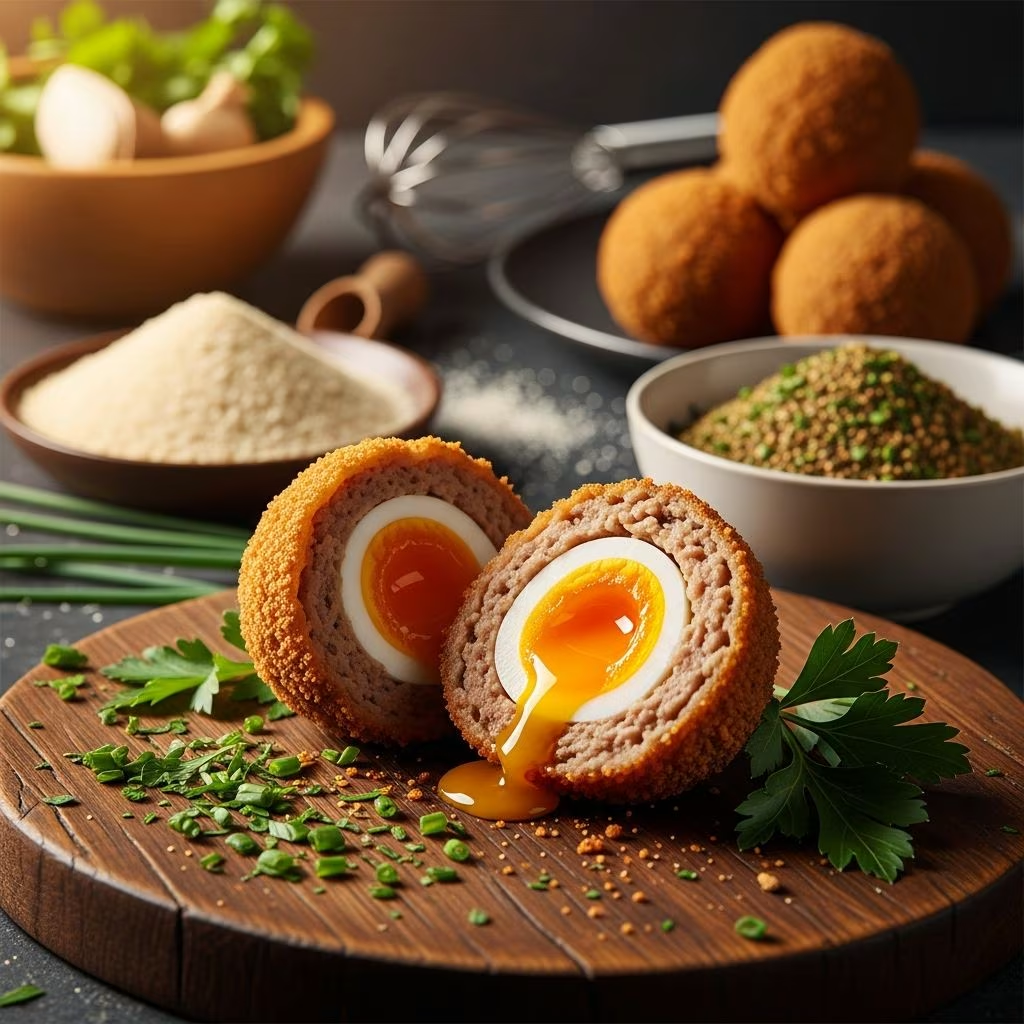
Scotch eggs represent a beloved classic in culinary traditions, offering a delightful combination of textures and flavors that appeal to diverse palates. Unlike their deep-fried counterparts, baked Scotch eggs provide a lighter alternative that maintains the essential character of this iconic dish. The baking method reduces oil absorption while delivering the same satisfying golden exterior and savory sausage coating that makes this recipe so appealing.
This comprehensive guide walks you through every aspect of creating restaurant-quality baked Scotch eggs in your own kitchen, from ingredient selection through serving suggestions.
Understanding the Foundation: Core Ingredients Explained
The beauty of Scotch eggs lies in their simplicity—a perfect marriage of just a few quality ingredients that transform into something greater than the sum of their parts. Understanding what goes into each component ensures you can make informed choices and customize the recipe to suit your preferences.
The Egg Selection Process
The foundation of any Scotch egg begins with hard-boiled eggs. Most recipes call for between 4 to 12 eggs depending on your desired yield, with 6 eggs serving as a standard middle ground. The quality of your eggs matters significantly—using fresh, preferably cage-free or pasture-raised eggs produces superior flavor and texture. When hard-boiling eggs, the goal is achieving a fully set yolk without the gray-green ring that indicates overcooking. Boiling eggs for 10 to 12 minutes, then immediately transferring them to an ice bath, prevents this discoloration while ensuring proper texture.
Selecting Your Sausage Meat
Ground pork traditionally forms the sausage coating, typically requiring 1 to 2 pounds depending on batch size. Bulk pork sausage—whether seasoned breakfast sausage or plain ground pork—works equally well. The meat should have enough fat content to remain moist during baking, but excessive fat can result in a greasy exterior. If using pre-seasoned sausage, you’ll need less additional seasoning; plain ground pork allows greater control over flavor profiles.
Seasoning Components and Flavor Building
The seasonings transform plain sausage into something memorable. Standard additions include:
- Dried sage or thyme for herbal depth
- Salt and black pepper for foundational seasoning
- Red pepper flakes or cayenne for subtle heat
- Minced onion or garlic powder for aromatic complexity
- Fennel, nutmeg, or parsley for distinctive character
The specific combination depends on your flavor preferences. Traditional recipes emphasize sage, while variations might incorporate different herbs to create unique profiles.
Breading Essentials
Three items comprise the breading station: all-purpose flour, beaten raw eggs, and breadcrumbs (typically panko for superior crispness). This triple-coating method creates the characteristic golden crust that distinguishes quality Scotch eggs.
Equipment and Setup Requirements
Proper preparation begins before you start cooking. Having all necessary tools and ingredients organized streamlines the process and prevents frustration mid-preparation.
Essential Kitchen Tools
- Large mixing bowl for combining sausage and seasonings
- Three shallow bowls for the breading station setup
- Parchment paper or silicone baking mats for the baking sheet
- Cooking spray for crisping the exterior
- Oven preheated to 400°F
Workspace Organization
Setting up an assembly line with the three breading stations arranged in order prevents cross-contamination and ensures efficiency. Hard-boiled eggs should be peeled and fully cooled before beginning the wrapping process. Having all ingredients measured and ready before starting—what chefs call mise en place—transforms the preparation into a smooth, enjoyable process.
The Preparation Process: Step-by-Step Instructions
Preparing the Sausage Mixture
Begin by combining your ground pork with dried herbs, salt, pepper, and any additional seasonings in a large mixing bowl. Mix thoroughly with your hands, ensuring even distribution of seasonings throughout the meat. The mixture should be homogeneous without overmixing, which can result in a dense, tough texture. If using pre-seasoned sausage, you still want to incorporate any breadcrumbs or additional ingredients at this stage.
Wrapping the Eggs
Divide the sausage mixture into equal portions—one per egg. Roll each portion into a thin disk between your palms or on a work surface. The thickness should be approximately one-quarter inch, thin enough to cook through but substantial enough to provide adequate sausage flavor. Gently place the peeled hard-boiled egg in the center of the disk and use your hands to carefully form the sausage around it, ensuring complete coverage with no cracks or gaps. These openings allow egg white to escape during cooking.
Executing the Breading Sequence
With all three breading components in separate shallow bowls, begin the coating process. Roll each sausage-wrapped egg in flour first, shaking off excess to prevent a gummy layer. Next, dip thoroughly into the beaten raw egg, ensuring complete coverage. Finally, place the egg into the breadcrumb bowl and rotate until fully coated. For extra-crispy results, some cooks apply a second layer of egg and breadcrumbs, though this isn’t necessary.
Positioning for Baking
Arrange the breaded eggs on a parchment-lined baking sheet, leaving space between each one for air circulation. Spray generously with cooking oil on all sides. This promotes even browning and the desired crispy texture. Avoid overcrowding the pan, which traps steam and prevents proper crisping.
Baking Techniques and Temperature Control
Oven Temperature Considerations
Most recipes recommend baking at 400°F, though some variations use 350°F. The 400°F temperature provides faster cooking and better browning, typically requiring 25 to 40 minutes depending on egg size and oven characteristics. Lower temperatures result in longer cooking times but may produce a paler exterior. Preheating your oven is essential—placing eggs into an insufficiently heated oven results in oil absorption before the exterior sets, producing a greasy final product.
Monitoring Doneness
The sausage coating must reach a safe internal temperature while the exterior achieves a golden-brown color. Perfectly baked Scotch eggs display a deep golden-brown exterior with the meat completely cooked through and no pink remaining near the egg. Rotation halfway through baking ensures even browning on all sides, particularly important for achieving professional appearance.
Creating Complementary Sauces and Accompaniments
Traditional Mustard-Based Sauce
A classic mustard sauce pairs beautifully with baked Scotch eggs. Combine Dijon mustard with maple syrup and apple cider vinegar for a sweet-tangy-spicy combination that complements the savory sausage. Alternatively, create a creamy mustard sauce by melting butter, whisking in flour, adding cream, salt, pepper, and Dijon mustard, then cooking until thickened.
Alternative Serving Options
- Serve with simple mayo or aioli for a neutral complement
- Pair with spicy sriracha for heat lovers
- Offer a selection of three different sauces for variety
- Serve at room temperature with crusty bread for casual dining
Troubleshooting Common Challenges
| Problem | Cause | Solution |
|---|---|---|
| Uncooked sausage interior | Insufficient baking time or temperature | Extend baking time by 5-10 minutes; check that oven temperature is accurate |
| Pale, not-crispy exterior | Insufficient oil spray or low oven temperature | Use more cooking spray; ensure 400°F temperature; rotate eggs halfway |
| Egg white leaking during cooking | Gaps in sausage coating | Ensure tight seal when wrapping; patch visible cracks with extra sausage |
| Greasy final product | Excessive oil or underheated oven trapping oil absorption | Use moderate oil spray; ensure oven fully preheated before adding eggs |
| Overly dense sausage texture | Overmixed sausage or excessive handling | Mix sausage minimally; handle wrapped eggs gently |
Storing, Reheating, and Make-Ahead Strategies
Baked Scotch eggs offer excellent make-ahead potential, making them ideal for meal preparation or entertaining.
Storage Guidelines
Freshly baked Scotch eggs maintain quality in the refrigerator for up to 5 days when stored in an airtight container. They can be eaten cold, at room temperature, or reheated. For longer storage, freeze baked eggs for up to 3 months in a freezer-safe container with layers separated by parchment paper to prevent sticking.
Reheating Methods
Restore crispness by reheating at 350°F for 10 to 15 minutes until warmed through. Microwaving is quick but compromises the crispy texture. For optimal results, use an oven or toaster oven even if it takes slightly longer.
Nutritional Considerations and Dietary Variations
A single baked Scotch egg provides substantial protein, healthy fats, and minerals from both eggs and sausage. The baking method reduces calorie content compared to deep-frying, making it a more health-conscious preparation.
Dietary Adaptations
- Gluten-free: Substitute breadcrumbs with gluten-free alternatives; use gluten-free flour for coating
- Low-carb: Replace breadcrumbs with crushed pork rinds or almond flour; use coconut flour instead of wheat flour
- Higher protein: Use ground turkey or beef instead of pork; double the sausage coating
Serving Suggestions and Occasions
Baked Scotch eggs serve multiple purposes in various dining contexts. They work beautifully as a hearty breakfast or brunch item, a protein-rich appetizer for entertaining, a portable picnic lunch, or a satisfying dinner accompanied by salad and vegetables. Their versatility makes them suitable for casual family meals or more formal occasions.
Frequently Asked Questions
Can I prepare Scotch eggs the day before baking?
Yes, you can prepare and bread the eggs several hours or even a full day ahead. Store them on a parchment-lined tray in the refrigerator, then bake when ready. This advance preparation offers convenient meal planning flexibility.
What’s the difference between baked and fried Scotch eggs?
Baking uses dry heat in an oven, while frying submerges eggs in hot oil. Baking produces a lighter, less oily final product that still develops a crispy exterior. Fried versions may achieve slightly superior crispness but contain more fat.
Can I use turkey or beef instead of pork?
Absolutely. Ground turkey creates a leaner version, while ground beef produces a richer flavor. Adjust seasoning accordingly, as different meats may require different herb quantities for optimal taste.
How do I know when the sausage is fully cooked?
The exterior should be golden brown with no pink meat visible when cut open. An internal meat thermometer inserted into the thickest sausage section should read 160°F for pork or 165°F for poultry.
Why is my sausage not sticking to the egg?
Insufficient wrapping or a slippery egg surface causes separation. Ensure eggs are completely dry after boiling, press sausage firmly around the egg, and avoid leaving gaps or thin spots.
Conclusion
Mastering baked Scotch eggs opens possibilities for impressive homemade appetizers, memorable breakfasts, and satisfying mains. With quality ingredients, proper technique, and patience during the preparation process, you’ll create golden, flavorful eggs that rival restaurant versions. Whether serving to family, entertaining guests, or preparing meals ahead, baked Scotch eggs deliver impressive results that belie their straightforward preparation.
References
- Baked Scotch Eggs Recipe — Heinen’s Grocery Store. 2024. https://www.heinens.com/recipes/baked-scotch-eggs/
- Baked Scotch Eggs — Nature’s Yoke. 2024. https://naturesyoke.com/recipe/baked-scotch-eggs/
- Baked Scotch Eggs — Curious Cuisiniere. 2024. https://www.curiouscuisiniere.com/baked-scotch-eggs/
- Easy Baked Scotch Eggs — The Elliott Homestead. 2020. https://www.theelliotthomestead.com/blog/2020/10/easy-baked-scotch-eggs
- Baked Scotch Eggs Recipe — Betty Crocker. 2024. https://www.bettycrocker.com/recipes/baked-scotch-eggs/f0e01f73-fb39-478b-9a2c-f242359d24af