The marriage of succulent poultry and fragrant stone fruit represents one of the most elegant yet accessible combinations in contemporary home cooking. When fresh peaches meet properly seasoned chicken in the oven, the result transcends simple weeknight fare—it becomes a sophisticated dish suitable for both casual family dinners and more formal entertaining. This comprehensive guide explores the techniques, flavor profiles, and practical considerations that transform these humble ingredients into a memorable meal.
Understanding the Fundamental Appeal
The natural affinity between poultry and peaches stems from complementary flavor characteristics. Chicken provides a neutral canvas that absorbs surrounding flavors while developing its own savory depth during cooking. Fresh peaches contribute natural sweetness, subtle tartness, and aromatic qualities that enhance rather than overpower the chicken. When combined with herbs and aromatic vegetables, this pairing creates a balanced dish with multiple layers of flavor and texture.
This cooking approach also offers practical advantages. Sheet pan and skillet preparations minimize cleanup while maximizing flavor development through the roasting process. The chicken’s rendered fat creates a flavorful base for peaches and accompanying ingredients, while peach juices caramelize and reduce into a natural sauce.
Selecting Quality Ingredients and Preparations
Choosing Your Chicken
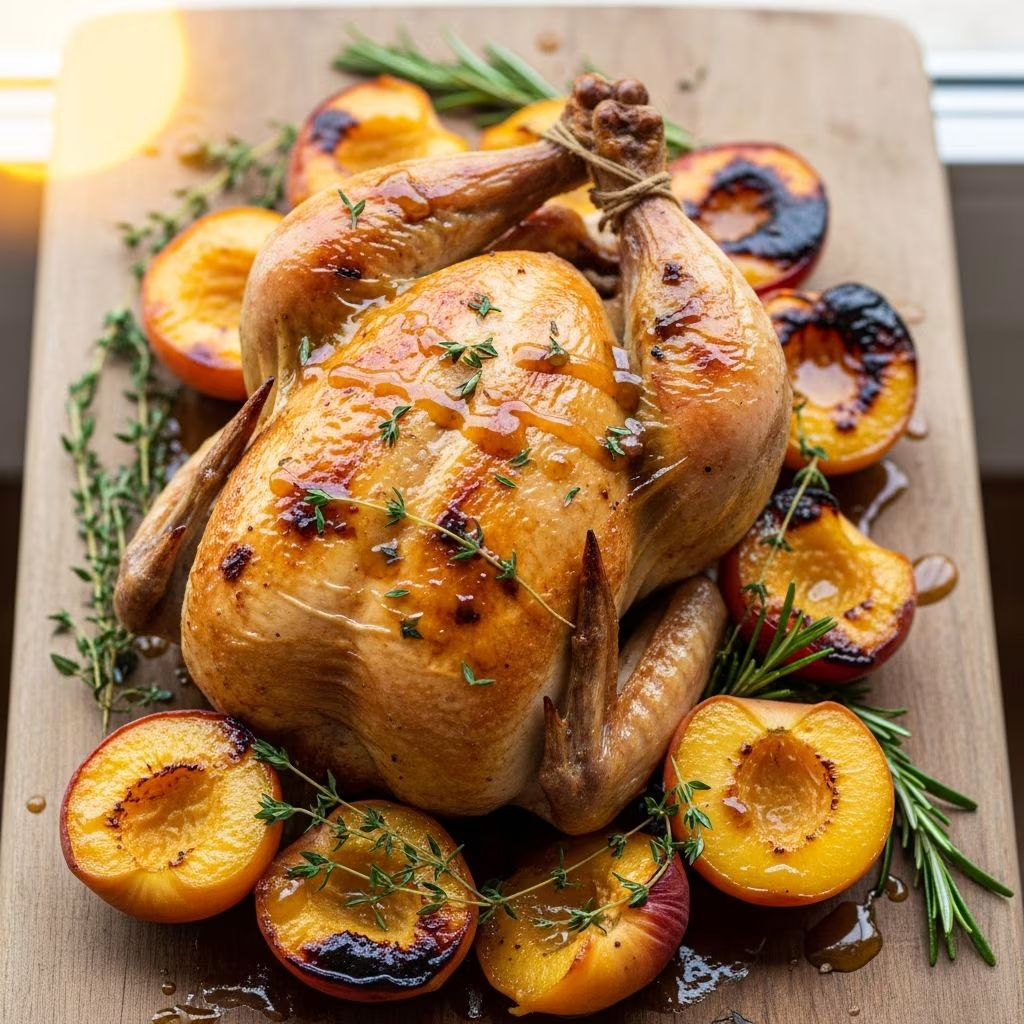
The type of chicken you select significantly impacts cooking time and texture. Bone-in, skin-on pieces develop superior flavor and browning compared to boneless, skinless cuts. Thighs and drumsticks offer more forgiving cooking characteristics due to their higher fat content, while breasts cook faster but require careful attention to prevent dryness. For a complete roasted presentation, some recipes employ spatchcocking—removing the backbone and flattening the bird—which ensures even cooking throughout the entire bird.
Portion size should align with your cooking vessel and desired presentation. Individual bone-in pieces ranging from 4 to 8 ounces work well for sheet pan dinners, while larger preparations may accommodate a whole bird weighing 2 to 3 pounds.
Selecting Peak Peaches
Peach quality determines the final dish’s flavor intensity and texture. Choose peaches that yield slightly to gentle pressure, indicating ripeness without excessive softness. The fruit should emit a fragrant aroma, a reliable indicator of sugar development and flavor compounds. Peaches that are too firm will remain hard during baking, while overripe specimens may disintegrate. Plan to use peaches within a day or two of selection for optimal results.
Preparation involves gentle washing, careful pitting, and cutting into uniform wedges or slices. The size of peach pieces should accommodate both visual presentation and even cooking within your overall timeline.
Building Flavor Through Complementary Ingredients
Aromatics and Alliums
Shallots serve as the traditional aromatic foundation in sophisticated preparations, offering a flavor profile that sits between onions and garlic. When cut into thin wedges and roasted alongside chicken and peaches, shallots caramelize gently and develop sweet, complex notes. Their natural sugars concentrate during cooking, creating texture contrast with the soft peaches and tender chicken.
Garlic, when used, should be minced finely to distribute flavor evenly throughout the dish. Fresh ginger adds warmth and complexity, particularly in preparations that emphasize Asian or fusion flavor profiles.
Herb Selections
Fresh and dried herbs define the character of your baked chicken preparation. Thyme, both fresh sprigs and dried varieties, provides earthy undertones that complement peach sweetness without overwhelming it. Rosemary contributes more assertive herbaceous notes and pairs particularly well with balsamic vinegar-based preparations. Basil, especially when added fresh before serving, brightens the finished dish and echoes summery flavor associations.
Herb placement matters strategically: dried herbs season the raw chicken, while fresh herbs nestle throughout the pan during cooking and finish the dish immediately before service. This layering approach provides both foundational flavor and fresh aromatic notes.
Acidic and Sweet Elements
Balsamic vinegar appears frequently in sophisticated preparations, its complex vinegar notes and subtle sweetness creating a sauce component when combined with honey or brown sugar. Lemon juice brightens dishes and prevents peach oxidation during preparation. White cooking wine deglazes the pan and adds aromatic depth. These acidic components balance peach sweetness and prevent the finished dish from becoming cloying.
Cooking Techniques and Temperature Management
The Two-Stage Roasting Method
Many successful preparations employ a two-stage cooking approach. The chicken begins roasting at moderate temperature (350-375°F) for approximately 20 minutes, allowing the meat to cook through while developing some color. Peaches and aromatics are then added to the pan, incorporating their flavors while benefiting from the chicken’s rendered fat. The preparation finishes with an additional 15-25 minutes of cooking, often followed by a brief broil to enhance skin crispness.
This staged approach prevents peaches from breaking down excessively during extended cooking while ensuring chicken achieves proper internal temperature. The progression also allows aromatic vegetables to caramelize before receiving peach juices.
Skillet Searing Before Oven Finishing
An alternative technique involves searing chicken pieces in a preheated skillet over medium-high heat before transferring to the oven. This initial browning develops fond—flavorful browned bits—on the skillet bottom, creating a flavorful base for subsequent cooking stages. After searing both sides until golden brown (2-3 minutes per side), liquid ingredients deglaze the pan, and aromatics begin cooking in the residual heat before the skillet transfers to the oven.
Temperature Benchmarks
Achieving proper doneness requires attention to internal temperature rather than relying solely on visual cues. Chicken breasts reach safe consumption temperature at 165°F internal temperature, measured in the thickest portion away from bone. A reliable meat thermometer eliminates guesswork and prevents both undercooked and overcooked outcomes. Cooking time varies based on chicken type, piece size, and oven characteristics, typically ranging from 25-60 minutes depending on the preparation method.
Practical Execution Steps
Preparation Phase
- Preheat oven to appropriate temperature (typically 350-400°F depending on recipe specifics)
- Prepare chicken pieces by patting dry with paper towels and seasoning all surfaces with salt, pepper, and dried herbs
- Wash peaches and cut into uniform wedges, removing pits carefully
- Prepare aromatics by chopping or slicing shallots, garlic, or ginger as your recipe specifies
- Assemble liquid ingredients (vinegar, honey, wine, etc.) if preparing a marinade or sauce component
Initial Cooking
- Place seasoned chicken in prepared pan or skillet, arranging pieces in single layer
- Roast or sear according to recipe specifications, typically 15-20 minutes for the initial stage
- Remove pan from heat when chicken has begun browning
Adding Remaining Components
- Toss peaches and aromatics with liquid ingredients if using a marinade or sauce
- Distribute peaches and aromatics around chicken pieces
- Nestle fresh herb sprigs throughout the pan
- Return to oven for second cooking stage
Finishing and Serving
- Monitor internal temperature beginning at two-thirds of projected cooking time
- Remove from oven when chicken reaches 165°F and peaches appear soft and slightly caramelized
- Optional: broil for 3-5 minutes to enhance skin crispness (monitor carefully to prevent burning)
- Rest 5-10 minutes before serving
- Garnish with fresh herbs immediately before presentation
Serving Presentations and Accompaniments
Simple Direct Service
The most straightforward approach involves plating the chicken prominently with roasted peaches and aromatics arranged artfully around it. Pan juices spoon over the finished dish, providing sauce component and visual appeal. Fresh herb garnish adds color contrast and fresh aromatic finishing notes.
Composed Plating
More refined presentations position chicken on beds of complementary vegetables such as baby arugula dressed lightly with olive oil and lemon juice. Peaches and shallots nestle among greens, while crumbled cheese—traditionally goat cheese—adds textural contrast and rich flavor notes. This approach transforms a simple one-pan meal into restaurant-style fare suitable for entertaining.
Sauce Development
Pan-roasting naturally develops rich, flavorful juices. For enhanced sauce, transfer the skillet to stovetop after removing cooked chicken and peaches. Reducing these juices over medium heat concentrates flavors and thickens the consistency to coat a spoon, typically requiring 3-5 minutes. The finished sauce coats the plated chicken and vegetables, providing elegant presentation and enhanced flavor delivery.
Customization and Flavor Variations
This fundamental preparation accommodates numerous personalization options. Substituting white cooking wine for balsamic vinegar creates lighter preparations with different flavor profiles. Increasing brown sugar or honey deepens sweetness for those preferring more pronounced fruit flavor. Adding warm spices like ground ginger or cloves introduces complexity and subtle heat. Swapping fresh basil for thyme or rosemary entirely changes the dish’s aromatic character while maintaining the core cooking technique.
Dietary modifications work equally well within this framework. Bone-in thighs substitute easily for breasts, requiring adjusted cooking times. Complete spatchcocked birds offer impressive presentations for larger gatherings. Substituting vegetable or chicken stock for wine accommodates non-alcohol preferences while maintaining flavor complexity.
Common Challenges and Solutions
| Challenge | Cause | Solution |
|---|---|---|
| Dry chicken | Overcooking or using lean cuts | Use meat thermometer, select bone-in thighs, rest before serving |
| Mushy peaches | Overripe fruit or extended cooking | Select firm-ripe peaches, add during second cooking stage |
| Pale, unappealing chicken skin | Insufficient initial browning | Sear before roasting, use brief broil finish |
| Overly sweet dish | Excessive sugar or honey | Reduce sweetener, increase acidic components like vinegar |
Frequently Asked Questions
Can I prepare this dish ahead of time?
Marinating chicken in vinegar or wine-based mixtures for 30-60 minutes enhances flavor penetration. However, extended marinating may affect texture. Prepare peaches and aromatics just before cooking for optimal freshness and to prevent oxidation.
What’s the best way to store leftovers?
Cool the finished dish to room temperature before refrigerating in airtight containers for up to three days. Reheat gently in a moderate oven to preserve texture, or enjoy cold as a salad-like preparation over greens.
Can frozen peaches substitute for fresh?
Fresh peaches provide superior texture and flavor, but frozen unsweetened peaches work acceptably if thawed and excess liquid is drained before cooking. Add them during the final cooking stage to prevent excessive softening.
What wine varieties work best for deglazing?
Dry white wines like Sauvignon Blanc or Pinot Grigio provide clean acidity without interfering with peach flavors. Avoid sweet or full-bodied wines that may overpower delicate fruit notes.
How do I adjust cooking time for larger chicken portions?
Larger bone-in pieces require proportionally longer cooking times, typically 10-15 additional minutes per pound of chicken. Always verify doneness with a meat thermometer rather than estimating based on time alone.
Nutritional Considerations
This preparation provides substantial protein from chicken while contributing important nutrients from fresh peaches, including vitamins A and C, dietary fiber, and beneficial plant compounds. The olive oil contributes heart-healthy monounsaturated fats. Overall nutritional profile appeals to health-conscious cooks seeking flavorful yet balanced meals. Portion control and side dish selection influence total caloric and nutritional content of the complete meal.
Conclusion: Mastering a Timeless Combination
Baked chicken with peaches represents an accessible entry point into more sophisticated home cooking while rewarding experienced cooks with opportunities for refinement and personalization. Understanding ingredient selection, flavor balance, and cooking technique fundamentals enables confident preparation whether you’re planning a casual weeknight dinner or an impressive entertaining occasion. With attention to proper temperature management and thoughtful ingredient combinations, this elegant dish becomes a reliable repertoire addition enjoyed repeatedly throughout peach season and beyond.
References
- Safe Minimum Internal Temperature Chart — U.S. Department of Agriculture, Food Safety and Inspection Service. 2024. https://www.fsis.usda.gov/food-safety/safe-food-handling-and-preparation/food-safety-basics/safe-temperatures-internal-temps
- Peaches: Nutrition, Benefits, and Selection Guide — University of California Cooperative Extension. 2023. https://ucanr.edu/sites/anrstaff/files/215033.pdf
- Skillet Chicken and Peaches with Thyme — Brooklyn Supper. https://brooklynsupper.com/skillet-chicken-and-peaches/
- Chicken and Balsamic Baked Peaches — Blue Jean Chef. https://bluejeanchef.com/recipes/chicken-and-balsamic-baked-peaches/
- Baked Chicken with Fresh Peaches — Kitchen Parade. 2012. https://www.kitchenparade.com/2012/07/baked-chicken-with-fresh-peaches.html
- Roasted Peach Chicken — I Am Homesteader. https://iamhomesteader.com/roasted-peach-chicken/
- Oven Roasted Chicken with Peaches Recipe for Dinner — Elana’s Pantry. https://elanaspantry.com/oven-roasted-chicken-with-peaches/