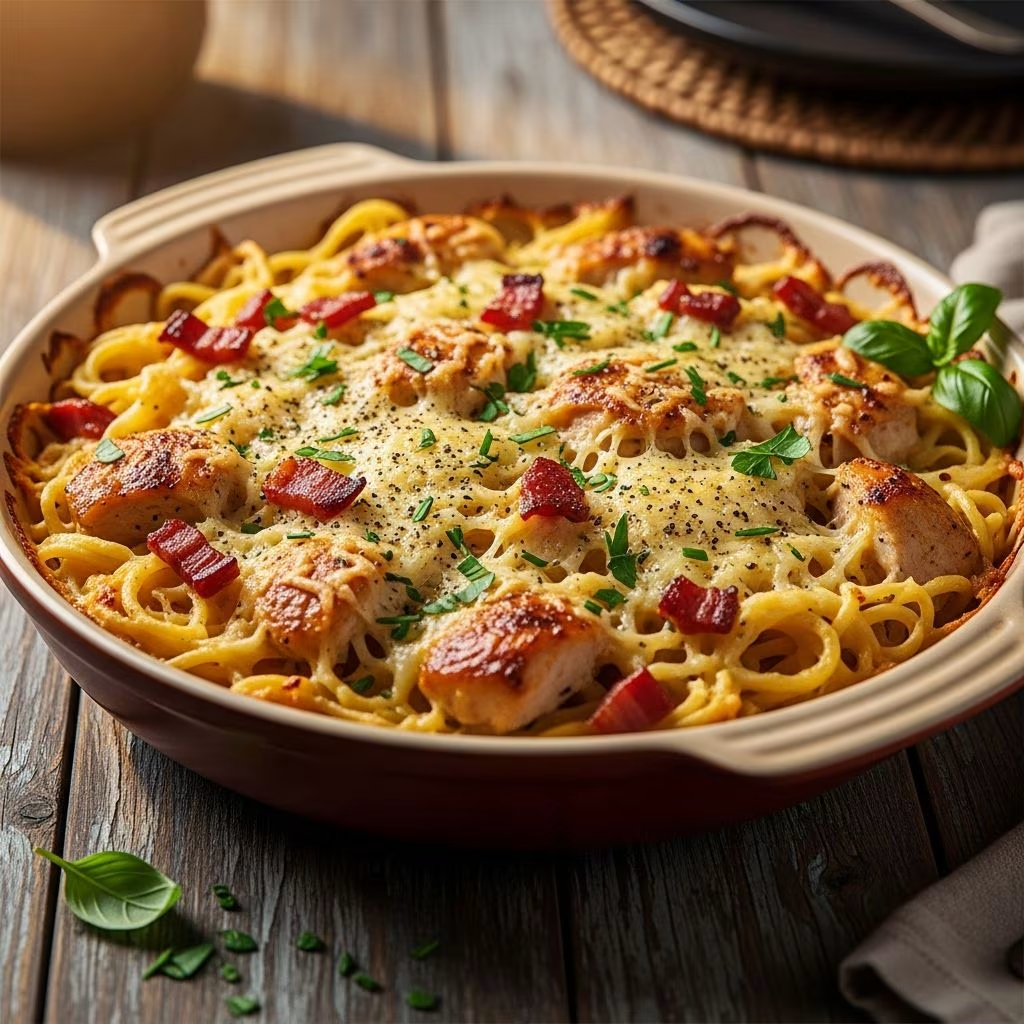
When traditional Italian recipes meet modern convenience cooking, magic happens in the kitchen. The baked chicken carbonara pasta represents a contemporary twist on the classic Roman dish, transforming stovetop preparation into an oven-friendly casserole that feeds families and impresses guests alike. This adaptation maintains the essential flavors that make carbonara beloved worldwide while offering the practical benefits of one-dish cooking.
Understanding the Evolution of Carbonara
Carbonara originated in Rome as a simple yet sophisticated pasta dish featuring eggs, cheese, cured pork, and pasta—a combination that creates an unexpectedly luxurious sauce without cream or excessive fat. The beauty of traditional carbonara lies in its minimalist approach; the heat from freshly cooked pasta cooks the eggs into a silky coating that clings to each strand.
The baked variation expands on this foundation by introducing chicken as a protein alongside bacon or pancetta, and transforming the dish into a casserole format. This adaptation doesn’t abandon the classic’s principles but rather adapts them for contemporary cooking styles and serving methods. The result is a heartier, more substantial dish suitable for feeding larger groups and serving from a single baking vessel.
Core Components That Define This Dish
Selecting Your Pasta Shape
The pasta choice significantly influences both texture and eating experience. While traditional carbonara uses long strands like spaghetti or fettuccine, baked versions benefit from shorter, tube-like shapes that trap sauce within their structure. Penne, rigatoni, and macaroni prove particularly effective for casserole preparations because they maintain their integrity during baking and create pockets where the creamy sauce settles.
Cook your pasta slightly underdone (al dente) before combining with other ingredients, as it will continue cooking in the oven. This prevents the final dish from having mushy pasta—a common pitfall in pasta bakes. Most recipes call for cooking pasta one to two minutes less than package directions suggest.
Protein Foundations
Chicken serves as the primary protein in this adaptation, offering a lean alternative to traditional pork-only carbonaras. Using cooked chicken—whether rotisserie chicken, previously baked breasts, or fresh-cooked pieces—ensures even cooking throughout the casserole. Approximately one pound of cooked chicken provides sufficient protein for a standard family-sized bake serving four to six people.
Bacon or pancetta provides essential smoky, salty depth that distinguishes carbonara from ordinary cream pasta dishes. Rendering the bacon until crispy before incorporating it into the casserole prevents it from becoming chewy during baking. The rendered fat from bacon also enriches the overall dish and should not be entirely discarded.
The Creamy Foundation
Traditional carbonara relies on egg yolks to create its signature sauce, but baked versions often incorporate heavy cream or Alfredo sauce to ensure creaminess survives the oven’s heat. Heavy cream provides richness while stabilizing the egg proteins, preventing them from scrambling during baking. Recipes typically call for half a cup to two cups of heavy cream, depending on desired consistency.
Some contemporary versions substitute jarred Alfredo sauce for fresh cream and egg preparations, offering convenience without sacrificing flavor. This approach works particularly well for busy cooks or those seeking foolproof results, as commercial Alfredo sauces are formulated to withstand oven temperatures.
Cheese Selection and Proportions
Cheese provides both flavor and binding properties essential to carbonara’s appeal. Parmesan cheese, particularly freshly grated varieties, delivers the distinctive nutty, salty character that defines authentic carbonara. Approximately one cup of grated Parmesan per casserole serves as a standard measure, though recipes vary based on personal preference and other ingredient quantities.
Mozzarella adds melting quality and creating appealing golden-brown topping when sprinkled over the assembled casserole before baking. A combination of Parmesan for flavor and mozzarella for texture creates optimal results, though some recipes use pizza cheese blends for convenience.
Step-by-Step Preparation Method
Initial Setup and Ingredient Preparation
Begin by preheating your oven to 350°F (175°C), allowing adequate time for proper temperature calibration. While the oven heats, prepare a large baking dish—preferably a 13×9-inch glass or ceramic vessel—by lightly spraying with cooking oil to prevent sticking.
Simultaneously, start cooking pasta according to package directions, reducing the suggested time by one minute to maintain al dente texture. In a separate large skillet, cook bacon pieces over medium heat until they achieve crispness, then transfer to a paper-towel-lined plate. If using fresh chicken, dice it into bite-sized pieces and sauté in the bacon fat until cooked through, approximately five to seven minutes.
Creating the Sauce Base
In a large mixing bowl, combine heavy cream with beaten eggs, stirring until fully incorporated. Add finely grated Parmesan cheese, salt, and fresh cracked black pepper to this mixture, whisking thoroughly to create a smooth sauce. The consistency should resemble liquid cream rather than thick paste—additional cream or reserved pasta water can adjust consistency as needed.
Assembly Process
Drain the cooked pasta, reserving approximately one cup of starchy cooking water. Transfer drained pasta to the prepared baking dish, then add cooked chicken, crispy bacon pieces, frozen peas (if using), and any additional vegetables. Pour the cream and egg mixture over these ingredients, stirring gently but thoroughly to ensure every pasta piece becomes coated with sauce.
The mixture should appear creamy but not soupy; if too dry, add reserved pasta water gradually while stirring. Distribute the top with shredded mozzarella or additional Parmesan cheese, creating an even layer approximately half an inch thick.
Baking and Finishing Touches
Transfer the prepared casserole to the preheated oven for fifteen to twenty minutes, or until the cheese topping becomes golden brown and the edges of the dish begin bubbling gently. The center should feel hot throughout when a knife is inserted, though carryover cooking continues after removal from the oven.
Allow the casserole to rest for five to ten minutes before serving, which helps the sauce set and makes plating cleaner. This resting period prevents serving molten-hot contents while allowing flavors to meld harmoniously. Fresh chopped parsley sprinkled over individual portions adds visual appeal and fresh herbal notes.
Ingredient Variations and Substitutions
| Component | Primary Option | Alternative Option | Notes |
|---|---|---|---|
| Protein | Diced chicken breast | Pancetta or prosciutto | Adjust seasoning if using cured pork exclusively |
| Pasta Shape | Penne or rigatoni | Fusilli or rotini | Shorter shapes work better than long strands |
| Cream Base | Heavy cream | Jarred Alfredo sauce | Alfredo offers convenience; adjust seasoning |
| Cheese | Parmesan and mozzarella | Pecorino Romano blend | Pecorino provides earthier, more pungent flavor |
| Vegetables | Frozen peas | Spinach, broccoli, or bell pepper | Pre-cook hearty vegetables; add delicate ones raw |
Make-Ahead and Storage Strategies
This dish excels as a make-ahead option for busy households. Prepare the casserole completely through the assembly stage, stopping before adding the cheese topping. Cover with plastic wrap or foil and refrigerate for up to twenty-four hours. When ready to serve, add the cheese topping and bake at 350°F for thirty to forty minutes, or until heated through and golden on top.
Leftover portions keep well refrigerated in airtight containers for three to four days. Reheat individual servings in the microwave or transfer the entire casserole to the oven at 325°F, covered with foil, until heated through. The texture may become slightly firmer upon reheating, but flavor remains excellent.
Serving Suggestions and Complementary Sides
This rich, hearty dish pairs beautifully with lighter accompaniments that balance the meal. A crisp green salad dressed with lemon vinaigrette provides textural contrast and digestive support. Garlic bread offers a nostalgic companion, though some may find it redundant given the dish’s richness.
Roasted vegetables—particularly asparagus, green beans, or broccoli—introduce nutritional variety and color to the plate. A simple tomato salad with fresh basil and olive oil provides Mediterranean flair and acidity that complements the creamy sauce.
Beverage pairings should consider the dish’s richness. Crisp white wines such as Pinot Grigio or Sauvignon Blanc cut through cream beautifully. Non-alcoholic options like sparkling water with lemon or iced tea work equally well.
Flavor Enhancement Techniques
While carbonara’s simplicity forms its foundation, thoughtful additions enhance the dish without overwhelming its essential character. Finely minced garlic sautéed briefly in bacon fat adds savory depth. Fresh cracked black pepper used generously provides subtle heat and complexity.
A small amount of nutmeg—approximately one-quarter teaspoon for a family-sized casserole—adds warmth and subtle sweetness that enriches cream-based sauces. Lemon zest incorporated into the sauce provides brightness that cuts through richness.
Fresh herbs added after baking preserve their vibrant flavor and visual appeal. Finely chopped parsley, basil, or chives scattered over individual servings contribute freshness and aromatics that complement cooked elements.
Troubleshooting Common Issues
Watery or Separated Sauce: This typically results from overcooking eggs or insufficient cheese. Ensure eggs are fully incorporated into cream before baking, and use the full amount of Parmesan specified. Reduce baking time if the mixture appears too liquid when removing from the oven.
Dry or Grainy Texture: Overcooking causes eggs to separate and proteins to tighten. Monitor baking time carefully, removing the casserole as soon as the top achieves golden color. The interior should still appear slightly moist rather than completely set.
Undercooked Pasta in Center: Ensure pasta achieves al dente doneness before combining with sauce. If using a particularly large baking dish, consider breaking pasta pieces in half for more even cooking and distribution.
Burnt Cheese Topping: Reduce oven temperature to 325°F or tent the dish loosely with foil during baking if the cheese browns too quickly before the interior heats through. The casserole may require slightly longer baking at lower temperature.
Nutritional Considerations
This rich casserole provides substantial protein from chicken, eggs, and cheese, making it satisfying in smaller portions. A typical serving supplies approximately 400–500 calories along with significant amounts of saturated fat from cream and cheese.
Balancing this dish as part of a complete meal involves pairing with lower-calorie vegetable sides and managing portion sizes. Those monitoring sodium intake should note that bacon, cheese, and eggs contribute considerable salt; additional seasoning may prove unnecessary.
Frequently Asked Questions
Can I use raw chicken instead of cooked?
Yes, dice raw chicken into small pieces and sauté until completely cooked through before adding to the casserole. This adds approximately five to seven minutes to preparation time but requires no other adjustments.
Is it necessary to use Parmesan cheese specifically?
While Parmesan provides the traditional flavor, Pecorino Romano offers an acceptable alternative with earthier, more pungent characteristics. Avoid pre-shredded varieties when possible, as anti-caking agents can affect sauce smoothness。
Can I freeze this dish?
Yes, assemble the casserole completely but do not bake. Cover tightly with plastic wrap and foil, then freeze for up to three months. Thaw overnight in the refrigerator before baking as directed, potentially adding five to ten extra minutes to baking time。
What pasta water accomplishes in this recipe?
Starchy pasta water helps adjust sauce consistency and aids in creating smooth, cohesive texture. It prevents the sauce from becoming too thick or dry, particularly important if the recipe seems too dense when initially combined。
How can I make this dish lighter?
Substitute half-and-half for heavy cream, use light cream cheese mixed with Greek yogurt, or reduce cheese quantities slightly. Adding more vegetables increases volume without proportionally increasing calories。
References
- Chicken Carbonara Pasta Bake — 12 Tomatoes. Accessed April 2026. https://12tomatoes.com/chicken-carbonara-pasta-bake/
- Chicken Carbonara Pasta Bake Recipe — Pillsbury.com. https://www.pillsbury.com/recipes/chicken-carbonara-pasta-bake/e6b228cb-526b-4db0-8511-a2a56e8c08fa
- Chicken Carbonara Recipe — The Pioneer Woman. https://www.thepioneerwoman.com/food-cooking/recipes/a68987621/chicken-carbonara-recipe/
- Best Chicken Carbonara Pasta Recipe — Delish. https://www.delish.com/cooking/recipe-ideas/a48598/chicken-carbonara-pasta-recipe/
- Chicken Carbonara Pasta — The Recipe Rebel. https://www.thereciperebel.com/chicken-carbonara/