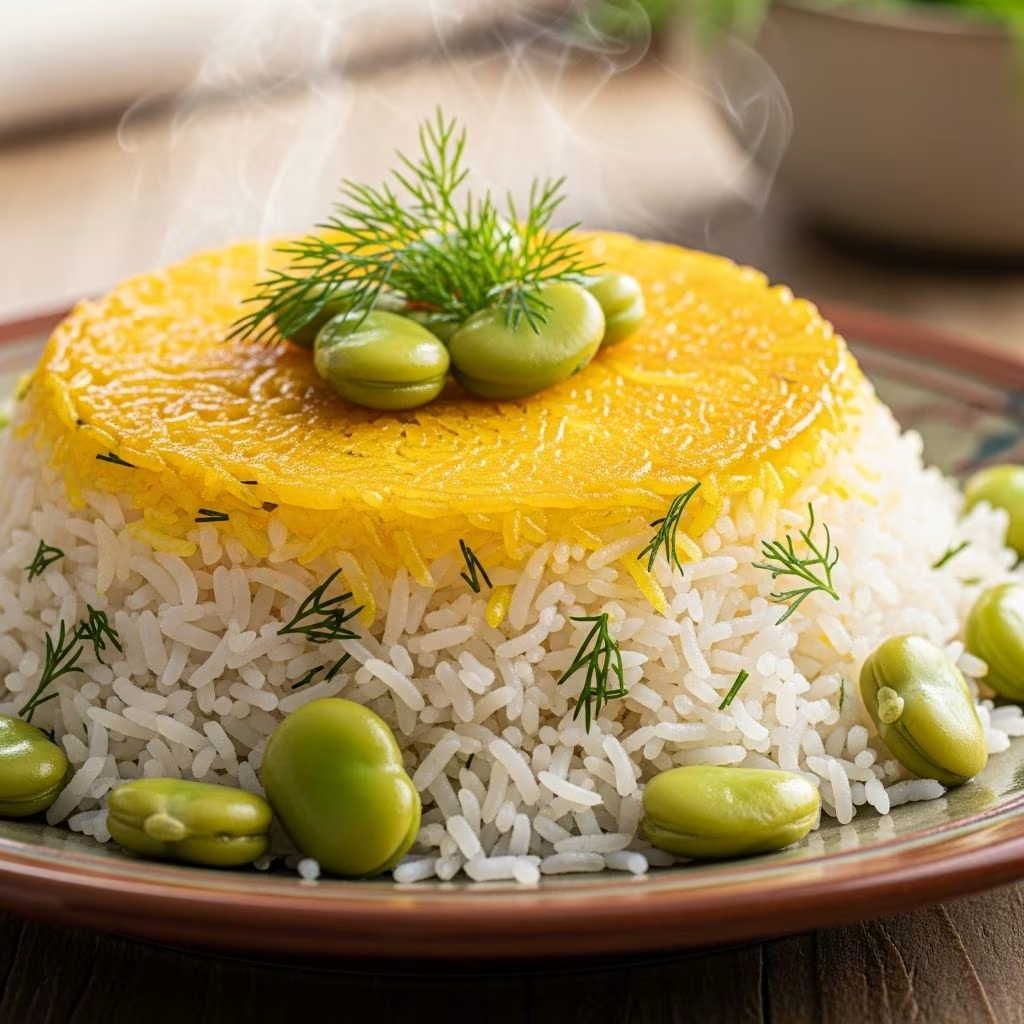
Baghali Polo, known as Persian dill rice with fava beans, stands as a cornerstone of Iranian culinary heritage. This vibrant dish combines fragrant basmati rice, fresh dill, and tender fava beans, crowned with a golden tahdig—the prized crispy rice bottom that every Persian cook strives for. Often served at weddings, Nowruz celebrations, and family gatherings, it embodies comfort and festivity.
The Essence of Baghali Polo in Persian Culture
In Persian cuisine, rice dishes like Baghali Polo are more than sustenance; they are expressions of hospitality and seasonal abundance. Fava beans, or baghali, symbolize renewal in spring, pairing perfectly with dill’s herbaceous punch. Saffron adds a luxurious aroma, elevating the pilaf to celebratory status. Unlike everyday meals, this rice accompanies stews like ghormeh sabzi or fish, creating balanced feasts.
Historically, such dishes trace back to Persia’s ancient rice cultivation traditions, refined over centuries. The technique of parboiling and steaming ensures fluffy grains with distinct flavors, a method passed down generations.
Core Ingredients for Authentic Flavor
Selecting quality ingredients is key to Baghali Polo’s success. Basmati rice provides the ideal long, separate grains. Fresh dill delivers unmatched brightness, though dried works in pinches. Fava beans offer earthy sweetness, with lima beans as a convenient substitute.
- Basmati rice: 2-3 cups, aged for best texture.
- Fava beans: 2 cups shelled (fresh, frozen, or lima beans).
- Fresh dill: 10 ounces, finely chopped (or ½-1 cup dried).
- Saffron: ¼ tsp ground, bloomed in water for color and scent.
- Oil or butter: For tahdig and layering.
- Salt: To taste, about 1-2 tbsp.
Optional additions like onions or advieh spice blend enhance depth.
Step-by-Step Guide to Perfect Baghali Polo
Mastering this dish requires patience, yielding fluffy rice and shatteringly crisp tahdig. Total time: about 2-3 hours, including soaking.
Preparation Phase
- Rinse 2 cups basmati rice until water clears, then soak 1 hour for even cooking.
- Shell and blanch fava beans: Boil 2 minutes, shock in ice water, peel skins for tenderness.
- Bloom saffron: Dissolve ¼ tsp ground saffron in ¼ cup hot water.
- Chop dill finely, discarding woody stems.
Parboiling the Rice
Boil 6-8 cups water with 1 tbsp salt. Add soaked rice, cook 4-6 minutes until al dente—not fully soft. Stir in fava beans and dill in last minute, drain immediately. Rinse pot.
Building the Tahdig and Steaming
Heat 2 tbsp oil in pot over medium. Mix 2 cups parboiled rice with beans, dill, and saffron water; press into bottom for tahdig base. Layer remaining rice in pyramid shape, drizzle oil and saffron atop. Poke 5 holes for steam, cover tightly, steam low 45-60 minutes until tahdig crisps.
Invert onto platter: Fluff top rice, serve tahdig separately or shattered around edges.
Variations and Substitutions for Every Kitchen
Adapt Baghali Polo to availability without losing authenticity.
| Ingredient | Substitution | Notes |
|---|---|---|
| Fresh fava beans | Frozen lima beans | Thaw and peel if needed; milder flavor. |
| Fresh dill | Dried dill | Use ⅓ amount; intenser taste. |
| Saffron | Turmeric | For color, less aroma. |
| Vegetable oil | Butter/ghee | Richer tahdig. |
Vegan versions use broth substitutes; add chickpeas for protein. Onion-sautéed versions appear in some recipes for savoriness.
Tips for Flawless Tahdig and Fluffy Rice
- Non-stick pot: Essential; seasoned cast iron works too.
- Don’t rush steaming: Low heat prevents burning.
- Test doneness: Lift edge to check tahdig goldeness.
- Soak rice: Prevents mushiness.
- Layer loosely: Allows steam circulation.
Common pitfalls: Overboiling rice (mushy) or high heat (soggy tahdig). Practice yields perfection.
Pairing Baghali Polo with Classic Mains
This versatile side shines with:
- Ghormeh Sabzi: Herb stew balances dill’s freshness.
- Fish: Grilled with lime, for spring meals.
- Khoresht Gheymeh: Split pea stew adds heartiness.
- Grilled meats: Kebabs for feasts.
Serve with yogurt, pickled garlic, and Shirazi salad for complete Iranian table.
Nutritional Profile and Health Benefits
Baghali Polo offers balanced nutrition: Fava beans provide protein (8g/cup), fiber, folate; dill aids digestion with antioxidants. Basmati’s low GI suits diabetes management. A serving (1 cup): ~300 calories, 60g carbs, 10g protein. Use olive oil for heart-healthy fats.
Seasonal Twists and Modern Adaptations
Spring: Fresh fava beans peak. Winter: Dried dill, canned beans. Air-fryer tahdig experiments or instant pot versions cut time, though traditionalists prefer stovetop. Gluten-free inherently; scale for crowds.
Frequently Asked Questions (FAQs)
Can I use brown basmati rice?
Yes, but adjust cooking time +10-15 mins; texture firmer.
How do I store leftovers?
Refrigerate 3 days; reheat stovetop with damp towel for steam. Freeze tahdig separately.
Why is my tahdig not crispy?
Insufficient oil/heat or wet rice. Ensure dry pot base.
Fava beans unavailable—what next?
Lima or edamame; retain bean essence.
Is this dish vegan?
Yes, with vegetable oil/broth.
Conclusion: Bringing Persian Magic Home
Baghali Polo transforms simple ingredients into a sensory delight, inviting you into Persia’s rich food story. With practice, you’ll craft tahdig that rivals Tehran masters, gathering loved ones around its emerald hues and dill perfume.
References
- Baghali Polo Recipe (Persian Dill Rice) — The Mediterranean Dish. 2023-05-15. https://www.themediterraneandish.com/baghali-polo-persian-dill-rice-with-fava-beans/
- Baghali Polo or Timman Bagilla (Dill Rice) — Hungry Paprikas. 2022-10-20. https://www.hungrypaprikas.com/baghali-polo-dill-rice/
- Baghali Polo – Persian Fava Bean Rice — Cooking With Ayeh. 2024-01-12. https://cookingwithayeh.com/baghali-polo-persian-fava-bean-rice/
- Rice with Fava Beans & Dill recipe — Nora’s International Cooking (YouTube). 2023-04-05. https://www.youtube.com/watch?v=zdT4KdsVnpk
- Baghali Polo – Persian Dill Rice — Proportional Plate. 2023-08-18. https://www.proportionalplate.com/baghali-polo/