Wild game cooking represents one of the most rewarding culinary experiences, offering flavors that cannot be replicated with conventional meats. Venison, in particular, delivers a rich, distinctive taste that pairs beautifully with bold flavors and sophisticated preparations. This elegant recipe transforms venison tenderloins into a restaurant-quality centerpiece by combining the smokiness of bacon with the umami depth of a luxurious mushroom and cream reduction.
Understanding Venison as a Protein
Venison possesses unique characteristics that set it apart from domesticated meats. The tenderloin, being the most tender cut, requires careful handling to preserve its delicate texture and subtle flavors. Unlike beef or pork, venison has minimal marbling, making it lean and prone to drying if overcooked. The meat benefits from techniques that add moisture and richness, which is precisely why wrapping it in bacon proves such an effective preparation method.
The natural flavor profile of venison tends toward earthiness with subtle gamey notes. Rather than masking these qualities, thoughtful seasoning and accompaniments enhance them. The combination of bacon fat, garlic, and cream creates a complementary contrast that elevates the venison without overwhelming its inherent character.
Essential Ingredients and Their Roles
Creating this dish requires attention to ingredient quality and proper proportions. Each component serves a specific purpose in building layers of flavor and texture.
The Protein Foundation
- Venison Tenderloins: Two roasts, each weighing approximately three-quarters of a pound, provide the foundation. This quantity yields six generous servings, making it suitable for entertaining or special family occasions.
- Bacon: Six thick-cut slices deliver sufficient coverage and smokiness. Thick-cut bacon provides better structural support than thin-cut varieties when wrapping the tenderloins.
Seasoning Components
- Olive Oil: Two teaspoons divided between coating the venison before seasoning and potential pan use ensures proper heat distribution during cooking.
- Onion Powder: A quarter teaspoon applied before wrapping adds subtle savory notes that complement venison’s natural flavors.
- Kosher Salt and Black Pepper: Applied to taste, these fundamentals enhance natural meat flavors without overwhelming them.
Sauce Ingredients
- Butter: Two tablespoons provide the fat base for sautéing vegetables and creating sauce emulsion.
- Cremini Mushrooms: One package (eight ounces) of sliced mushrooms adds earthy umami that resonates with venison’s gamey character.
- Garlic: Two cloves, finely chopped, deliver pungent aromatic complexity to the finishing sauce.
- Green Onion: One tablespoon of chopped green onion provides bright, fresh notes that balance the richness of the cream.
- Heavy Whipping Cream: Half a cup creates a velvety sauce that clings to the venison while enhancing rather than masking its flavor.
Preparation Timeline and Execution
Total preparation spans approximately one hour and twenty-five minutes, with active prep requiring just fifteen minutes. This timing allows for proper oven preparation and sauce execution without rushed final steps.
Initial Bacon Preparation
Begin by preheating your oven to 375 degrees Fahrenheit. This moderate temperature balances cooking speed with moisture retention in the venison. Arrange six bacon slices on a slotted baking pan and place in the preheated oven for six to eight minutes. This partial cooking step proves critical—the bacon should achieve some structural firmness while maintaining flexibility for wrapping. Removing it too early leaves it too pliable and unable to hold its shape; cooking it too long causes cracking when wrapped around the tenderloins.
Venison Seasoning and Wrapping
While bacon partially cooks, prepare the venison. Brush each tenderloin with olive oil to create a base for seasoning adhesion. Distribute the onion powder evenly across both roasts, then season generously with kosher salt and ground black pepper. The oil coating ensures seasonings remain in place during the wrapping process.
Once bacon achieves the desired partial-cook state, carefully remove it from the oven and allow it to cool slightly for easier handling. Position the two tenderloins side by side and wrap them together using the partially cooked bacon strips. Each strip should overlap slightly with the previous one, creating a continuous protective layer. Transfer the wrapped tenderloins to a roasting pan.
Primary Roasting Phase
Return the wrapped tenderloins to the 375-degree oven for approximately one hour. The internal temperature should reach 145 degrees Fahrenheit when measured at the thickest point with an instant-read thermometer. At this temperature, the venison remains slightly pink and supremely tender. Venison becomes noticeably firmer and potentially dry above 160 degrees, so monitoring internal temperature proves essential for success.
During roasting, the bacon exterior crisps and browns while the venison cooks through gently, allowing residual bacon fat to permeate the meat gradually. This low-and-slow approach prevents the exterior from overcooking while the interior finishes cooking.
Crafting the Garlic Cream Sauce
While the venison roasts, prepare the sauce that transforms this dish into something truly special. The sauce requires approximately fifteen to twenty minutes of active cooking time, easily accomplished while monitoring the main course.
Building the Flavor Base
Heat two tablespoons of butter in a saucepan over medium heat. Once the butter foams and turns golden, add the sliced cremini mushrooms. Cremini mushrooms, also known as baby bellas, possess deeper, earthier flavors than button mushrooms while maintaining better texture than large portobellos. Cook and stir frequently for eight to ten minutes until the mushrooms release their moisture and begin to brown slightly. This browning process, called the Maillard reaction, develops complex flavors through chemical interactions between amino acids and reducing sugars.
Add the two finely chopped garlic cloves and continue cooking for an additional two minutes. This brief window prevents garlic from burning while allowing its aromatics to fully develop. At this point, the kitchen should fill with an intoxicating aroma combining earthy mushroom and pungent garlic notes.
Finishing the Sauce
Stir in the chopped green onion, which adds a brightness that prevents the sauce from becoming one-dimensional. Pour in the heavy whipping cream and stir frequently, cooking for another three to five minutes until the sauce reaches serving temperature. Do not allow the cream to boil aggressively, as high heat can cause separation. Instead, maintain a gentle simmer that keeps the sauce hot while preserving its creamy texture and cohesion.
The finished sauce should coat the back of a spoon and flow slowly when tilted. If it appears too thick, thin with additional cream or a splash of cooking wine. If it seems thin, continue simmering gently until it reaches the desired consistency, keeping in mind that it will continue thickening slightly as it cools.
Serving and Presentation
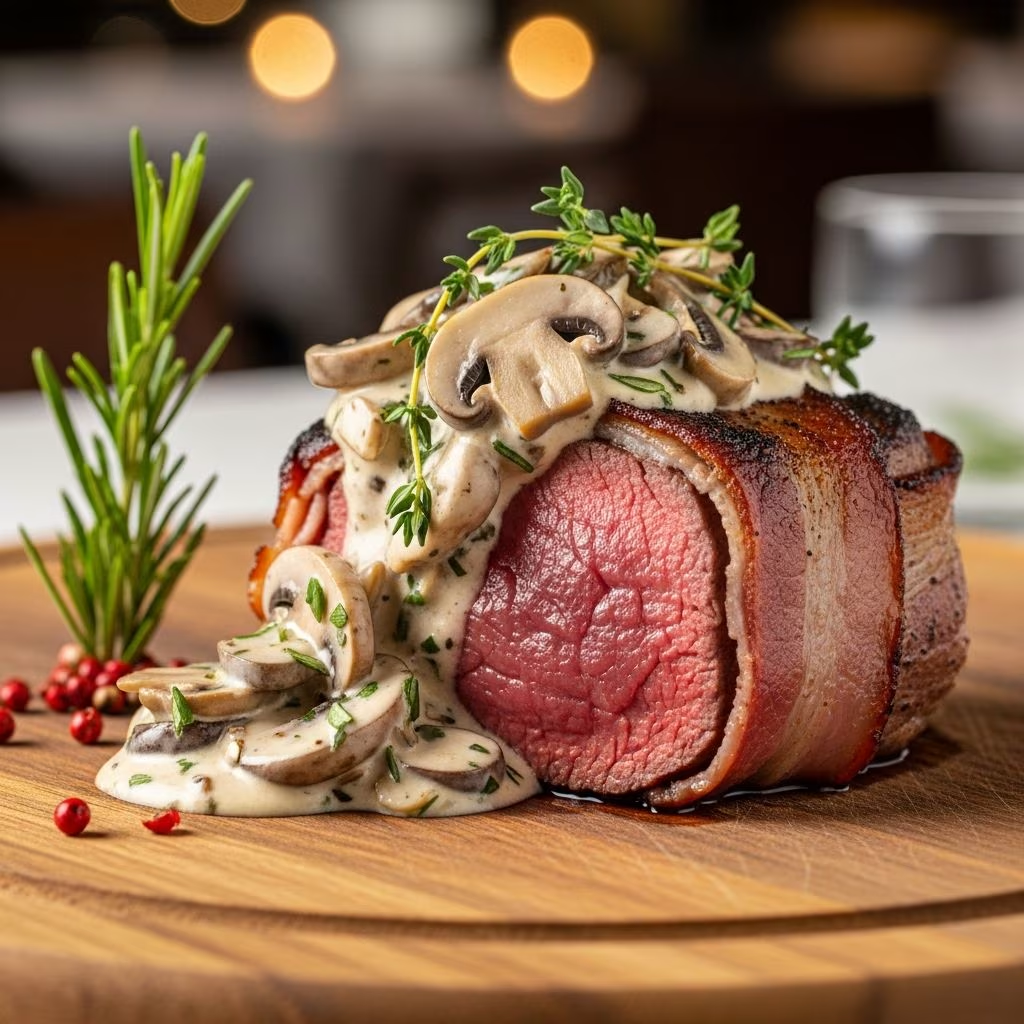
Remove the roasted venison from the oven and allow it to rest for five minutes before slicing. This resting period allows muscle fibers to relax, reabsorbing internal juices rather than releasing them onto the cutting board. Slice the wrapped tenderloins into medallions, revealing the beautiful contrast between crispy exterior bacon, tender venison, and the rich sauce.
Arrange venison medallions on warmed plates and spoon the mushroom-garlic cream sauce over and around them. The sauce should pool slightly on the plate, inviting diners to use it as a vehicle for every bite of venison.
Expert Techniques and Professional Tips
Temperature Control and Doneness
An instant-read meat thermometer represents the single most valuable tool for achieving perfect results. Venison’s lean character means that visual cues can be misleading. The difference between perfectly cooked and overdone venison is often just a few degrees Fahrenheit. Insert the thermometer horizontally into the thickest portion of the larger tenderloin, ensuring the probe reaches the center without touching the bacon exterior.
Bacon Selection Considerations
The quality and type of bacon significantly impact final results. Applewood-smoked bacon imparts a subtle sweetness that complements venison beautifully, while hickory-smoked varieties offer a more assertive character. Avoid thin-cut bacon, which cannot adequately wrap the tenderloins and tends to crisp excessively during roasting. Conversely, extremely thick-cut bacon may not cook through completely by the time venison reaches optimal doneness.
Mushroom Selection and Preparation
While cremini mushrooms work wonderfully, other varieties offer interesting variations. A combination of cremini and shiitake mushrooms increases umami intensity. Pre-slicing mushrooms rather than chopping or dicing them maintains their structural integrity during cooking, resulting in a more refined sauce texture. Avoid overcrowding the pan when initially cooking mushrooms—they should make contact with the hot surface rather than steaming in their own released moisture.
Sauce Customization
The basic garlic cream sauce framework accepts numerous variations. A splash of red wine or brandy adds sophistication and subtle acidity that brightens the cream. Dijon mustard stirred in after the cream adds complexity without introducing harshness. Fresh thyme or rosemary, particularly if you grow these herbs, complements both venison and mushroom notes beautifully. For those preferring lighter preparations, substitute half the heavy cream with a combination of milk and cornstarch slurry to achieve similar richness with fewer calories.
Scaling and Serving Suggestions
This recipe naturally yields six servings, but scaling proves straightforward. For four people, halve all ingredients and reduce roasting time slightly—approximately forty-five minutes to one hour depending on tenderloin thickness. For larger gatherings, multiply the recipe proportionally; remember that total roasting time may increase slightly as the pan becomes fuller and heat distribution changes.
Venison pairs beautifully with both classic and contemporary accompaniments. A simple green salad dressed with Dijon vinaigrette provides textural contrast and palate cleansing. Roasted root vegetables like parsnips and carrots echo the earthiness of the main course. Creamed spinach or au gratin potatoes add richness that complements the venison without overwhelming it. For wine pairing, Pinot Noir or Burgundy-style wines share similar earthy characteristics with venison, while their acidity cuts through the sauce’s richness.
Storage and Make-Ahead Considerations
Leftover venison keeps well refrigerated for three to four days. Store it separately from the sauce to maintain bacon crispness. Reheat gently in a 300-degree oven until warmed through, and prepare fresh sauce rather than reheating, which can cause cream separation. The venison also freezes successfully for up to three months when properly wrapped, though the bacon coating may lose some crispness upon thawing.
Fortunately, most components can be prepared in advance. Tenderloins can be wrapped in bacon and refrigerated for up to twenty-four hours before roasting. The sauce can be prepared entirely and refrigerated, requiring only gentle reheating while the venison finishes cooking.
Frequently Asked Questions
What internal temperature indicates properly cooked venison?
Venison reaches ideal doneness at 145 degrees Fahrenheit, yielding a slightly rosy center that remains incredibly tender. Cooking beyond 160 degrees renders the meat noticeably firmer and drier due to its naturally lean composition. Use a reliable instant-read thermometer to verify doneness.
Can I substitute venison with other meats?
This recipe works equally well with beef tenderloin, elk, or even pork loin, though cooking times may vary slightly depending on the meat chosen. Each substitution produces slightly different flavor profiles, but the technique remains fundamentally sound.
Should I marinate the venison beforehand?
Marinating is unnecessary given the bacon wrapping and cream sauce, which provide ample moisture and flavor. However, a brief thirty-minute soak in oil and herbs can enhance results if desired. Avoid lengthy marination with acidic components, which can adversely affect venison’s texture.
What if I don’t have an instant-read thermometer?
While thermometers significantly improve consistency, you can judge doneness by feeling the meat’s firmness or cutting into the thickest part to observe color. Venison should remain slightly pink at the center. However, investing in an inexpensive digital thermometer eliminates guesswork and ensures perfect results.
Can I prepare this dish on a grill instead of in the oven?
Yes, though the technique differs slightly. Preheat a grill to medium-high heat and adjust to two-zone cooking with heat on one side only. Sear the bacon-wrapped tenderloins over direct heat for two minutes per side, then move them to indirect heat and close the lid. Monitor carefully until internal temperature reaches 145 degrees, typically fifteen to twenty-five minutes depending on tenderloin thickness.
Conclusion
This bacon-wrapped venison tenderloin with garlic cream sauce represents an achievable yet impressive preparation that elevates wild game from hunting camp fare to elegant dining. By respecting the venison’s lean nature through careful temperature control and complementary flavors through thoughtful ingredient selection, even novice cooks can produce restaurant-quality results. The combination of smoky bacon, tender venison, and luxurious cream sauce creates a harmonious dish worthy of special occasions and discriminating palates.
References
- Venison Meat: Safety and Nutritional Information — U.S. Department of Agriculture Food Safety and Inspection Service. 2024. https://www.fsis.usda.gov/food-safety/safe-food-handling-and-preparation/meat
- Cooking Game Meats: Temperature Guidelines — National Deer Association. 2023. https://www.deerassociation.org/
- Maillard Reaction in Food Science — Institute of Food Science and Technology. 2023. https://www.ifst.org/
- Culinary Mushroom Varieties and Applications — Produce for Better Health Foundation. 2024. https://www.pbhfoundation.org/
- Wine Pairing Principles for Game Meats — Wine Institute. 2023. https://www.wineinstitute.org/