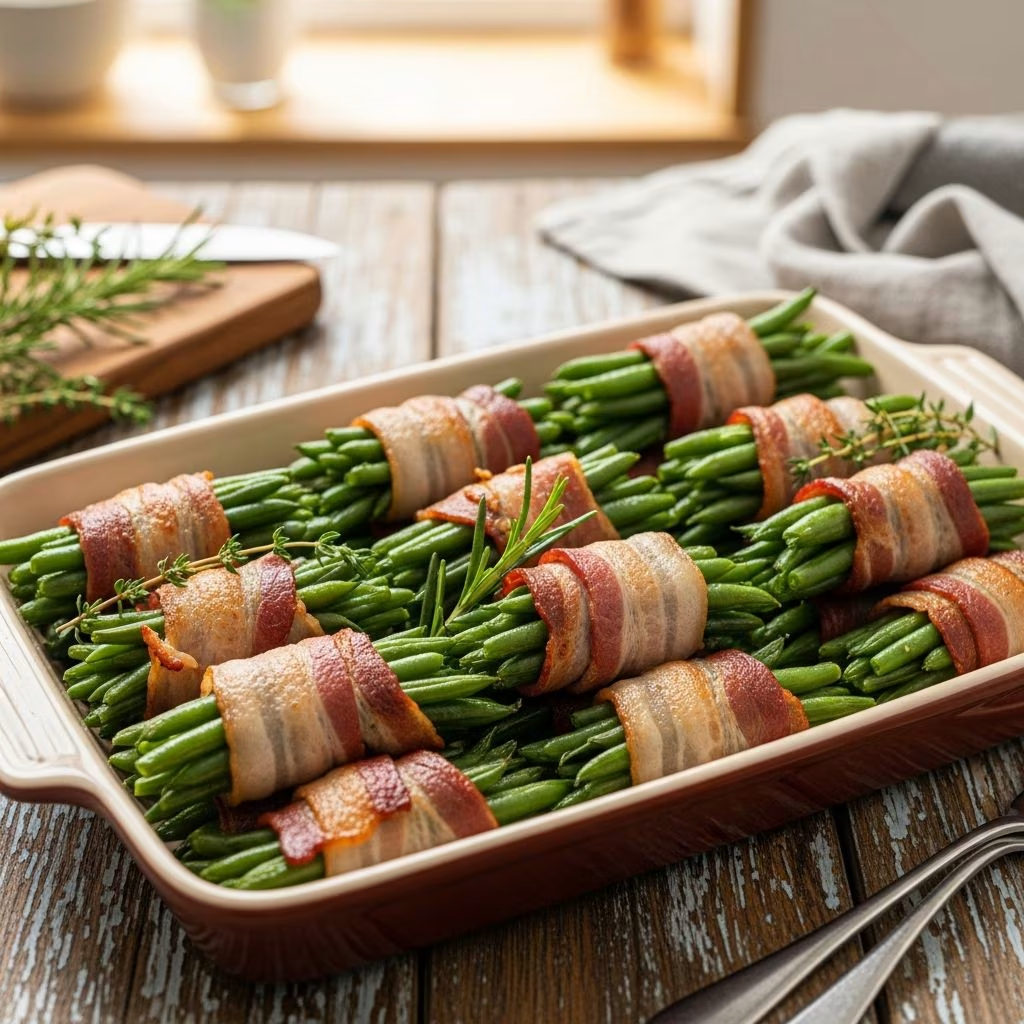
When it comes to creating an impressive side dish that requires minimal effort, few recipes rival the elegance and simplicity of green beans encased in crispy bacon. This classic preparation combines tender vegetables with smoky, savory meat, creating a dish that consistently earns compliments at the dinner table. The beauty of this recipe lies in its straightforward nature—despite appearing restaurant-quality, it demands only basic cooking skills and readily available ingredients.
Why This Dish Deserves a Place on Your Table
This preparation method transforms an ordinary vegetable into something extraordinary. The combination of fresh green beans with quality bacon creates layers of flavor that appeal to diverse palates. Whether you’re preparing a casual weeknight dinner or hosting a formal gathering, bacon-wrapped green beans offer versatility without compromise. The dish pairs wonderfully with beef, pork, chicken, or seafood, making it an ideal accompaniment to virtually any protein.
The textural contrast between the crisp exterior of the bacon and the tender-yet-firm green beans provides eating satisfaction that elevates the entire meal. Additionally, the caramelized brown sugar glaze adds a subtle sweetness that balances the savory components, creating a well-rounded flavor profile.
Essential Ingredients for Success
Creating this dish begins with selecting quality components. Each ingredient plays a specific role in achieving the desired outcome.
- Fresh Green Beans: Choose French-cut beans (haricots verts) when possible, as their slender profile wraps neatly with bacon. Standard green beans work adequately, though they may require slightly longer cooking. Plan for approximately 1 to 1.5 pounds for a standard serving.
- Bacon: Regular-cut bacon works best for wrapping, as thick-cut varieties take longer to crisp and may not cook evenly around the bean bundles. Plan on using roughly 6 to 12 slices, depending on your bundle size preference and total yield desired.
- Butter: Unsalted butter allows you to control sodium levels. Melted butter serves as the base for the glaze that coats each bundle.
- Brown Sugar: This ingredient caramelizes during roasting, creating a glossy coating and subtle sweetness. Light or dark brown sugar both work, though light brown sugar produces a milder flavor.
- Garlic: Fresh minced garlic provides aromatic depth. Alternatively, garlic powder works if fresh garlic is unavailable, though the flavor profile will be slightly different.
- Soy Sauce or Dijon Mustard: These ingredients add umami and complexity. Choose soy sauce for an Asian-inspired variation or Dijon mustard for a more classic preparation.
- Seasonings: Freshly cracked black pepper, kosher salt, and optionally fresh rosemary round out the flavor profile.
Preparation Techniques That Matter
Blanching Your Beans
For optimal results, blanch the green beans before wrapping them in bacon. This technique involves briefly boiling the beans, then immediately plunging them into ice water to halt the cooking process. Blanching ensures even cooking throughout the final roasting stage while preserving the bright green color and crisp-tender texture.
To blanch properly, bring a pot of salted water to a rolling boil. Add the trimmed green beans and cook for approximately 2 to 3 minutes, depending on their thickness. The beans should still possess a slight firmness when removed from the water. Transfer them immediately to an ice bath, drain thoroughly, and pat completely dry with paper towels before assembly.
Creating Proper Bundles
Divide your blanched beans into portions of 6 to 10 beans per bundle. Consistency in bundle size ensures even cooking. Lay the green beans in parallel alignment on your work surface, gather them into a neat bundle, and wrap a halved strip of bacon around the middle. Secure each bundle with a toothpick to prevent the bacon from unraveling during the roasting process.
Preparing the Glaze
The glaze transforms the dish into something special. In a small bowl, whisk together melted butter, brown sugar, minced garlic, your chosen umami ingredient (soy sauce or Dijon mustard), and freshly cracked pepper until fully combined. This mixture should have a smooth, pourable consistency.
The Roasting Process
Preparation extends to properly setting up your cooking vessel. Line a baking sheet with parchment paper or aluminum foil for easy cleanup. If using a wire rack set atop the baking sheet, this allows heat circulation around each bundle, promoting more even browning.
Arrange your assembled bundles on the prepared sheet with the bacon seam positioned downward. Using a pastry brush, apply the glaze mixture generously over each bundle, ensuring complete coverage. This step determines the caramelization and final appearance of your dish.
Roast at 400°F to 425°F for approximately 15 to 30 minutes, depending on your specific oven characteristics and the thickness of your bacon. The bacon should emerge golden brown and crispy, while the beans beneath remain tender but not mushy. Start checking around the 15-minute mark to avoid overcooking.
Make-Ahead and Storage Considerations
One significant advantage of this recipe involves its make-ahead potential. You can prepare assembled bundles up to 24 hours in advance, storing them in the refrigerator on a covered baking sheet. This advance preparation makes entertaining significantly less stressful, as your main cooking occurs during the final 15 to 30 minutes before serving.
Some cooks prefer to partially cook the bacon before wrapping, allowing it to partially crisp before the final roasting stage. This approach requires removing bacon from the heat when still slightly pliable, cooling it until safe to handle, then proceeding with bundle assembly. This technique can reduce the final roasting time by several minutes.
Flavor Variations and Adaptations
Classic Brown Sugar Glaze
The most traditional preparation features butter, brown sugar, garlic, and soy sauce. This combination delivers a balanced sweet-savory profile that appeals to most diners.
Dijon Mustard Variation
Substituting Dijon mustard for soy sauce creates a more European-inspired preparation with additional depth and slight tanginess. This variation pairs particularly well with pork or beef entrées.
Herb-Infused Option
Fresh rosemary, thyme, or parsley can be incorporated into the glaze or sprinkled over bundles before roasting. These herbs add aromatic complexity and visual appeal to the finished dish.
Serving and Presentation Suggestions
Remove the roasted bundles from the oven and allow them to rest for 5 minutes before serving. This brief resting period allows the exterior to set slightly while maintaining optimal temperature for consumption. Carefully remove the toothpicks using small tongs or tweezers to avoid damaging the bundles.
Arrange the finished bundles on a serving platter or directly onto individual plates. If desired, garnish with additional fresh herbs or a light sprinkle of fleur de sel for visual interest and textural contrast. The bundles can be served warm or at room temperature, making them suitable for both seated dinners and buffet-style entertaining.
Nutritional Considerations
Each bundle typically contains minimal calories while providing beneficial nutrients from the fresh green beans, which supply dietary fiber and various vitamins. Bacon contributes protein and healthy fats, though portions should be mindful of saturated fat intake. The brown sugar and butter add richness and calories, making this appropriate as a side dish rather than the primary protein component of a meal.
Troubleshooting Common Issues
| Problem | Solution |
|---|---|
| Bacon not crisping properly | Ensure oven temperature reaches 400°F or higher. Partially pre-cooking bacon before wrapping accelerates crispness during final roasting. |
| Green beans becoming mushy | Reduce roasting time or lower oven temperature by 25°F. Proper blanching ensures beans remain firm enough to withstand final cooking. |
| Uneven cooking across bundles | Rotate baking sheet halfway through roasting. Ensure bundles are arranged in a single layer with adequate spacing for air circulation. |
| Glaze burning before bacon crisps | Cover bundles loosely with foil for the first 10 minutes of roasting, then remove foil to allow final crisping and browning. |
| Bundles falling apart after cooking | Ensure toothpicks remain in place during cooking. Use sturdy wooden picks rather than thin bamboo skewers. |
Frequently Asked Questions
Can I use frozen green beans for this recipe?
Frozen green beans are not recommended for bundles, as they contain excess moisture that can prevent proper crisping and create a soggy final product. Fresh beans deliver superior results in both texture and appearance.
What if I don’t have fresh garlic available?
Garlic powder works as an adequate substitute at a ratio of approximately 1/4 teaspoon powder for each teaspoon of fresh minced garlic. The flavor will be slightly less sharp, but still delivers the desired aromatic quality.
How long can I store leftovers?
Refrigerate leftover bundles in an airtight container for up to 3 days. Reheat gently in a 325°F oven for approximately 10 minutes to restore crispness. These bundles are also palatable at room temperature, making them suitable for picnics or cold buffets.
Can this dish be prepared on a grill or smoker?
Yes, grilling works well for this preparation. Arrange bundles on a grill-safe surface or use a perforated grill mat to prevent sticking. Cook over medium heat for approximately 12 to 18 minutes, turning occasionally for even browning.
What proteins pair best with bacon-wrapped green beans?
This side dish complements virtually all proteins. Beef steaks, pork chops, chicken breasts, roasted salmon, and lamb all benefit from the accompanying flavors. The dish also works well in vegetarian contexts when paired with substantial plant-based proteins.
Conclusion
Bacon-wrapped green beans represent an ideal recipe for both novice and experienced cooks. The preparation requires minimal technical skill while delivering impressive results suitable for casual dining and formal entertaining alike. By understanding the fundamental techniques—proper blanching, consistent bundling, careful glaze application, and appropriate roasting temperatures—you create a dish that consistently earns appreciation from diners. The flexibility to prepare bundles in advance makes this recipe particularly valuable for entertaining, reducing last-minute stress while ensuring hot, perfectly cooked vegetables reach the table with minimal effort during service. Whether you prepare this dish regularly or discover it for the first time, bacon-wrapped green beans offer an uncomplicated path to vegetable-based excellence.
References
- Bacon Wrapped Green Beans Recipe — The Gourmet Housewife. Accessed April 2026. https://www.gourmethousewife.com/bacon-wrapped-green-beans/
- Bacon-Wrapped Green Beans on the Traeger Timberline 1300 — Heath Riles BBQ. Accessed April 2026. https://www.heathrilesbbq.com/blogs/favorite-recipes/bacon-wrapped-green-beans-on-the-traeger-timberline-1301
- Make-Ahead Bacon Wrapped Green Beans — The Cafe Sucre Farine. Accessed April 2026. https://thecafesucrefarine.com/make-ahead-bacon-wrapped-green-beans/
- The Best Bacon-Wrapped Green Beans — Amee’s Savory Dish. Accessed April 2026. https://ameessavorydish.com/green-bean-roll-ups/
- Green Beans Wrapped in Bacon — Julia’s Album. Accessed April 2026. https://juliasalbum.com/green-bean-bundles-bacon/
- Bacon-Wrapped Green Bean Bundles Recipe — The Pioneer Woman. Accessed April 2026. https://www.thepioneerwoman.com/food-cooking/recipes/a70843624/bacon-wrapped-green-bean-bundles-recipe/