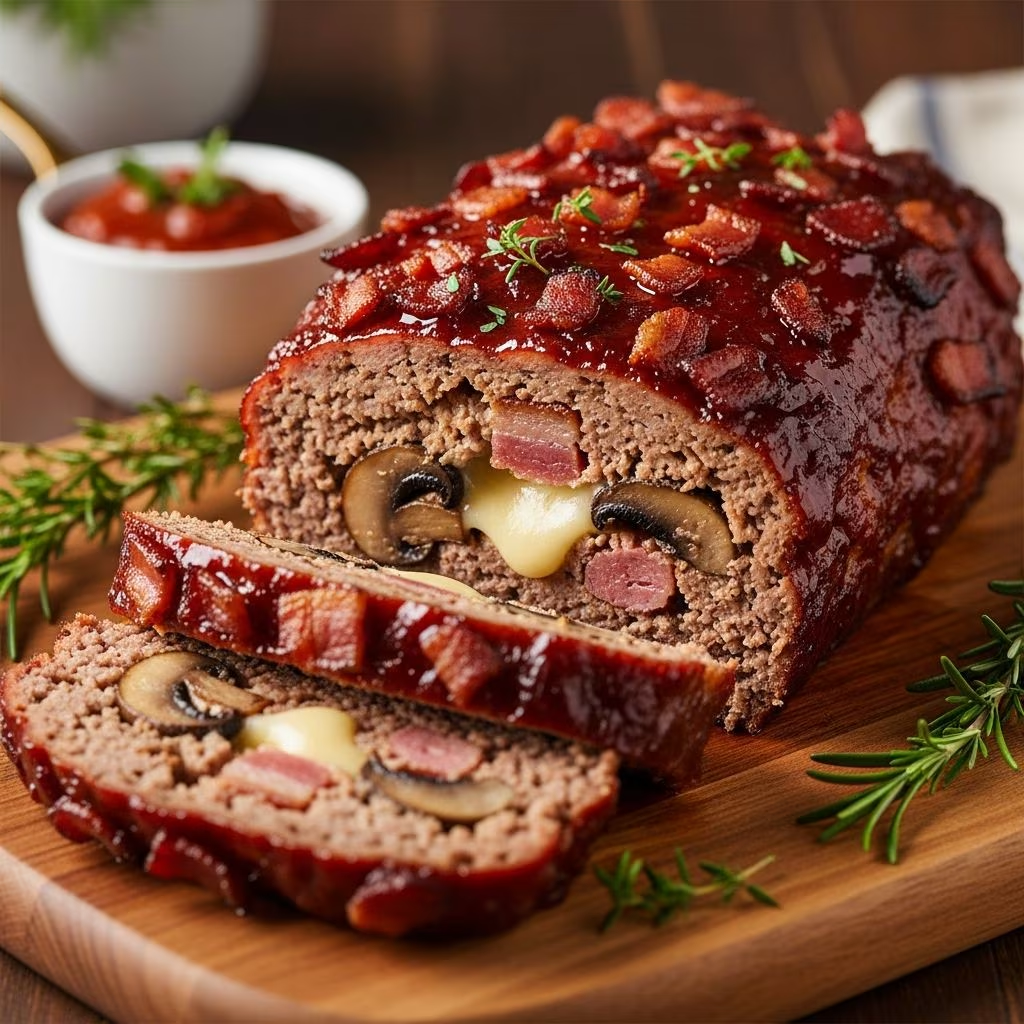
Meatloaf has long held a place at the American dinner table as a reliable comfort food that brings families together. While traditional recipes often stick to simple beef and breadcrumbs, modern culinary approaches have elevated this humble dish into something far more sophisticated. One such transformation involves incorporating three premium ingredients: smoky bacon, earthy mushrooms, and creamy Swiss cheese. This combination creates a multi-layered flavor profile that transforms an ordinary weeknight meal into something restaurant-worthy.
The beauty of this meatloaf variation lies in its ability to balance richness with freshness. The bacon provides a salty, smoky foundation, the mushrooms add umami depth and subtle earthiness, and the Swiss cheese delivers a nutty, mild creaminess that ties everything together. When these elements combine within a tender beef and pork mixture, you get a dish that appeals to both traditional meatloaf enthusiasts and those seeking culinary adventure.
Understanding Your Core Ingredients
The foundation of any exceptional meatloaf begins with selecting quality proteins. Most recipes combine ground beef with ground pork, using ratios that typically range from 1:1 to 2:1 beef to pork. The pork contributes moisture and tenderness that pure beef cannot achieve alone, while the beef provides structure and robust flavor. The mixture typically weighs between 2.5 to 3 pounds total, depending on your desired meatloaf size.
Bacon serves dual purposes in this dish. Beyond providing flavor when cooked and crumbled into the mixture, bacon grease becomes a culinary tool for sautéing vegetables. This rendered fat carries bacon’s complex flavors into the mushrooms and onions, creating a more cohesive taste experience throughout the entire dish.
Swiss cheese brings its distinctive characteristics to the final product. Unlike sharp cheddar or pungent blue cheese, Swiss cheese offers a mild, slightly sweet flavor with subtle nuttiness that won’t overpower the other ingredients. Its melting properties make it ideal for both mixing into the meat mixture and layering on top for a golden, creamy finish.
Preparing Your Vegetables and Aromatics
The vegetable component deserves careful attention, as proper preparation significantly impacts the final texture and flavor. Fresh mushrooms—whether baby bella, button, or cremini varieties—should be cleaned gently and chopped into pieces roughly the size of small coins. This sizing ensures they cook through without becoming mushy while remaining substantial enough to contribute texture.
Onions provide aromatic backbone and natural sweetness that balances the savory elements. Finely mincing onions helps them distribute evenly throughout the mixture and cook down completely during the baking process. Some recipes call for dried minced onion, which concentrates flavor and requires no pre-cooking.
Garlic amplifies the savory profile and should be minced extremely fine or pressed. Fresh garlic typically outperforms powder for this application, though garlic powder offers consistency and requires no preparation. Most recipes incorporate between one to two tablespoons of minced fresh garlic or one to two teaspoons of garlic powder.
Before incorporating vegetables into the meat mixture, sautéing them in bacon fat enhances their flavors and removes excess moisture. This preliminary cooking step prevents the finished meatloaf from becoming watery. Mushrooms release significant liquid when heated, so cooking them first allows this moisture to evaporate rather than accumulate in the meatloaf.
Building Your Meat Mixture
Proper technique when combining ingredients directly impacts meatloaf texture. The mixture should include breadcrumbs or cornflake crumbs, which absorb moisture and create a tender crumb structure. Approximately one cup of breadcrumbs for every 2-3 pounds of meat provides optimal binding without creating a dense result.
Eggs act as both binder and moisture retainer. Typically, one to two eggs suffice for most recipes. Beating eggs lightly before incorporation ensures even distribution throughout the mixture.
Seasoning components should include Worcestershire sauce, which adds complex umami notes and slight acidity. Most recipes call for one to two tablespoons. Dried thyme or fresh parsley contribute herbal notes that complement mushrooms and cheese. Salt and black pepper should be added judiciously—approximately one-half to one teaspoon each—though adjustments depend on how much salty bacon remains in the mixture.
Optional additions include paprika for subtle color and smoke, ground mustard for tangy complexity, and ketchup for mild sweetness and acidity. A small amount of evaporated milk or regular milk keeps the mixture moist without making it soggy.
When combining all components, work gently with your hands until everything is just incorporated. Overmixing develops gluten in the breadcrumbs, resulting in a dense, tough meatloaf rather than a tender one.
Cooking Techniques and Temperature Management
Oven temperature significantly influences cooking time and crust formation. Most recipes recommend 350 to 375 degrees Fahrenheit. The lower temperature ensures even cooking throughout, while the slightly higher temperature promotes better browning on the exterior.
Baking vessels matter more than many home cooks realize. Traditional meatloaf pans feature holes that allow grease to drain away, preventing the finished product from sitting in its own fat. If you lack a proper meatloaf pan, creating a rack from aluminum foil and placing it on a rimmed baking sheet achieves similar results. Some recipes suggest lining baking dishes with parchment paper, which simplifies cleanup and makes handling easier after cooking.
Initial baking typically runs 45 to 60 minutes at 350-375 degrees Fahrenheit, depending on exact oven calibration and meatloaf size. Covering with foil during the first portion of cooking helps retain moisture and prevents the top from browning too quickly.
After the initial baking period, remove the foil and add the final cheese and bacon layer. Return to the oven for an additional 10 to 15 minutes until the cheese melts completely and the edges turn golden brown. Internal temperature should reach 160 degrees Fahrenheit for food safety.
Layering Strategy for Maximum Flavor
Some preparation methods incorporate cheese and bacon throughout the mixture, while others reserve these ingredients for top garnishing. The layering approach offers advantages: it creates visual appeal, ensures cheese melts properly, and guarantees each slice includes these premium ingredients.
If using the layering technique, press half the meat mixture into your prepared pan, add half the sautéed mushrooms, half the bacon, and half the cheese. Top with the remaining meat mixture, then finish with the remaining vegetables, bacon, and cheese. This approach creates distinct flavor layers that develop during cooking.
Serving and Accompaniment Suggestions
Plating and accompaniments enhance the dining experience. Classic pairings include creamy mashed potatoes, which provide textural contrast and absorb the savory pan juices. Green vegetables like roasted asparagus, steamed broccoli, or sautéed green beans add color and nutritional balance.
Pan drippings can be transformed into a simple pan sauce by deglazing with beef broth and reducing on the stovetop. This sauce adds moisture and intensifies flavors for those who enjoy extra richness.
Creative Variations and Substitutions
| Variation | Key Changes | Best For |
|---|---|---|
| French Onion Inspired | Gruyère cheese, beef broth in mixture, caramelized onions | Those seeking sophisticated European flavors |
| Bacon Cheeseburger Style | Sharp cheddar instead of Swiss, hamburger seasoning | Casual entertaining and family dinners |
| Mushroom-Forward | Increased mushroom quantity, reduced meat slightly | Vegetable-focused palates |
| Herb Garden | Fresh herbs: thyme, rosemary, sage | Spring and early summer meals |
Storage and Make-Ahead Instructions
Prepared meatloaf mixture can be assembled 24 hours before baking. Cover tightly with plastic wrap and refrigerate until ready to cook. This advance preparation benefits weeknight schedules by reducing day-of preparation time.
Leftover cooked meatloaf stores well for 3-4 days in airtight containers. It reheats effectively at 350 degrees Fahrenheit until warmed through, approximately 20-25 minutes. Sliced meatloaf also makes excellent sandwich material when served cold or reheated between crusty bread.
Frequently Asked Questions
Can I use ground turkey instead of beef and pork?
Yes, though results differ slightly. Ground turkey is leaner and requires careful handling to prevent dryness. Add an extra egg and increase milk by one-quarter cup. The finished product will be lighter and less rich than traditional beef-pork versions.
What if I don’t have Swiss cheese?
Gruyère, Emmental, or even mild provolone work well. Avoid highly sharp cheeses that may overpower the delicate mushroom flavor. Reduce quantity slightly if using particularly strong-flavored cheeses.
How do I prevent my meatloaf from being dry?
Don’t overmix the meat mixture. Use the pork-to-beef ratio specified. Ensure vegetables are cooked before mixing to remove excess moisture. Don’t bake longer than necessary—check temperature starting at 45 minutes.
Can I make this in a slow cooker?
Yes. Shape the mixture in a loaf-shaped piece of foil, place on trivet in slow cooker, and cook on low 6-7 hours or high 3-4 hours. Add cheese and bacon in the final 15 minutes, covering to allow melting.
What’s the best way to slice meatloaf?
Allow the finished meatloaf to rest 10 minutes after removing from the oven. Use a long, sharp knife dipped in hot water between cuts. This prevents crumbling and creates clean, attractive slices.
References
- Bacon Mushroom Swiss Meatloaf Preparation Guide — Homemade on a Weeknight. 2024-12-13. https://homemadeonaweeknight.com/2024/12/13/mushroom-bacon-swiss-meatloaf/
- How to Make Bacon Mushroom Swiss Meatloaf — All Things BBQ. https://www.atbbq.com/blogs/recipes/bacon-mushroom-swiss-meatloaf
- Delicious Bacon Mushroom Swiss Cheese Meatloaf Recipe — Easy Savory Meals. https://easysavorymeals.com/bacon-mushroom-swiss-cheese-meatloaf/