Understanding This Classic Pasta Combination
Bacon and Parmesan penne represents one of the most straightforward yet deeply satisfying pasta preparations available to home cooks. This dish exemplifies how a limited ingredient list can yield remarkable flavor complexity when each component receives proper attention. The interplay between smoky bacon, nutty Parmesan, and tender pasta creates a harmonious balance that appeals to both seasoned cooks and kitchen novices alike.
The beauty of this particular pasta preparation lies in its flexibility. Whether you’re cooking for a busy weeknight or preparing something special for guests, this dish adapts to various cooking methods and ingredient preferences while maintaining its essential character. Understanding the fundamental principles behind this recipe allows you to customize it to your tastes and available ingredients.
Selecting Quality Ingredients for Optimal Results
Choosing the Right Bacon
Bacon selection significantly influences the final dish’s flavor profile. Thick-cut bacon provides superior results compared to standard varieties because it renders more slowly, allowing you to render sufficient fat for cooking aromatics while simultaneously developing deeper flavor compounds through the Maillard reaction. Approximately five to six slices of thick-cut bacon delivers adequate bacon bits for distribution throughout a standard serving while providing enough fat for the cooking process.
The cut matters because thinner bacon crisps quickly, often before releasing optimal flavor. Thick-cut varieties maintain structural integrity during cooking and provide better texture contrast against soft pasta. When purchasing bacon, look for pieces with visible marbling of fat throughout the meat rather than heavily concentrated areas, as this indicates more even rendering during cooking.
Penne Pasta Characteristics
Penne’s tubular structure makes it an ideal choice for this preparation. The hollow interior allows sauce and rendered bacon fat to penetrate the pasta, creating flavor in every bite. When selecting penne, choose standard dried penne rather than whole wheat varieties for this particular application, as refined penne absorbs sauce more effectively and provides the textural contrast this dish requires.
The starch content in pasta water becomes important during preparation. This starch acts as a natural emulsifier, helping to bind fat-based components into a cohesive sauce that coats each piece of pasta evenly. Always reserve pasta cooking water before draining—approximately one-half cup proves useful for adjusting sauce consistency.
Parmesan Cheese Selection
Authentic Parmigiano-Reggiano provides superior results compared to pre-grated domestic varieties. Freshly grated Parmesan melts more smoothly into sauce and provides more pronounced nutty, umami flavors essential to this dish. Pre-grated cheese contains anti-caking agents that prevent proper melting and can create a grainy texture rather than a smooth, creamy sauce.
Grating Parmesan fresh from a wedge using a microplane or box grater yields finer particles that integrate more effectively into warm sauces. For a standard four-serving portion, approximately one cup of freshly grated Parmesan provides adequate coverage without overwhelming the palate.
Core Cooking Techniques and Methods
Rendering Bacon Fat Properly
Begin preparation by cutting bacon into one-inch pieces. This size provides optimal surface area for rendering while maintaining structural integrity throughout cooking. Place bacon pieces in a large skillet over medium-high heat without adding oil—the bacon’s inherent fat provides sufficient cooking medium.
Allow bacon to render slowly, stirring occasionally to ensure even cooking. This typically requires eight to twelve minutes depending on thickness and heat intensity. The goal is achieving a crispy exterior while fully rendering the interior fat. Properly rendered bacon becomes deeply golden, textured, and fragrant.
Once bacon reaches desired crispness, remove pieces using a slotted spoon and transfer to paper towels for draining. Reserve approximately one teaspoon of rendered fat in the skillet—this concentrated bacon flavor foundation becomes crucial for the cooking process ahead.
Aromatics and Flavor Building
Add minced garlic to the reserved bacon fat and cook for approximately one minute. This brief cooking window releases garlic’s aromatic compounds while preventing browning, which would introduce bitter notes incompatible with the dish’s delicate balance. Proper garlic preparation requires constant attention—overcooking compromises the final flavor significantly.
After garlic becomes fragrant, immediately add uncooked pasta directly to the skillet. This technique, known as toasting pasta, develops nutty undertones through dry-heat cooking. Stir pasta continuously for approximately two minutes, allowing each piece to become lightly coated with rendered bacon fat and develop subtle brown coloring.
Liquid Introduction and Cooking Process
Pour chicken broth or vegetable stock over the toasted pasta. The liquid should barely cover the pasta—approximately two cups works for one pound of dried penne. Add salt and freshly ground black pepper at this stage. Bring the mixture to a rolling boil, then immediately reduce heat to maintain a gentle simmer.
Cover the skillet partially, leaving it slightly ajar to prevent boiling over. Cook for thirteen to fifteen minutes, stirring twice during cooking to prevent sticking and ensure even liquid absorption. The pasta continues absorbing broth throughout cooking, and monitoring ensures sufficient moisture remains at completion.
Proper doneness is achieved when pasta becomes tender enough to bite easily while maintaining slight firmness—the al dente state preferred in Italian cooking. Undercooked pasta resists biting, while overcooked pasta becomes mushy and loses structural integrity.
Finishing and Sauce Development
Cream and Cheese Integration
Once pasta reaches desired tenderness, remove the skillet from heat. Pour heavy cream over the pasta and stir continuously while adding grated Parmesan gradually. Continuous stirring prevents cheese from clumping while helping it melt uniformly into the cream, creating a smooth, cohesive sauce.
The residual heat from hot pasta and broth-infused liquid melts cheese more effectively than attempting to melt cheese into cold ingredients. Approximately one-half cup of heavy cream combined with one cup of freshly grated Parmesan creates a sauce with ideal consistency and flavor intensity. The mixture should coat pasta evenly without appearing watery or excessively thick.
Texture and Consistency Adjustments
If the sauce appears too thick, add reserved pasta cooking water one tablespoon at a time while stirring gently. The starch in pasta water thins the sauce while helping it coat pasta more effectively. If sauce appears too thin, return the skillet to low heat and stir continuously until the mixture reduces slightly and thickens naturally.
Properly balanced sauce coats each piece of pasta without pooling excessively at the dish’s bottom. The sauce should glisten slightly, indicating adequate fat content and smooth integration of all components.
Garnishing and Serving Strategies
Traditional Garnish Approaches
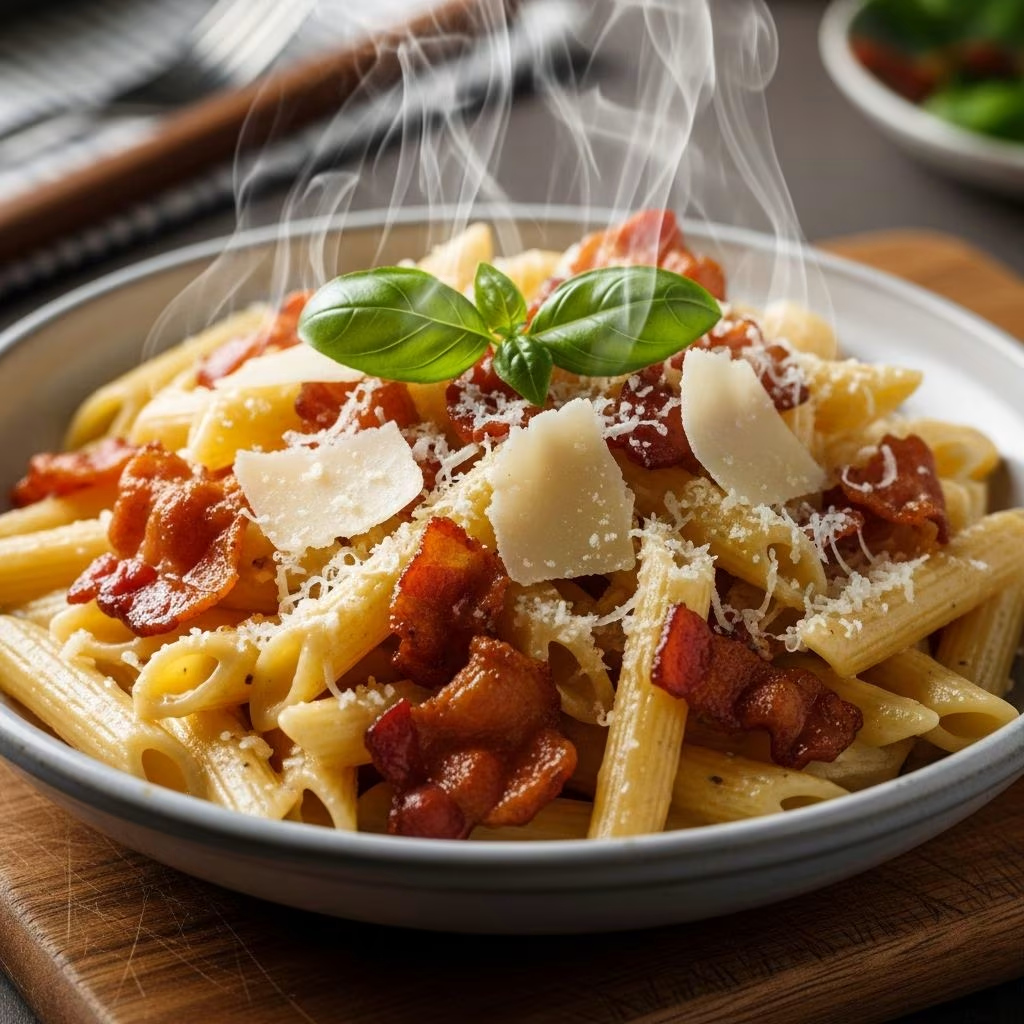
Distribute crispy bacon pieces evenly across the dish’s surface before serving. These bacon pieces provide textural contrast against soft pasta and visually signal the dish’s core flavor component. For additional visual appeal and nutritional benefit, sprinkle fresh parsley over the finished dish. Parsley’s bright green color contrasts beautifully with the cream-colored sauce while adding subtle herbaceous notes.
Additional Parmesan can be shaved or grated over individual servings, allowing diners to customize the cheese intensity according to personal preference. A light grinding of black pepper over finished dishes adds visual sophistication and reinforces peppery flavors already present.
Serving Considerations
Serve the dish immediately after preparation for optimal texture and temperature. Pasta continues absorbing sauce and cooling gradually, so plate preparation right before serving ensures the best eating experience. Individual serving bowls maintain heat longer than flat plates, preserving the dish’s warmth throughout consumption.
Accompaniments should complement rather than overwhelm the delicate flavors. Crusty bread serves well for sauce absorption, while simple green salads provide textural and flavor contrast. Light white wines or uncomplicated red wines pair well without competing with the dish’s inherent flavors.
Ingredient Variations and Creative Modifications
Protein Alternatives
While bacon provides the traditional foundation, prosciutto offers a more delicate, salty alternative with different flavor dimensions. Pancetta provides similar rendered fat but with slightly different spice notes. For vegetarian preparations, mushrooms can be sautéed to create umami depth comparable to bacon’s savory richness.
Vegetable Additions
Frozen peas added during cooking introduce sweetness and visual variety. Green onions or fresh chives sprinkled at serving time provide onion notes without overwhelming other flavors. Roasted tomatoes can be folded in at the end, though this modification shifts the dish toward more tomato-forward preparations.
Cheese Variations
Pecorino Romano offers a sharper, more assertive cheese profile than Parmigiano-Reggiano. Mixing multiple aged cheeses creates complex flavor layers. Gruyère adds nutty sweetness and helps create creamier sauce consistency through its natural fat content.
Practical Cooking Tips and Common Challenges
Preventing Common Problems
Ensure bacon achieves complete crispness before setting aside—partially cooked bacon releases less fat and contributes insufficient flavor. Avoid overcooking garlic, which produces bitter compounds that persist throughout the dish. Do not allow the cream and cheese mixture to boil vigorously, as excessive heat can cause the sauce to break and appear grainy or separated.
Monitor broth levels during pasta cooking carefully. Adding too much liquid results in a watery dish, while insufficient liquid causes pasta to cook unevenly and stick together. Stirring twice during cooking prevents both issues and ensures uniform tenderness.
Equipment and Timing Considerations
Using a large skillet accommodates pasta expansion during cooking and provides adequate surface area for even cooking. A heavy-bottomed skillet distributes heat more uniformly than lightweight alternatives, preventing hot spots that cause uneven cooking or burning. Total preparation time from start to finish typically requires approximately thirty minutes, making this dish ideal for weeknight preparation.
Frequently Asked Questions
Can I prepare this dish ahead of time?
This dish is best served immediately after preparation, as refrigeration changes texture and sauce consistency. However, you can prepare individual components separately—cook pasta, crisp bacon, and warm cream in advance, then quickly combine before serving.
What type of broth works best?
Chicken broth provides mild flavor that doesn’t compete with bacon and cheese. Vegetable broth works acceptably for vegetarian versions. Low-sodium options allow better seasoning control, preventing the finished dish from becoming excessively salty.
Is heavy cream necessary?
Heavy cream creates the traditional creamy sauce consistency. Half-and-half provides similar results with slightly less richness. For lower-fat alternatives, reserve additional pasta cooking water and reduce cream quantity, though this modifies the final texture and flavor profile.
How should I store leftovers?
Refrigerate leftover portions in airtight containers for up to two days. Reheat gently over low heat with additional broth to restore moisture, as pasta continues absorbing sauce during storage. Microwave reheating can cause uneven texture changes.
Can I use different pasta shapes?
Tubular pasta shapes work best because they trap sauce internally. Conchiglie or orecchiette provide similar structural benefits. Small pasta shapes cook faster than penne and may require shortened cooking times. Avoid delicate shapes like angel hair, which break during the cooking and stirring process.
Nutritional Considerations and Serving Guidance
This preparation is relatively rich due to bacon fat, cream, and cheese content. A standard serving provides significant caloric density alongside substantial fat and protein content. Consider serving smaller portions alongside vegetable-based sides to create more nutritionally balanced meals. The high fat content contributes to satiety, meaning smaller quantities often prove satisfying.
For reduced-fat versions, decrease bacon quantity and cream volume while increasing reserved pasta cooking water. This modification preserves flavor while reducing caloric density. Using reduced-fat Parmesan cheese or mixing it with Pecorino Romano creates similar flavor profiles with somewhat lower fat content.
Conclusion and Culinary Insights
Bacon and Parmesan penne exemplifies how understanding fundamental cooking principles elevates simple ingredients into memorable dishes. Success requires attention to timing, proper ingredient selection, and respect for each component’s role in the final creation. This preparation rewards careful technique while remaining accessible to cooks of varying skill levels. Whether prepared for weeknight family dinners or casual entertaining, mastering this dish provides a foundation for countless pasta preparations and culinary applications.
References
- MyNaturalFamily — Easy Creamy Bacon Parmesan Pasta Recipe — MyNaturalFamily.com. Retrieved from https://www.mynaturalfamily.com/easy-creamy-bacon-pasta-recipe/
- Ciao Chow Bambina — Penne with Bacon, Black Pepper & Parmesan — CiaoChowBambina.com. Retrieved from https://ciaochowbambina.com/penne-with-bacon-black-pepper-parmesan/
- Giangi’s Kitchen — Penne Pasta, Peas and Bacon – Easy & The Best! — GiangisKitchen.com. Retrieved from https://www.giangiskitchen.com/pasta-peas-bacon/
- Tastemade — Penne with Bacon Tomato Sauce — Tastemade.com. Retrieved from https://www.tastemade.com/recipes/penne-with-bacon-tomato-sauce-with