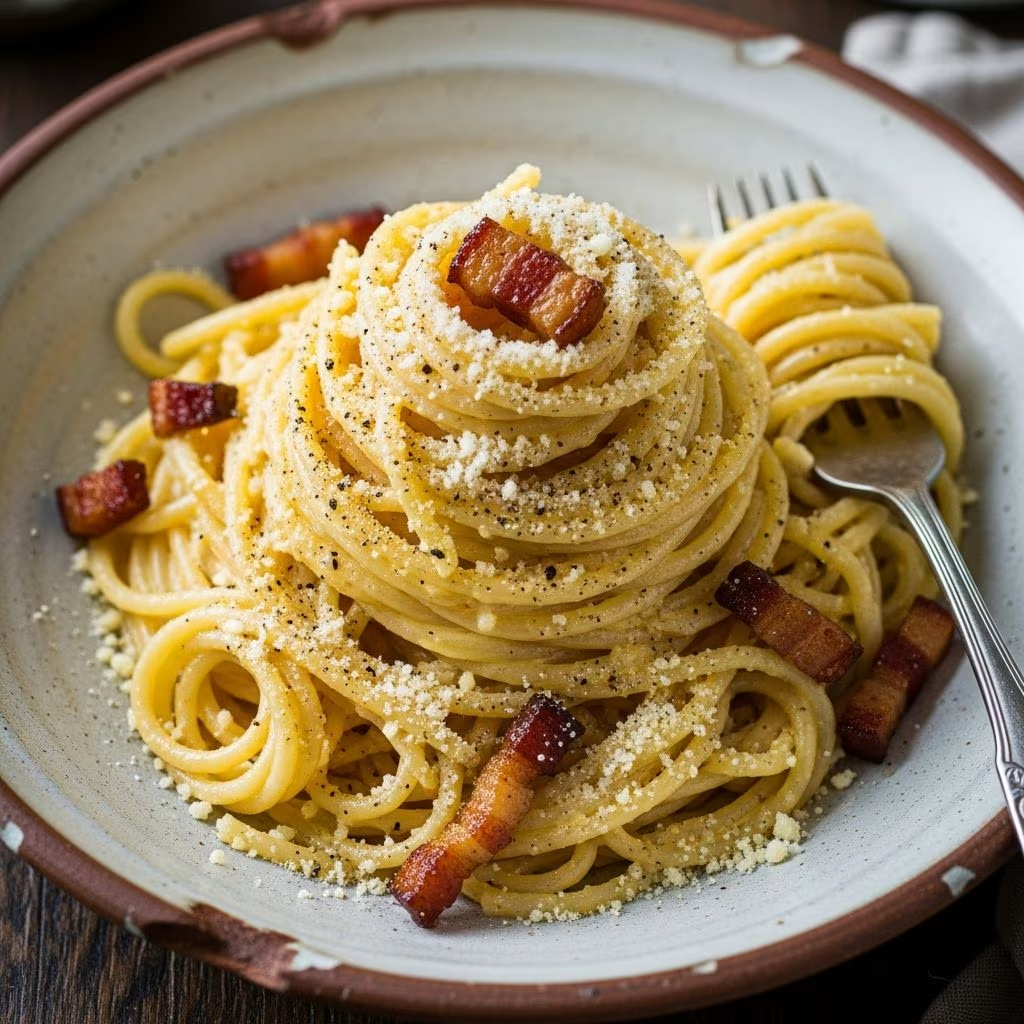
Spaghetti alla carbonara stands as one of Italy’s most iconic pasta dishes, originating from the Eternal City of Rome. This recipe relies on a handful of high-quality ingredients to create a luxurious, creamy sauce without the addition of cream, which many international versions mistakenly include. The harmony of crispy guanciale, sharp pecorino romano, freshly cracked black pepper, and silky egg yolks defines its essence, delivering bold flavors in every bite.
Origins and Cultural Significance of Carbonara
The story of carbonara traces back to mid-20th century Rome, though its exact origins spark lively debates among food historians. Some attribute it to charcoal workers—’carbonari’—who carried preserved ingredients like cured pork, cheese, and eggs during their labors, combining them with dried pasta for sustenance. Others link it to American GIs introducing bacon and powdered eggs post-World War II, adapted by Roman cooks using local guanciale and pecorino. Regardless of its roots, the dish embodies Roman cucina povera, or ‘poor kitchen,’ transforming humble pantry staples into something extraordinary.
In modern Italy, carbonara holds protected status, with strict guidelines from the Academy of Spaghetti alla Carbonara preserving its authenticity. Romans fiercely guard the recipe, rejecting deviations like cream, garlic, onions, or mushrooms. This commitment ensures the dish remains a testament to simplicity and quality ingredients.
Essential Ingredients for Genuine Carbonara
Authenticity hinges on precise ingredient choices. Here’s what you need for four servings:
- 400g spaghetti (or rigatoni/bucatini for variation; opt for bronze-die extruded pasta for better sauce adhesion)
- 200-280g guanciale (cured pork cheek; avoid pancetta or bacon for true flavor)
- 4-5 fresh egg yolks (room temperature; large size, about 1 per person plus extra)
- 100-200g Pecorino Romano DOP (grated finely; aged with black rind for sharpness)
- Black peppercorns (freshly cracked; no pre-ground)
- Salt (for pasta water only; guanciale provides salinity)
Guanciale, from the pig’s jowl, offers a richer fat profile than pancetta, rendering into a flavorful base. Pecorino Romano’s intense, salty bite cuts through the richness, while yolks create the signature emulsion. Proportions vary slightly by source, but aim for balance: roughly 100g guanciale, 100g cheese, and 4 yolks per 400g pasta.
Step-by-Step Guide to Perfect Carbonara
Preparation takes about 20 minutes, emphasizing timing to prevent overcooked eggs or soggy pasta. Follow these steps meticulously.
Prep guanciale: Trim rind if present, cut into 1cm thick strips or lardons. Place in a cold, wide skillet (no oil needed). Heat gently over low-medium, rendering fat slowly until translucent and edges crisp (5-7 minutes). Remove half the guanciale to a plate; reserve fat.
Boil pasta: Bring a large pot of water to a rolling boil (use 4-5 liters for 400g pasta). Add coarse sea salt (1-2% of water weight). Cook spaghetti al dente, reserving 1-2 cups starchy pasta water before draining 2 minutes early.
Mix egg sauce: In a heatproof bowl, whisk yolks with grated Pecorino and generous cracked pepper until smooth. Add 2-3 tbsp hot pasta water gradually, emulsifying into a thick, velvety cream. This tempers the eggs, preventing scrambling.
Combine off-heat: Add drained pasta to skillet with guanciale and fat over low heat. Toss 30 seconds to coat. Remove from heat, pour in egg mixture, and stir vigorously with tongs, adding reserved pasta water spoonful by spoonful until creamy and glossy (1-2 minutes). Reincorporate crispy guanciale.
Serve immediately: Twirl into preheated bowls, topping with extra Pecorino, pepper, and any remaining guanciale. Enjoy hot to savor the emulsion.
Pro Tips for Restaurant-Quality Creaminess
The hallmark of great carbonara is its luscious, custard-like sauce—not scrambled eggs. Success lies in technique:
- Low and slow guanciale: Start cold to render fat evenly without burning.
- Al dente pasta: Undercook slightly; residual heat and starch finish the job.
- Emulsify properly: Use pasta water’s starch to bind eggs, cheese, and fat into a stable sauce.
- Off-heat mixing: High heat coagulates proteins; momentum from stirring creates silkiness.
- Fresh ingredients: Pasture-raised eggs and DOP-certified Pecorino elevate results.
For safety with raw-ish yolks, pasteurize by placing the egg-cheese bowl over simmering pasta water (bagnomaria method), stirring to 52-60°C before combining.
Ingredient Substitutions and Variations
While purists shun changes, adaptations exist:
| Original | Substitution | Notes |
|---|---|---|
| Guanciale | Pancetta | Milder; less ideal but workable |
| Pecorino Romano | Parmesan | Sweeter; mix 50/50 for balance |
| Spaghetti | Tonarelli or Rigatoni | Thicker shapes hold sauce better |
| 4 yolks | 3 whole eggs | Traditional rural version; looser sauce |
Vegan twists use aquafaba and nutritional yeast, but they stray from authenticity. Regional tweaks include Amatrice Pecorino.
Common Mistakes to Avoid
- Adding cream: Unauthentic; dilutes flavor.
- Overcooking eggs: Results in frittata-like texture.
- Using pre-grated cheese: Anti-caking agents prevent melting.
- High heat final mix: Scrambles yolks instantly.
- Skipping pasta water: Essential for emulsion.
Pairing Suggestions and Serving Ideas
Serve carbonara as a primo (first course) with crisp greens like radicchio salad or artichokes. Pair with a young Pecorino-friendly white like Frascati or Verdicchio. For wine, acidity cuts richness. Portion generously—it’s hearty. Leftovers reheat gently with pasta water splash, but best fresh.
Frequently Asked Questions (FAQs)
Is cream in real carbonara?
No, traditional recipes exclude cream. Creaminess comes from emulsified eggs, cheese, and pasta water.
Guanciale vs. bacon?
Guanciale is pork cheek, smokier and fattier. Bacon adds unwanted smoke.
How to prevent scrambled eggs?
Mix off-heat, use starchy water, and stir rapidly.
Can I make it vegetarian?
Replace guanciale with smoked mushrooms or zucchini, but it’s not authentic.
How much pasta per person?
100g dry per serving for mains.
Nutritional Breakdown (Per Serving, Approx.)
| Nutrient | Amount |
|---|---|
| Calories | 650 |
| Protein | 25g |
| Fat | 35g |
| Carbs | 55g |
Rich in protein and fats; enjoy in moderation.
(Word count: 1678)
References
- Ricetta Carbonara Originale, la Guida Definitiva — La Taverna dei 40. Accessed 2026. https://www.latavernadeiquaranta.com/curiosita/ricetta-carbonara-originale/
- Spaghetti alla Carbonara: la Ricetta originale passo passo — Tavolarte Gusto. Accessed 2026. https://www.tavolartegusto.it/ricetta/spaghetti-alla-carbonara/
- Ricetta CARBONARA, ricetta originale cremosissima come a Roma — Giallo Zafferano Blog. Accessed 2026. https://blog.giallozafferano.it/dulcisinforno/spaghetti-alla-carbonara/
- Carbonara Ancient recipe, original recipe — YouTube (Chef Stefano Barbato). Accessed 2026. https://www.youtube.com/watch?v=rCrC72R_k6k
- PASTA ALLA CARBONARA RICETTA ORIGINALE ROMANA — Giallo Zafferano Blog. Accessed 2026. https://blog.giallozafferano.it/valeriaciccotti/pasta-alla-carbonara/
- Spaghetti alla Carbonara – Cremosi e con Tuorli Pastorizzati — YouTube. Accessed 2026. https://www.youtube.com/watch?v=1iNq6vknu6M