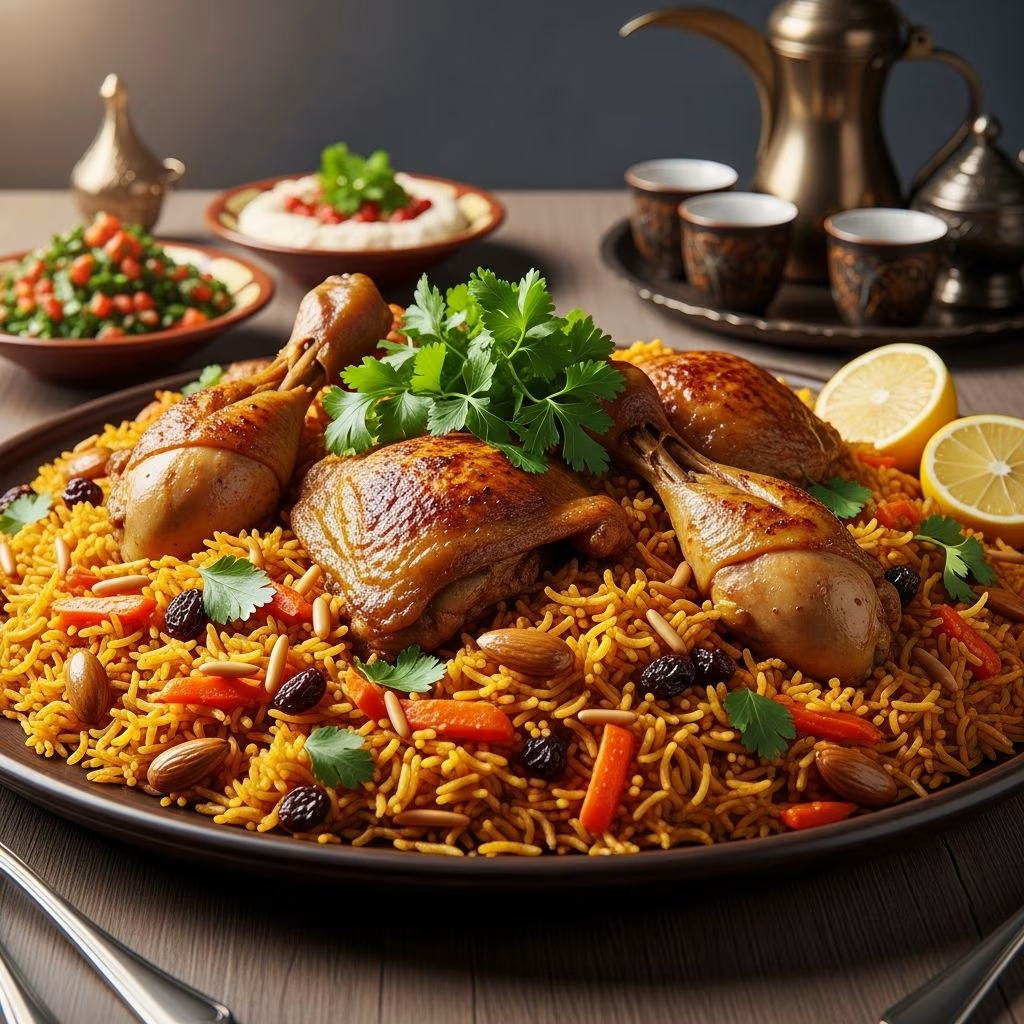
Al Kabsa stands as the crown jewel of Saudi Arabian cuisine, a dish that captures the essence of hospitality and rich flavors from the Arabian Peninsula. This one-pot wonder combines tender chicken pieces simmered in a symphony of spices with fluffy basmati rice that soaks up every bit of the savory broth. Popular across the Gulf region, kabsa is often served at family gatherings, weddings, and religious holidays like Eid, symbolizing abundance and warmth.
The Roots and Significance of Kabsa in Arabian Culture
Kabsa traces its origins to the nomadic Bedouin traditions, where simple ingredients were transformed into nourishing meals using available spices and meats. Over time, it evolved into Saudi Arabia’s national dish, reflecting influences from Persian, Indian, and Ottoman cuisines through trade routes. The name ‘kabsa’ refers to the pressing or pressing down of rice during cooking, ensuring even absorption of flavors.
In modern Saudi homes, kabsa is prepared fresh for special occasions. It’s typically presented on a large communal platter, where diners eat with their right hands, fostering a sense of togetherness. Variations exist across the Kingdom—coastal versions might include seafood, while inland preparations emphasize lamb or camel—but chicken kabsa remains the most accessible and beloved for home cooks worldwide.
Essential Ingredients for Perfect Kabsa
The magic of kabsa lies in its spice blend, which delivers a balance of warmth, earthiness, and subtle citrus notes. Here’s a breakdown of key components:
- Protein: 1 whole chicken (about 3-4 lbs), cut into 8-10 pieces with skin on for crispiness.
- Rice: 3 cups basmati rice, rinsed thoroughly to remove excess starch for fluffy grains.
- Aromatics: 2 large onions (finely chopped), 4-6 garlic cloves (minced), and fresh ginger (1 tsp paste).
- Vegetables: 2-3 tomatoes (blended or diced), 1-2 carrots (grated), and tomato paste (2 tbsp).
- Spices: A signature mix including 1 tsp each of ground cumin, coriander, cardamom, cinnamon, black pepper, and turmeric; whole spices like cloves, bay leaves, and dried lime (loomi).
- Liquids: 4-6 cups water or chicken broth, plus 1-2 stock cubes for depth.
- Garnishes: Raisins, slivered almonds or pine nuts (toasted), and fresh parsley or cilantro.
- Fats: 1/4 cup butter, ghee, or vegetable oil for sautéing.
These ingredients create layers of flavor: the chicken infuses the rice with richness, while spices provide an aromatic backbone reminiscent of a bustling spice souk.
Step-by-Step Guide to Cooking Saudi Chicken Kabsa
Preparing kabsa is straightforward, involving simmering and steaming techniques that yield restaurant-quality results at home. Total time is about 1.5 hours, serving 6-8 people.
Prepare the Chicken Base
- Heat oil or butter in a large pot over medium heat. Toast whole spices (cardamom pods, cloves, bay leaves) for 1-2 minutes until fragrant.
- Add chopped onions, garlic, and ginger. Sauté until onions turn golden, about 5-7 minutes.
- Stir in tomato paste, blended tomatoes, grated carrots, and ground spices. Cook for 3-4 minutes to release their oils.
- Add chicken pieces, skin-side down first, browning for 5 minutes per side. Season with salt.
- Pour in water or broth (enough to cover chicken by 1 inch), add dried lime or lemon slices. Bring to a boil, then simmer covered for 25-30 minutes until chicken is nearly tender.
Cook the Rice
- Remove chicken to a plate. Measure broth; you need about 1.5 times the rice volume (e.g., 4.5 cups for 3 cups rice). Top up with water if needed.
- Bring broth to a boil, add drained rice, and stir once. Nestle chicken back on top, skin-side up.
- Cover tightly and cook on low for 20-25 minutes until rice absorbs liquid and is fluffy. Add raisins in the last 10 minutes.
- Turn off heat; let steam covered for 10 minutes.
Finishing Touches
While rice steams, grill or broil chicken pieces for 5-10 minutes until skin crisps and internal temperature reaches 165°F. In a small pan, toast nuts in butter until golden. Fluff rice, transfer to a platter, top with chicken, nuts, raisins, and herbs.
Pro Tips for Restaurant-Quality Kabsa
- Rice Perfection: Soak basmati for 30 minutes pre-cooking to elongate grains and prevent stickiness.
- Spice Balance: Toast spices separately to unlock flavors; adjust heat with chili flakes if desired.
- Chicken Crisp: Pat dry before final grilling; skin-on yields the best texture.
- Make-Ahead: Cook base a day ahead; flavors deepen overnight.
- Vegetarian Twist: Swap chicken for chickpeas or eggplant, using vegetable broth.
Common pitfalls include under-seasoning or over-stirring rice, which breaks grains. Taste broth before adding rice to ensure perfect salt levels.
Variations Across the Arabian Peninsula
Kabsa adapts regionally:
| Region | Protein | Unique Twist |
|---|---|---|
| Saudi Interior | Lamb/Camel | Dried lime dominant, served with yogurt. |
| Gulf Coast | Fish/Shrimp | Coconut milk infusion, milder spices. |
| Emirati | Goat | Extra saffron for golden hue. |
| Qatari | Chicken | Added eggplants, tomato-heavy sauce. |
These tweaks highlight local ingredients while preserving the core one-pot method.
Pairing Kabsa: Sides and Sauces
Elevate your meal with traditional accompaniments:
- Shatta: Spicy tomato-chili sauce blended with garlic, cilantro, lemon, and cumin.
- Yogurt Dip: Plain yogurt mixed with cucumber, mint, and garlic.
- Salata Hara: Fresh tomato-onion salad with lime and parsley.
- Bread: Warm pita or khubz to scoop rice.
Serve family-style on a large tray, drizzling with reserved broth for extra moisture.
Nutritional Profile and Health Benefits
A serving (1/6th recipe) offers about 600 calories, with 30g protein from chicken, complex carbs from basmati, and vitamins from vegetables. Spices like turmeric provide anti-inflammatory benefits, while carrots add beta-carotene. Opt for brown basmati for more fiber, and skinless chicken to reduce fat.
Frequently Asked Questions (FAQs)
What is the difference between kabsa and biryani?
Kabsa uses a simpler spice profile and one-pot cooking, while biryani layers marinated meat and rice, often fried separately.
Can I use a pressure cooker for kabsa?
Yes; sauté on high, add liquids, pressure cook chicken 10 minutes, then rice 5 minutes natural release.
Is kabsa gluten-free?
Naturally yes, as long as garnishes avoid wheat-based items.
How do I store leftovers?
Refrigerate up to 3 days; reheat with a splash of broth. Freezes well for 1 month.
What if I can’t find loomi (dried lime)?
Substitute with lemon zest/juice or tamarind paste for tang.
Conclusion: Bringing Saudi Flavors Home
Mastering Saudi kabsa opens a door to Arabian culinary traditions, delivering a dish that’s as impressive as it is comforting. With practice, you’ll create memories around the table, just like in Riyadh homes. Experiment with spices to make it your own, and share the joy of this timeless recipe.
References
- Al Kabsa The national dish of Saudi Arabia — International Cuisine. 2023-05-15. https://www.internationalcuisine.com/al-kabsa/
- Saudi Arabian Kabsa {Chicken and Rice} — MarocMama. 2022-08-10. https://marocmama.com/saudi-arabian-kabsa-chicken-and-rice/
- Authentic Chicken Kabsa (Saudi Arabia National Dish) — Falasteeni Foodie. 2024-01-20. https://falasteenifoodie.com/saudi-chicken-kabsa/
- Arabic Chicken and Rice (Kabsa) + Video — Silk Road Recipes. 2023-11-05. https://silkroadrecipes.com/kabsa-chicken-and-rice/
- Chicken Kabsa (Saudi Arabia National Dish) — Amira’s Pantry. 2023-03-12. https://amiraspantry.com/chicken-saudi-kabsa/