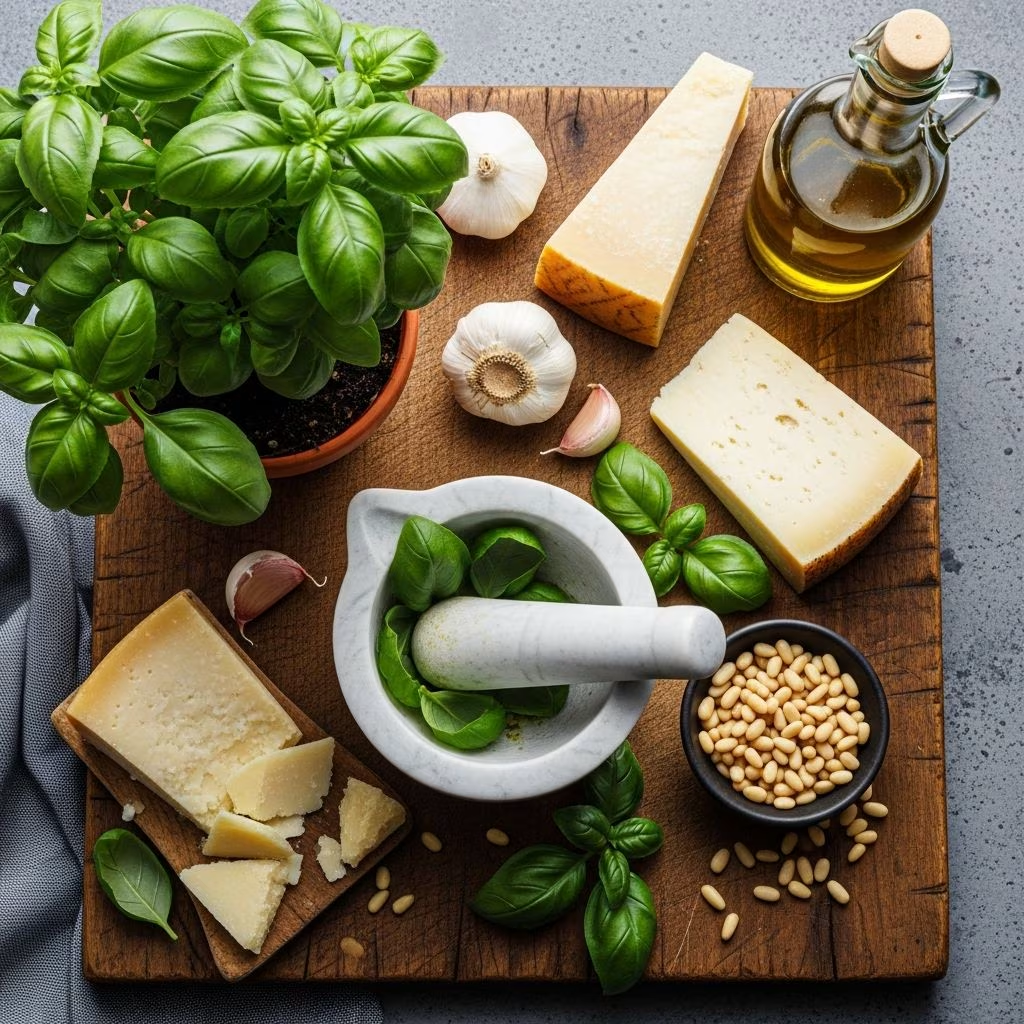
Pesto Genovese stands as one of Italy’s most iconic sauces, originating from the Liguria region in northwestern Italy. This traditional uncooked basil sauce represents the pinnacle of simplicity in Italian cuisine, combining just a handful of carefully selected ingredients into a vibrant, aromatic condiment. The beauty of this sauce lies in its elegant restraint—rather than relying on complex techniques or numerous components, authentic pesto depends entirely on ingredient quality and proper preparation methods to achieve its distinctive character.
The journey to creating restaurant-quality pesto at home begins with understanding what makes this sauce truly authentic. Unlike many modern variations that sacrifice traditional preparation for convenience, genuine Pesto Genovese maintains its integrity through time-honored practices and respect for regional ingredients. Whether you’re a seasoned home cook or someone discovering Italian cuisine for the first time, mastering this classic sauce opens doors to countless culinary possibilities.
Understanding the Essential Ingredients
Creating authentic Pesto Genovese requires selecting ingredients with the same care a painter chooses their pigments. Each component contributes specific flavor notes and textural qualities that, when balanced correctly, create something greater than the sum of its parts.
The Foundation: Fresh Basil
Genovese basil represents the soul of this sauce. This specific variety, available as a protected designation of origin (DOP) product, features small, delicate leaves with an intense, complex aroma that distinguishes it from common sweet basil varieties. The leaves curl slightly under and offer a tender texture ideal for pesto preparation. If authentic Genovese basil proves unavailable in your area, sweet basil with a mild, non-spicy flavor serves as an acceptable substitute, though the final sauce will differ subtly in taste complexity.
The quantity matters significantly—most traditional recipes call for approximately 50 grams or about 60-65 individual leaves. This precise measurement ensures the basil provides sufficient body without overpowering other flavors. The leaves should be picked fresh, ideally in the morning after dew has dried, as this timing captures optimal essential oil content.
Pine Nuts: The Textural Element
Pine nuts, known as pignoli in Italian, bring both textural dimension and subtle sweetness to the sauce. These nuts should be lightly toasted before incorporation, as this process awakens their natural flavors and creates a more complex taste profile. Most recipes use between 15-40 grams of pine nuts, depending on personal preference for nuttiness intensity. Some cooks substitute walnuts when pine nuts are unavailable or to reduce costs, though this adjustment produces a distinctly different flavor character.
Cheese: The Umami Profile
Traditional Pesto Genovese utilizes a specific combination of Italian cheeses that work in concert to create depth and richness. Parmigiano Reggiano provides sharp, complex notes alongside its natural saltiness. Many authentic recipes also incorporate Pecorino Fiore Sardo, a Sardinian cheese that adds a distinct peppered undertone. Some preparations combine both cheeses equally, while others emphasize Parmigiano Reggiano as the dominant cheese. The typical ratio calls for approximately 70 grams of Parmigiano Reggiano combined with 30 grams of Pecorino Fiore Sardo, though variations exist based on regional preferences and personal taste.
Olive Oil: Liquid Gold
Extra virgin olive oil of superior quality forms the binding medium that transforms individual ingredients into a cohesive sauce. Oils from the Ligurian Riviera hold particular prestige in authentic preparations, though any premium extra virgin olive oil with peppery or herbaceous notes complements the basil well. The oil quantity ranges typically from ¼ to ½ cup, adjusted according to desired consistency and personal preference. The oil should be added gradually during the final stages of preparation to achieve proper emulsification and prevent separation.
Garlic and Salt: The Finishing Touches
Two cloves of fresh garlic provide aromatic backbone without overwhelming the delicate basil flavor. The garlic should be peeled and smashed rather than minced whole, allowing better integration during processing. Coarse salt, typically between 4-5 grains or about one teaspoon of sea salt, enhances overall flavor complexity and aids in the ingredient breakdown during preparation.
Preparation Methods and Techniques
The method by which you combine these ingredients significantly influences the final result. While modern convenience often calls for food processors or blenders, understanding traditional preparation reveals why technique matters.
The Traditional Mortar and Pestle Approach
Historically, Pesto Genovese was prepared using a marble mortar and pestle, a method that remains valid and produces exceptional results. This technique involves crushing rather than chopping, which releases essential oils more gently and prevents oxidation that can darken the finished sauce. The process typically follows this sequence: begin with garlic and salt, crushing them into a paste; add pine nuts next, grinding until coarsely broken; introduce basil leaves gradually, pressing and rotating the pestle gently to avoid overheating the delicate leaves; incorporate the grated cheeses smoothly; and finally drizzle in olive oil a small amount at a time while stirring continuously.
Food Processor Method
Most home cooks employ food processors for efficiency, and this approach works well when executed properly. The method begins by adding garlic, toasted pine nuts, and coarse salt to the food processor bowl, then pulsing several times until the mixture becomes finely chopped. Next, add the fresh basil leaves along with the grated cheese and pulse while slowly drizzling olive oil into the mixture until reaching desired consistency. The key to success with this method involves pulsing rather than continuous blending—pulsing provides better control and reduces the risk of over-processing, which generates heat and causes color deterioration.
Achieving Optimal Consistency
The finished pesto should reach a creamy, homogeneous consistency that coats pasta evenly without appearing excessively oily. This balance requires patience during the oil-adding stage. Adding oil too quickly can result in separation, while insufficient oil creates a thick, pasty texture. Most recipes achieve ideal consistency using approximately ⅓ to ½ cup of oil total.
Critical Preparation Tips for Success
Several lesser-known techniques separate good pesto from exceptional pesto. These tips, rooted in traditional Italian practice, address common pitfalls and optimize flavor development.
- Chill your ingredients: Place basil leaves and the food processor bowl in the freezer for 15-20 minutes before beginning. This temperature reduction prevents heat generation during processing, which would oxidize and darken the delicate basil leaves.
- Pat basil completely dry: After washing, use a clean kitchen towel to remove all moisture from basil leaves. Wet basil promotes oxidation and can cause the finished pesto to darken over time.
- Select small, tender leaves: Avoid large, tough basil leaves with thick stems, as these impart bitter flavors. Baby basil varieties with leaves that curl slightly under provide the most tender and flavorful option.
- Toast pine nuts lightly: Briefly toast pine nuts in a dry skillet over medium heat until fragrant, which intensifies their natural sweetness and adds complexity to the final sauce.
- Add olive oil incrementally: Rather than pouring oil in a steady stream, add it in small quantities while processing, allowing proper emulsification and preventing separation.
- Taste and adjust: After combining all ingredients, taste the pesto and adjust salt or cheese quantities if needed to match personal preference.
Storage and Serving Recommendations
Authentic Pesto Genovese maintains optimal quality for limited periods. Store finished pesto in an airtight glass jar in the refrigerator for up to one week, though the color and flavor gradually fade as oxidation occurs naturally. To extend shelf life to several months, freeze pesto in ice cube trays, then transfer frozen cubes to freezer bags for convenient portioning. When freezing, omit the olive oil initially, adding it fresh after thawing for superior texture and flavor recovery.
Serving pesto with pasta requires a specific technique to achieve the desired creamy sauce consistency. Toss hot, freshly cooked pasta directly with the pesto, then add a small amount of reserved pasta water while mixing continuously until the sauce coats each strand evenly. The pasta water’s starch content facilitates proper sauce distribution and creates the characteristic silky coating.
Common Variations and Substitutions
While authentic recipes maintain specific ingredient lists, practical considerations sometimes necessitate adjustments. Understanding how substitutions affect the final result helps maintain dish quality despite ingredient limitations.
| Ingredient | Authentic Choice | Acceptable Substitute | Impact on Flavor |
|---|---|---|---|
| Basil Type | Genovese DOP | Sweet Italian basil | Slightly less complex, more herbaceous |
| Nuts | Pine nuts | Walnuts | Earthier, less sweet profile |
| Cheese | Parmigiano Reggiano + Pecorino | Parmesan only | Less peppery undertone |
| Olive Oil | Ligurian extra virgin | Other premium extra virgin | Subtle regional flavor variations |
Frequently Asked Questions
- Can I make pesto without pine nuts?
- Yes, walnuts provide a suitable alternative, though the flavor profile shifts toward earthiness. Some recipes successfully use sunflower seeds or almonds as alternatives, each contributing distinct flavor characteristics.
- Why does my pesto turn brown?
- Oxidation causes browning, typically resulting from warm basil leaves, wet ingredients, or excessive processing time. Chilling ingredients, ensuring complete dryness, and using brief pulse motions prevent this common issue.
- Should I add water to my pesto?
- Traditional pesto contains no added water beyond what remains on properly dried basil leaves. Pasta water, added when serving with pasta, provides the only liquid adjustment.
- How long does homemade pesto last?
- Refrigerated pesto maintains quality for approximately one week, though oxidation gradually affects color and flavor. Frozen pesto remains usable for several months when properly stored in ice cube trays or freezer bags.
- Can I make pesto in a blender instead of a food processor?
- Yes, though a food processor provides better control through pulsing rather than continuous blending. If using a blender, employ the pulse function and proceed carefully to avoid overprocessing.
- What pasta pairs best with pesto?
- Traditionally, Trofie or Pappardelle pastas work exceptionally well due to their surface area and ability to capture sauce. Short tube pastas like Penne also perform well, while delicate angel hair may become overwhelmed.
Elevating Your Pesto Beyond Basic Applications
While most commonly paired with pasta, authentic Pesto Genovese enhances numerous dishes. Spread it on crostini topped with fresh tomatoes for simple appetizers, swirl it into soups like minestrone for final-moment complexity, or use it as a finishing sauce for grilled vegetables and proteins. A spoonful stirred into mayonnaise creates an excellent sandwich spread, while a small amount folded into softened butter produces an elegant compound butter for bread or steaks.
References
- Pesto Genovese Preparation and Technique — Ask Chef Dennis. 2024. https://www.askchefdennis.com/pesto-genovese/
- Original Pesto Genovese Recipe: Authentic Italian Basil Pesto — Recipes from Italy. 2024. https://www.recipesfromitaly.com/original-pesto-genovese-recipe/
- Pesto Genovese: Classic Basil Pesto — Coley Cooks. 2024. https://coleycooks.com/pesto-genovese-classic-basil-pesto/
- Classic Italian Basil Pesto (Pesto alla Genovese) — The Clever Carrot. 2022-05-10. https://www.theclevercarrot.com/2022/05/classic-italian-basil-pesto-pesto-alla-genovese/
- The Authentic Basil Pesto Recipe — Gourmet Project. 2024. https://www.gourmetproject.net/authentic-genovese-pesto-recipe/