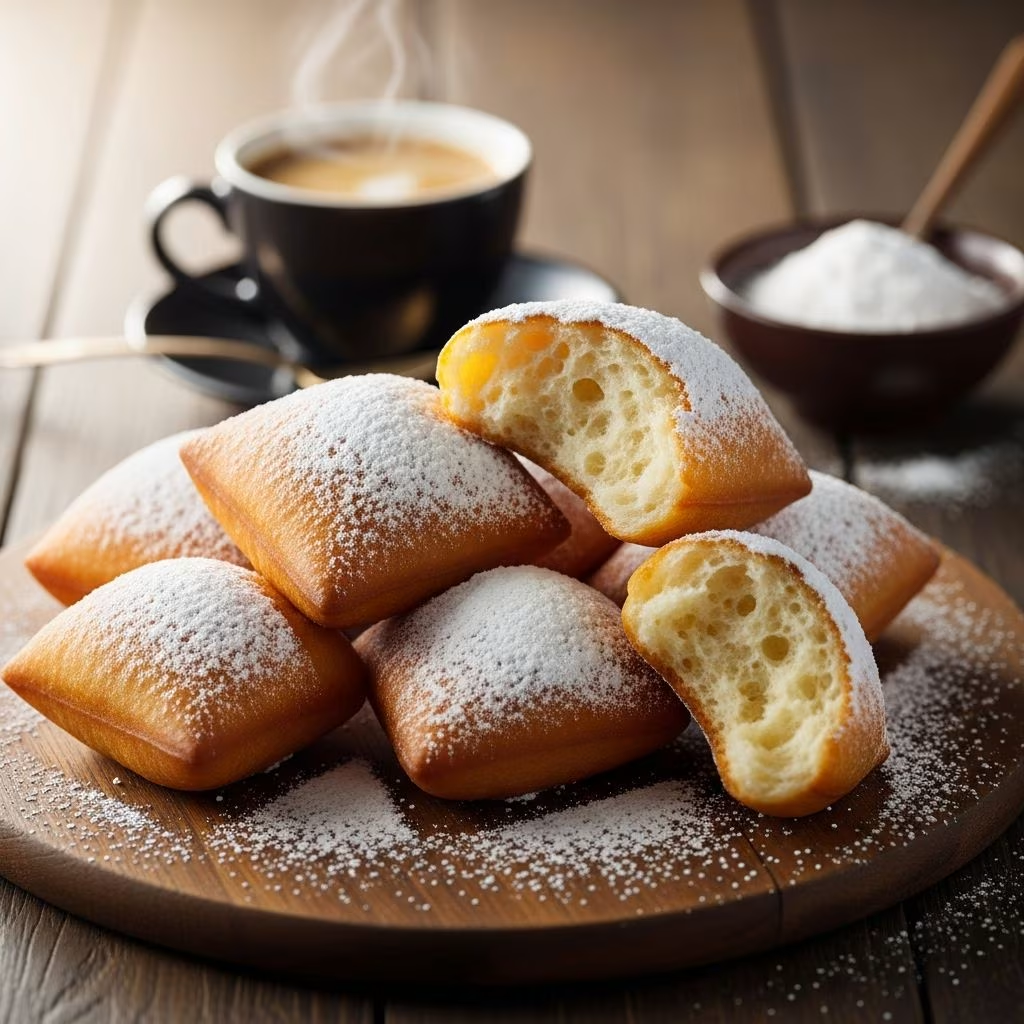
Beignets represent a cornerstone of New Orleans cuisine, offering a delightful combination of light, airy texture and sweet powdered sugar coating. These square fried pastries, deeply rooted in French heritage, have become synonymous with the city’s vibrant food culture, especially during Mardi Gras festivities. Making them at home allows you to capture that fresh-from-the-fryer magic without needing a trip to the French Quarter.
The Allure of New Orleans Beignets
Originating from French settlers in Louisiana, beignets evolved into the pillow-like treats we know today. Unlike typical doughnuts with holes, beignets are cut into uniform squares, fried to golden perfection, and buried under a snowdrift of confectioners’ sugar. Their appeal lies in the contrast: a crisp exterior giving way to a soft, chewy interior infused with subtle vanilla and yeasty notes. Served hot alongside chicory coffee, they evoke the essence of Cafe du Monde, a legendary spot where locals and tourists alike line up for this simple yet indulgent pleasure.
These pastries aren’t just dessert; they’re a cultural icon. During Carnival season, beignets fuel parades and parties, symbolizing joy and indulgence. Home cooks appreciate their straightforward preparation, which yields impressive results with basic pantry staples. Whether you’re hosting a brunch or craving a midnight snack, mastering beignets brings a taste of Louisiana to your kitchen.
Essential Ingredients for Perfect Beignets
Success starts with quality ingredients measured precisely. The dough relies on yeast for lift, enriched with milk, eggs, and butter for tenderness. Here’s a breakdown:
- Warm water (100-115°F): Activates the yeast without killing it. Too hot, and the yeast dies; too cool, and it won’t bloom.
- Active dry yeast: Provides the rise. One packet (2¼ tsp) suits most recipes for 3-4 dozen beignets.
- Granulated sugar: Feeds the yeast and sweetens the dough mildly.
- Evaporated or whole milk: Adds richness and moisture. Evaporated milk mimics traditional recipes for extra creaminess.
- Eggs: Contribute structure and golden color.
- Vanilla extract: Infuses aromatic flavor.
- Bread or all-purpose flour: Bread flour yields chewier results; all-purpose works for lighter versions. About 4-7 cups total, added gradually.
- Salt and butter: Balance flavors and tenderize.
- Oil for frying: Peanut or vegetable oil for high smoke point and neutral taste.
- Powdered sugar: The signature finish—use generously!
Proportions vary slightly across recipes, but the goal is a soft, slightly sticky dough that pulls away from the bowl cleanly.
Step-by-Step Guide to Making Beignets
Patience is key; the process involves proofing yeast, kneading dough, rising, cutting, and frying. Allow 2-3 hours total, mostly hands-off.
1. Proof the Yeast
In a stand mixer bowl or large mixing vessel, combine ¾-1½ cups warm water, ⅓-⅔ cup sugar, and 2¼ tsp yeast. Stir gently and let sit 5-10 minutes until foamy. This confirms the yeast is alive.
2. Mix the Wet Ingredients
Add room-temperature milk (½-1 cup), egg(s), melted or softened butter (3-5 tbsp), and vanilla (2-2½ tsp). Whisk until smooth. The mixture should be creamy and aromatic.
3. Incorporate Flour and Knead
With a dough hook, add 1 tsp salt and 3¾-7 cups flour gradually, starting with 2 cups. Mix on low until combined, then medium until the dough forms a ball and pulls from the sides—about 5-8 minutes. It should be soft and elastic, not sticky. Adjust flour 1 tbsp at a time if needed.
4. First Rise
Transfer to a greased bowl, cover with plastic or a damp cloth, and let rise in a warm spot until doubled, 1-2 hours. Ideal temp: 75-85°F.
5. Roll, Cut, and Second Rise
Punch down dough on a floured surface. Roll to ¼-½ inch thick rectangle. Cut into 2-3 inch squares with a pizza cutter or knife. Place on parchment-lined sheets, cover, and rise 30-45 minutes until puffy.
6. Fry to Golden Perfection
Heat 3-4 inches neutral oil in a deep pot to 360-375°F. Fry 2-3 beignets at a time, 1-2 minutes per side until deep golden. Avoid overcrowding to maintain temperature. Drain on paper towel-lined racks.
7. Dust and Serve
While hot, shake in a bag of powdered sugar or sift generously over top. Serve immediately for peak crispness and melt-in-mouth texture.
Tips for Flawless Beignets Every Time
- Use a thermometer for oil—too low, and they absorb oil; too high, they burn.
- Keep dough hydrated but not sticky; err on less flour.
- Fry in small batches to stabilize oil temp.
- Dust sugar right before serving to prevent sogginess.
- Make ahead: Dough refrigerates overnight for morning frying.
| Common Issue | Solution |
|---|---|
| Dense beignets | Check yeast freshness; ensure full rise times. |
| Oily texture | Oil not hot enough; drain well. |
| Flat dough | Overworked or insufficient flour. |
| Not crispy | Fry longer per side; use bread flour. |
Variations to Elevate Your Beignets
While classic is unbeatable, experiment:
- Filled Beignets: Pipe in chocolate, raspberry jam, or custard post-frying.
- Vegan Version: Swap milk for plant-based, eggs for flax, butter for coconut oil.
- Savory Twist: Omit sugar in dough, fill with cheese or crawfish.
- Flavored Sugar: Mix powdered sugar with cinnamon, cardamom, or matcha.
- Tropical: Infuse with pineapple or pair with fruit sauce.
These adaptations maintain the light fry while adding excitement.
Pairing Suggestions and Serving Ideas
Beignets shine with strong coffee—New Orleans-style chicory cuts sweetness. For brunch, serve with fresh berries, whipped cream, or chocolate sauce. At parties, stack in cones for easy grabbing. They’re versatile for holidays, brunches, or casual desserts, yielding 24-36 pieces per batch.
Storing and Freezing Beignets
Fresh is best, but store cooled, unsugared beignets in airtight containers up to 2 days. Reheat in 350°F oven 5 minutes, then dust. Freeze dough squares pre-rise up to 1 month; thaw, rise, and fry. Fried beignets freeze well up to 1 month—thaw and re-crisp in oven.
Nutrition and Dietary Notes
One beignet (without extra sugar) offers about 200-250 calories, mostly from frying oil and flour. Indulgent, so enjoy in moderation. Gluten-free flours work with adjustments, though texture changes.
Frequently Asked Questions (FAQs)
Can I bake beignets instead of frying?
Baking yields a muffin-like result, not authentic crisp. Brush with butter and bake at 400°F for 10-12 minutes, but frying is traditional.
Why use evaporated milk?
It provides concentrated milk solids for tenderness without watering down dough.
How do I know oil is ready?
Target 360-375°F; test with a dough scrap—it should sizzle and rise immediately.
Can I make beignets without a stand mixer?
Yes, knead by hand 10-15 minutes until smooth and passing windowpane test.
What’s the best oil for frying?
Peanut or canola for high smoke point and clean flavor.
References
- New Orleans-Style Beignets Recipe — Baker by Nature. Accessed 2026. https://bakerbynature.com/new-orleans-style-beignets/
- New Orleans Style Beignets Recipe — Preppy Kitchen. Accessed 2026. https://preppykitchen.com/beignets/
- The Best Authentic New Orleans Beignets Recipe — Chef Billy Parisi. Accessed 2026. https://www.billyparisi.com/the-best-authentic-new-orleans-beignets-recipe/
- 32 Scrumptious Beignet Recipes That Aren’t Just for Mardi Gras — Brit + Co. Accessed 2026. https://www.brit.co/beignet-recipes/
- The BEST New Orleans Beignets Recipe — Grandbaby Cakes. Accessed 2026. https://grandbaby-cakes.com/new-orleans-beignets/