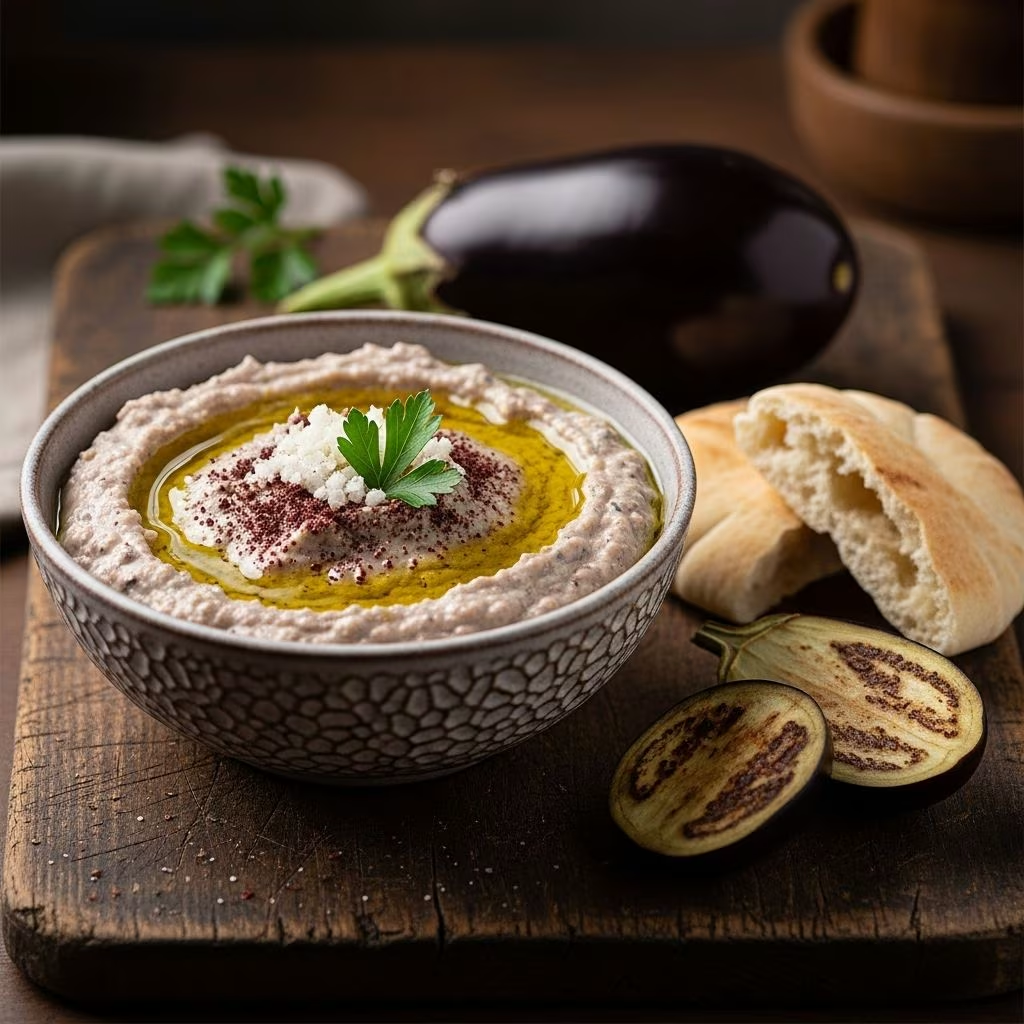
Mutabal stands out as a beloved staple in Middle Eastern cuisine, offering a velvety texture and intense smoky flavor that captivates palates worldwide. This dip, crafted from fire-roasted eggplants blended with tahini, garlic, and lemon, delivers a perfect balance of richness and brightness. Unlike its cousin baba ganoush, mutabal often incorporates tahini for extra creaminess, making it a go-to for mezze spreads.
Origins and Cultural Significance of Mutabal
Rooted in Levantine traditions, mutabal traces its beginnings to regions like Palestine, Lebanon, and Syria, where eggplant dishes are culinary cornerstones. The name ‘mutabal’ derives from Arabic terms evoking the process of seasoning or dipping, highlighting its role in communal dining. Families gather around tables laden with mezze, small plates that encourage sharing and savoring.
In Palestinian kitchens, mutabal embodies hospitality, often prepared fresh for guests with eggplants charred over open flames to infuse that signature smokiness. Its popularity has spread globally, appearing in modern restaurants and home kitchens as a versatile appetizer. This dip not only pleases the taste buds but also connects diners to ancient culinary practices passed down through generations.
Essential Ingredients for Authentic Mutabal
Creating mutabal starts with high-quality components. Here’s a breakdown of the core elements:
- Eggplant: Opt for medium-sized, firm Italian or globe varieties. Their smaller seed cavities yield a smoother, less bitter flesh. One large or two medium eggplants serve 4-6 people.
- Tahini: This sesame seed paste provides creaminess and nutty depth. Stir well before use to blend separated oil and solids. Use 3 tablespoons for balanced flavor.
- Garlic: Fresh cloves, minced or roasted, add pungency. Start with 1-3 cloves, adjusting for preference. Roasted garlic offers a milder taste.
- Lemon Juice: Freshly squeezed, 2-3 tablespoons cut through richness with acidity.
- Salt and Spices: Sea salt to taste, plus optional cumin or smoked salt for enhancement.
- Garnishes: Extra virgin olive oil, pomegranate seeds, parsley, or Aleppo pepper for visual appeal and flavor pops.
Variations might include yogurt for tang or omit tahini for a lighter ‘moutabal’ style popular in some Lebanese recipes.
Step-by-Step Guide to Roasting and Preparing Mutabal
Mastering mutabal hinges on proper roasting and handling. Follow these steps for perfection:
- Prepare the Eggplant: Prick the skin with a fork to prevent bursting. Position directly over a gas flame, under a broiler, or on a grill. Rotate every 5 minutes until charred and soft, about 20-40 minutes.
- Cool and Peel: Transfer to a colander, cover with a towel, and let steam for 10-20 minutes. Peel off blackened skin, discarding stems and seeds.
- Drain Excess Moisture: Place flesh in a sieve over a bowl for 30-60 minutes. This step removes bitter liquids, ensuring a creamy consistency.
- Mash and Season: In a bowl, mash eggplant with a fork for texture. Mix in minced garlic, tahini, lemon juice, salt, and spices. Taste and adjust.
- Rest and Serve: Let flavors meld for 15 minutes. Swirl into a serving dish, drizzle with olive oil, and garnish.
For a video-like walkthrough, imagine the sizzle of eggplant over flame, the peel slipping off effortlessly, and the final mix transforming into a luscious dip.
Expert Techniques for Superior Flavor and Texture
Elevate your mutabal with these pro tips drawn from traditional methods:
- Choose eggplants that feel heavy and shiny – indicators of freshness and meaty flesh.
- Fire-roasting beats oven-baking for authentic smoke; if oven-only, broil on high.
- Strain thoroughly to avoid a watery dip; press gently if rushed.
- Customize garlic: Raw for bite, confit for subtlety.
- Balance tahini by stirring it first; thin with lemon juice if too thick.
- Experiment with add-ins like yogurt for creaminess or mint for freshness in tahini-free versions.
| Common Issue | Solution |
|---|---|
| Bitter taste | Select smaller eggplants, salt flesh pre-roast, drain well. |
| Watery texture | Extend draining to 1 hour, squeeze lightly. |
| Lack of smoke | Use open flame or liquid smoke sparingly. |
| Too thick | Add olive oil or lemon juice incrementally. |
Mutabal vs. Baba Ganoush: Key Differences
Though similar, mutabal and baba ganoush diverge in key ways:
| Aspect | Mutabal | Baba Ganoush |
|---|---|---|
| Main Ingredients | Eggplant, tahini, garlic, lemon | Eggplant, garlic, lemon, often yogurt/onions |
| Texture | Creamier due to tahini | Chunkier, lighter |
| Region | Levant (Palestine, Lebanon) | Broader Middle East/North Africa |
| Best Paired With | Pita, veggies, grilled meats | Similar, but stands alone more |
Mutabal’s tahini makes it richer, akin to hummus, while baba ganoush emphasizes eggplant purity.
Creative Serving Ideas and Pairings
-Mutabal shines in mezze: spread on warm pita, scoop with crudités, or dollop on falafel. Pair with grilled lamb, chicken, or fish for contrast. For fusion twists, use as a sandwich spread or pizza base. Vegan and gluten-free, it’s inclusive for all diets.
- Summer picnic: Serve chilled with crackers.
- Dinner party: Part of a mezze board with hummus, tabbouleh.
- Breakfast: Swirl into labneh toast.
Storage, Make-Ahead, and Freezing Tips
Store in an airtight container in the fridge for up to 5 days. If liquid separates, stir or drain. For make-ahead, prepare up to mashing, then season before serving. Freeze portions for 3 months; thaw overnight and remix. Avoid freezing if yogurt-added for best texture.
Healthy Benefits of Mutabal Ingredients
Eggplants provide fiber and antioxidants; tahini offers healthy fats, protein, and minerals like calcium. Garlic boosts immunity, lemon aids digestion. Low-calorie at ~100 kcal per serving, it’s nutritious party food.
Frequently Asked Questions (FAQs)
Can I make mutabal without tahini?
Yes, for moutabal: Blend eggplant with garlic, lemon, olive oil, mint, and chili for a fresh take.
What’s the best way to roast eggplant without a gas stove?
Broil in oven at 500°F, turning until charred, or grill outdoors.
Is mutabal the same as baba ganoush?
No, mutabal uses tahini for creaminess; baba ganoush is typically tahini-free.
How long does mutabal last in the fridge?
Up to 5 days; stir before serving.
Can I use store-bought roasted eggplant?
Yes, but homemade roasting maximizes smoke flavor.
Recipe Card: Classic Mutabal
Ingredients (Serves 6)
- 2 medium eggplants
- 3 tbsp tahini
- 2-3 garlic cloves, minced
- 3 tbsp lemon juice
- 1 tsp cumin (optional)
- Salt, pepper to taste
- Olive oil, pomegranate for garnish
Instructions
- Roast eggplants until charred.
- Peel, drain 30-60 min.
- Mash with garlic, tahini, lemon, seasonings.
- Garnish and serve.
Prep: 15 min | Cook: 30 min | Total: 1.5 hrs
References
- Mutabal (Authentic Middle Eastern Roasted Eggplant Dip) — Urban Farm and Kitchen. 2023-05-15. https://urbanfarmandkitchen.com/mutabal-roasted-eggplant-dip/
- Mutabal Recipe (The Creamiest Middle Eastern Eggplant Dip) — Moon and Spoon and Yum. 2022-08-10. https://moonandspoonandyum.com/mutabal/
- Mutabal – A Middle Eastern Eggplant Dip Recipe) — Saffron Trail. 2019-07-22. https://www.saffrontrail.com/mutabal-moutabal-eggplant-dip-baba-ganoush/
- Mutabal Recipe — Palestine in a Dish. 2021-03-05. https://palestineinadish.com/recipes/mutabal-recipe/
- Moutabal Recipe — Plant Based Folk. 2023-11-12. https://plantbasedfolk.com/moutabal-recipe/