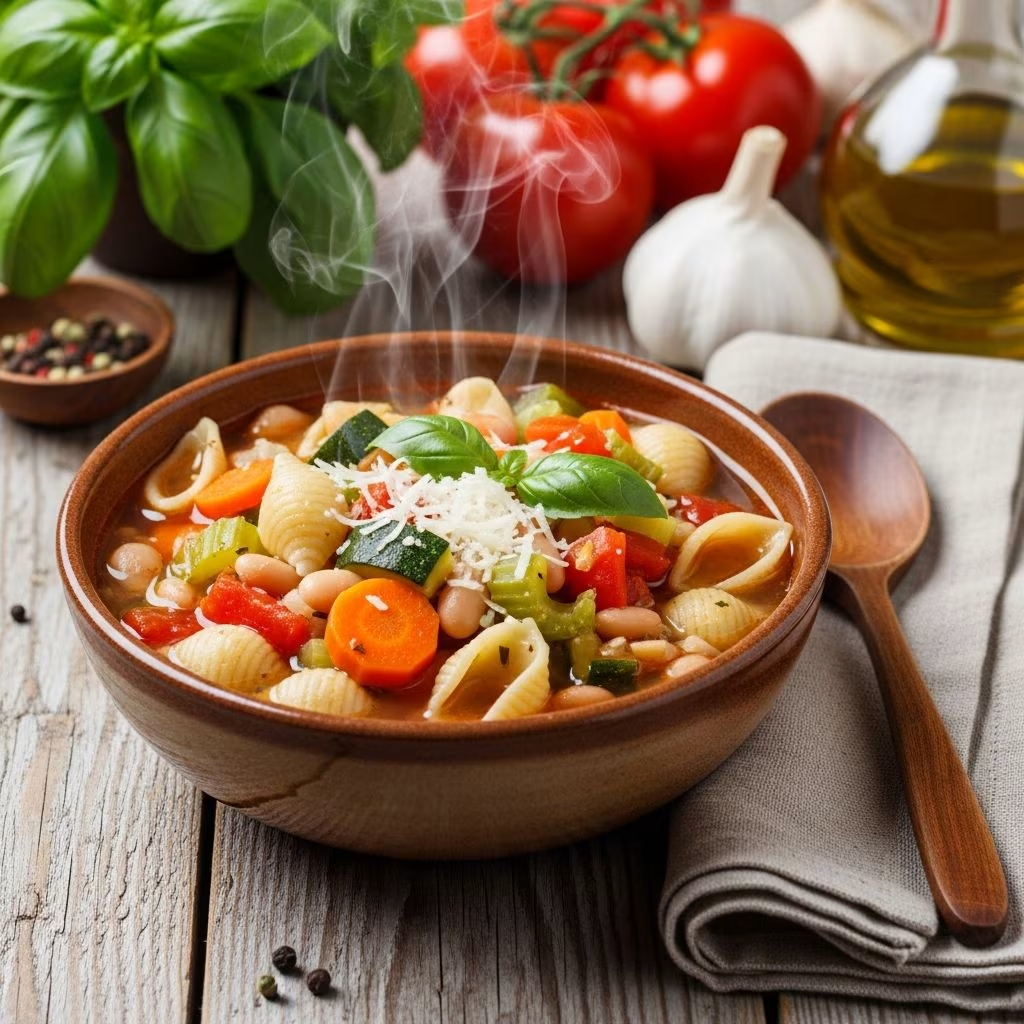
Minestrone soup represents one of the most beloved dishes in Italian cuisine, celebrated for its heartwarming combination of fresh vegetables, tender beans, and delicate pasta in a rich tomato broth. This traditional soup transcends simple comfort food status by offering a flexible canvas for seasonal variations while maintaining its unmistakable Mediterranean character. Whether you’re seeking a weeknight dinner solution or planning to impress guests with authentic Italian fare, understanding the fundamentals of minestrone preparation opens doors to countless delicious possibilities.
Understanding Minestrone: More Than Just Vegetable Soup
Minestrone, which translates to “big soup” in Italian, distinguishes itself from other vegetable soups through its specific combination of ingredients and cooking philosophy. Rather than being a random assortment of available vegetables, authentic minestrone follows a carefully balanced formula that includes a soffritto base, seasonal produce, legumes, pasta or rice, and aromatic herbs. This soup serves as an excellent example of cucina povera, the Italian peasant cooking tradition that transforms humble, accessible ingredients into deeply satisfying meals.
The beauty of minestrone lies in its adaptability. While certain core elements remain constant—the tomato foundation, the aromatic vegetables, and the protein-rich beans—the specific vegetable selections can shift based on seasonal availability and personal preferences. This flexibility makes minestrone an ideal recipe for using up garden harvests or farmers market finds, ensuring that no two batches taste exactly identical.
Essential Ingredients and Their Roles
The Flavor Foundation: Soffritto and Aromatics
Every exceptional minestrone begins with a properly executed soffritto, the holy trinity of diced onion, celery, and carrot that forms the aromatic base. This trio should be sautéed in high-quality extra-virgin olive oil until the onions become translucent and the vegetables begin releasing their natural juices. The soffritto creates a flavor foundation that supports all subsequent ingredients, making this initial step crucial for overall soup quality.
Fresh garlic, added after the soffritto has softened, introduces pungent complexity without overwhelming the other flavors. Allow the garlic to cook for just one to two minutes, stirring constantly to prevent browning, which would impart unwanted bitterness.
Vegetable Selection and Seasonal Considerations
Beyond the soffritto vegetables, minestrone traditionally incorporates two to three additional vegetables that provide textural variety and nutritional diversity. Common choices include:
- Zucchini for delicate sweetness and soft texture
- Green beans for bright color and slight crispness
- Potatoes for hearty substance and creamy mouthfeel
- Spinach or other leafy greens for mineral content and visual appeal
- Seasonal squashes for natural sweetness during autumn months
The key principle involves selecting vegetables with varying cooking times. Heartier vegetables like potatoes enter the pot earlier, while delicate options like spinach join near the end to preserve their color and texture.
Legumes as Protein and Substance
Beans serve double duty in minestrone, providing plant-based protein while contributing to the soup’s hearty, satisfying nature. Both canned beans (which require only draining and rinsing) and dried beans (which need advance soaking and cooking) work effectively. Kidney beans, cannellini beans, Great Northern beans, and navy beans all offer excellent results, though experimenting with different varieties reveals subtle flavor variations.
Tomatoes: The Acidic Backbone
High-quality canned tomatoes form the liquid base that ties all minestrone elements together. Most recipes call for large cans of diced tomatoes (28 ounces) or equivalent amounts in smaller cans. The tomatoes provide acidity that brightens other flavors while their liquid content contributes to the soup’s overall volume. Some preparations incorporate tomato paste as well, which intensifies tomato flavor and adds subtle umami depth.
Liquid Components and Broth Selection
Vegetable broth serves as the primary liquid for minestrone, though some recipes combine broth with added water to create the desired consistency. The choice between store-bought and homemade broth affects the final flavor profile, though either option produces delicious results. Approximately four to six cups of broth creates the ideal soup-to-vegetable ratio.
Pasta, Herbs, and Finishing Elements
Small pasta shapes including elbows, ditalini, orecchiette, or small shells integrate seamlessly into minestrone’s texture. Uncooked pasta added toward the end of cooking prevents mushiness while ensuring the soup absorbs the pasta’s starch, creating a more cohesive broth.
Dried herbs—particularly oregano and thyme—provide essential Mediterranean character. Bay leaves add subtle earthiness and should be removed before serving. Fresh lemon juice or additional olive oil stirred in just before serving brightens the finished soup, while Parmesan cheese grated over individual bowls adds savory depth.
Step-by-Step Cooking Process
Stage One: Building the Flavor Base
Begin by heating two to four tablespoons of extra-virgin olive oil in a large pot or Dutch oven over medium heat. Once the oil shimmers, add the diced onion, celery, and carrots along with a generous pinch of salt and several grinds of black pepper. Cook these aromatic vegetables for approximately six to eight minutes, stirring occasionally, until they soften and become fragrant.
Add minced garlic during the final minute of this stage, stirring constantly to distribute the garlic evenly without allowing it to brown. This careful attention to timing prevents the harsh, burnt-garlic flavor that can develop when garlic cooks too long or too quickly.
Stage Two: Introducing Tomatoes and Broth
Pour in the canned tomatoes along with their liquid and the vegetable broth. Add bay leaves, dried oregano, thyme, and red pepper flakes (if desired for subtle heat) at this stage. Increase heat to medium-high and bring the mixture to a gentle boil, then reduce heat to maintain a steady simmer.
This stage typically requires fifteen to twenty minutes of simmering, allowing the broth to absorb the tomato flavor while the remaining vegetables soften. Partially cover the pot during this phase, leaving about an inch of space for steam to escape and preventing the soup from becoming overly concentrated.
Stage Three: Adding Heartier Vegetables and Beans
Once the initial simmering period concludes, add any vegetables requiring extended cooking time, such as potatoes or root vegetables. Include drained and rinsed beans at this stage as well, giving them time to warm through and absorb the surrounding flavors. Continue simmering, covered, for an additional five to ten minutes.
Stage Four: Finishing Touches
Add uncooked pasta during the final cooking stage, stirring well to distribute the pasta throughout the pot. Simultaneously introduce delicate vegetables like spinach or green beans, which require only minimal cooking time. Continue simmering for eight to twelve minutes, stirring occasionally, until the pasta reaches al dente texture and leafy greens become tender.
Before serving, remove the pot from heat and discard bay leaves. Stir in fresh lemon juice and an additional drizzle of high-quality olive oil to brighten flavors and add richness. Taste the soup and adjust seasoning with additional salt and pepper until flavors reach their peak.
Cooking Techniques and Professional Tips
Temperature Management
Maintaining consistent heat throughout cooking ensures even ingredient cooking while developing flavors harmoniously. A gentle simmer, evidenced by occasional lazy bubbles breaking the surface, represents the ideal cooking speed. Vigorous boiling can cause pasta to break apart and vegetables to become mushy.
Texture Considerations
Professional minestrone achieves a balance between broth and solid ingredients. Avoid oversimmering, which causes vegetables to break down excessively and pasta to disintegrate. Conversely, insufficient cooking leaves vegetables undercooked and pasta al dente rather than properly tender.
Flavor Layering
Building flavor involves strategic ingredient timing rather than dumping everything simultaneously. Soffritto cooking creates foundational umami, tomato simmering adds acidic brightness, herbs and spices contribute aromatic complexity, and finishing olive oil provides silky richness.
Customization for Dietary Preferences
Minestrone naturally accommodates various dietary restrictions. Vegetarian preparations omit meat entirely, making the soup accessible to plant-based eaters. Gluten-sensitive individuals can substitute regular pasta with gluten-free alternatives without compromising the soup’s essential character.
Storage and Make-Ahead Preparation
Minestrone actually improves after sitting overnight, as flavors meld and develop increased complexity. Store cooled soup in airtight containers in the refrigerator for up to four days or freeze for three months. When reheating, add a splash of vegetable broth if the soup has thickened excessively during storage. Note that pasta may continue absorbing liquid over time, creating a thicker consistency in leftover portions.
Frequently Asked Questions
Can I make minestrone in advance?
Yes, minestrone is an excellent make-ahead dish. Prepare the entire soup and refrigerate, adding uncooked pasta separately if you prefer to store the soup longer. Cook pasta fresh when reheating to maintain optimal texture.
What vegetables work best for minestrone?
Minestrone works with virtually any vegetable. Stick to vegetables requiring similar cooking times or add them strategically based on their texture needs. Avoid vegetables with strong flavors that might overpower the delicate tomato base.
Should I use fresh or canned beans?
Both options produce excellent results. Canned beans offer convenience and consistent texture, while dried beans provide more control over final consistency. Rinse canned beans thoroughly before adding to remove excess sodium.
How do I adjust minestrone consistency?
Add vegetable broth to thin the soup or simmer uncovered to reduce and thicken it. Remember that pasta absorbs liquid during cooking and storage, so account for this when adjusting initial consistency.
Can minestrone be made vegetarian?
Traditional minestrone is naturally vegetarian when prepared with vegetable broth. Ensure all other ingredients meet vegetarian requirements if this is a concern.
Variations and Creative Adaptations
While traditional minestrone maintains core characteristics, creative interpretations offer interesting possibilities. Summer versions incorporate fresh vegetables like cherry tomatoes, fresh basil, and delicate zucchini. Autumn preparations feature butternut squash, kale, and heartier root vegetables. Some regional Italian variations use rice instead of pasta, creating a slightly different texture profile.
Adding prepared pesto just before serving introduces Genoese influence, while finishing with a sprinkle of fresh parsley and aged Parmesan creates Tuscan-inspired complexity. Experimenting with different bean varieties or adding white wine during the flavor-building stage offers sophisticated variations.
Conclusion: Mastering Minestrone
Creating exceptional minestrone at home requires understanding fundamental cooking principles while remaining flexible about specific ingredients. By respecting the soffritto foundation, balancing vegetable cooking times, and finishing with bright flavors, anyone can produce restaurant-quality soup that transports diners to sun-drenched Italian kitchens. Whether following traditional approaches or exploring creative variations, minestrone’s fundamental formula ensures delicious results that celebrate seasonal produce and the beauty of simple, honest cooking.
References
- Classic Minestrone Soup Recipe — Cookie and Kate. Retrieved April 2026. https://cookieandkate.com/classic-minestrone-soup-recipe/
- Minestrone Soup Recipe — The Pioneer Woman. Retrieved April 2026. https://www.thepioneerwoman.com/food-cooking/recipes/a68062473/minestrone-soup-recipe/
- The Best Minestrone Soup Recipe — Ambitious Kitchen. Retrieved April 2026. https://www.ambitiouskitchen.com/minestrone-soup-recipe/
- Minestrone Soup Recipe (Thick & Hearty) — Sally’s Baking Addiction. Retrieved April 2026. https://sallysbakingaddiction.com/minestrone-soup/
- Minestrone Soup Recipe — Love and Lemons. Retrieved April 2026. https://www.loveandlemons.com/minestrone-soup/
- The BEST Authentic Italian Minestrone Recipe — The Pasta Queen. Retrieved April 2026. https://thepastaqueen.cooking/recipes/the-best-authentic-italian-minestrone-recipe/