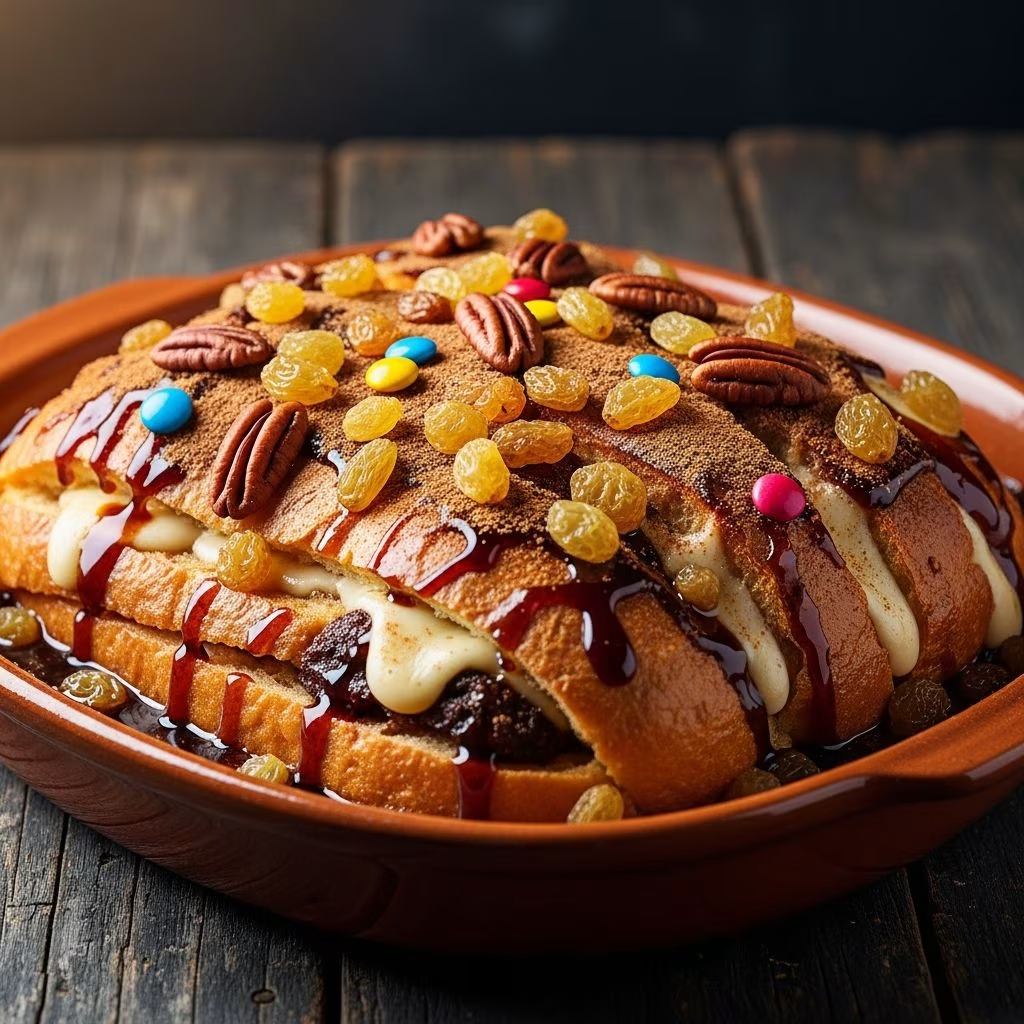
Mexican capirotada stands as a beloved dessert that captures the essence of tradition, blending layers of toasted bread, melted cheese, sweet fruits, and a fragrant spiced syrup. This dish, often prepared during Lent and Christmas, offers a unique fusion of sweet, savory, and nutty flavors that evoke family gatherings and cultural heritage. Rooted in Mexican culinary history, capirotada transforms simple ingredients into a comforting pudding-like treat soaked in piloncillo syrup infused with cinnamon and cloves.
The Cultural Roots of Capirotada
Capirotada traces its origins to colonial Mexico, where Spanish influences merged with indigenous ingredients. The name derives from the Spanish word “capirote,” referring to a hooded monk’s garment, symbolizing Lent’s penitential themes. During Holy Week, families prepare this pudding as a meatless indulgence, incorporating pantry staples like day-old bread and unrefined cane sugar known as piloncillo. Its preparation varies by region, with northern Mexico and Texas border areas favoring cheese for a gooey contrast, while other versions highlight fruits like plantains or apricots.
Passed down through generations, capirotada holds nostalgic value. Home cooks adapt it based on available ingredients, but core elements remain: a rich syrup, sturdy bread, and toppings that create textural harmony. In many households, it’s served warm, allowing the syrup to meld flavors as it cools slightly.
Essential Ingredients for Classic Capirotada
Building an authentic capirotada starts with high-quality components. Piloncillo, a raw cane sugar cone, provides deep molasses notes superior to brown sugar substitutes. Bolillo rolls or French bread offer the ideal crusty base that absorbs syrup without disintegrating.
- Bread: 4-6 bolillo rolls, sliced ½-inch thick and toasted for crispness.
- Syrup Base: 4-6 cups water, 12-24 oz piloncillo, 3-4 cinnamon sticks, 3-6 cloves.
- Add-Ins: 1 cup raisins (golden or regular), ½-1 cup roasted peanuts or sliced almonds, 2-3 cups shredded cheese (Monterey Jack, Oaxaca, or Cheddar).
- Optional Enhancers: Butter for toasting bread, evaporated milk for creaminess, fruits like bananas or mangoes.
Cheese might surprise newcomers, but it melts into a savory layer that balances the syrup’s intensity, creating a pudding reminiscent of tres leches cake with a Mexican twist.
Mastering the Syrup: Heart of the Dish
The spiced piloncillo syrup defines capirotada’s flavor profile. Simmer water with piloncillo cones until dissolved, adding cinnamon sticks and cloves for aromatic warmth. Recipes vary: some steep the mixture for 2 hours post-simmer to intensify spices, straining solids before use.
Expect a 20-30 minute reduction to a thin, pourable consistency—not too thick, as it thickens during baking. This syrup soaks the bread layers, infusing every bite with caramelized sweetness and subtle spice. For authenticity, source whole spices; ground versions work but lack depth.
Step-by-Step Guide to Preparing Capirotada
Assembling capirotada requires patience for optimal soaking. Preheat your oven to 350°F (175°C). Follow these detailed steps for a foolproof result serving 8-10.
- Toast the Bread: Slice bolillos into ½-inch pieces, butter both sides if desired, and bake on a sheet for 3-6 minutes per side until golden and dry. This prevents sogginess.
- Prepare Syrup: Boil 4½ cups water with 12 oz piloncillo, 4 cinnamon sticks, and 6 cloves. Simmer 20 minutes, steep covered for 2 hours (optional), then strain.
- Layer the Dish: In a greased 9×13-inch baking dish, arrange one-third of the bread. Sprinkle one-third each of raisins, nuts, and cheese. Pour one-third syrup evenly. Repeat twice, allowing 15-minute soaks between layers for absorption.
- Bake: Cover with foil and bake 40 minutes. Uncover for 10-15 minutes until cheese browns and top crisps. Rest 10 minutes before serving warm.
Total time: About 3-4 hours, including steeping. The layered approach ensures even moisture distribution.
Regional Variations and Creative Twists
Capirotada adapts to local tastes. Traditional northern versions emphasize cheese and raisins, while Pati Jinich’s rendition adds caramelized plantains and mango for tropical flair. Texas-Mexican styles incorporate pecans and apricots, using brown sugar if piloncillo is unavailable.
| Variation | Key Additions | Region/Influence |
|---|---|---|
| Classic Northern | Peanuts, Monterey Jack cheese | Mexico/Texas border |
| Fruity Deluxe | Plantains, mango, Cotija cheese | Central Mexico |
| Creamy Adaptation | Heavy cream, milk, almonds | Modern U.S. |
| Nutty Pecan | Pecans, dried apricots | Tex-Mex |
Experiment with Oaxaca cheese for stretchiness or add apple butter for subtle tartness.
Expert Tips for Perfect Capirotada Every Time
- Use stale or thoroughly toasted bread to avoid mushiness.
- Let layers soak 15 minutes each—patience yields tender results.
- Check browning midway; foil prevents over-caramelization.
- Source piloncillo from Latin markets for authenticity; grate if cones are hard.
- Serve with whipped cream or vanilla ice cream for indulgence.
- Store leftovers covered in fridge up to 3 days; reheat gently to revive crisp top.
Pairing Suggestions and Serving Ideas
Warm capirotada shines post-meal during Lent dinners or holiday feasts. Pair with atole or champurrado for a cozy beverage match. For breakfast, top with fresh berries. Its versatility extends to potlucks, where the aroma draws crowds.
Nutritional Profile and Dietary Notes
A serving (1/10th) offers approximately 400-500 calories, rich in carbs from bread and sugar, with protein from cheese and fats from nuts. It’s naturally vegetarian; use vegan cheese for plant-based versions. Mindful portions suit festive indulgence.
Frequently Asked Questions (FAQs)
What is capirotada made of?
Capirotada features toasted bread layers with raisins, nuts, cheese, soaked in piloncillo-cinnamon-clove syrup.
When is capirotada traditionally eaten?
Primarily during Lent, Holy Week, and Christmas in Mexican and Tex-Mex cultures.
Can I substitute brown sugar for piloncillo?
Yes, 1½ cups packed dark brown sugar per 12 oz piloncillo, but it lacks the robust flavor.
Why does capirotada have cheese?
Cheese adds savory meltiness, balancing sweetness—a hallmark of authentic recipes.
How long does capirotada last?
Refrigerated, up to 3 days; freeze unbaked assembly for later.
Conclusion: Savor the Tradition
Capirotada embodies Mexico’s culinary soul—simple yet profound. Whether following a family recipe or innovating, this bread pudding invites warmth and joy. Gather ingredients, layer with care, and bake a piece of history.
References
- Grandma’s Capirotada Recipe — Latino Foodie. Accessed 2026. https://www.latinofoodie.com/recipes/capirotada-recipe/
- Authentic Mexican Capirotada — Muy Bueno Blog. Accessed 2026. https://muybuenoblog.com/capirotada-mexican-bread-pudding/
- Easy Capirotada Recipe — A Farmgirl’s Dabbles. Accessed 2026. https://www.afarmgirlsdabbles.com/capirotada/
- Capirotada Mexican Bread Pudding — Isabel Eats. Accessed 2026. https://www.isabeleats.com/capirotada-mexican-bread-pudding/
- Capirotada Mexican Bread Pudding Lent — Homesick Texan. Accessed 2026. https://www.homesicktexan.com/capirotada-mexican-bread-pudding-lent/
- Pati Jinich How to Make Capirotada — YouTube (Pati Jinich). Accessed 2026. https://www.youtube.com/watch?v=6UQ9IDNA7Mo