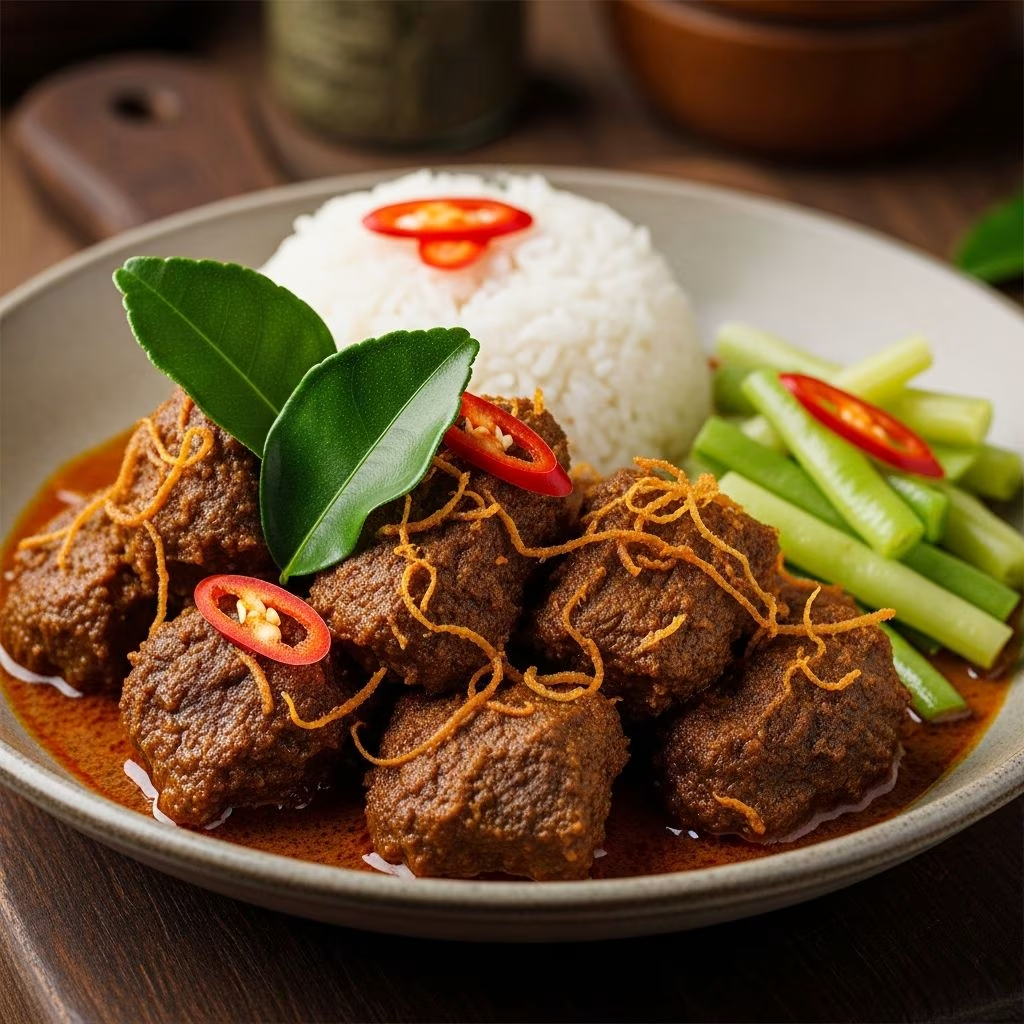
Malaysian Beef Rendang stands as one of the world’s most revered dishes, renowned for its intricate layers of flavor, tender meat, and rich, aromatic sauce. This slow-cooked beef curry originates from the Minangkabau region of Indonesia but has become a staple in Malaysian cuisine, especially during festive occasions like Hari Raya. What sets it apart is the transformation of coconut milk into a thick, caramelized coating that clings to melt-in-your-mouth beef chunks, achieved through hours of patient simmering.
The Essence of Rendang: History and Cultural Significance
Rendang’s journey spans centuries, evolving from a preservation method in tropical climates to a symbol of hospitality and celebration. In Malaysia, it’s prepared in large pots for communal feasts, embodying the fusion of Malay, Indian, and indigenous influences. The dish’s UNESCO recognition as an intangible cultural heritage underscores its global appeal, often ranked among the top foods worldwide for its depth of taste.
Traditionally cooked over wood fires, rendang requires time and technique, resulting in a dry curry where the sauce reduces completely, leaving spiced beef glistening with oil. This process not only intensifies flavors but also ensures longevity without refrigeration, a nod to its practical origins.
Key Ingredients for Authentic Flavor
The magic of Beef Rendang lies in its spice paste, or rempah, blended from fresh roots, herbs, and aromatics. Here’s a breakdown of essentials:
- Beef: Opt for chuck, brisket, or short ribs (about 2-4 lbs, cut into 2-inch cubes) for optimal tenderness during braising.
- Coconut Milk: 2-3 cans of full-fat, unsweetened (around 800ml total) forms the creamy base that reduces into a glossy sauce.
- Spice Paste Base: Shallots, garlic, ginger, galangal, lemongrass, turmeric, chilies (fresh and dried for heat balance), blended smooth.
- Whole Spices: Cinnamon sticks, star anise, cloves, cardamom pods for warmth and fragrance.
- Enhancers: Kaffir lime leaves, tamarind pulp or skin for tang; toasted coconut (kerisik) for nutty depth; palm or brown sugar for subtle sweetness.
These ingredients create a symphony of sweet, spicy, sour, and savory notes, with no single flavor overpowering the rest.
Step-by-Step Guide to Cooking Beef Rendang
Preparing Rendang demands patience, typically 3-4 hours total, but the results are transformative. Follow these steps for perfection.
1. Prepare the Spice Paste
Soak dried chilies in hot water for 30 minutes to soften, then drain. In a food processor, combine 10-15 shallots, 6-8 garlic cloves, 2-inch ginger piece, 2-inch galangal, 4-6 lemongrass stalks (white parts only), 10-20 red chilies, 1 tsp turmeric powder, and a splash of water. Blitz until a fine paste forms. This rempah is the heart of the dish.
2. Sauté the Aromatics
Heat 4-5 tbsp oil in a heavy-bottomed pot over medium heat. Add 2 cinnamon sticks, 3 star anise, 4 cloves, 3 cardamom pods, and 2 bruised lemongrass stalks. Stir in the spice paste and cook for 10-15 minutes, stirring to prevent burning, until fragrant and oil separates.
3. Brown the Beef
Add beef cubes, stirring to coat evenly. Sear for 3-5 minutes until browned. This step locks in juices and builds flavor foundation.
4. Simmer to Perfection
Pour in coconut milk, 1-2 cups water or broth, tamarind pulp, kaffir lime leaves (6-8), 1-2 tbsp sugar, and salt. Bring to a boil, then reduce to low simmer. Cook uncovered for 2-3 hours, stirring occasionally. The sauce will darken, thicken, and reduce as coconut solids fry, caramelizing the beef. In the final 30 minutes, stir frequently and add toasted kerisik for texture.
Test doneness: Beef should shred easily, sauce dry and oily. Total time yields about 6-8 servings.
Pro Tips for Restaurant-Quality Rendang
- Low and Slow: Maintain gentle simmer to avoid curdling coconut milk; use a diffuser if needed.
- Kerisik Magic: Toast 1/2 cup grated coconut until golden, then pound into paste. It thickens and enriches.
- Chili Control: Adjust fresh vs. dried chilies for heat; deseed for milder version.
- Make-Ahead: Flavors deepen overnight; refrigerate up to 5 days or freeze.
- Pot Choice: Dutch oven or heavy pot prevents sticking during reduction.
Nutrition and Dietary Notes
A 1-cup serving offers approximately 450-550 calories, high in protein (30g+), healthy fats from coconut, and vitamins from spices. It’s naturally gluten-free and can be keto-adapted by reducing sugar. Balance richness with steamed rice or ketupat (compressed rice cakes).
| Nutrient | Per Serving | % Daily Value |
|---|---|---|
| Calories | 520 | 26% |
| Protein | 35g | 70% |
| Fat | 40g | 51% |
| Carbs | 10g | 4% |
Perfect Pairings and Serving Suggestions
Serve Rendang hot with steamed jasmine rice to soak up the sauce, or traditionally with ketupat for festivals. Accompany with acar (spicy vegetable pickle) for crunch and acidity, or fresh cucumber slices. For drinks, try teh tarik (pulled tea) or sparkling lime soda to cut richness.
Variations include chicken rendang (shorter cook time) or vegetarian with jackfruit, maintaining the spice profile.
Common Mistakes and How to Avoid Them
- High Heat: Causes sauce to split; always simmer low.
- Under-Reduction: Wet rendang isn’t authentic; cook until dry.
- Skipping Kerisik: Essential for authenticity and thickness.
- Lean Beef: Use fatty cuts for moisture.
Frequently Asked Questions (FAQs)
Can I use a slow cooker?
Yes, cook on low for 6-8 hours after sautéing paste and beef, but finish on stovetop to reduce sauce properly.
How spicy is it?
Medium-hot; reduce chilies for family-friendly heat.
What’s the difference between Malaysian and Indonesian rendang?
Malaysian is drier and spicier; Indonesian wetter. Both use similar spices.
Can I make it dairy-free?
It’s naturally dairy-free with coconut milk.
How long does it last?
5 days in fridge, 3 months frozen. Reheat gently.
Why Rendang Captivates Home Cooks Worldwide
Beef Rendang transcends a mere recipe; it’s a labor of love yielding unparalleled satisfaction. Its complexity rewards experimentation while staying true to roots. Whether for holidays or weeknights, it brings Southeast Asian vibrancy to any table. Master this, and you’ll have a dish that impresses every time.
References
- Beef Rendang – The Woks of Life — The Woks of Life. 2023-05-15. https://thewoksoflife.com/beef-rendang/
- Beef Rendang Malaysian style — Just As Delish. 2012-02-20. https://justasdelish.com/beef-rendang-malaysian-style/
- Beef Rendang (The BEST Recipe!) — Rasa Malaysia. 2024-01-10. https://rasamalaysia.com/beef-rendang-recipe-rendang-daging/
- Beef Rendang — El Mundo Eats. 2022-08-05. https://www.elmundoeats.com/malaysian-beef-rendang-curry/
- Authentic Beef Rendang Recipe — Singaporean Malaysian Recipes. 2023-11-12. https://www.singaporeanmalaysianrecipes.com/beef-rendang-daging/
- Malaysian Beef Rendang — Curious Nut. 2021-06-18. https://www.curiousnut.com/beef-rendang/
- Beef Rendang — RecipeTin Eats. 2024-03-22. https://www.recipetineats.com/beef-rendang/