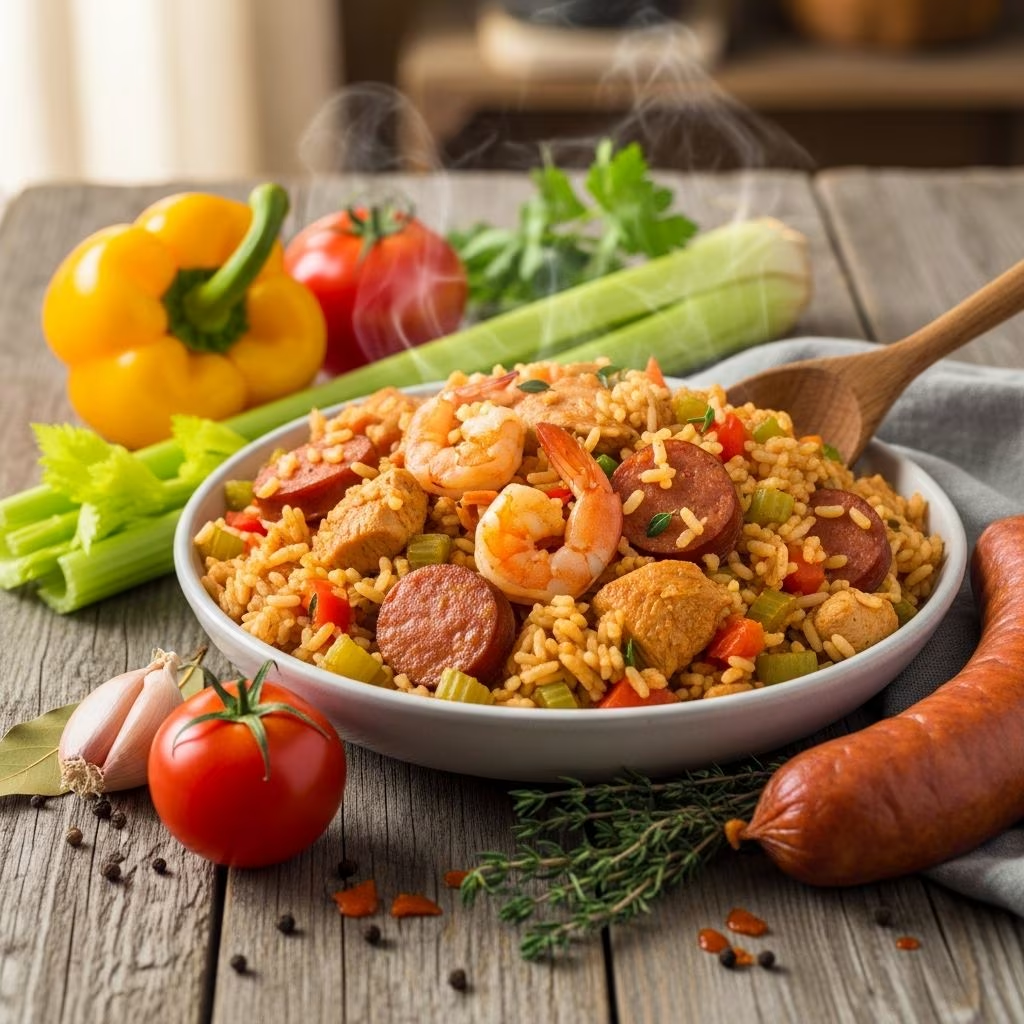
Jambalaya stands as one of the most iconic dishes emerging from Louisiana’s rich culinary heritage. This one-pot meal represents a fascinating blend of cultural influences, combining Spanish, French, and African cooking traditions into a single, flavorful composition. Whether you’re preparing dinner for your family or hosting guests, jambalaya offers a satisfying and impressive meal that delivers bold, warming flavors.
Understanding Jambalaya’s Cultural Significance
This distinctive rice-based dish carries deep historical roots in Louisiana cuisine. The combination of ingredients and cooking methods reflects centuries of cultural exchange and adaptation. Jambalaya emerged as a practical solution for families seeking to create hearty, nourishing meals using available ingredients. The dish evolved through generations, with each family adding their own interpretation and preferred variations.
The foundation of jambalaya rests on three essential vegetable components known as the “trinity” in Cajun cooking. These foundational vegetables—onions, celery, and bell peppers—form the aromatic base that gives jambalaya its characteristic depth and complexity. This holy trinity approach mirrors similar culinary traditions found in French mirepoix, demonstrating how jambalaya connects to broader European cooking foundations while maintaining its distinct Louisiana identity.
Essential Ingredients for Your Jambalaya
Creating successful jambalaya begins with understanding your ingredient options and their roles in the final dish. The recipe accommodates various proteins and allows for personal customization based on dietary preferences and available resources.
The Vegetable Foundation
- Yellow or white onions (typically 1-2 medium onions, diced)
- Celery stalks (3-4 ribs, chopped)
- Bell peppers in various colors (green, red, or yellow varieties work equally well)
- Garlic cloves (4-6 cloves, minced for maximum flavor extraction)
- Green onions (optional garnish, provides fresh brightness)
- Jalapeño peppers (optional, for additional heat and flavor dimension)
Protein Components
- Boneless, skinless chicken breasts or thighs, cut into bite-sized pieces
- Smoked sausage or andouille sausage, sliced into rounds
- Raw shrimp, peeled, deveined, and thawed if previously frozen
Aromatic and Flavor Elements
- Long-grain white rice, uncooked and rinsed thoroughly
- Chicken broth (low-sodium varieties work best)
- Canned diced tomatoes
- Worcestershire sauce
- Cajun seasoning blend or individual spices (paprika, oregano, thyme, cayenne)
- Bay leaves
- Salt and black pepper
- Optional heat elements (cayenne pepper or red pepper flakes)
Optional Additions
- Okra (fresh, sliced thinly)
- File powder (ground sassafras, a traditional thickening agent)
- Fresh parsley for garnish
Step-by-Step Preparation Method
Initial Meat Preparation
Begin by heating a large, heavy-bottomed pot or Dutch oven over medium-high heat. Add a small amount of oil to the surface. Once the oil reaches proper temperature, introduce the chicken pieces to the pot. Allow the chicken to brown on multiple sides without fully cooking through—this stage typically requires 5-7 minutes of active cooking. Once sufficiently browned, remove the chicken to a clean bowl.
In the same pot, add the sliced sausage and cook until the exterior develops a golden-brown crust. The rendered fat from the sausage contributes valuable flavor to the cooking base. Transfer the sausage to the bowl containing the chicken.
Building the Flavor Foundation
Reduce the heat to medium and add butter and flour to the pot, stirring continuously to create a roux. This thickening base requires about 1-2 minutes of constant stirring to reach the desired consistency. Using a wooden spoon or silicone scraper, work across the bottom of the pot to incorporate all the browned meat particles and rendered fats into your roux.
Once your roux reaches proper consistency, introduce the diced onions, minced garlic, chopped celery, and bell pepper pieces. Stir these vegetables frequently, allowing them to soften and release their aromatic compounds. This sautéing stage typically requires 3-4 minutes of medium heat. You should observe the vegetables becoming translucent and fragrant.
Combining All Components
Add your chosen Cajun seasonings, dried basil, salt, and pepper to the vegetable mixture. Stir thoroughly to distribute the seasonings evenly. Pour in the canned diced tomatoes along with their liquid, along with the Worcestershire sauce. Mix well to combine all elements.
Measure and add your chicken broth, stirring to incorporate smoothly. Introduce the uncooked rice, distributing it evenly throughout the liquid. Return the browned chicken and sausage to the pot, stirring gently to distribute the meat pieces throughout the rice.
The Cooking Process
Increase the heat slightly to bring the mixture to a gentle boil. Once bubbling, reduce the heat to low and cover the pot with a well-fitting lid. Maintain this covered cooking for approximately 20 minutes. During this phase, avoid lifting the lid, as this disrupts the steam circulation necessary for proper rice cooking.
After 20 minutes, remove the pot from heat while maintaining the lid in place. Allow the jambalaya to rest for 10 minutes, which permits the rice to absorb any remaining liquid and allows flavors to meld. Remove the lid and gently fluff the rice using a fork, separating any clumped grains. Allow an additional 5-minute resting period before serving.
Customization and Variation Options
Protein Adjustments
The flexibility of jambalaya lies in its adaptability to various protein preferences. Those seeking milder sausage options can substitute traditional andouille with Polska Kielbasa or other pork sausage varieties. Vegetarian preparations can replace meat with additional vegetables like okra, mushrooms, or beans. Some cooks prepare seafood-focused versions emphasizing shrimp and crab, reducing or eliminating poultry components.
Spice Level Management
Jambalaya accommodates individual heat preferences effectively. Those sensitive to spicy foods can omit cayenne pepper and red pepper flakes entirely. Conversely, spice enthusiasts can increase these components or add fresh jalapeños. Building a custom Cajun spice blend allows you to adjust traditional spice ratios based on your household’s preferences.
Vegetable Variations
The vegetable trinity provides flexibility within its structure. Red, yellow, and orange bell peppers can supplement or replace green varieties, adding visual appeal and slightly different flavor profiles. Fresh okra adds traditional Creole character and natural thickening properties. Some regional variations incorporate different vegetable combinations reflecting local ingredient availability.
Cooking Techniques and Professional Tips
Rice Selection and Preparation
Long-grain white rice serves as the traditional choice for jambalaya, offering individual grain separation and appropriate texture. Rinsing the rice before cooking removes excess starch, preventing excessive clumping. Some cooks prefer soaking rice for 15-20 minutes before cooking, which can promote more even moisture absorption during the steaming phase.
Broth Ratio Considerations
The ratio of liquid to rice determines the final texture. Standard proportions suggest approximately 2-2.5 parts broth to 1 part rice. These proportions ensure the rice absorbs sufficient liquid for proper cooking without becoming mushy or remaining undercooked. Adjusting liquid amounts accommodates different rice varieties and personal texture preferences.
Equipment Selection
Heavy-bottomed pots and Dutch ovens distribute heat evenly, preventing hot spots that might burn the rice on the pot bottom. Fitted lids create the steam environment necessary for proper rice cooking. Cast iron or enameled cast iron cookware offers excellent heat retention properties beneficial for extended cooking periods.
Serving and Presentation Strategies
Jambalaya achieves maximum visual appeal through thoughtful garnishing. Fresh chopped parsley adds color contrast and fresh herbal notes. Sliced green onions provide visual interest and mild onion flavor. Some presentations include a sprinkle of paprika or additional fresh herbs like cilantro for contemporary variations.
This one-pot dish serves well directly from the cooking vessel, creating casual, family-style dining. Alternatively, plate individual portions for more formal presentations. Jambalaya pairs well with crusty bread for soaking up residual sauce and steamed vegetables for balanced nutrition.
Storage and Make-Ahead Strategies
Prepared jambalaya stores effectively in the refrigerator for 3-4 days in airtight containers. The flavors often intensify during storage as components meld and develop. Reheat gently over medium-low heat with a small amount of additional broth to restore moisture if needed.
Freezing jambalaya works well for extended storage up to 3 months. However, texture may change slightly upon thawing and reheating, particularly for shrimp if included. Allow frozen jambalaya to thaw completely in the refrigerator before reheating for best results.
Frequently Asked Questions
Can I prepare jambalaya without sausage?
Absolutely. Jambalaya adapts well to various protein combinations. You can increase chicken and shrimp quantities, add beans for protein and texture, or create vegetarian versions with mushrooms and legumes. Adjust cooking times based on your chosen proteins to ensure everything cooks through properly.
What causes mushy rice in jambalaya?
Excessive liquid or prolonged cooking creates mushy rice. Ensure accurate measurement of broth, avoid removing the lid during cooking to prevent steam loss, and adhere to specified cooking times. Using properly rinsed rice also helps maintain individual grain integrity.
How can I make jambalaya less spicy?
Omit cayenne pepper, red pepper flakes, and jalapeños entirely. Use mild sausage varieties instead of andouille. Customize your spice blend by reducing heat-producing ingredients while maintaining other flavor components like paprika and oregano.
Is it necessary to brown the meat first?
Browning meat develops deeper flavors through the Maillard reaction and removes excess surface moisture that could interfere with texture. While technically optional, browning significantly enhances the final dish’s depth and complexity.
What types of sausage work best?
Andouille sausage provides traditional Cajun character with distinct smokiness and moderate spice. Smoked sausage or kielbasa offers milder alternatives while still contributing valuable flavor. Choose sausages with good smoke content for authentic jambalaya character.
References
- The Forked Spoon – The Best Jambalaya Recipe — The Forked Spoon. Accessed 2026-04-09. https://theforkedspoon.com/jambalaya-recipe/
- Easy One Pan Jambalaya — Tastes Better from Scratch. Accessed 2026-04-09. https://tastesbetterfromscratch.com/one-pan-jambalaya/
- New Orleans Jambalaya Recipe: Easy One-Pot Meal — Confetti and Bliss. Accessed 2026-04-09. https://www.confettiandbliss.com/jambalaya/
- 12 Authentic Jambalaya Recipes — Louisiana Cookin’ Magazine. Accessed 2026-04-09. https://louisianacookin.com/12-authentic-jambalaya-recipes/
- Kenneth Temple’s Cajun Jambalaya — Food Network. Accessed 2026-04-09. https://www.youtube.com/watch?v=O8TTbedtCVk