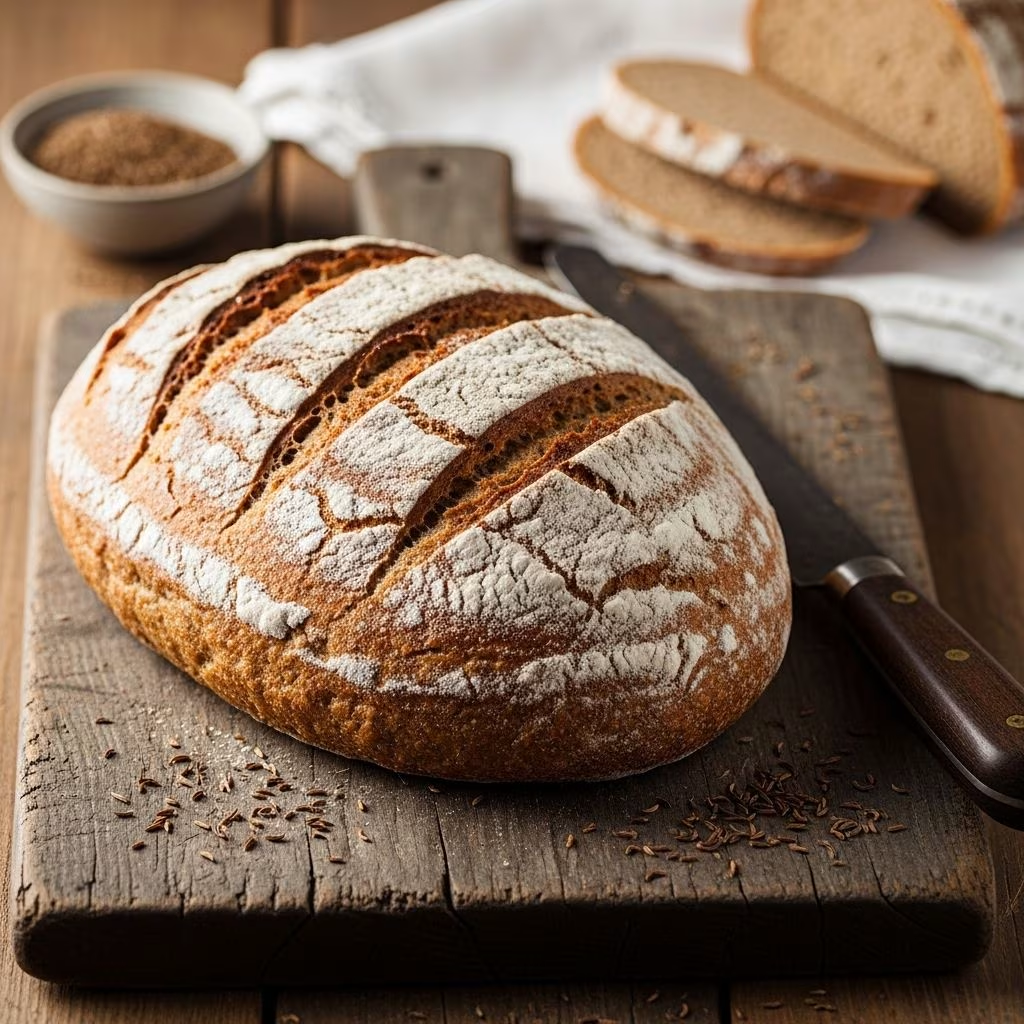
Nothing captures the essence of New York delis quite like a slice of **Jewish rye bread**. This hearty loaf, studded with caraway seeds and boasting a tangy depth from a fermented rye sour, forms the backbone of legendary sandwiches like pastrami on rye or corned beef with mustard. Unlike lighter wheat breads, Jewish rye combines rye flour’s earthy nuttiness with high-protein bread flour for structure, creating a chewy crumb and crisp crust that’s ideal for robust fillings.
The Heritage of Jewish Rye in American Baking
Jewish rye bread traces its roots to Eastern European immigrants who brought rye baking traditions to New York in the late 19th and early 20th centuries. In bustling delis of the Lower East Side, bakers perfected a style using a multi-day sour starter to mimic natural fermentation without commercial sourdough. This process develops complex flavors—sour, malty, and aromatic—while the addition of caraway seeds provides a distinctive licorice-like note. Today, home bakers can recreate this iconic bread, evoking the nostalgia of Brooklyn bakeries.
The bread’s hallmark is its balance: about 20-30% rye flour for flavor without overwhelming density, paired with bread flour for rise and chew. Fermentation stages build acidity, tenderizing the crumb and enhancing shelf life. Proper technique yields a loaf with a golden-brown crust that shatters under knife pressure and a moist interior perfect for toasting.
Essential Ingredients for Success
Selecting quality ingredients is crucial for authentic results. Here’s a breakdown of key components:
- Bread flour: High-protein (12-14%) for gluten development and structure. Provides the chew that holds up to deli meats.
- Rye flour: Light or medium rye for nutty flavor and color; dark rye intensifies taste but can make dough stickier.
- Yeast: Instant or active dry; some recipes use a tiny amount in the initial starter for controlled fermentation.
- Caraway seeds: 1-2 tablespoons per loaf, toasted for deeper aroma. Optional but essential for traditional taste.
- Warm water: Around 90-100°F to activate yeast without killing it.
- Salt: 2-3% of flour weight for flavor and dough strength.
- Add-ins: Malt powder, honey, or molasses for subtle sweetness and browning; some include potato starch or altus (cooked rye mash) for moisture.
| Ingredient | Role | Quantity (1 Large Loaf) |
|---|---|---|
| Bread Flour | Structure | 3-4 cups |
| Rye Flour | Flavor/Color | 1-1.5 cups |
| Water | Hydration | 1.5-2 cups total |
| Yeast | Leavening | 1-2 tsp |
| Caraway Seeds | Aroma | 2 tbsp |
Building the Rye Sour: A Multi-Stage Process
The secret to genuine deli rye lies in the **rye sour**, a fermented preferment built over 2-3 days. This isn’t a full sourdough but a yeasted starter that ferments slowly, producing lactic and acetic acids for tanginess. Start 48 hours ahead for peak flavor.
Stage 1: Initial Starter (Day 1)
Mix 1/2 cup rye flour, 1/8 tsp yeast, 1 cup warm water, 1 tbsp crushed caraway seeds, and minced onion (optional for savoriness). Stir to a thin batter consistency. Cover and ferment in a warm spot (75-80°F) for 24 hours until bubbly and pungent. This inoculates the mixture with wild yeasts and bacteria from the flour.
Stage 2: First Build (Day 2)
Add 1/2 cup water and 1.25 cups rye flour to the starter. Stir smooth, sprinkle 1/4 cup rye flour on top, and cover. Let double in 4-8 hours, watching for cracks in the flour crust—indicating gas production without collapse.
Stage 3: Final Sour (Day 2 Evening or Day 3)
Incorporate 1/2 cup water and 1 cup rye flour. Adjust with extra flour for a thick dough. Ferment 4-8 hours or overnight until risen and cracked. Use immediately or refrigerate up to 24 hours. Yields about 3 cups of sour, the flavor powerhouse for your dough.
This staged approach prevents over-fermentation, which can make rye dough gummy. Total time investment: 10-15 minutes active per stage.
Mixing and Kneading the Final Dough
With the sour ready, assemble the dough. Dissolve 1 packet yeast in 1 cup warm water. Stir in all the sour, 1/2 cup altus (boiled rye-water mash for tenderness), 4-5 cups bread flour, and 3 tsp salt. Mix until shaggy, then knead 5-8 minutes on a rye-dusted surface. The dough will be tacky—resist adding excess flour. It should feel silky and pass the windowpane test: stretch a piece thin without tearing.
Rest 15-20 minutes covered, then punch down and fold in caraway seeds. For stand mixers, use a dough hook on low for 8-10 minutes after autolyse (30-minute rest post-mixing).
Shaping, Proofing, and Baking Techniques
Divide into two portions for pan loaves or freestanding rounds. Shape by flattening into rectangles, folding like envelopes, and rolling tightly. Place seam-side down on parchment-lined sheets dusted with rye flour or cornmeal.
Proof covered until doubled, 1-2 hours. Brush with cornstarch glaze (1 tbsp cornstarch in 1 cup water, boiled) for shine. Score 3 diagonal slashes. Bake at 375°F with steam (ice cubes in a hot pan or spritz oven) for 35-45 minutes. Internal temp: 205°F. Thump bottom for hollow sound. Cool on racks 2+ hours before slicing to set crumb.
Troubleshooting Common Issues
- Dense loaf: Under-proofed or too much rye. Ensure full doubling and use 70-80% hydration.
- Gummy crumb: Over-kneaded or insufficient fermentation. Stick to times.
- Flat top: Weak gluten. High-protein flour and proper salt help.
- No rise: Dead yeast or cold environment. Test yeast and use proofing box.
Variations and Modern Twists
Experiment with sourdough discard in the sour for extra tang, or add dill pickle juice for moisture and zest. For seeded versions, incorporate sesame or poppy. Marble rye: dye half the dough with cocoa and layer. Sourdough NY deli rye uses 100g mature levain instead of yeasted sour.
Perfect Pairings and Storage
Slice thick for pastrami, corned beef, or Reuben sandwiches. Toast lightly for butter and salt. Store wrapped at room temp 3-4 days; freeze sliced up to 3 months. Revive by spritzing and oven-toasting.
Frequently Asked Questions (FAQs)
Can I use all-purpose flour instead of bread flour?
Yes, but expect less chew. Bread flour’s higher protein yields better structure for this high-rye dough.
Is caraway seeds necessary?
Traditional yes, but omit for plain rye. Toast them first for intensified flavor.
How do I make altus?
Boil equal parts rye flour and water to a paste, cool, and use 1/2 cup per loaf.
Can this be made gluten-free?
Challenging due to rye’s nature; use a dedicated GF rye blend but results won’t match authentic texture.
Why the multi-stage sour?
It builds gradual acidity, preventing rye’s enzymes from weakening gluten too quickly.
References
- The Ultimate NYC Jewish Rye Bread — The Food Dictator. 2015-10-20. https://www.thefooddictator.com/ultimate-nyc-jewish-rye-bread/
- Jewish Rye Bread (NYC Deli Style) — The Aproneer. 2023-05-15. https://aproneer.com/mrbread/jewish-rye-bread-nyc-deli-style
- Old-Fashioned Rye Bread — The Jewish Kitchen. 2018-09-12. https://thejewishkitchen.com/old-fashioned-rye-bread/
- Sourdough NY Deli Rye Bread — Breadtopia. 2022-11-08. https://breadtopia.com/sourdough-ny-deli-rye-bread/
- New York Deli Rye Bread — Smitten Kitchen. 2010-01-25. https://smittenkitchen.com/2010/01/new-york-deli-rye-bread/