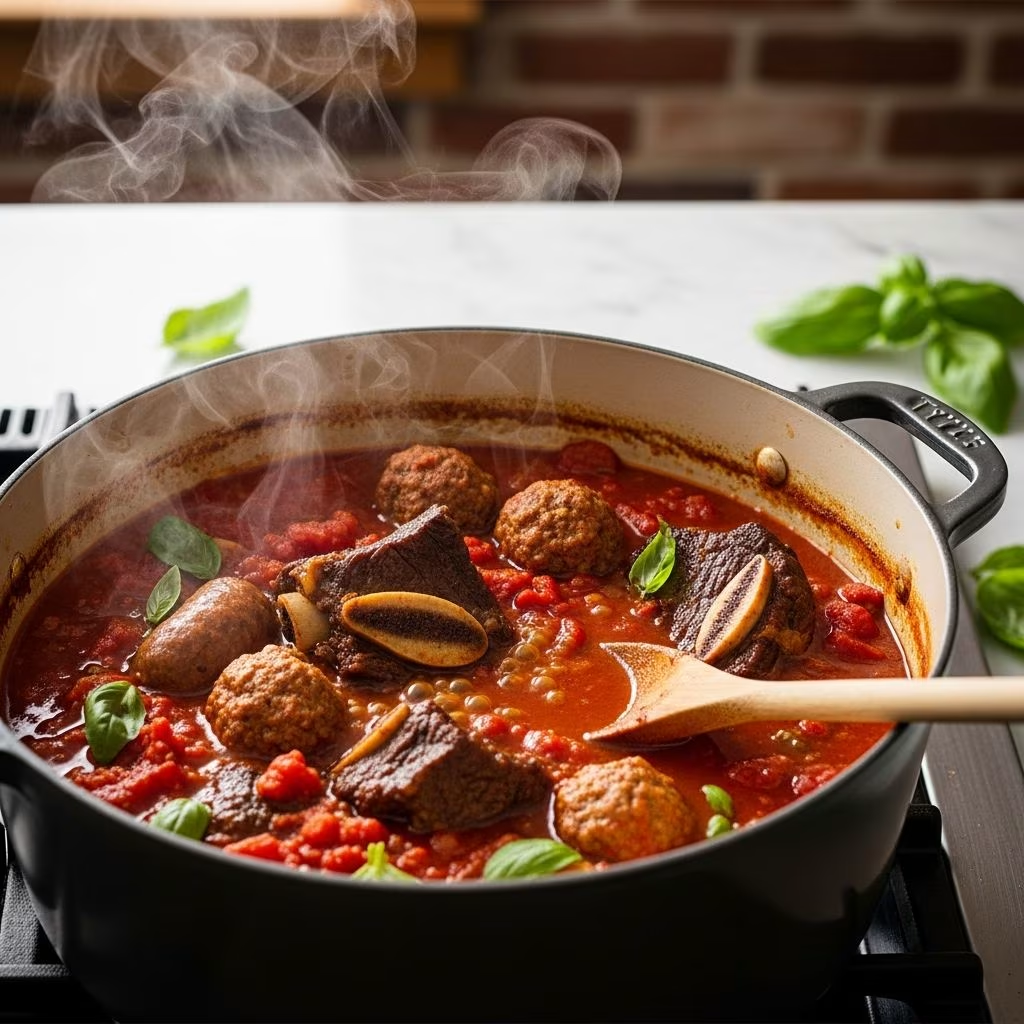
Italian Sunday sauce, often called Sunday gravy, stands as a cornerstone of family traditions across generations. This robust tomato-based sauce simmers for hours with an array of meats, infusing every bite with layers of savory depth. Originating from Italian-American homes, it transforms simple ingredients into a meal that gathers loved ones around the table. Unlike quick weeknight sauces, this one demands patience, rewarding cooks with tender meats that practically melt into the rich, velvety tomato base.
The Heart of Italian Family Traditions
Sunday sauce embodies more than just food; it’s a ritual passed down through families, evoking memories of bustling kitchens filled with the aroma of garlic, herbs, and simmering tomatoes. In many households, preparation begins early in the day, allowing the sauce to develop its full potential. Meats like sausages, meatballs, and cuts of beef or pork release their juices, enriching the tomatoes while herbs such as basil, oregano, and parsley provide aromatic balance. The result is a sauce that’s thick, flavorful, and versatile—ideal for coating pasta, filling sandwiches, or even standalone with crusty bread.
This dish varies by region and family, but core elements remain: high-quality canned tomatoes, slow cooking, and a medley of meats. Some recipes incorporate red wine for acidity and depth, while others rely on grated carrots or sugar for natural sweetness. The slow simmer, often lasting 3-5 hours, breaks down the meats and concentrates flavors, creating an oil-slicked top that’s a hallmark of authenticity.
Essential Ingredients for Authentic Flavor
Building the perfect Sunday sauce starts with selecting premium components. Tomatoes form the foundation—opt for San Marzano crushed or whole peeled varieties for their sweet, low-acidity profile. Tomato paste adds concentration, while aromatics like onions, garlic, and carrots build the base.
- Tomatoes: 4-6 cans (28 oz each) of crushed or whole peeled tomatoes, hand-crushed for texture.
- Meats: Sweet Italian sausages (1-2 lbs), beef short ribs or chuck (1.5 lbs), pork ribs, and homemade meatballs.
- Aromatics: 1-2 onions, 6-10 garlic cloves, 1 carrot (grated for sweetness).
- Herbs & Seasonings: Dried oregano, basil, parsley, bay leaves, red pepper flakes, salt, pepper.
- Enhancers: Olive oil or lard (1/4 cup), red wine (1/2-1 cup), tomato paste (6 oz can).
For meatballs, combine ground beef, pork, and veal (equal parts, about 1 lb each) with breadcrumbs soaked in milk, eggs, Pecorino Romano cheese, parsley, and garlic. This mixture yields tender, juicy results when pan-seared before simmering.
Step-by-Step Guide to Building Your Sauce
Mastering Sunday sauce involves layering flavors through careful technique. Begin with a heavy-bottomed pot or Dutch oven to ensure even heat distribution.
- Prepare the base: Heat 1/4 cup olive oil or lard over medium heat. Brown sausages and large cuts of meat (beef chuck, short ribs, pork ribs) in batches to avoid steaming. Remove meats and set aside.
- Sauté aromatics: Add diced onions and cook until translucent (5-7 minutes). Stir in minced garlic and grated carrot for 1-2 minutes to release fragrance without burning.
- Incorporate tomato paste: Add a 6 oz can of tomato paste, stirring for 2 minutes to caramelize and deepen color.
- Deglaze with wine: Pour in 1/2-1 cup dry red wine, scraping the pot bottom to lift flavorful browned bits (fond). Reduce until alcohol evaporates.
- Add tomatoes: Stir in 4-6 cans of crushed tomatoes, rinsing cans with 1/2 cup water each to capture every drop. Season with salt, pepper, oregano, basil, bay leaves, and optional red pepper flakes.
- Return meats: Nestle browned meats back into the sauce, ensuring they’re submerged. Bring to a gentle simmer.
- Make and add meatballs: While sauce simmers, form meatballs (golf ball-sized) and sear in olive oil until golden. Add to sauce after 1 hour of simmering.
- Low and slow cook: Cover partially and simmer on stovetop lowest heat (or 300°F oven) for 3-5 hours, stirring occasionally. Skim excess fat if desired, but the oil layer signals richness.
After cooking, remove bay leaves and large bones. Shred tender meats into the sauce or serve whole. Taste and adjust seasoning— a pinch of sugar or baking soda can balance acidity.
Perfecting Meatballs: The Star of the Sauce
Meatballs elevate Sunday sauce from good to unforgettable. The key is a panade—breadcrumbs soaked in milk—for moisture and tenderness.
| Ingredient | Quantity | Purpose |
|---|---|---|
| Ground beef (80/20) | 1 lb | Rich beef flavor |
| Ground pork | 1 lb | Juiciness and fat |
| Ground veal | 1 lb | Tender texture |
| Panko breadcrumbs + milk | 2 cups + 1 cup | Moisture binder |
| Pecorino Romano | 1 cup grated | Umami depth |
| Eggs + garlic + parsley | 4 + 3 cloves + 1/4 cup | Binding and freshness |
Mix gently to avoid tough meatballs, chill 30 minutes, then sear. Simmer in sauce for the final 2 hours to absorb flavors.
Common Mistakes and Pro Tips
Avoid these pitfalls for sauce success:
- Rushing the simmer: Low heat is crucial; high heat toughens meats.
- Overmixing meatballs: Handle lightly to keep them soft.
- Skipping the sear: Browning via Maillard reaction builds essential flavor.
- Poor tomatoes: Choose quality brands to avoid metallic taste.
Pro tips: Use a parmesan rind for subtle cheesiness. For silkiness, try lard in Neapolitan style. Freeze leftovers in portions—flavor improves over time.
Serving Suggestions and Pairings
Serve over al dente spaghetti, rigatoni, or bucatini. Top with grated Parmesan or ricotta for creaminess. Accompany with garlic bread, Caesar salad, and Chianti wine. Leftovers shine in lasagna, parmigiana, or hero sandwiches.
Variations Across Italian-American Homes
Recipes adapt regionally: Neapolitan versions emphasize beef ribs and lard; Sicilian adds braciole (rolled beef stuffed with herbs). Some skip meatballs for pork necks or oxtails. Vegetarians can swap meats for mushrooms and eggplant, maintaining the simmer technique.
Health Considerations and Storage
This indulgent sauce is nutrient-dense from tomatoes’ lycopene and meats’ protein. Portion control balances richness. Store in fridge up to 5 days or freeze 3 months. Reheat gently with a splash of water.
Frequently Asked Questions
What makes Sunday sauce different from marinara?
Sunday sauce includes multiple meats simmered for hours, creating a meaty gravy, while marinara is quick-cooked with just tomatoes and herbs.
Can I make it in a slow cooker?
Yes—brown meats first, then cook on low 6-8 hours for similar results.
Is red wine necessary?
No, substitute beef stock or water, but wine adds complexity.
How do I fix a too-acidic sauce?
Add grated carrot, sugar, or 1/2 tsp baking soda.
What’s the best pasta for this sauce?
Strand pastas like spaghetti or tube shapes like rigatoni to trap the gravy.
References
- Italian Sunday Sauce Recipe — Food.com. 2010-08-15. https://www.food.com/recipe/italian-sunday-sauce-460768
- How to Make Italian Sunday Sauce: Ragù alla Napoletana — YouTube (Chef Ange). 2023-05-10. https://www.youtube.com/watch?v=XGfO0j8fctk
- How to Make Authentic Italian Sunday Sauce — The Brooklyn Mom. 2022-11-20. https://www.thebrooklynmom.com/italian-sunday-sauce/
- Classic Italian Sunday Sauce & Meatballs Recipe — YouTube (Chef Ange). 2024-02-14. https://www.youtube.com/watch?v=3b5engQpl-g
- The Best Authentic Italian Sunday Gravy (Sugo) — Coley Cooks. 2021-09-05. https://coleycooks.com/authentic-italian-sunday-gravy/