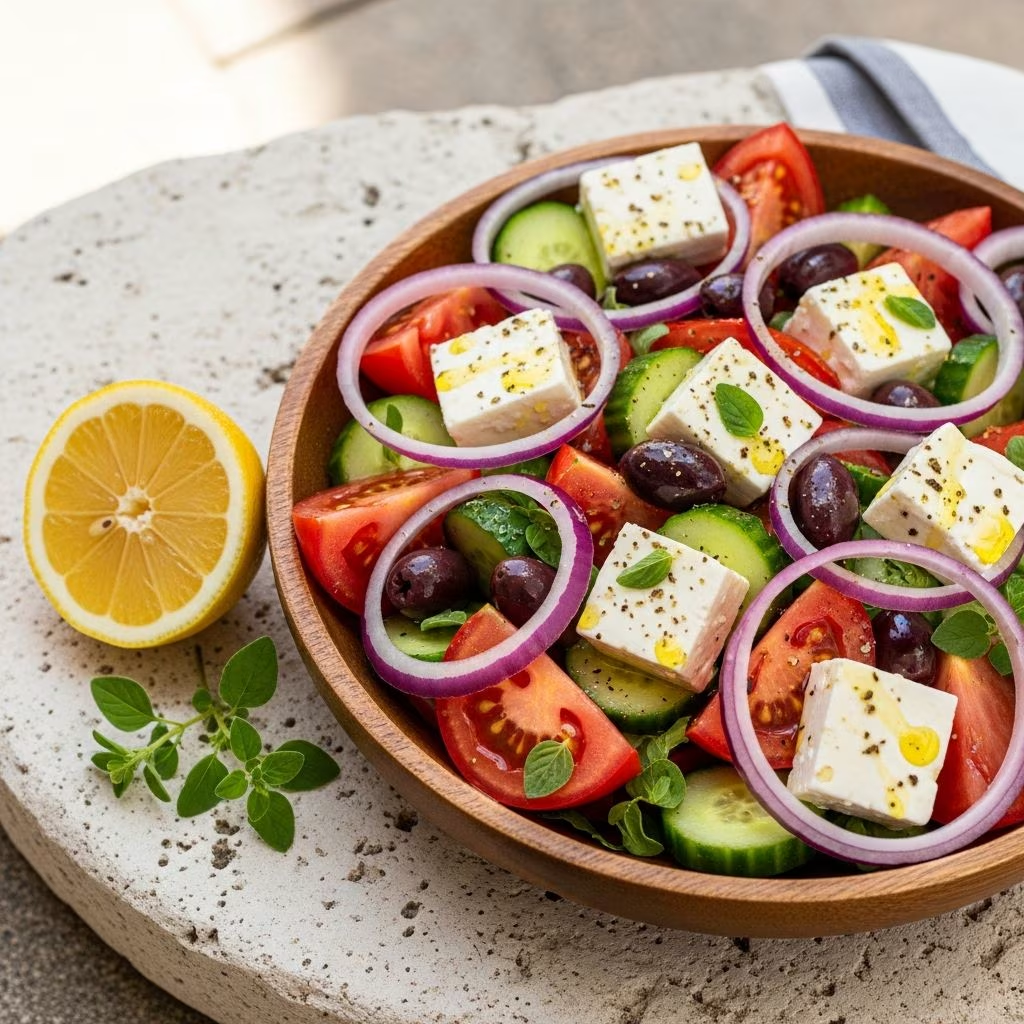
The Greek salad, known locally as horiatiki, represents one of the Mediterranean’s most cherished culinary traditions. This rustic yet elegant dish transcends simple vegetable combinations, embodying centuries of Greek dining heritage and the region’s abundant agricultural bounty. Whether served as a light lunch, a vibrant side dish, or the centerpiece of a Mediterranean feast, this salad captures the essence of fresh, wholesome eating that has sustained Greek communities for generations.
Understanding the Heritage and Cultural Significance
The Greek salad carries deep cultural roots within Mediterranean communities, particularly across the islands and mainland regions of Greece. The term “horiatiki” literally translates to “village salad” or “peasant salad,” reflecting its humble origins as a practical meal composed of whatever fresh produce was available in local gardens and markets.
This dish represents authentic Mediterranean cuisine, where simplicity and quality ingredients are paramount. The salad’s composition reveals a philosophy of eating that prioritizes seasonal freshness and minimal processing, allowing each ingredient’s natural flavors to shine brilliantly.
Essential Ingredients: Building Blocks of Flavor
Creating an exceptional Greek salad begins with understanding the role each ingredient plays in the final dish. Rather than being merely a collection of chopped vegetables, each component contributes distinct flavors, textures, and nutritional benefits.
The Core Vegetables
Tomatoes serve as the foundation of the salad, providing juiciness and acidity that balances the richness of feta cheese. Medium-sized, ripe tomatoes work best when sliced into bite-sized wedges or pieces, ensuring they maintain their structural integrity throughout the salad’s preparation and service. The natural sugars in quality tomatoes create a subtle sweetness that complements the other savory elements.
Cucumbers contribute a refreshing crispness and cooling effect to the dish. An English cucumber, when partially peeled to create an attractive striped pattern, becomes as much a visual component as a textural one. Slicing the cucumber into half-moon shapes ensures even distribution throughout the salad and prevents any single bite from becoming overwhelmingly watery.
Bell peppers, particularly green varieties, add a subtle peppery note and satisfying crunch. When sliced into rings or chopped into uniform pieces, they maintain their structural integrity and provide visual contrast against the red tomatoes and white cheese.
Red onions deliver a sharp, pungent quality that awakens the palate. Slicing them thinly into half-moon shapes and soaking them briefly in ice water mellows their intensity while maintaining their characteristic bite and crisp texture.
The Signature Components
Kalamata olives are non-negotiable in authentic Greek salad preparation. These dark, brined olives possess a distinctive fruity, slightly fermented flavor that cannot be adequately replicated by other varieties. When pitted and left whole or halved, they provide bursts of concentrated flavor and a tender texture that contrasts beautifully with the fresh vegetables.
Feta cheese represents the crowning element of Greek salad. This crumbly, salty cheese, traditionally made from sheep’s milk or a sheep-goat milk blend, creates a creamy, tangy counterpoint to the crisp vegetables and briny olives. The cheese should be torn into substantial slabs rather than finely crumbled, allowing diners to experience distinct pockets of rich, salty flavor with each bite.
Ingredient Preparation Techniques
The manner in which you prepare each ingredient significantly influences the final salad’s texture, appearance, and flavor integration.
Vegetable Processing Methods
- Tomato preparation: Slice medium tomatoes into wedges or bite-sized pieces, working over a bowl to capture any juices that can later be incorporated into the dressing or reserved for other culinary uses.
- Cucumber treatment: Use a vegetable peeler to create alternating strips of peeled and unpeeled cucumber skin, then slice lengthwise before cutting into half-moon shapes for visual appeal.
- Bell pepper cutting: Remove the core and seeds, then slice into uniform rings or chop into one-inch pieces, depending on your preferred presentation style.
- Onion preparation: Slice thinly into half-moons, then submerge in ice water for fifteen to twenty minutes to reduce pungency while maintaining crispness.
Component Assembly Strategy
Rather than randomly combining ingredients, thoughtfully arrange them on a large serving platter or in a spacious bowl. This intentional presentation allows each component to remain visually distinct while creating an inviting, appetizing display that showcases the salad’s vibrant colors and fresh quality.
Crafting the Perfect Dressing
The dressing elevates Greek salad from a simple vegetable combination into a cohesive, flavor-forward dish. A traditional Greek dressing maintains a delicate balance between acidic, savory, and herbal notes.
Essential Dressing Components
| Ingredient | Function | Recommended Amount |
|---|---|---|
| Extra virgin olive oil | Rich base providing smooth texture and fruity undertones | ¼ to ⅓ cup |
| Red wine vinegar | Acidic component brightening flavors | 3 to 4 tablespoons |
| Dried oregano | Herbaceous element providing Mediterranean character | ½ to 1 teaspoon |
| Garlic | Aromatic base adding depth and complexity | 1 to 2 cloves, minced |
| Kosher salt and black pepper | Flavor enhancement and seasoning | To taste |
Dressing Preparation Process
Begin by mincing fresh garlic cloves into a small mixing bowl, allowing the garlic’s natural oils to begin releasing. Add the dried oregano, along with a pinch of kosher salt and freshly ground black pepper. The salt acts as an abrasive, helping to break down the garlic cloves further and intensifying their flavor. Pour in the red wine vinegar, stirring to combine the seasonings into a cohesive mixture. Finally, slowly drizzle the extra virgin olive oil while whisking continuously, creating an emulsified dressing with a smooth, balanced consistency.
The act of whisking not only combines the ingredients but also helps incorporate air, creating a dressing with superior texture and flavor distribution.
Assembly and Final Seasoning
Once all components are prepared, arrange the tomatoes, cucumbers, bell peppers, onions, and olives on a large platter or in a generous serving bowl. Gently distribute the feta cheese pieces across the surface, ensuring each portion of the finished salad will contain adequate cheese. Sprinkle the entire composition with dried oregano, allowing the herb’s aromatic qualities to infuse the vegetables as the salad rests.
Pour the prepared dressing over the arranged ingredients, using a gentle hand to toss and combine without crushing the delicate vegetables or cheese. The goal is thorough coating while maintaining the structural integrity of each component. Taste the salad at this point, adjusting the seasoning with additional salt, pepper, or vinegar as needed to achieve your preferred flavor balance.
Timing and Storage Considerations
Greek salad is best served immediately after assembly, while all vegetables remain crisp and the flavors haven’t begun to homogenize. However, the individual components can be prepared several hours in advance and stored separately in the refrigerator. This approach proves particularly useful for meal planning and entertaining, as you can focus on final assembly moments before serving.
If you must prepare the entire salad ahead of time, dress it lightly just before serving to minimize vegetable softening. Store any leftover dressed salad in an airtight container in the refrigerator for up to one day, understanding that the vegetables will gradually soften and release additional liquid as they marinate in the dressing.
Variations and Creative Adaptations
While the traditional Greek salad maintains a specific ingredient list, thoughtful variations can expand its appeal without compromising its essential character. Some preparations incorporate fresh mint leaves for an additional layer of herbal freshness, while others might include capers for added briny complexity. A modest drizzle of fresh lemon juice just before serving brightens the overall flavor profile, introducing a citrus note that complements rather than competes with the vinegar-based dressing.
Nutritional Benefits and Health Considerations
Beyond its appealing taste and visual presentation, Greek salad offers substantial nutritional value. The abundance of fresh vegetables provides fiber, vitamins, and minerals essential for optimal health. Kalamata olives contribute heart-healthy monounsaturated fats, while feta cheese supplies protein and calcium. The extra virgin olive oil contains polyphenols and other compounds associated with Mediterranean dietary patterns and cardiovascular health. This salad exemplifies nutrient-dense eating that satisfies without excessive calories or processed ingredients.
Serving Suggestions and Complementary Pairings
Greek salad functions beautifully as a standalone light meal, particularly during warm weather months when fresh vegetables are at their peak. It equally serves as an elegant side dish accompanying grilled fish, roasted chicken, or lamb preparations. The salad’s crisp, refreshing qualities provide a perfect counterpoint to rich, hearty Mediterranean mains.
Frequently Asked Questions
Should I use fresh or dried oregano?
Dried oregano is traditional and preferred for Greek salad, as it distributes more evenly throughout the dish and provides a concentrated, authentic Mediterranean flavor. Fresh oregano, while delicious, can become stringy and unevenly distributed unless finely minced.
Can I substitute feta with other cheeses?
Authentic Greek salad specifically calls for feta cheese, which provides essential salty, tangy qualities that other cheeses cannot replicate. Attempting substitutions fundamentally alters the dish’s character and authenticity.
What is the best type of olive oil to use?
Extra virgin olive oil, preferably from Greece, offers superior flavor and quality. The oil’s fruity, sometimes slightly peppery notes complement the salad’s other components beautifully.
How long can I store prepared Greek salad?
Undressed components can be refrigerated separately for up to two days. Once dressed, the salad is best consumed within a few hours, as vegetables gradually soften and lose their appealing crispness.
References
- Traditional Greek Salad (Horiatiki) Recipe — The Mediterranean Dish. Accessed April 2026. https://www.themediterraneandish.com/traditional-greek-salad-recipe/
- Greek Salad Recipe — Love and Lemons. Accessed April 2026. https://www.loveandlemons.com/greek-salad/
- Best Greek Salad — Downshiftology. Accessed April 2026. https://downshiftology.com/recipes/greek-salad/
- Greek Salad Recipe with Homemade Dressing — Budget Bytes. Accessed April 2026. https://www.budgetbytes.com/greek-salad/
- Greek Salad — RecipeTin Eats. Accessed April 2026. https://www.recipetineats.com/greek-salad/
- Best Greek Salad Recipe — Delish. Accessed April 2026. https://www.delish.com/cooking/recipe-ideas/a54226/best-greek-salad-recipe/