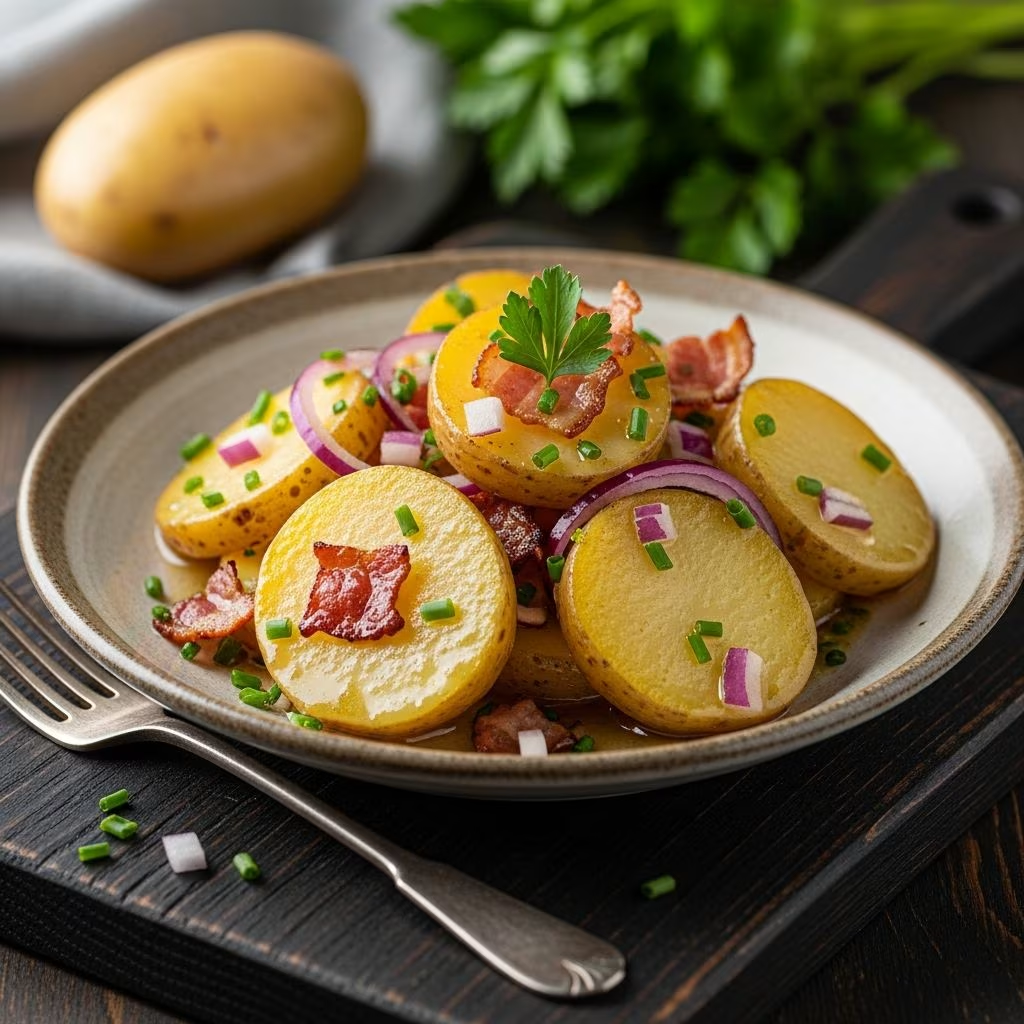
German potato salad, known locally as Kartoffelsalat, represents one of Europe’s most beloved side dishes. Unlike mayonnaise-heavy versions found in some regions, the authentic Central European preparation features a warm, tangy dressing made with vinegar, beef broth, and mustard. This traditional approach creates a dish that is both hearty and refreshing, making it an ideal complement to grilled meats, sausages, or roasted poultry.
The beauty of this classic dish lies in its simplicity and the quality of its fundamental ingredients. When prepared correctly, the warm potatoes absorb the flavorful dressing while maintaining their structural integrity, resulting in a salad that is moist yet cohesive. Understanding the proper techniques and ingredient selection ensures your German potato salad achieves the authentic texture and taste that has made this dish a staple at gatherings throughout Bavaria and surrounding regions.
Essential Ingredients for Authentic Preparation
The foundation of exceptional German potato salad begins with selecting the right potatoes. Waxy varieties such as Yukon Gold, yellow potatoes, Charlotte, or new red potatoes are ideal choices because their firm, creamy texture prevents them from breaking apart during cooking and absorbing the dressing. These potato types contain less starch than russet varieties, which would become mealy and create an undesirable dry consistency.
The ingredient list extends beyond potatoes to include several flavor-building components:
- Bacon – Provides smoky richness and crispy texture; typically 6 to 8 ounces for a standard batch
- Onions – Add subtle sweetness and pungency; usually finely chopped to distribute evenly
- Beef broth – Forms the liquid base of the dressing; approximately ¾ to 1 cup
- White vinegar – Delivers the characteristic tang; about ¼ to ½ cup depending on desired acidity
- Mustard – Mild German mustard or Dijon provides depth; 1 to 2 teaspoons
- Oil – Vegetable, sunflower, or avocado oil creates proper dressing consistency; 2 tablespoons
- Seasonings – Sugar, salt, white pepper, and fresh herbs round out the flavor profile
The Science Behind Proper Potato Selection
Choosing the correct potato variety significantly impacts the final texture and appearance of your salad. Waxy potatoes possess a lower starch content and waxy coating that allows them to remain firm after cooking. When cut into thin slices or small cubes, these potatoes hold their shape while simultaneously absorbing the warm dressing.
Starchy potatoes like russets contain more amylose and amylopectin, which breaks down more readily during cooking. This degradation causes the potato pieces to absorb excessive liquid and become soggy or crumbly. The resulting salad would lack the pleasing texture that characterizes authentic German preparations, where individual potato pieces remain distinct and coated with the flavorful dressing rather than swimming in liquid or disintegrating into a paste.
Step-by-Step Preparation Method
Cooking the Potatoes
Begin by placing 2 pounds of whole, unpeeled waxy potatoes in a large pot. Cover them completely with water and bring to a rolling boil over high heat. Maintain a steady boil for approximately 20 minutes, though cooking time varies based on potato size. Test for doneness by inserting a sharp knife point into the largest potato; the blade should slide through with minimal resistance. Potatoes should be tender but not falling apart, as they will continue to soften slightly as they absorb the warm dressing.
Once cooked, drain the potatoes and rinse briefly under cold water just until they are cool enough to handle. The potatoes should still feel warm to the touch, as this warmth plays a crucial role in dressing absorption.
Preparing the Flavorful Dressing
While the potatoes cook, prepare the dressing base. In a medium skillet, cook 6 to 8 ounces of finely diced bacon over medium heat until the edges become crispy and the fat renders. Remove the cooked bacon with a slotted spoon, leaving approximately 2 tablespoons of rendered fat in the pan. This bacon fat provides authentic flavor depth that vegetable oil alone cannot replicate.
Add ½ cup of finely chopped onion to the same skillet and cook for 3 to 4 minutes, stirring occasionally, until the onion becomes translucent. Avoid browning the onion, as this would create an undesirable bitter note. Pour in ¾ cup of beef broth and bring the mixture to a gentle simmer. Once simmering, add ¼ cup of white vinegar, 1 to 2 teaspoons of mustard, 2 tablespoons of vegetable oil, 1 teaspoon of sugar, ½ teaspoon of salt, and ¼ teaspoon of freshly ground black pepper.
Allow the dressing to simmer gently for about 5 minutes. This brief cooking period allows the flavors to meld and mellow, creating a more harmonious and complex taste profile than simply combining cold ingredients.
Assembling the Salad
Once the potatoes are cool enough to handle, peel them while they are still warm. The outer skin comes away more easily from warm potatoes, and the retained internal heat facilitates better dressing absorption. Cut the peeled potatoes into ¼-inch slices or small cubes, depending on your preference and serving context. Place the cut potatoes in a large mixing bowl.
Pour the hot dressing over the warm potatoes and mix very gently using a folding motion rather than vigorous stirring. Rough handling can break the tender potatoes. Fold in the reserved bacon pieces, distributing them evenly throughout. Cover the bowl loosely and let the salad rest at room temperature for at least 20 to 30 minutes before serving. During this resting period, the potatoes continue absorbing the dressing, developing fuller flavor and achieving the characteristic moist-but-not-wet consistency.
Achieving the Perfect Texture and Consistency
An authentic German potato salad should have a moist but not wet appearance. The dressing coats the potato pieces with an almost creamy consistency rather than pooling at the bottom of the bowl. This textural target requires careful attention to dressing proportions and cooking technique.
The ratio of potatoes to dressing determines the final moisture level. Too much dressing creates a soupy consistency, while too little results in a dry, unappetizing dish. The amount specified in traditional recipes—approximately ¾ cup broth and ¼ cup vinegar for 2 pounds of potatoes—provides optimal absorption for waxy potato varieties.
Timing also matters significantly. Allowing the warm potatoes to rest in the dressing enables gradual absorption without oversaturation. If prepared hours in advance, the salad may require gentle reheating and additional broth to restore moisture that evaporates over time.
Regional Variations and Serving Approaches
German potato salad exists in several regional interpretations. The Bavarian version emphasizes warm service with beef broth-based dressing, while Swabian variations may include additional ingredients like carrots or celery. Some regions prefer red wine vinegar instead of white vinegar, creating a deeper color and slightly different flavor profile.
This versatile dish can be served either warm or at room temperature, though warm serving immediately after assembly preserves the optimal flavor and texture. Traditionally, German potato salad accompanies grilled bratwurst, schnitzel, sauerbraten, or roasted poultry at outdoor gatherings, picnics, and holiday celebrations. The bright acidity of the vinegar-based dressing cuts through rich meats beautifully, providing a palate-cleansing element to the meal.
Storage and Make-Ahead Considerations
German potato salad develops deeper flavor when prepared a day in advance, as the potatoes continue absorbing the dressing overnight. Store the salad in a covered glass or ceramic container in the refrigerator for up to three days. Avoid metal containers, as the vinegar can react with certain metals and impart metallic flavors.
Before serving leftover salad, bring it to room temperature and add a small amount of additional beef broth if the mixture appears too dry. The salad can be gently reheated by transferring it to a heavy-bottomed pot over low heat, stirring occasionally, until warmed through. Adding fresh chopped parsley or chives just before serving brightens the flavors.
Common Mistakes to Avoid
Several pitfalls can compromise the quality of your German potato salad. Using the wrong potato variety—particularly starchy russets—frequently leads to a mushy, unappetizing result. Skipping the resting period deprives the potatoes of adequate time to absorb the dressing, resulting in a flat flavor profile. Overmixing can break the delicate potato pieces, creating an unappealing texture.
Neglecting to simmer the dressing allows the flavors to remain sharp and unintegrated, creating an unbalanced taste. Using cold dressing instead of hot dressing prevents proper absorption into the potatoes. Lastly, allowing the salad to sit without covering permits excessive evaporation, potentially creating a dry final product.
Customization Options While Maintaining Authenticity
While respecting traditional preparation methods, several modifications accommodate different preferences. Vegetable broth substitutes for beef broth when serving vegetarians, though the flavor profile shifts slightly. Fresh herbs like dill, chives, or parsley enhance the dish when added just before serving, contributing brightness without compromising authenticity.
Some cooks include finely minced garlic in the dressing for additional depth, while others incorporate crispy onion pieces for textural contrast. These variations remain true to the spirit of German potato salad while reflecting individual tastes and regional traditions within German-speaking countries.
FAQs About German Potato Salad
Can German potato salad be made vegetarian?
Yes, simply omit the bacon and use vegetable broth instead of beef broth. Some vegetarian versions include mushrooms sautéed in oil to provide umami depth that the bacon would normally contribute.
How far in advance can German potato salad be prepared?
Prepare German potato salad up to 24 hours before serving. The flavors actually deepen with time as the potatoes continue absorbing the dressing. Cover and refrigerate, then bring to room temperature before serving.
What is the difference between German and American potato salad?
German potato salad features a warm vinegar-based dressing and no mayonnaise, while American versions typically contain mayonnaise-based dressing served cold. The German preparation emphasizes tangy flavors and tender potato texture.
Can red potatoes be used instead of Yukon Gold?
Yes, new red potatoes work well as they are also waxy potatoes with firm texture. The distinction between potato types matters more than the specific variety; waxy potatoes work, starchy ones do not.
Is it necessary to peel potatoes while warm?
Yes, warm potatoes peel more easily and absorb the dressing more effectively. Peeling warm potatoes removes the skin cleanly and allows the exposed flesh to soak up maximum flavor from the warm dressing.
Nutritional Considerations
German potato salad provides substantial nutritional value, offering complex carbohydrates from potatoes, protein from bacon, and healthy fats from rendered fat and oil. The vinegar contributes beneficial probiotics if unpasteurized. A typical serving contains approximately 200-250 calories, making it a reasonably moderate side dish when paired with vegetables or lighter proteins.
The dish provides significant amounts of potassium from potatoes, important for cardiovascular health and electrolyte balance. For individuals monitoring sodium intake, the salt content can be adjusted to personal preferences without compromising the recipe’s traditional character.
References
- Authentic German Potato Salad (Bavarian Recipe) — Plated Cravings. 2024. https://platedcravings.com/authentic-german-potato-salad/
- Authentic German Potato Salad – Schwäbischer Kartoffelsalat (Swabian Potato Salad) — The Daring Gourmet. 2024. https://www.daringgourmet.com/restaurant-style-schwabischer-kartoffelsalat-swabian-potato-salad/
- Old-Fashioned German Potato Salad — Evolving Table. 2024. https://www.evolvingtable.com/german-potato-salad/
- Traditional German Potato Salad (without Mayo) — Adamant Kitchen. 2024. https://adamantkitchen.com/german-potato-salad-without-mayo/
- Hot German Potato Salad (Kartoffelsalat) — Host The Toast. 2024. https://hostthetoast.com/german-potato-salad-kartoffelsalat/
- German Potato Salad – Delicious Old Fashioned Classic — YouTube. 2024. https://www.youtube.com/watch?v=1e_v11TouPg