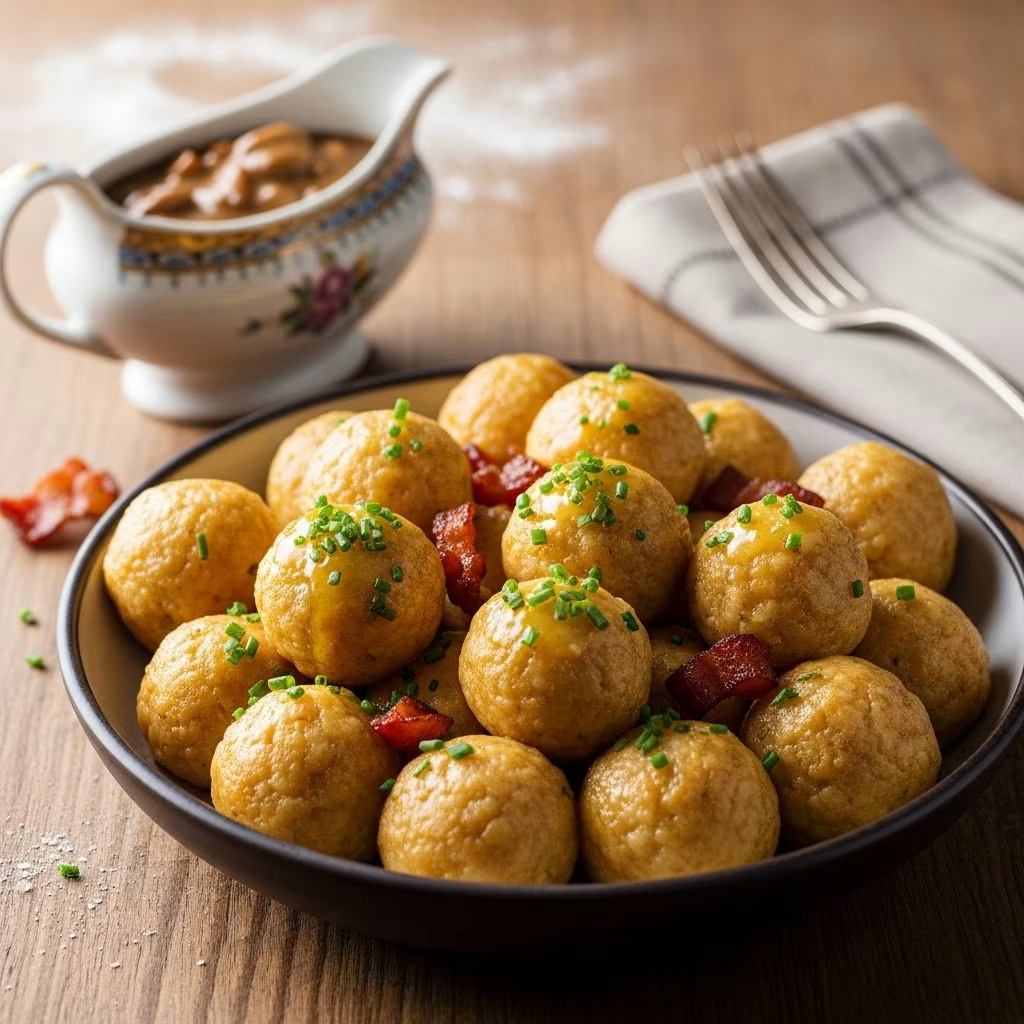
German cuisine has given the world countless comfort food treasures, and among the most beloved are Klößchen, tender mini potato dumplings that have graced family tables for generations. These delicate potato creations represent the heart of traditional German home cooking, combining simple ingredients to create something truly extraordinary. Whether you’re seeking to reconnect with your heritage or simply exploring new culinary horizons, mastering the art of making authentic Klößchen opens doors to a world of satisfying, warmth-inducing meals.
Understanding Klößchen: The Essence of German Comfort Cuisine
Klößchen translates to “mini dumplings” in German, and these bite-sized treasures represent far more than just food on a plate. They embody a cooking philosophy that values simplicity, quality ingredients, and time-honored techniques passed down through families. Unlike their larger cousins, which can sometimes feel heavy, these smaller dumplings deliver an incredibly tender texture that melts on the tongue. The beauty of Klößchen lies in their versatility—they can serve as a main course, a side dish, or even a vehicle for creative flavor combinations.
The foundation of authentic Klößchen rests on understanding how potatoes transform when properly prepared. Starchy potato varieties work best because their higher starch content creates a lighter, fluffier dumpling when combined with minimal binding agents. The technique of using finely grated raw potatoes followed by careful moisture removal distinguishes authentic versions from simpler preparations.
Essential Ingredients for Perfect Klößchen
Creating authentic Klößchen requires attention to ingredient selection, as each component plays a crucial role in achieving the desired texture and flavor profile. Here’s what you’ll need for a traditional batch:
- Starchy potatoes — approximately 4.5 pounds, peeled and finely grated
- Potato starch or cornstarch — 3 tablespoons, with additional amounts for adjusting consistency
- Salt — 1 tablespoon for the dough, plus extra for boiling water
- Unsalted butter — 4 tablespoons, divided for cooking stages
- Yellow onions — 2 large onions, sliced into half-moon shapes
- Slab bacon — 1.5 pounds, cut into half-inch strips
- Eggs — 4 large eggs for the final cooking stage
Selecting the Right Potatoes
The potato selection process deserves special attention, as this choice fundamentally determines your dumplings’ success. High-starch, low-moisture potato varieties create the most tender results. In Germany, cooks seek out varieties labeled “mehlig kochende,” which translates to varieties that cook mealy. For North American cooks, Russet potatoes serve as an excellent substitute due to their similar starch profile. Avoid waxy potatoes like red or fingerling varieties, as their lower starch content produces dense, gluey dumplings rather than the desired fluffy texture.
Preparation Techniques That Make a Difference
The preparation method separates mediocre dumplings from exceptional ones. Understanding the reasoning behind each step transforms this recipe from a mere set of instructions into a culinary education.
Processing the Potatoes
Begin by peeling your potatoes and immediately grating them finely using a box grater or food processor. This timing is crucial—do not allow grated potatoes to sit exposed to air for extended periods, as oxidation will darken them and potentially affect texture. Working in manageable batches, place orange-sized portions of grated potatoes into thin linen towels or cheesecloth. With determination and patience, wring out as much water as possible. This moisture removal step cannot be overstated in importance; excess water in your dough creates mushy dumplings rather than tender ones.
The wringing process may feel exhausting, but it represents the difference between authentic Klößchen and disappointing results. Some cooks prepare protective gloves before beginning this task, as the sharp potato shreds can irritate unprotected hands. Once thoroughly drained, transfer your prepared potatoes to a large mixing bowl.
Creating the Dough
To your drained potatoes, add the potato starch and salt. Using your hands, knead the mixture together until a just barely sticky dough forms. The dough should hold together when squeezed but shouldn’t feel wet or overly gluey. If your mixture appears too moist, return it to the cheesecloth for additional wringing. Conversely, if the dough seems too dry and crumbly, adding one tablespoon of potato starch at a time will help achieve the proper consistency. This hands-on kneading develops proper texture while allowing you to assess moisture content accurately.
The Cooking Process: From Raw Dough to Finished Dumplings
The cooking stages require attention and proper timing, but the actual process moves quickly once preparations are complete.
Boiling the Dumplings
Fill a large pot with salted water and bring it to a rolling boil. The salt in the water is not merely for flavor—it seasons the dumplings from the outside as they cook. On a small cutting board, spread out a thin layer of your potato dough, approximately half an inch thick. Dip a soup spoon into the boiling water, then use it to scrape small dumpling portions directly from the cutting board into the pot. Continue this process, rewetting your spoon between additions to prevent sticking and ensure consistent dumpling sizes.
Allow the dumplings to boil until they float to the surface, which typically occurs after about 3 minutes. This floating action indicates that cooking is complete—the dumplings have reached their proper density and interior texture. Using a skimmer or slotted spoon, transfer the cooked dumplings to a prepared colander set over a large bowl. Allowing them to drain thoroughly prevents excess moisture from affecting the next cooking stage.
Pan-Frying and Final Assembly
In a large non-stick skillet over medium-high heat, melt the remaining butter. Add your drained dumplings and cook while stirring occasionally until they begin adopting a light golden color, approximately 3 minutes. This pan-frying stage adds textural contrast and wonderful flavor development. Once the dumplings have achieved this light coloring, crack the eggs directly into the skillet and stir until the eggs are fully scrambled and cooked through, which takes about 1 to 2 minutes. Season everything to taste with additional salt if desired.
Creating Traditional Accompaniments
Authentic Klößchen achieve their complete character when served with traditional German accompaniments that balance and complement the tender dumplings.
Caramelized Onions
Begin caramelizing your onions well in advance, as this process rewards patience. In a separate skillet over medium-low heat, melt 2 tablespoons of butter. Add your sliced onions and cook slowly for approximately 30 minutes, stirring occasionally. During this extended cooking, the natural sugars in the onions gradually caramelize, developing deep, complex flavors. The onions should become soft, golden brown, and almost jam-like in consistency. These sweet, savory caramelized onions provide a perfect counterpoint to the neutral flavor of the potato dumplings.
Crispy Bacon Preparation
While the onions caramelize, prepare your slab bacon by cutting it into half-inch strips, also known as lardons. In a separate skillet over medium heat, fry the bacon until the edges curl and the fat renders, creating crispy, flavorful morsels. Drain the finished bacon on paper towels to remove excess fat. The combination of crispy bacon, tender dumplings, and soft scrambled eggs creates layers of textural interest that elevate a simple dish into something memorable.
Serving and Enjoyment
Plate your finished dumplings on individual serving dishes, then crown each portion with the caramelized onions and crispy bacon. The warm dumplings, soft eggs, and flavorful toppings create a cohesive dish that satisfies on multiple levels. Traditional German households accompany this dish with a simple green salad or steamed vegetables to add brightness and balance to the rich, comforting main course.
Frequently Asked Questions About Klößchen
Can I prepare Klößchen in advance?
Yes, Klößchen can be frozen after the initial boiling stage. Allow them to cool completely, arrange them on a baking sheet, freeze until solid, then transfer to freezer bags where they keep for up to three months. When ready to use, simply thaw and proceed with the pan-frying stage.
What if my dough seems too wet or too dry?
Moisture content varies depending on potato variety and freshness. If your dough is too wet, wring the potatoes more thoroughly or add additional potato starch one tablespoon at a time. If too dry, you can knead in small amounts of water or milk until proper consistency is achieved.
Are there vegetarian versions of Klößchen?
Absolutely. Omit the bacon and simply serve the dumplings with caramelized onions, fried breadcrumbs, or a simple cream sauce. The dumplings’ mild flavor works beautifully with various vegetarian toppings and sauces.
How do I know when dumplings are fully cooked?
The floating action is the primary indicator of doneness. Once dumplings rise to the surface, allow them another 30 seconds to one minute in the water before removing them. The dough should feel tender and cohesive, not mushy or grainy.
Troubleshooting Common Issues
| Problem | Likely Cause | Solution |
|---|---|---|
| Dumplings fall apart while cooking | Insufficient starch or excessive moisture | Ensure thorough water removal from grated potatoes; add additional starch to dough |
| Heavy, dense texture | Over-mixing dough or using low-starch potatoes | Knead gently and briefly; select proper potato varieties |
| Dumplings don’t float properly | Water not hot enough or dough too dense | Ensure rolling boil; review moisture removal technique |
| Bland flavor | Insufficient seasoning or underseasoned water | Taste and adjust salt in both cooking water and dough |
Storage and Make-Ahead Strategies
Klößchen offer remarkable flexibility for meal planning. Uncooked dough keeps refrigerated for up to 24 hours, allowing you to prepare ingredients the evening before serving. Fully cooked dumplings store in the refrigerator for three to four days and reheat beautifully when pan-fried gently with a small amount of butter. The freezing capability makes these dumplings ideal for batch cooking and maintaining in your freezer for quick weeknight meals.
Expanding Your Klößchen Repertoire
Once you’ve mastered the basic preparation, numerous variations invite culinary exploration. Some German traditions incorporate bread filling within the dumplings, while others add herbs like parsley or dill to the dough itself. Cheese-filled versions add richness, while mushroom accompaniments introduce earthiness. Each variation maintains the essential character of tender potato dumplings while allowing creative expression.
The journey toward mastering authentic Klößchen rewards patience, attention to detail, and respect for traditional techniques. These humble dumplings, born from simple ingredients and time-honored methods, deliver comfort and satisfaction that transcends their modest appearance. Whether connecting with your heritage or discovering German cuisine for the first time, Klößchen represent an accessible entry point into the world of traditional European home cooking.
References
- Klößchen (Mini Potato Dumplings) Recipe — Samsung Food. 2026-03-03. https://app.samsungfood.com/recipes/1010a23473b83a07d7cd9708a6f0d782eaff5ac99ea
- Kartoffelklöße (German Potato Dumplings) — The Daring Gourmet. Accessed 2026. https://www.daringgourmet.com/german-potato-dumplings-kartoffelkloesse/
- Authentic German Potato Dumplings (Klößchen) – Oma’s Recipe — Dirndl Kitchen. Accessed 2026. https://dirndlkitchen.com/a-tribute-to-my-dear-grandma-sieghilde/
- German Potato Dumplings, aka Kartoffelklöße — The Lemon Apron. Accessed 2026. https://thelemonapron.com/german-potato-dumplings-aka-kartoffelklose/