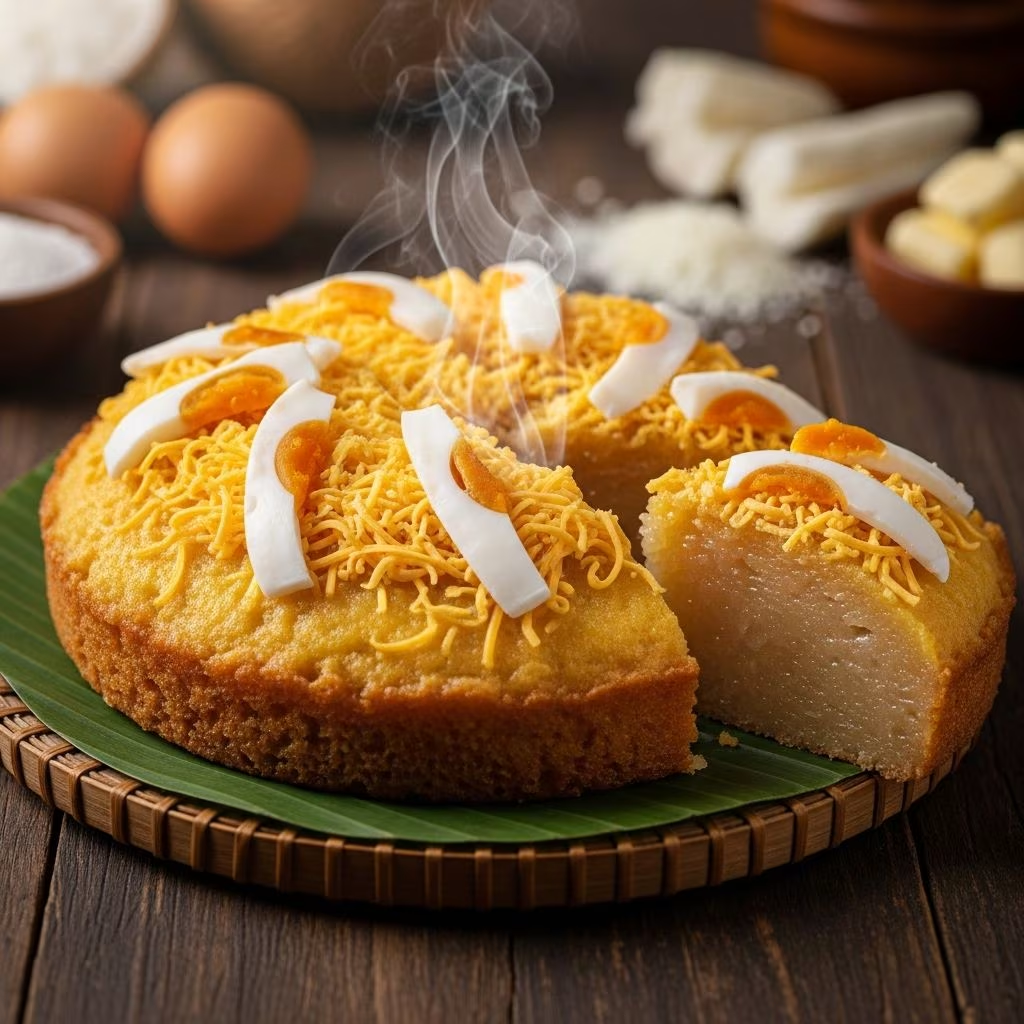
Cassava cake, widely known as bibingka or bibingkang kamoteng kahoy, stands as a cornerstone of Filipino dessert culture. This treat combines the earthy sweetness of grated cassava root with rich coconut elements, creating a dense, moist texture that’s both comforting and indulgent. Unlike flour-based cakes, it relies on the natural starchiness of cassava for its structure, making it naturally gluten-free and appealing to a wide audience.
Origins and Cultural Significance in Filipino Cuisine
Rooted in the Philippines’ tropical abundance, cassava cake draws from indigenous ingredients like kamoteng kahoy (cassava) and fresh coconut. Bibingka originally refers to rice cakes baked in banana leaves over charcoal, but the cassava version emerged as a modern adaptation, especially popular during holidays like Christmas and fiestas. Families gather to prepare large batches, sharing slices that symbolize hospitality and tradition. Its simplicity allows home cooks to recreate it without specialized equipment, preserving its place in everyday celebrations.
The dish’s evolution reflects colonial influences—Spanish and American—blending with native flavors. Coconut milk and condensed milk add a creamy luxury, turning a humble root vegetable into a festive staple. Today, it’s enjoyed worldwide by Filipino diaspora communities, evoking nostalgia through its unique chewiness and topping’s silky finish.
Understanding the Star Ingredient: Cassava Root
Cassava, or manioc, is a tuber native to South America but thriving in Southeast Asia. In the Philippines, it’s harvested fresh for desserts, providing a neutral base that absorbs coconut flavors beautifully. Fresh cassava must be peeled, grated, and squeezed to remove excess moisture, preventing a watery cake. Frozen grated versions simplify prep while retaining quality.
Key properties of cassava in baking:
- Starchy texture: Acts as a flour substitute, yielding a dense, fudgy crumb.
- Mild flavor: Allows coconut, sugar, and milk to shine.
- Gluten-free: Ideal for dietary restrictions.
- Preparation needs: Always grate finely and drain to avoid gumminess.
Handle raw cassava carefully, as it contains cyanogenic compounds that cooking neutralizes. Boiling or thorough baking ensures safety.
Essential Ingredients for Authentic Flavor
The beauty of cassava cake lies in its short ingredient list, emphasizing quality over complexity. Core components include grated cassava, coconut milk or cream, sweetened condensed milk, evaporated milk, eggs, butter, and sugar. Optional add-ins like macapuno (coconut strings) or grated cheese elevate it.
| Component | Role | Common Variations |
|---|---|---|
| Cassava (1-2 lbs grated) | Base structure | Fresh vs. frozen |
| Coconut milk/cream (13-14 oz) | Moisture and flavor | Full-fat for richness |
| Condensed milk (5-10 oz) | Sweetness and creaminess | Portioned for batter and topping |
| Eggs (2-4) | Binding and topping custard | Yolks for richness |
| Butter (2-4 tbsp melted) | Tenderness | Brushing pans or banana leaves |
These measurements scale easily for 8×8 or 9×13 pans, serving 8-16 people. Use full-fat canned goods for optimal texture.
Step-by-Step Guide to Baking Cassava Cake
Preparation takes about 20 minutes, with 60-90 minutes total baking. Preheat oven to 350-375°F.
- Prep cassava: Peel fresh roots, remove fibrous core, grate, and squeeze out liquid using cheesecloth. Thaw frozen if using.
- Mix batter: Whisk eggs, sugar, melted butter, coconut milk, evaporated milk, and condensed milk. Fold in grated cassava (and optional coconut shreds). Batter should be pourable yet thick.
- Prepare pan: Grease 8×8 or 9×13 dish with butter. Line with banana leaves for authentic aroma if available.
- First bake: Pour batter into pan. Bake 40-45 minutes until edges set and center jiggles slightly. Toothpick test: clean with moist crumbs.
- Make topping: Simmer coconut cream, condensed milk, egg yolks, sugar, and a touch of flour until thickened like custard (5-10 minutes).
- Second bake: Spread topping evenly. Bake 20-30 more minutes until golden and set. Broil briefly for caramelization, watching closely.
- Cool and serve: Rest 30 minutes. Slice into squares.
Tips: Check midway to cover with foil if browning too fast. Yields a pale golden base with glossy top.
Variations to Suit Every Palate
Customize cassava cake endlessly:
- Mini versions: Use muffin tins or tart shells lined with banana leaves for bite-sized treats.
- Cheese-topped: Grate queso de bola or cheddar post-baking for salty contrast.
- Macapuno twist: Stir in jarred coconut strings for chewiness.
- Vegan adaptation: Swap eggs with flaxseed gel, use plant-based milks.
- Chilled delight: Refrigerate overnight for firmer texture.
Portion batter and toppings precisely—reserve 1/3 of milks for custard to balance sweetness.
Troubleshooting Common Baking Issues
Even pros face hiccups. Here’s how to fix them:
| Problem | Cause | Solution |
|---|---|---|
| Watery cake | Undrained cassava | Squeeze thoroughly; use frozen pre-drained |
| Cracked topping | Overcooked | Lower temp, check at 20 min |
| Not setting | Too much liquid | Bake longer; ensure oven accurate |
| Burnt edges | High heat | Foil shield after first bake |
| Too sweet | Excess condensed milk | Balance with salt or cheese |
Humidity affects baking; adjust liquid by 10% in moist climates.
Pairing and Serving Suggestions
Serve warm with coffee or chilled post-meal. Pairs with:
- Hot tsokolate (chocolate drink).
- Fresh mango slices for tang.
- Vanilla ice cream for contrast.
Store airtight up to 3 days at room temp, 1 week chilled. Freezes well sliced.
Nutritional Profile and Dietary Notes
Per slice (1/16th 9×13 pan): ~250 calories, high carbs from cassava, moderate fat from coconut. Rich in vitamin C, fiber. Naturally gluten-free; adapt for low-sugar with stevia.
Frequently Asked Questions (FAQs)
Can I use frozen cassava?
Yes, thaw and drain excess liquid for best results.
What’s the difference between cassava cake and regular bibingka?
Regular uses rice flour; cassava version swaps for grated root.
How do I grate fresh cassava safely?
Peel thick skin, remove core, grate, squeeze, and cook fully.
Is banana leaf necessary?
No, but it imparts flavor; parchment works as substitute.
Can I make it ahead?
Absolutely—bake, cool, refrigerate up to 2 days, reheat gently.
Cassava cake embodies Filipino ingenuity, transforming simple roots into dessert magic. Experiment confidently for your perfect batch.
References
- Cassava Bibingka – The Little Epicurean — The Little Epicurean. 2023-05-15. https://www.thelittleepicurean.com/cassava-bibingka/
- Cassava Cake Recipe (Filipino Cassava Bibingka) — Hungry Huy. 2024-02-10. https://www.hungryhuy.com/cassava-cake/
- Cassava Cake – Bibingkang Kamoteng Kahoy | Cooking with Kurt — Cooking with Kurt (YouTube). 2023-11-20. https://www.youtube.com/watch?v=mEq-IjIscz8
- Bibingka (Cassava Cake) — Alton Brown. 2022-12-01. https://altonbrown.com/recipes/bibingka-cassava-cake/
- Cassava Cake Recipe — Panlasang Pinoy. 2024-01-05. https://panlasangpinoy.com/filipino-food-dessert-holiday-cassava-cake-recipe/