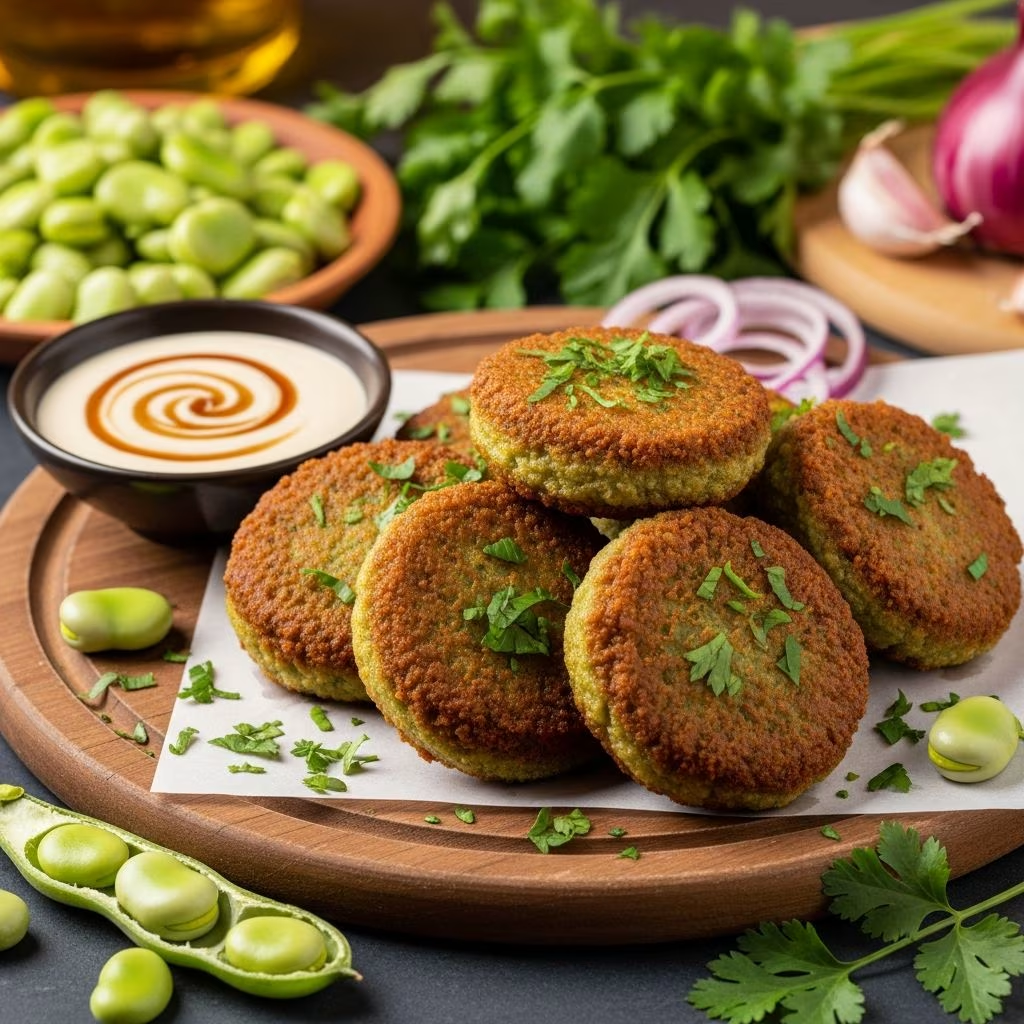
Egyptian taameya stands out as a beloved street food, crafted from humble fava beans transformed into crispy, flavorful fritters. Unlike the chickpea-based falafel common elsewhere in the Middle East, taameya relies on dried fava beans for its unique texture and nutty taste, making it a staple in Egyptian breakfasts and snacks.
The Origins and Cultural Role of Taameya
Taameya, often called Egyptian falafel, traces its roots to ancient Egypt where fava beans have been cultivated for millennia. This dish embodies resourcefulness, turning affordable legumes into a protein-rich meal served in pita pockets or alongside salads. In Cairo’s bustling markets, vendors fry fresh batches daily, filling the air with aromatic spices and sizzling oil. It’s not just food; it’s a symbol of everyday Egyptian hospitality, enjoyed by all social classes.
Historically, fava beans were a dietary cornerstone for Nile Valley farmers, providing sustenance during lean times. Today, taameya remains a vegan powerhouse, offering complete proteins when paired with tahini or yogurt. Its popularity extends beyond Egypt to kosher and plant-based communities worldwide, adapting seamlessly to modern diets.
Essential Ingredients for Authentic Taameya
Building the perfect taameya starts with high-quality components. The foundation is dried, skinless fava beans, soaked overnight to soften without cooking, ensuring a firm batter that holds together during frying.
- Dried fava beans: 1 pound (about 3 cups), skinless preferred for easier processing.
- Fresh herbs: Cilantro, parsley, dill, or chives for brightness; 1/4 to 1/2 bunch each.
- Aromatics: 6-8 scallions or 1 medium onion, 3-6 garlic cloves for depth.
- Spices: Cumin (1-2 tsp), coriander (1 tsp ground + seeds for coating), cayenne or chili powder (1/4-1/2 tsp), salt, black pepper.
- Leaveners: 1 tsp baking powder or soda for fluffiness.
- Coatings and oil: Flour or sesame seeds for crispiness, vegetable oil for deep-frying.
Some recipes incorporate chickpeas alongside fava beans for varied texture, blending 50/50 for a hybrid approach. Always use dried beans—canned versions make the mixture too mushy.
Step-by-Step Guide to Preparing Taameya Batter
Success hinges on proper bean preparation and processing. Begin by soaking beans in ample water for 8-24 hours, doubling in size. Drain and pat dry to remove excess moisture.
- Process herbs and aromatics: In a food processor, pulse scallions, garlic, onion quarter, cilantro, parsley, and any greens like arugula or dill until finely chopped.
- Grind the beans: Add drained fava beans in batches. Pulse to a coarse paste—avoid over-processing into mush, as this causes crumbling. Use a splash of water if needed, then strain excess liquid.
- Season boldly: Mix in cumin, coriander, cayenne, salt, pepper, and baking powder. Whisk vigorously for 5 minutes to aerate, then refrigerate 30-60 minutes for flavors to meld and moisture to drain.
This resting period is crucial; it firms the batter and enhances binding without eggs.
Shaping and Frying for Perfect Crispiness
Form 1-inch balls or patties using wet hands to prevent sticking. Flatten slightly and roll in flour, coarse coriander seeds, or sesame seeds for extra crunch.
Heat 1.5-2 inches of neutral oil to 350-365°F (medium heat). Fry in batches, turning once, for 4-5 minutes until deep golden. Avoid overcrowding to maintain temperature—too hot browns exteriors prematurely, too cool leaves soggy centers. Drain on paper towels.
For a healthier twist, bake at 425°F on a parchment-lined sheet with oil spray for 10-15 minutes per side, though frying yields superior crisp.
| Method | Time | Texture | Oil Used |
|---|---|---|---|
| Deep Fry | 4-5 min/batch | Crispy exterior, fluffy inside | High |
| Bake | 20-30 min total | Firmer, less oily | Low |
| Air Fry | 10-12 min at 375°F | Crunchy, even cooking | Minimal |
Flavor Variations and Customizations
While traditional taameya is spice-forward, experiment mindfully. Add ground cardamom for earthiness or extra chili for heat. For gluten-free, skip flour coating. Incorporate leeks or leeks for a regional twist.
- Spicy version: Double cayenne, add fresh chilies.
- Herb-heavy: Boost dill and chives for garden freshness.
- Hybrid: Mix with soaked chickpeas for nuttier profile.
- Sweet-savory: Dust fried fritters with powdered sugar, a rare festive variant.
Freezer-friendly: Shape and freeze uncooked patties on trays, then bag for up to 3 months. Fry from frozen, adding 1-2 minutes.
Classic Serving Suggestions and Pairings
Taameya shines in pita wraps with tahini sauce, pickled vegetables, tomatoes, cucumbers, and lettuce—a complete sandwich. Serve as meze with hummus, baba ganoush, or yogurt dip.
Tahini Sauce Recipe: Whisk 1/2 cup tahini, 1/4 cup lemon juice, 2 crushed garlic cloves, water to thin, salt. Drizzle generously.
- Pita pocket with salad and tahini.
- Meze platter with salads.
- Breakfast bowl over ful medames (fava stew).
- Burgers in buns for fusion.
Nutritionally, one serving (3-4 fritters) delivers 15g protein, fiber, iron from beans, low in fat if baked.
Troubleshooting Common Issues
Encounter problems? Here’s how to fix:
- Fritters fall apart: Batter too wet or over-processed; chill longer, add baking powder.
- Soggy texture: Oil not hot enough; use thermometer.
- Bitter taste: Old beans or excess skins; source fresh, skinless.
- Not crispy: Skip coatings or overcrowd; fry solo in single layer.
Health Benefits and Nutritional Profile
Fava beans pack antioxidants, folate, and magnesium, supporting heart health and digestion. Spices like cumin aid digestion; herbs provide vitamins. A 100g serving offers 350 calories, mostly from healthy fats post-frying, with zero cholesterol. Ideal for vegan, gluten-free diets.
Global Adaptations and Modern Twists
Beyond Egypt, taameya inspires chefs worldwide. Kosher versions omit non-kosher elements. Air-fryer methods cater to oil-conscious eaters. Fusion burgers or taameya tacos blend cultures innovatively.
Frequently Asked Questions (FAQs)
Can I use canned fava beans?
No, they make batter mushy and prone to disintegrating. Stick to dried, soaked overnight.
How long do leftovers last?
Refrigerate up to 3 days or freeze uncooked up to 3 months. Reheat in oven for crispiness.
Is taameya gluten-free?
Yes, naturally; use cornstarch instead of flour for coating if needed.
What’s the difference between taameya and falafel?
Taameya uses fava beans (green interior), falafel chickpeas (beige); Egyptian style is rounder, greener.
Vegetable oil or others for frying?
Neutral oils like canola or sunflower; avoid olive for high heat.
References
- Tamiya – Egyptian Fava Bean Fritters — Kosher.com. Accessed 2026. https://www.kosher.com/recipe/tamiya-egyptian-fava-bean-fritters-recipe-2553/
- Egyptian Fava Beans Falafel Wrap (Ta’ameya) — Instructables. Accessed 2026. https://www.instructables.com/Egyptian-Fava-Beans-Falafel-Wrap-Taameya/
- Egyptian Falafel (Ta’ameya) — Silk Road Recipes. Accessed 2026. https://silkroadrecipes.com/egyptian-falafel-taameya/
- Egyptian Baked Ta’ameya — The Matbakh. Accessed 2026. https://thematbakh.com/the-best-falafel-recipe-baked-using-egyptian-taameya/
- Tamiya (Egyptian Dried Fava Bean Fritters) — OU Kosher. Accessed 2026. https://oukosher.org/recipes/tamiya-egyptian-dried-fava-bean-fritters/