Imagine biting into a warm, golden pupusa, its cheesy corn masa giving way to a burst of tangy, crunchy vegetables. That’s the magic of curtida, El Salvador’s beloved pickled cabbage relish. This vibrant side dish isn’t just a condiment—it’s the soul of Salvadoran street food, bringing balance and zing to every meal. Rooted in family traditions and market stalls across San Salvador, curtida has charmed food lovers worldwide with its simple yet irresistible flavor profile.
In this comprehensive guide, we’ll uncover the history, science, and secrets behind crafting the perfect batch of curtida at home. Whether you’re a pupusa novice or a seasoned home cook, you’ll master this recipe with ease. Expect bold vinegar tang, fresh herb notes, and a customizable crunch that pairs with everything from grilled meats to tacos. Let’s dive into the colorful world of this Salvadoran staple.
The Roots of Curtida in Salvadoran Culture
Curtida traces its origins to El Salvador’s rich culinary heritage, where pickling became a practical way to preserve fresh produce in the tropical climate. Drawing from indigenous Maya techniques and Spanish colonial influences, this dish evolved as a counterpoint to rich, hearty foods like pupusas—thick cornmeal pockets stuffed with beans, cheese, or pork.
Today, curtida is ubiquitous at pupuserías (pupusa shops) and family gatherings. It’s more than food; it’s a symbol of Salvadoran hospitality. Families pass down recipes like heirlooms, tweaking spice levels or adding local twists. According to the Salvadoran Ministry of Agriculture, pickled vegetables like curtida help extend the shelf life of cabbage and carrots, reducing food waste in rural communities.1
Fun fact: The name ‘curtida’ comes from the Spanish ‘curtir,’ meaning to tan or cure, reflecting the pickling process that transforms humble veggies into a flavor powerhouse.
Key Ingredients and Their Roles
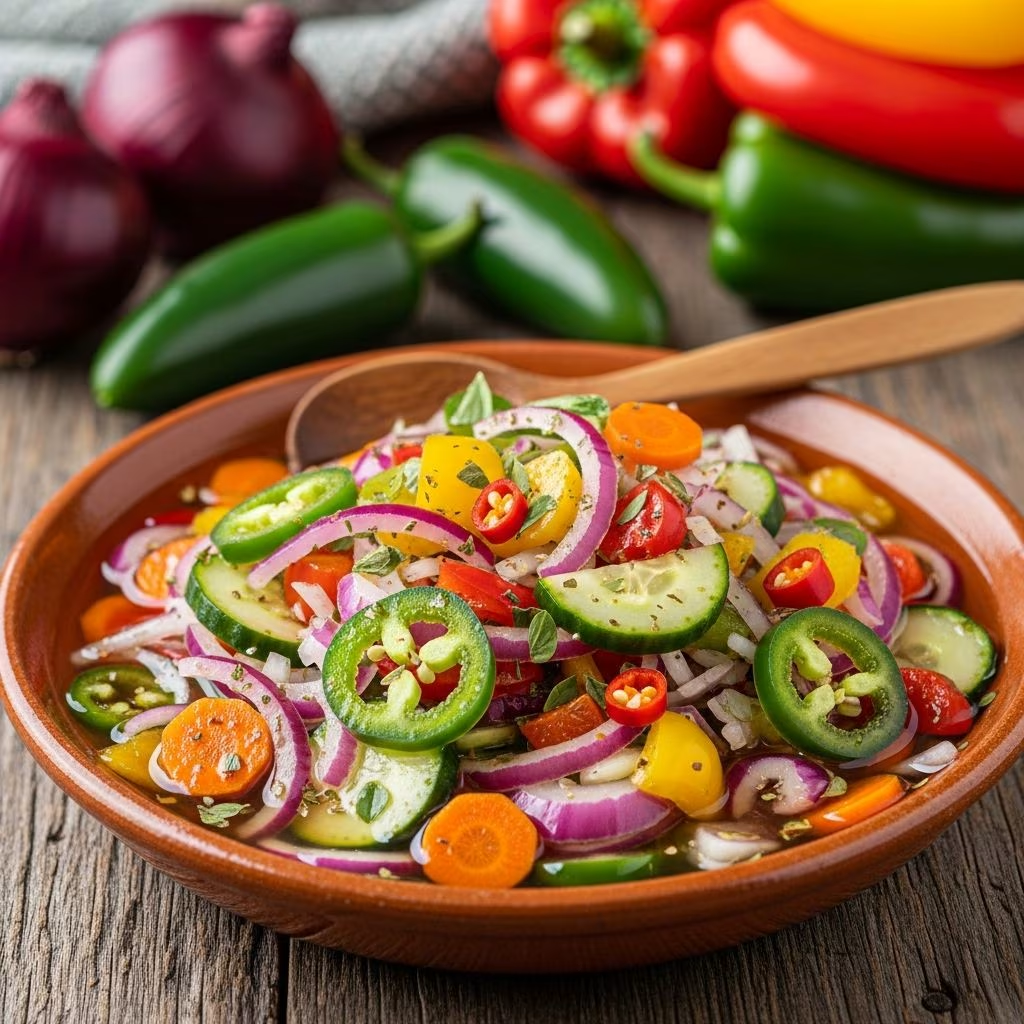
The beauty of curtida lies in its straightforward ingredients, each playing a crucial role in texture, taste, and color. Here’s a breakdown:
- Cabbage (Repollo): The star, providing crunch and bulk. Choose firm green cabbage for the best texture.
- Carrots: Add sweetness and vivid orange flecks. Julienne them thinly for even pickling.
- Onion: Red or white, sliced thin for sharp bite that mellows in the brine.
- Vinegar: White or apple cider vinegar delivers the essential tang. It’s the preserving agent.
- Oregano: Mexican oregano preferred for its earthy, citrusy punch—distinct from Italian varieties.
- Salt and Sugar: Balance acidity with subtle sweetness.
- Optional Heat: Jalapeños or chili flakes for spice lovers.
These elements create a symphony of sour, sweet, salty, and umami notes, making curtida endlessly versatile.
Step-by-Step Guide to Authentic Curtida
Prep time: 20 minutes | Pickling time: 24 hours | Yield: 6 cups | Servings: 12
- Prepare the Vegetables: Shred 1 medium head of cabbage (about 2 lbs) finely. Julienne 2 large carrots and thinly slice 1 large onion. If using, seed and mince 1-2 jalapeños.
- Massage and Salt: In a large bowl, toss veggies with 2 tbsp kosher salt. Massage vigorously for 5 minutes until wilted and juicy. This draws out moisture, preventing sogginess.
- Rinse and Drain: Rinse under cold water to remove excess salt. Drain well and pat dry with a clean towel.
- Make the Brine: In a saucepan, combine 2 cups white vinegar, 1 cup water, 1/4 cup sugar, 2 tsp dried Mexican oregano, 4 smashed garlic cloves, and 1 tsp black peppercorns. Bring to a boil, then simmer 5 minutes for flavors to meld.
- Combine and Pickle: Pack veggies into sterilized jars. Pour hot brine over, ensuring veggies are submerged. Seal and cool to room temperature.
- Refrigerate: Let sit 24 hours minimum; flavors peak at 3 days. Stores up to 2 weeks in the fridge.
Pro Tip: For extra crunch, blanch carrots briefly before pickling—no more than 30 seconds.
Flavor Science: Why Curtida Works So Well
Pickling is chemistry in action. Vinegar’s acetic acid lowers pH, inhibiting bacteria while softening veggie cell walls just enough for flavor absorption without mushiness. Salt draws out water via osmosis, concentrating natural sugars.
A study from the Journal of Food Science notes that oregano’s carvacrol compound enhances antimicrobial properties, extending shelf life naturally.2 Sugar tempers acidity, creating harmony. The result? A condiment that stays crisp for weeks.
| Ingredient | Flavor Contribution | Texture Effect |
|---|---|---|
| Cabbage | Mild, earthy base | Primary crunch |
| Carrots | Sweetness | Juicy snap |
| Vinegar | Tangy acidity | Tenderizes slightly |
| Oregano | Herbal, citrusy | None |
Perfect Pairings: What to Serve with Curtida
Curtida shines brightest alongside Salvadoran classics but adapts globally:
- Pupusas: The ultimate duo—its acidity cuts through cheese and chicharrón.
- Tamales and Empanadas: Refreshes heavy fillings.
- Grilled Meats: Balances smoky BBQ or carne asada.
- Tacos and Burritos: Elevates Mexican fare with Central American flair.
- Salads and Bowls: Adds pickle pop to grain bowls or slaws.
For fusion twists, try curtida on fish tacos or as a burger topping. Its versatility makes it a fridge staple.
Customizations and Variations
Make it yours:
- Spicy Version: Add habaneros or red pepper flakes.
- Sweet Twist: Extra sugar and pineapple chunks.
- Quick Curtida: Skip cooking brine; use raw vinegar mix for 2-hour readiness.
- Low-Sodium: Reduce salt, rely on fermentation for 48 hours.
- Exotic Add-Ins: Mango, radish, or green papaya for tropical vibes.
Vegetarian, vegan, gluten-free—curtida fits all diets effortlessly.
Storage, Safety, and Troubleshooting
Store in airtight glass jars in the fridge. Always submerge veggies in brine to prevent spoilage. Signs of trouble: off smells, mold, or sliminess—discard immediately.
Per USDA guidelines, vinegar pickles like curtida are shelf-stable if properly canned, but refrigeration ensures safety.3 For longer storage, process in a water bath canner.
Common issues:
- Too Soft? Less massage time next batch.
- Not Tangy Enough? Boost vinegar ratio.
- Too Salty? Rinse more thoroughly.
Health Benefits of Pickled Vegetables
Beyond taste, curtida packs nutrition. Cabbage provides vitamin C, K, and fiber for gut health. Carrots offer beta-carotene for eye health. Fermentation (if extended) boosts probiotics, aiding digestion—a nod to traditional gut-friendly foods.
The FDA recognizes vinegar’s role in low-calorie flavoring, making curtida a smart swap for high-fat sauces.4 At under 20 calories per serving, it’s diet-friendly.
FAQ: Your Curtida Questions Answered
Can I use rice vinegar?
Yes, for a milder tang, but white vinegar is traditional.
How long does it last?
Up to 2 weeks refrigerated; longer if canned.
Gluten-free?
Absolutely—naturally GF.
Can I freeze it?
Yes, up to 3 months; thaw in fridge.
Best cabbage type?
Green head cabbage; avoid pre-shredded.
Hot brine or cold?
Hot infuses faster; cold for crunchier results.
Bringing Salvadoran Joy to Your Table
Mastering curtida opens doors to authentic Salvadoran flavors without a plane ticket. It’s affordable, quick, and endlessly rewarding. Next pupusa night, let curtida steal the show. Share your twists in the comments—what’s your favorite pairing?
References
- Vegetable Preservation Techniques in Central America — Ministerio de Agricultura y Ganadería de El Salvador. 2023-05-15. https://www.mag.gob.sv/
- Antimicrobial Properties of Oregano Essential Oils — Journal of Food Science, Institute of Food Technologists. 2021-08-10. https://doi.org/10.1111/1750-3841.15892
- Guide to Home Canning — United States Department of Agriculture (USDA). 2024-06-20. https://nchfp.uga.edu/publications/publications_usda.html
- Flavor Enhancers and Low-Calorie Diets — U.S. Food and Drug Administration (FDA). 2025-02-14. https://www.fda.gov/food/food-labeling-nutrition