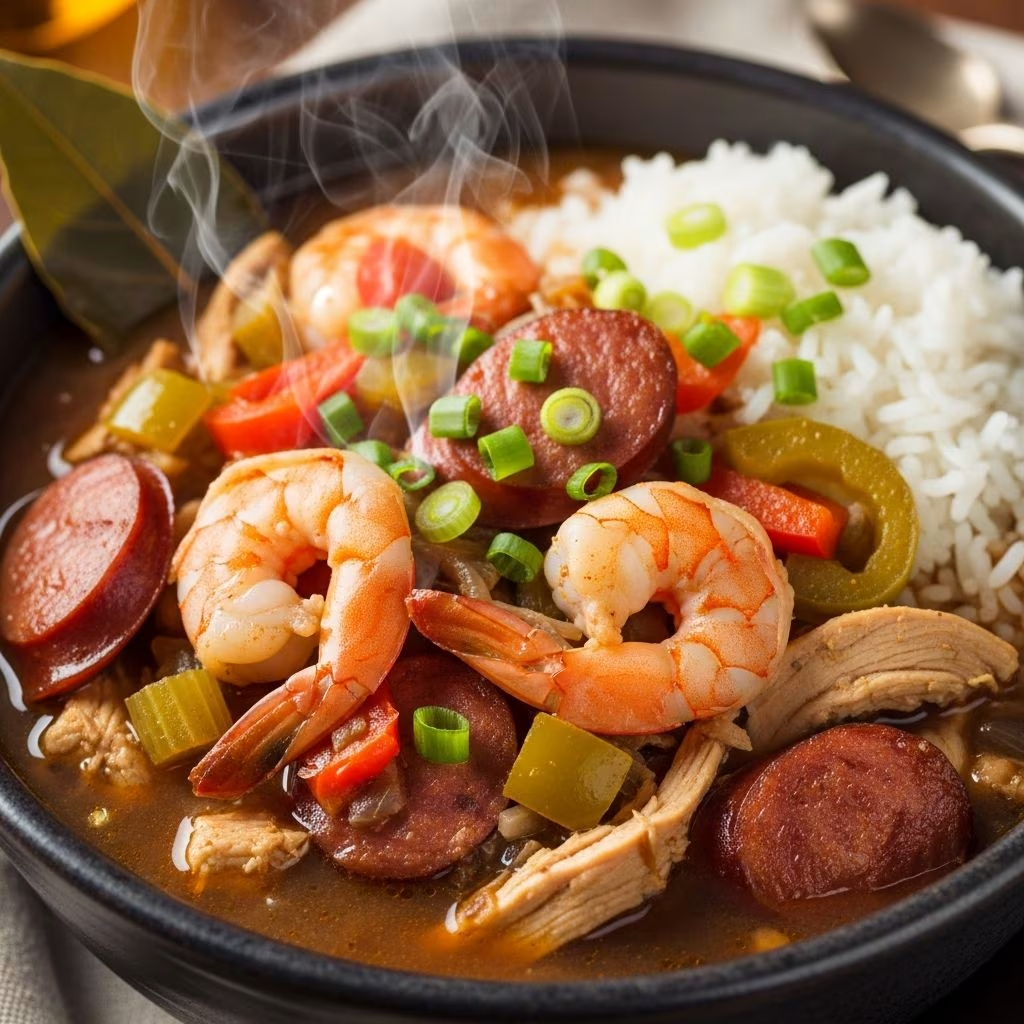
Creole gumbo stands as a cornerstone of Louisiana cuisine, blending African, French, Native American, and Spanish influences into a hearty, flavorful stew. This dish captures the essence of New Orleans with its dark roux base, fresh seafood, smoky sausage, and the classic ‘holy trinity’ of onions, bell peppers, and celery. Unlike Cajun gumbo, Creole versions often incorporate tomatoes for a brighter profile, though purists debate the nuances. Preparing gumbo requires patience, especially for the roux, but the result is a comforting pot of goodness perfect for gatherings.
Understanding the Heart of Gumbo: Roux and Beyond
The soul of any great gumbo lies in the roux, a cooked mixture of flour and fat that thickens and flavors the stew. In Creole style, aim for a deep chocolate-brown color, achieved by low-and-slow cooking to develop nutty, caramelized notes without bitterness. This process can take 30-45 minutes of constant stirring, but it’s worth every second for the rich depth it imparts.
Beyond roux, the holy trinity provides aromatic foundation. Chopped onions, celery, and green bell peppers sautéed until softened release sweetness and balance the roux’s intensity. Creole seasoning—typically a mix of paprika, garlic powder, onion powder, cayenne, and herbs—adds the signature spice kick. Seafood like shrimp and crab, paired with andouille sausage, brings smokiness and brininess, while stock (chicken or seafood) ties it all together.
Essential Ingredients for Creole Gumbo
Gathering high-quality ingredients ensures success. Here’s a breakdown:
- Roux Base: ½ cup vegetable oil or lard, ½ cup all-purpose flour.
- Holy Trinity: 1 large onion (diced), 1 green bell pepper (diced), 2 celery stalks (diced).
- Aromatics & Spices: 4 garlic cloves (minced), 2 bay leaves, 1-2 tbsp Creole or Cajun seasoning, 1 tsp cayenne pepper, 1 tsp dried thyme.
- Proteins: 1 lb andouille sausage (sliced), 1 lb shrimp (peeled/deveined), 1 lb crab meat or claws (optional), meat from 1 rotisserie chicken (shredded).
- Liquids & Add-Ins: 8-10 cups chicken or seafood stock, 1 cup diced tomatoes (for Creole twist), 2 tbsp Worcestershire sauce, salt and pepper to taste.
- Serving: Cooked white rice, green onions, and parsley for garnish.
Pro tip: Use fresh seafood for the best flavor; frozen works in a pinch but thaw fully to avoid excess water.
Step-by-Step Guide to Making Creole Gumbo
Follow these detailed steps for a pot that serves 8-10 people. Total time: about 2 hours.
Prepare the Roux: In a large Dutch oven or heavy pot, heat oil over medium-low. Whisk in flour gradually. Cook, stirring constantly with a wooden spoon, for 30-45 minutes until it reaches a dark brown hue like melted chocolate. If it smokes excessively, lower the heat—patience prevents scorching.
Add the Trinity: Once roux is ready, stir in onions, bell pepper, and celery. Cook 5-7 minutes until vegetables soften and release moisture, lightening the roux slightly.
Incorporate Aromatics: Add garlic, bay leaves, Creole seasoning, cayenne, and thyme. Sauté 2 minutes until fragrant.
Brown the Sausage: In a separate skillet, brown sliced andouille over medium-high heat for crisp edges and rendered fat. Transfer to the pot with roux mixture.
Build the Broth: Gradually pour in stock (start with 4 cups, add more as needed), stirring to incorporate. Add tomatoes, Worcestershire, and chicken. Bring to a boil, then simmer uncovered for 45-60 minutes. Skim foam or fat from the surface periodically.
Add Seafood: Stir in shrimp and crab during the last 10 minutes. Shrimp will turn pink and curl when done. Taste and adjust seasoning with salt, pepper, or more Creole blend.
Rest and Serve: Remove bay leaves. Let gumbo sit off-heat for 10 minutes to meld flavors. Ladle over hot rice in bowls, garnished with chopped green onions and parsley.
Pro Tips for Gumbo Perfection
- Roux Troubleshooting: If it burns (black flecks or bitter smell), start over—there’s no saving it. Practice on a small batch first.
- Thickness Control: For thicker gumbo, extend simmering; for soupier, add more stock. File powder (ground sassafras) can thicken post-cooking but add just before serving to avoid sliminess.
- Make-Ahead Magic: Gumbo improves overnight in the fridge as flavors deepen. Reheat gently on stovetop.
- Variations: Go fully seafood with oysters or crawfish; omit chicken for vegetarian with okra. Creole often includes tomatoes, distinguishing it from tomato-free Cajun.
Nutrition and Serving Suggestions
A 1-cup serving (without rice) offers roughly 300-400 calories, high in protein from seafood and sausage, with healthy fats from the roux. It’s gluten-containing due to flour, so adapt for allergies with cornstarch slurry.
Pair with:
- Steamy white rice or potato salad for authenticity.
- Cornbread or French bread to sop up broth.
- Chilled Abita beer or sweet tea.
| Nutrient | Per Serving (approx.) | % Daily Value |
|---|---|---|
| Calories | 350 | 18% |
| Protein | 25g | 50% |
| Fat | 20g | 26% |
| Carbs | 15g | 5% |
Common Mistakes and How to Avoid Them
Even seasoned cooks falter. Here’s how to sidestep pitfalls:
- Rushing the Roux: Low heat is key; high heat leads to burnt flour.
- Overcrowding Proteins: Add shrimp late to prevent rubbery texture.
- Skipping the Skim: Remove impurities for clearer broth.
- Weak Stock: Homemade or quality store-bought elevates the dish.
The Cultural Legacy of Creole Gumbo
Gumbo’s roots trace to the 18th century in Louisiana, evolving from West African stews, Choctaw filé, and French roux techniques. In New Orleans, it’s more than food—it’s community, served at second lines, holidays, and wakes. Creole gumbo reflects urban sophistication with tomatoes and shellfish, contrasting rural Cajun’s game meats and okra. Today, it symbolizes resilience, especially post-Katrina, with chefs innovating while honoring tradition.
Word count for this section contributes to the article’s depth, exploring how gumbo unites families. Recipes vary by household, but the love poured in remains constant. Experiment to create your signature version.
Frequently Asked Questions (FAQs)
What makes Creole gumbo different from Cajun?
Creole includes tomatoes and often more seafood, reflecting city influences; Cajun is rustier, with okra or file and no tomatoes.
Can I make gumbo in advance?
Yes! It tastes better after 1-2 days in the fridge. Freeze for up to 3 months.
Vegetarian gumbo possible?
Absolutely—use vegetable stock, okra for thickening, and plant-based sausage.
How do I store leftovers?
Refrigerate in airtight containers up to 4 days; reheat with a splash of stock.
What’s file powder, and do I need it?
Ground sassafras leaves for thickening and earthy flavor. Stir in at serving; don’t boil after adding.
With these insights, you’re equipped to craft a pot of Creole gumbo that rivals New Orleans kitchens. Dive in, stir with intention, and savor the magic.
References
- New Orleans Seafood File Gumbo — Kenneth Temple. 2023-05-15. https://kennethtemple.com/new-orleans-seafood-file-gumbo/
- Authentic New Orleans Style Gumbo — Tastes Better From Scratch. 2024-02-10. https://tastesbetterfromscratch.com/authentic-new-orleans-style-gumbo/
- Authentic Cajun Gumbo — Butter Be Ready. 2023-11-20. https://www.butterbeready.com/authentic-cajun-gumbo/
- Authentic Louisiana Seafood Gumbo Recipe — The Cagle Diaries. 2024-01-05. https://thecaglediaries.com/louisiana-seafood-gumbo-recipe/