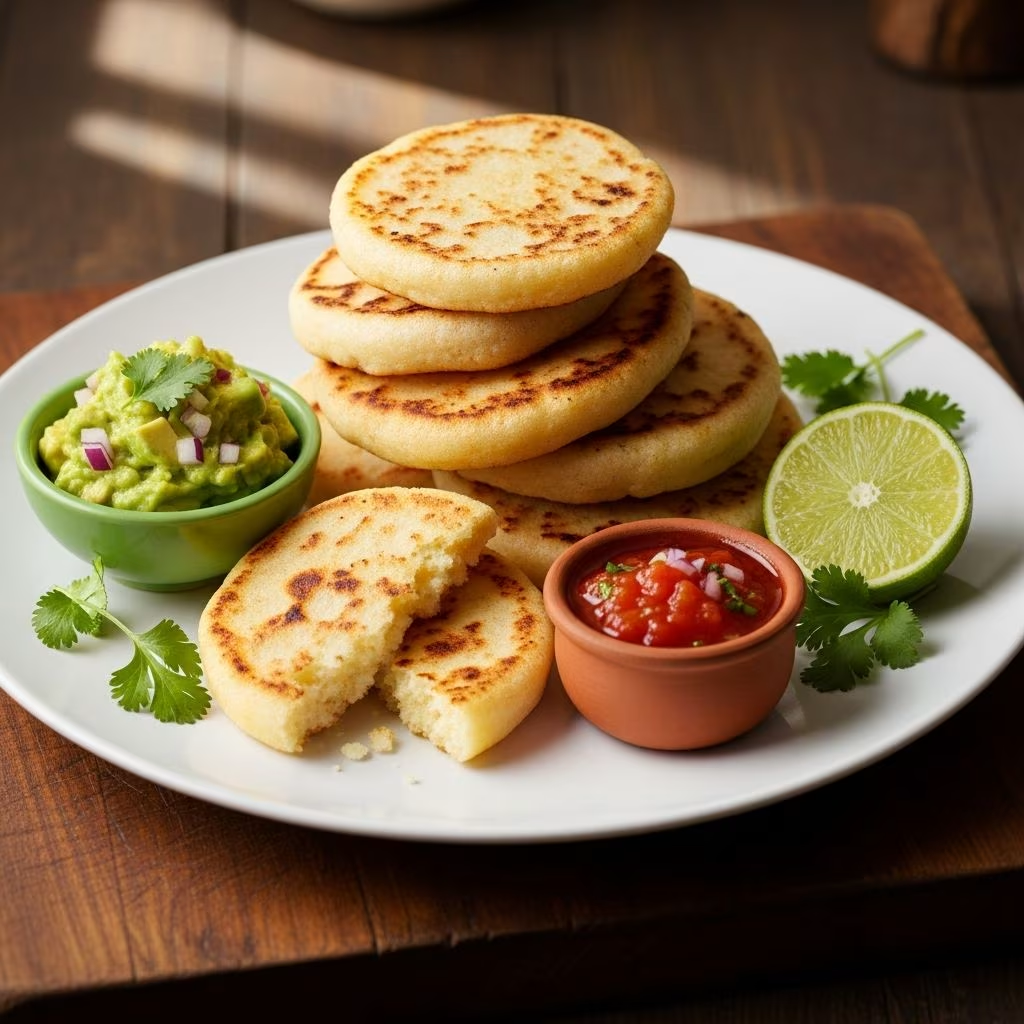
Colombian arepas stand as a cornerstone of the nation’s cuisine, representing versatility and comfort in every bite. These cornmeal-based patties, griddled to a golden crisp, serve as a canvas for countless fillings, from savory cheeses to hearty stews. Originating from indigenous traditions and refined over centuries, arepas transcend meals—breakfast, lunch, or dinner—and embody communal eating across Colombia’s diverse regions.
Understanding the Essence of Colombian Arepas
Arepas differ from their Venezuelan counterparts in texture and preparation. Colombian versions prioritize a **soft, doughy interior** encased in a crisp exterior, achieved through precise hydration and cooking. The key ingredient, masarepa—precooked corn flour—ensures gluten-free authenticity without the need for grinding fresh corn.
Historically, arepas sustained indigenous communities and later became staples during colonial times. Today, they appear plain or stuffed, adapting to urban and rural lifestyles alike. Their simplicity belies nutritional value: corn provides fiber and energy, while additions like cheese boost protein.
Essential Ingredients for Perfect Arepas
Gathering the right components guarantees success. Focus on quality masarepa, available in white or yellow varieties, both yielding excellent results.
- Precooked cornmeal (masarepa): 2 cups (brands like P.A.N. recommended for authenticity).
- Warm water: 1.25 to 2 cups, adjusted for dough consistency.
- Salt: 1 teaspoon to enhance flavors.
- Butter or oil: 1-2 tablespoons, softened, for richness and frying.
- Optional cheese: 1 cup shredded (mozzarella, queso fresco, or Monterey Jack) for stuffed or mixed-in versions.
These measurements yield 6-8 arepas, scalable for larger batches. Use warm water to activate the cornmeal properly, preventing cracks during shaping.
Step-by-Step Guide to Making Basic Arepas
Preparation takes under 30 minutes, with cooking adding another 10-15. Follow these steps for foolproof results.
- Mix the dry ingredients: In a large bowl, combine masarepa and salt. This base ensures even distribution.
- Incorporate wet elements: Add softened butter and gradually pour in warm water. Stir with hands or a spoon until a smooth, moist dough forms—neither sticky nor dry.
- Rest the dough: Cover with a damp cloth and let sit 5-10 minutes. Hydration completes, making shaping easier.
- Shape the patties: Divide into 6-8 portions. Roll into balls, then flatten to ½-inch thickness, about 4 inches wide. Smooth edges to avoid splitting.
- Cook to perfection: Heat a greased skillet, griddle, or budare over medium heat. Place arepas without overcrowding; cook 4-6 minutes per side until golden and crisp. Internal heat forms a soft pocket.
Tip: Damp hands prevent sticking during shaping. If dough cracks, add water sparingly.
Popular Variations: From Plain to Cheese-Filled Delights
Arepas shine in diversity. Experiment with these adaptations rooted in Colombian traditions.
| Variation | Key Addition | Cooking Adjustment | Best Pairings |
|---|---|---|---|
| Plain Arepas | None | Standard 5 min/side | Butter, hogao sauce |
| Arepas con Queso | 1 cup shredded cheese mixed in dough | Medium heat to melt cheese | Pico de gallo, scrambled eggs |
| Stuffed Arepas | Extra cheese pocket in center | Seal well; cook longer | Avocado, pulled pork |
| Sweet Arepas | 2 tbsp sugar in dough | Lower heat to caramelize | Chocolate spread, fresh fruit |
For cheese arepas, knead shredded varieties like Jarlsberg or mozzarella directly into the dough post-rest. This melts during cooking, creating gooey centers. Stuffed versions involve pressing cheese into a dough pocket before sealing—ideal for indulgent snacks.
Mastering Cooking Techniques and Tools
Equipment impacts texture. A cast-iron skillet or electric griddle at 325°F mimics traditional budare pans, promoting even browning.
- Stovetop skillet: Medium heat, butter/oil grease; flip once browned (5-7 min/side).
- Electric griddle: Preheat to 325°F, spread butter; ideal for batches.
- Air fryer: 375°F for 10-12 min, flipping halfway—healthier crisp.
- Panini press: Quick compression for uniform crusts, 5 min total.
Pro tip: Arepas stick initially but release when ready—patience yields char spots and flavor.
Serving Suggestions and Traditional Pairings
Hot from the griddle, slice horizontally for fillings. Colombian tables feature:
- Breakfast: With eggs, avocado, and hogao (tomato-onion sauce).
- Lunch: Stuffed with carne desmechada (shredded beef) or chicken.
- Snacks: Plain with butter or cheese, alongside coffee.
- Sides: To bandeja paisa or sancocho soups.
Enhance with aji picante or fresh herbs for authenticity. They reheat well in a toaster oven, maintaining crispness.
Troubleshooting Common Issues
Encounter problems? Quick fixes ensure success.
- Cracked edges: Dough too dry—add water 1 tbsp at a time.
- Dense texture: Over-kneaded; handle gently.
- Not crispy: Increase heat or cook longer; ensure grease.
- Cheese leaks: Seal pockets tightly or mix in evenly.
Store uncooked dough refrigerated up to 24 hours; freeze shaped arepas for months.
Nutritional Profile and Dietary Adaptations
One plain arepa (about 100g) offers ~200 calories, high carbs from corn, low fat. Cheese versions add ~100 calories and protein.
Gluten-free naturally. Veganize by omitting butter/cheese, using plant-based alternatives. Scale sugar for low-glycemic options.
Exploring Arepas in Colombian Culture
Beyond kitchens, arepas symbolize unity. Street vendors in Bogotá and Medellín grill them fresh, while coastal regions add coconut. Festivals like Feria de las Colonias celebrate regional twists, fostering community.
Home cooks worldwide replicate this through accessible masarepa. Pair with plantains or beans for full meals, evoking Colombian vibrancy.
Frequently Asked Questions (FAQs)
What is masarepa, and where to buy it?
Masarepa is precooked corn flour essential for authentic texture. Find P.A.N. or Goya in Latin markets or online.
Can I use regular cornmeal?
No—regular cornmeal requires cooking first and yields gritty results. Stick to masarepa.
How do I know when to flip?
Edges lift and bottom is golden, about 5 minutes. They release naturally.
Are arepas freezer-friendly?
Yes, freeze cooked or uncooked up to 3 months. Thaw and reheat on griddle.
What’s the difference between Colombian and Venezuelan arepas?
Colombian arepas are thicker, softer inside; Venezuelan often thinner, corn-ground.
References
- Colombian Arepas – Martina’s Recipes — LifestyleMartina. Accessed 2026. https://lifestylemartina.com/recipes/dinner-recipes/colombian-arepas/
- Authentic Colombian Arepas – Colombian Cheese Arepa Recipe — LetsEatTheWorld. Accessed 2026. https://letseattheworld.com/authentic-colombian-arepas-recipe/
- Arepas Recipe – Colombian Snack! — The Foreign Fork. Accessed 2026. https://foreignfork.com/colombian-arepas/
- Authentic Colombian Arepas con Queso recipe — Immigrant’s Table. Accessed 2026. https://immigrantstable.com/authentic-colombian-cheese-arepas/
- Easy Recipe Using a Panini Press | The Frugal Chef — YouTube (The Frugal Chef). Accessed 2026. https://www.youtube.com/watch?v=eQRfKe82gxo
- How to Make Easy Colombian Arepas and Hogao Sauce at Home — YouTube. Accessed 2026. https://www.youtube.com/watch?v=snSnk6NwlKA
- What are Arepas? — My Colombian Recipes. Accessed 2026. https://www.mycolombianrecipes.com/what-are-arepas/