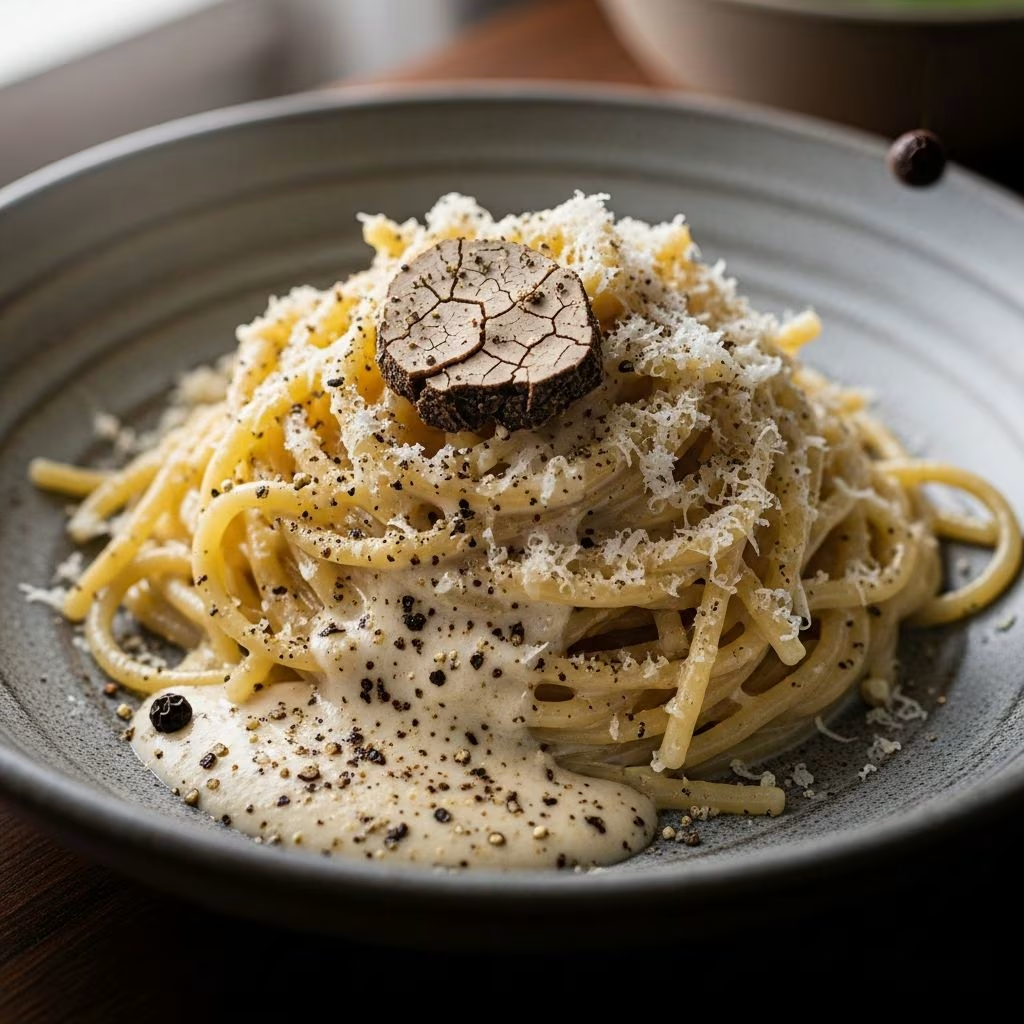
Classic cacio e pepe stands as one of Italy’s most treasured pasta dishes, originating from the streets of Rome. Translating literally to “cheese and pepper,” this minimalist recipe relies on just a handful of ingredients to deliver bold flavors and a luxurious, emulsified sauce that clings perfectly to the pasta. Far from being a simple weeknight throw-together, achieving the iconic glossy texture requires precision in technique, fresh components, and an understanding of how starch, heat, and agitation work together.
The Timeless Appeal of Roman Street Food
Cacio e pepe emerged from the pastoral traditions of Roman shepherds who carried durable ingredients like hard cheese and pepper on long journeys. These elements needed no refrigeration and provided sustenance in a compact form. Over time, the dish evolved into a staple of Roman trattorias, celebrated for its purity and intensity. Today, it captivates home cooks worldwide with its deceptive simplicity—yet many struggle to replicate the silky sauce seen in authentic versions.
The magic lies in the emulsion: starchy pasta water binds with finely grated pecorino Romano cheese and freshly cracked black pepper, creating a sauce without cream, butter, or flour. This balance highlights the cheese’s sharp, nutty profile against the pepper’s fiery bite, all wrapped around sturdy pasta strands.
Selecting the Right Ingredients for Authenticity
Success starts with quality components. Here’s a breakdown of essentials:
- Pasta: Opt for long, thick shapes like tonnarelli, bucatini, or spaghetti. These hold the sauce well due to their rough texture and ability to trap pepper flecks. Tonnarelli, a square-cut pasta from Rome, is traditional, but spaghetti offers a reliable substitute.
- Pecorino Romano: This sheep’s milk cheese is non-negotiable for true flavor. Its salty, pungent qualities melt into the sauce uniquely. Grate it fresh on the finest setting for optimal melting—pre-grated versions contain anti-caking agents that prevent smooth emulsification.
- Black Pepper: Use coarse, freshly cracked peppercorns. Toast them lightly to release aromatic oils, amplifying the dish’s warmth and complexity. Fine table pepper lacks the punch.
- Pasta Water: The unsung hero. Its starch content is crucial for sauce formation. Salt the boiling water generously to enhance pasta flavor and starch release.
Avoid substitutions like Parmesan alone, as it yields a milder taste. For budget adaptations, a Pecorino-Parmesan blend works, but purists insist on 100% Pecorino.
Step-by-Step Recipe for Perfect Cacio e Pepe
This recipe serves 2-4 and takes about 20 minutes. Scale as needed.
Ingredients
| Ingredient | Quantity |
|---|---|
| Dry spaghetti or bucatini | 8 oz (225g) |
| Pecorino Romano, finely grated | 1.5 cups (about 3 oz / 85g), plus extra for serving |
| Coarse black pepper | 1-2 tsp freshly cracked, plus more for garnish |
| Kosher salt | For pasta water |
Instructions
- Boil the pasta: Bring a large pot of water to a rolling boil. Add a palmful of salt (water should taste like the sea). Cook pasta until just shy of al dente—about 1 minute less than package instructions. Reserve 1.5 cups pasta water, then drain.
- Toast the pepper: In a large skillet over medium heat, add cracked pepper. Stir for 30 seconds until fragrant. Add 1/2 cup reserved pasta water and simmer briefly to create a pepper-infused base.
- Combine off heat: Reduce skillet heat to low. Add drained pasta directly to the skillet. Toss to coat. Sprinkle in grated cheese in stages, alternating with small splashes of pasta water (start with 1/2 cup total). Use tongs to vigorously mix, creating emulsion. The sauce should be glossy and coat strands lightly—add water incrementally if too thick.
- Finish and serve: Taste for seasoning (cheese is salty, so adjust pepper only). Plate immediately, garnishing with extra cheese and pepper. Serve hot to preserve sauce texture.
Pro Tip: Work quickly off direct heat to prevent cheese clumping. If sauce breaks, add a splash of cold water and stir rapidly.
Common Mistakes and How to Avoid Them
Even seasoned cooks falter here. Key pitfalls include:
- Overheating cheese: High heat causes proteins to seize, forming gritty clumps. Always emulsify on low or off heat.
- Insufficient starch: Undercook pasta slightly and reserve ample water. Low-starch water leads to oily separation.
- Wrong cheese grate: Coarse shreds don’t melt evenly. Microplane or fine grater is essential.
- High heat throughout: Simmer pepper gently, but finish sauce cool to maintain silkiness.
Test for doneness: Sauce should ribbon off tongs without dripping excessively.
Creative Variations to Elevate Your Dish
While purists shun additions, modern twists keep the spirit alive:
- Vegetarian boost: Sauté broccoli rabe or peas; add post-emulsion for crunch.
- Protein-packed: Top with grilled shrimp or pancetta crisps—sparingly to not overwhelm.
- Spicy kick: Infuse with red chili flakes during pepper toast.
- Umami upgrade: Mix in a pat of butter for richness, as in some adapted recipes.
- Pasta swaps: Try rigatoni for a short-pasta version or add asparagus for earthiness.
For gluten-free, use sturdy legume pasta, adjusting water ratios.
Pairing Suggestions and Serving Ideas
Keep sides light: Arugula salad with lemon vinaigrette cuts richness. Pair with crisp white wines like Frascati or Verdicchio—their acidity balances pepper heat. For drinks, a chilled Peroni amplifies Roman vibes.
Serve family-style from a warmed bowl to prevent cooling. Leftovers reheat gently with pasta water splashes.
Nutritional Snapshot
| Per Serving (1/4 recipe) | Amount |
|---|---|
| Calories | ~450 |
| Protein | 18g |
| Carbs | 55g |
| Fat | 16g |
| Sodium | High (from cheese) |
Values approximate; cheese drives sodium and fat.
Frequently Asked Questions
What if I can’t find Pecorino Romano?
Use Parmigiano-Reggiano, but expect milder flavor. A 50/50 blend approximates authenticity.
Why does my sauce break?
Usually heat or low starch. Cool pan, add water slowly, and toss off heat.
Can I make it vegan?
Substitute nutritional yeast and cashew cream, but it won’t mimic true emulsion.
How much pepper is too much?
Start with 1 tsp per 8oz pasta; adjust to taste. Pepper should enhance, not dominate.
Best pasta shape?
Bucatini or tonnarelli for tradition; spaghetti for accessibility.
Advanced Techniques for Pro Results
For next-level execution, toast pepper in olive oil (sparingly) or pre-mix cheese with cool pasta water into a slurry before adding. In Rome, chefs use a single cold bowl method: toss hot pasta, cheese, and water vigorously for emulsion without a skillet.
Practice makes perfect—experiment with water ratios to suit your stove and pasta brand.
References
- Cacio e Pepe Recipe – Love and Lemons — Love and Lemons. 2023. https://www.loveandlemons.com/cacio-e-pepe/
- Authentic Cacio e Pepe – Urban Farmie — Urban Farmie. 2023. https://urbanfarmie.com/authentic-cacio-e-pepe-recipe/
- Easy Cacio e Pepe Recipe – Spoon Fork Bacon — Spoon Fork Bacon. 2023. https://www.spoonforkbacon.com/cacio-e-pepe-recipe/
- Irresistible Cacio e Pepe – Budget Bytes — Budget Bytes. 2023. https://www.budgetbytes.com/cacio-e-pepe/
- Cacio e Pepe Pasta with Pecorino Romano – Familystyle Food — Familystyle Food. 2023. https://familystylefood.com/cacio-e-pepe-pasta/
- 10 Unique Cacio e Pepe Recipes – DeLallo — DeLallo. 2023. https://www.delallo.com/blog/cacio-e-pepe-recipes
- Spaghetti Cacio e Pepe – Chef in Rome — YouTube (Chef Alessandra Ruggeri). 2023. https://www.youtube.com/watch?v=_JHAOGJllMQ