Beef ragu represents one of Italy’s most cherished culinary traditions, a dish that embodies generations of family cooking and regional pride. This hearty meat sauce, known formally as Ragu di Carne, transforms humble ingredients into a deeply flavorful creation that graces tables during special occasions and everyday family dinners alike. The magic of beef ragu lies not in complex techniques or exotic components, but in the patience required to allow flavors to develop and intensify through slow, careful cooking. Whether you’re exploring Italian cuisine for the first time or refining your cooking repertoire, understanding the fundamentals of beef ragu preparation will elevate your ability to create authentic, restaurant-quality dishes at home.
Understanding the Foundation: What Makes Beef Ragu Distinctive
Beef ragu differs significantly from lighter tomato-based sauces commonly found in contemporary Italian-American cuisine. The distinction lies primarily in the cooking method and ingredient composition. Rather than serving as a quick accompaniment to pasta, traditional beef ragu demands several hours of slow simmering, allowing the beef to become incredibly tender while releasing collagen that enriches the sauce. This extended cooking process creates a sauce with body, depth, and complexity that cannot be rushed or replicated through shortcuts.
The dish’s character stems from the Bolognese tradition, though regional variations exist throughout Italy. What unites these versions is the philosophy of combining meat, aromatic vegetables, tomatoes, and wine in proportions that allow each component to shine while contributing to a cohesive whole. The result is fundamentally different from meat-based pasta sauces found in other cuisines—it’s thicker, more substantial, and meant to cling to wider pasta shapes rather than coat them lightly.
Selecting Premium Ingredients for Optimal Results
The Beef Selection Process
The choice of beef cut fundamentally determines your ragu’s success. Chuck roast emerges as the preferred selection among experienced cooks because it contains optimal amounts of intramuscular fat and connective tissue. When exposed to prolonged, moist heat, this connective tissue converts to gelatin, transforming tough meat into melt-in-your-mouth tenderness. A three-pound chuck roast, cut into fist-sized pieces, provides the ideal starting point for most home kitchens.
Some cooks combine multiple beef types—incorporating ground beef alongside chuck roast pieces—to achieve additional flavor complexity. The ground beef breaks down further during cooking, helping to thicken the sauce while adding savory depth. If accessibility becomes an issue, braising beef or chuck steak can substitute successfully, though consistency may vary slightly.
Aromatic Foundation Components
The soffritto—the aromatic vegetable base—requires careful attention during preparation. Yellow onions provide sweet undertones that develop during extended cooking, while carrots contribute subtle natural sugars that balance acidity. Celery adds complexity and helps develop the sauce’s body. These three vegetables should be finely chopped to ensure they soften completely and disperse evenly throughout the ragu. Garlic, either minced or pressed, intensifies the savory profile without overpowering other flavors.
Quality matters considerably when sourcing these vegetables. Fresh, firm specimens without blemishes or soft spots will deliver superior flavor compared to vegetables that have begun deteriorating. Pre-chopped supermarket vegetables lack the flavor intensity of freshly processed versions, making this one area where minimal effort yields significant returns.
Tomato Products and Acidity Balance
Three distinct tomato components typically feature in beef ragu preparation. Crushed tomatoes provide the sauce’s base and body, canned varieties offering convenient consistency and year-round availability. Tomato paste, concentrated and intensely flavored, adds depth and umami. Some recipes incorporate tomato sauce as well, though this remains optional depending on desired thickness.
The acidity present in tomato products requires careful consideration. Red wine vinegar or dry red wine balances this acidity while introducing complementary flavors. A general ratio involves one-third cup of vinegar or wine to approximately three pounds of beef, though personal preference and specific tomato product brands may necessitate adjustment.
Supporting Flavor Elements
Fresh thyme springs or dried thyme varieties contribute herbaceous notes essential to traditional preparation. Bay leaves should remain whole and retrievable, as they provide flavor without disintegrating into the sauce. Some recipes benefit from crushed red pepper if additional heat appeals to your palate, though this remains entirely optional.
Advanced cooks sometimes incorporate unexpected elements for greater complexity. Dried ground porcini mushrooms introduce umami depth without tasting overtly mushroom-forward. A small piece of Parmesan rind, if available, enriches the sauce considerably and can be removed before serving. These additions represent opportunities for personalization rather than essential components.
Execution: The Art of Layering Flavors Through Technique
Initial Meat Preparation and Browning
Before cooking begins, pat your beef pieces completely dry using paper towels. Moisture on the surface inhibits browning, preventing the development of flavorful compounds through the Maillard reaction. Season generously with salt and pepper—this initial seasoning establishes flavor foundations that will concentrate during extended cooking.
Heat olive oil in a large, heavy-bottomed pot or Dutch oven over medium-high heat until it shimmers visibly. Working in batches to avoid overcrowding, brown the beef on all sides until a deep golden crust forms. This browning phase typically requires five to ten minutes per batch. Resist the temptation to stir constantly; allowing each piece to sit undisturbed against the hot surface creates the desired crust. Transfer browned meat to a clean plate and proceed to the next batch.
Building the Aromatic Base
Once all beef has been browned, reduce heat to medium and add butter to the pot. The residual fat combined with fresh butter provides ideal cooking medium for vegetables. Add your finely chopped onions, carrots, and celery simultaneously, stirring occasionally as they begin to soften. This phase should take approximately eight to twelve minutes, with vegetables becoming tender but not browned. The butter creates a flavor-building environment impossible to replicate using oil alone.
When vegetables have softened, add minced garlic and tomato paste simultaneously, stirring constantly for one to two minutes. This brief cooking period allows tomato paste to caramelize slightly, intensifying its concentrated flavor. Be cautious not to allow garlic to brown, as burnt garlic imparts bitter, unpleasant flavors that cannot be corrected.
Deglazing and Flavor Development
Pour your chosen acidic component—whether wine or vinegar—into the pot, using a wooden spoon to scrape the bottom and sides. These browned, caramelized bits, known as fond, contain concentrated meat flavor and collagen. Scraping them into the liquid ensures they distribute throughout the sauce. Allow this mixture to bubble vigorously for two to three minutes, which cooks off harsh alcohol notes while concentrating flavors.
Bringing Elements Together
Add beef broth, crushed tomatoes, water, and all your browned beef back to the pot simultaneously. Stir thoroughly to combine, ensuring no browned bits remain stuck to the bottom. Season with salt and crushed red pepper if desired. Bring the mixture to a gentle simmer—not a rolling boil, which toughens the meat and causes excessive evaporation.
At this stage, nestle bay leaves and fresh thyme springs beneath the liquid surface, ensuring they remain submerged throughout cooking. Cover the pot with a lid and transfer it to a preheated 350-degree Fahrenheit oven, or alternatively maintain the simmer on the stovetop over the lowest heat setting.
Cooking Methods: Flexibility for Modern Kitchens
Oven-Based Preparation
Oven cooking provides the most reliable and hands-off approach to beef ragu preparation. The even, ambient heat of an oven ensures uniform cooking throughout the pot without requiring the constant attention that stovetop methods demand. Cook covered for three to four hours, checking every forty-five minutes to ensure the sauce isn’t reducing excessively. If the sauce appears to be concentrating too quickly, add water in quarter-cup increments. The beef should reach complete tenderness, shredding easily when tested with two forks.
Stovetop Simmering
Traditional stovetop cooking demands more attention but provides immediate temperature control. Maintain the gentlest simmer possible, where only occasional bubbles break the surface. This method requires checking every thirty minutes, stirring occasionally, and potentially adjusting heat to prevent either rapid reduction or sticking. Most stovetop preparations require three to three and one-half hours.
Slow Cooker Adaptation
Modern slow cookers offer convenient alternatives for busy cooks. After completing all preliminary steps through the simmering stage, transfer the pot contents to your slow cooker. Cook on the low setting for eight to ten hours, or on high for four to five hours. Slow cookers produce slightly different results than oven or stovetop methods, as their gentle, consistent heat sometimes yields marginally different flavor profiles, though the end result remains delicious and satisfying.
Testing for Doneness and Finishing Touches
Successful beef ragu reaches completion when the meat shreds effortlessly and the sauce has thickened considerably, coating a spoon without running immediately. This typically occurs after three hours of cooking, though variations in pot size, oven calibration, and initial ingredient temperature can affect timing. Never rush this phase—undercooked beef will taste tough and stringy rather than luxuriously tender.
Once fully cooked, remove the pot from heat and allow it to cool slightly. Remove the meat to a clean plate and shred it using two forks, discarding any visible fat, gristle, or cartilage. Return the shredded meat to the sauce, stirring thoroughly to combine. Remove and discard bay leaves and thyme sprigs.
At this point, taste your creation and adjust seasoning as needed. The sauce may benefit from additional salt, though remember that concentrated flavors can intensify further as the ragu sits. Many cooks allow their finished ragu to rest for fifteen to thirty minutes before serving, which permits flavors to meld and allows the sauce to achieve its full potential.
Serving Recommendations and Pairing Strategies
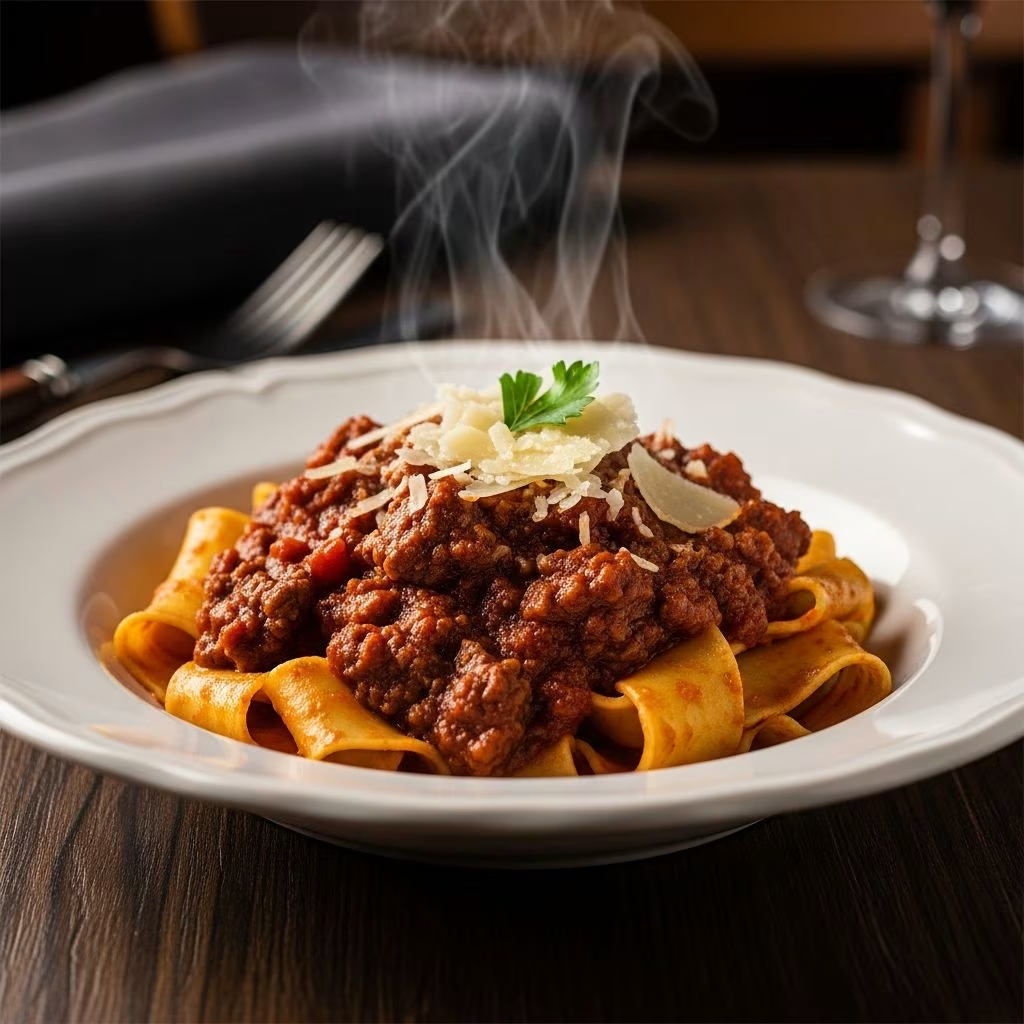
Beef ragu pairs authentically with wider pasta shapes that can accommodate its substantial texture. Pappardelle—the wide ribbon pasta—represents the traditional choice, its surface area allowing sauce to adhere generously rather than pooling at the bowl’s bottom. Tagliatelle, fettuccine, and even wider egg noodle preparations work beautifully. Some contemporary approaches serve ragu over polenta or creamy risotto for variations on the classic theme.
Finish each serving with freshly grated Parmigiano-Reggiano cheese, allowing diners to adjust quantity according to preference. Fresh basil and thyme leaves add brightness that contrasts pleasantly with the sauce’s deep, cooked flavors. A drizzle of quality extra-virgin olive oil contributes complexity and richness.
Storage, Freezing, and Make-Ahead Strategies
Beef ragu improves with time as flavors continue melding and developing. Store completely cooled ragu in airtight containers in the refrigerator for up to four days, or freeze in portion-sized amounts for up to three months. When freezing, consider placing portions in smaller containers or ice cube trays if you anticipate using them gradually. Thaw frozen ragu overnight in the refrigerator before gently reheating over low stovetop heat, adding water if the sauce appears too thick.
This make-ahead quality makes beef ragu ideal for entertaining or batch cooking. Prepare a large quantity on a weekend, then draw from your frozen supply for weeknight dinners with minimal additional effort.
Frequently Asked Questions
Can I use ground beef instead of chuck roast?
Ground beef produces a different texture—the sauce becomes less chunky but develops similar flavor profiles. Many cooks use ground beef exclusively or combine it with chunks for textural variety.
How do I prevent excessive sauce reduction?
Ensure your pot has a well-fitting lid and check liquid levels regularly. Add water in small increments if needed. The sauce should reduce to approximately half its original volume.
Why does my ragu taste bitter?
Bitterness typically results from burnt garlic or overcooked herbs. Ensure garlic is minced finely and added briefly before liquid additions, and remove bay leaves and thyme before serving.
Can beef ragu be prepared without wine or vinegar?
While less traditional, omitting acidic components is possible, though the sauce may taste flatter. If avoiding alcohol entirely, increase tomato paste slightly and add a small amount of balsamic vinegar for depth.
References
- Slow-Cooked Shredded Beef Ragu Pasta — RecipeTin Eats. 2024. https://www.recipetineats.com/slow-cooked-shredded-beef-ragu-pasta/
- Beef Ragu (Slow-Cooked, Batch & Freezer-Friendly) — Kitchen Sanctuary. 2024. https://www.kitchensanctuary.com/big-batch-beef-ragu-with-pasta/
- Slowly Braised Beef Ragu (Stovetop, Oven, Slow Cooker, and More!) — Plays Well With Butter. 2024. https://playswellwithbutter.com/beef-ragu/
- Ultimate Beef Ragu — The Daring Gourmet. 2024. https://www.daringgourmet.com/beef-ragu-recipe/
- Beef Ragu with Pappardelle Pasta — Small Town Woman. 2024. https://www.smalltownwoman.com/beef-ragu/