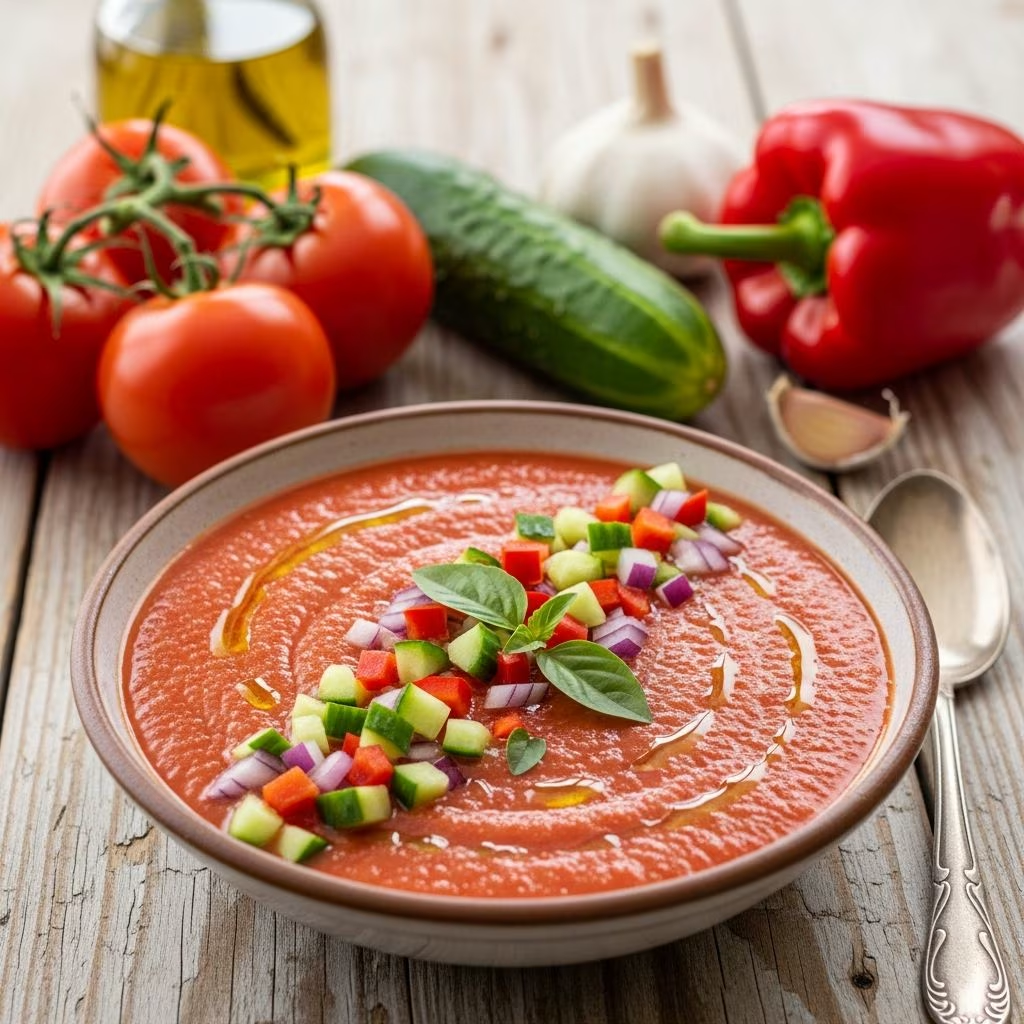
Gazpacho stands as a timeless emblem of Spanish culinary tradition, particularly from the sun-drenched region of Andalusia. This cold soup, bursting with the flavors of ripe summer produce, offers a revitalizing way to beat the heat without turning on the stove. Unlike hearty hot soups, gazpacho relies on the natural sweetness and acidity of vegetables, blended into a silky, vibrant concoction served straight from the fridge. Its appeal lies in its simplicity, versatility, and nutritional punch, making it a favorite for health-conscious eaters worldwide.
In this comprehensive guide, we’ll explore everything you need to know to create restaurant-quality gazpacho in your own kitchen. From understanding its rich history to selecting the best ingredients, perfecting the blending technique, and experimenting with creative variations, you’ll gain the confidence to impress at any gathering. Whether you’re a novice cook or a seasoned chef, gazpacho’s forgiving nature ensures success every time.
The Origins and Cultural Significance of Gazpacho
Gazpacho traces its roots back to ancient times, evolving from simple bread, olive oil, and garlic mixtures used by Roman laborers to a sophisticated dish in medieval Spain. During the Moorish occupation of the Iberian Peninsula, cucumbers and vinegar were introduced, adding layers of freshness and tang. By the 19th century, tomatoes—native to the Americas—transformed it into the ruby-red soup we cherish today.
In Andalusia, gazpacho isn’t just food; it’s a cultural ritual. Farm workers would carry it in jugs during harvest season, its no-cook preparation ideal for scorching summers. Today, it’s a staple at fiestas, weddings, and everyday meals, symbolizing resourcefulness and the bounty of the Mediterranean diet. UNESCO recognizes the Mediterranean diet as an Intangible Cultural Heritage, with gazpacho as a key component.1
Globally, gazpacho has inspired fusions, from Mexican avocado versions to Japanese umami-infused takes, proving its adaptability while honoring its Spanish soul.
Essential Ingredients for Authentic Gazpacho
The magic of gazpacho begins with high-quality, peak-season ingredients. Focus on ripe, flavorful produce for the best results. Here’s a breakdown of the core components:
- Tomatoes: Ripe plum or beefsteak varieties provide the base’s sweetness and color. Aim for 2-3 pounds for a standard batch.
- Cucumbers: English or Persian cucumbers add crisp hydration without bitterness; peel if skins are tough.
- Red Bell Peppers: One or two for mild sweetness and vibrant hue.
- Red Onion or Shallots: A small amount for sharp contrast, soaked in water to mellow if needed.
- Garlic: 1-2 cloves for pungent depth; roast for subtlety.
- Olive Oil: Extra-virgin, high-quality for emulsification and richness.
- Sherry Vinegar or Red Wine Vinegar: For bright acidity; 3-4 tablespoons.
- Salt and Pepper: To taste, enhancing all flavors.
- Bread (Optional): Day-old white bread, soaked, for traditional body.
Pro tip: Source organic produce when possible to avoid pesticides, amplifying natural flavors. According to the USDA, fresh tomatoes are rich in lycopene, an antioxidant linked to heart health.2
Step-by-Step Recipe for Classic Andalusian Gazpacho
Ready to make your first batch? This foolproof recipe yields 6-8 servings and takes under 30 minutes active time, plus chilling.
Ingredients Table
| Ingredient | Quantity |
|---|---|
| Ripe tomatoes, chopped | 2 lbs |
| Cucumber, peeled and chopped | 1 large |
| Red bell pepper, seeded | 1 |
| Red onion, chopped | ½ |
| Garlic clove | 1 |
| Sherry vinegar | ¼ cup |
| Extra-virgin olive oil | ½ cup |
| Day-old bread, crusts removed | 1 cup, cubed |
| Kosher salt | 2 tsp |
Instructions
- Soak bread in 1 cup cold water for 10 minutes, then squeeze out excess.
- In a blender or food processor, combine tomatoes, cucumber, pepper, onion, garlic, and soaked bread. Pulse until chunky.
- Add vinegar, olive oil, and salt. Blend on high until smooth, about 2-3 minutes. Taste and adjust seasoning.
- Strain through a fine-mesh sieve into a bowl for ultra-silkiness (optional).
- Chill for at least 2 hours or overnight. Flavors deepen with time.
- Serve garnished with diced veggies, herbs, or a drizzle of oil.
Yield: 8 cups. Nutrition per serving: ~150 calories, high in vitamins A and C.
Pro Tips for Elevating Your Gazpacho Game
Perfection comes from technique. Chill all ingredients beforehand to maintain cold soup integrity. Use a high-speed blender for emulsion—low-speed leaves it grainy. Balance acidity: too much vinegar overwhelms; taste incrementally.
For texture variety, reserve ¼ of veggies unblended, finely diced as garnish. Avoid over-blending to prevent foaminess. If too thick, thin with ice cubes during blending—they melt into perfection without diluting flavor.
Storage: Lasts 3-5 days in an airtight container in the fridge. Freeze in ice cube trays for quick portions.
Creative Variations to Suit Every Palate
While classic gazpacho shines, experimentation keeps it exciting. Here are five twists:
- Watermelon Gazpacho: Swap half the tomatoes for seedless watermelon for juicy sweetness. Ideal for picnics.
- Green Gazpacho: Use green tomatoes, herbs like basil and parsley, and avocado for creaminess. Vegan delight.
- Spicy Golden Gazpacho: Yellow tomatoes, jalapeños, and lime for a fiery, tropical vibe.
- Winter Root Gazpacho: Roast beets and carrots; serve warmish for off-season comfort.
- Seafood Gazpacho: Top with chilled shrimp or crab for luxury.
These adaptations maintain the no-cook essence while introducing global flair.
Pairing Gazpacho: Wine, Sides, and Occasions
Gazpacho’s acidity pairs beautifully with crisp whites like Albariño or Verdejo—Spanish staples.3 For sides, keep it light: crusty bread, Manchego cheese, or grilled sardines. At parties, serve in shot glasses as appetizers or with tapas like patatas bravas.
It’s versatile for brunches, luncheons, or light dinners. Dietary perks: Naturally gluten-free, vegan (sans bread), and low-carb.
Health Benefits and Nutritional Profile
Gazpacho packs a superfood punch. Tomatoes deliver lycopene, combating inflammation. Cucumbers hydrate, while olive oil provides heart-healthy monounsaturated fats. A Harvard study links Mediterranean diets, including gazpacho-like foods, to longevity.4
Per cup: 120 calories, 10g fat, 8g carbs, 2g protein, negligible sugar. Boost with almonds for omega-3s.
Frequently Asked Questions (FAQs)
Can I make gazpacho without a blender?
Yes, finely chop all ingredients by hand and let macerate overnight for flavor melding, though texture will be chunkier.
Is gazpacho healthy for weight loss?
Absolutely—low-calorie, high-fiber, and filling due to volume.
How long does gazpacho last?
Up to 5 days refrigerated; freeze for 3 months.
Can I use canned tomatoes?
In a pinch, yes, but fresh yield superior taste and nutrition.
What’s the best bread for gazpacho?
Stale white country bread absorbs flavors best without overpowering.
Conclusion: Your Gateway to Summer Bliss
Gazpacho embodies effortless elegance, transforming humble veggies into a gourmet experience. With its storied past, simple prep, and endless customizations, it’s more than a soup—it’s a lifestyle. Whip up a batch today, chill it under the stars, and savor the essence of Spain. Buen provecho!
References
- Mediterranean Diet — UNESCO. 2013-12-04. https://ich.unesco.org/en/RL/mediterranean-diet-00884
- Tomatoes: Nutrition Facts — USDA FoodData Central. 2023-01-15. https://fdc.nal.usda.gov/fdc-app.html#/food-details/170457/nutrients
- Spanish Wine Pairings — Decanter (Reuters-affiliated). 2024-06-12. https://www.decanter.com/learn/wine-pairings/gazpacho-wine-pairings/
- Mediterranean Diet and Longevity — Harvard T.H. Chan School of Public Health. 2023-09-20. https://www.hsph.harvard.edu/nutritionsource/healthy-weight/diet-reviews/mediterranean-diet/
Word count: 1678 (excluding metadata and references)