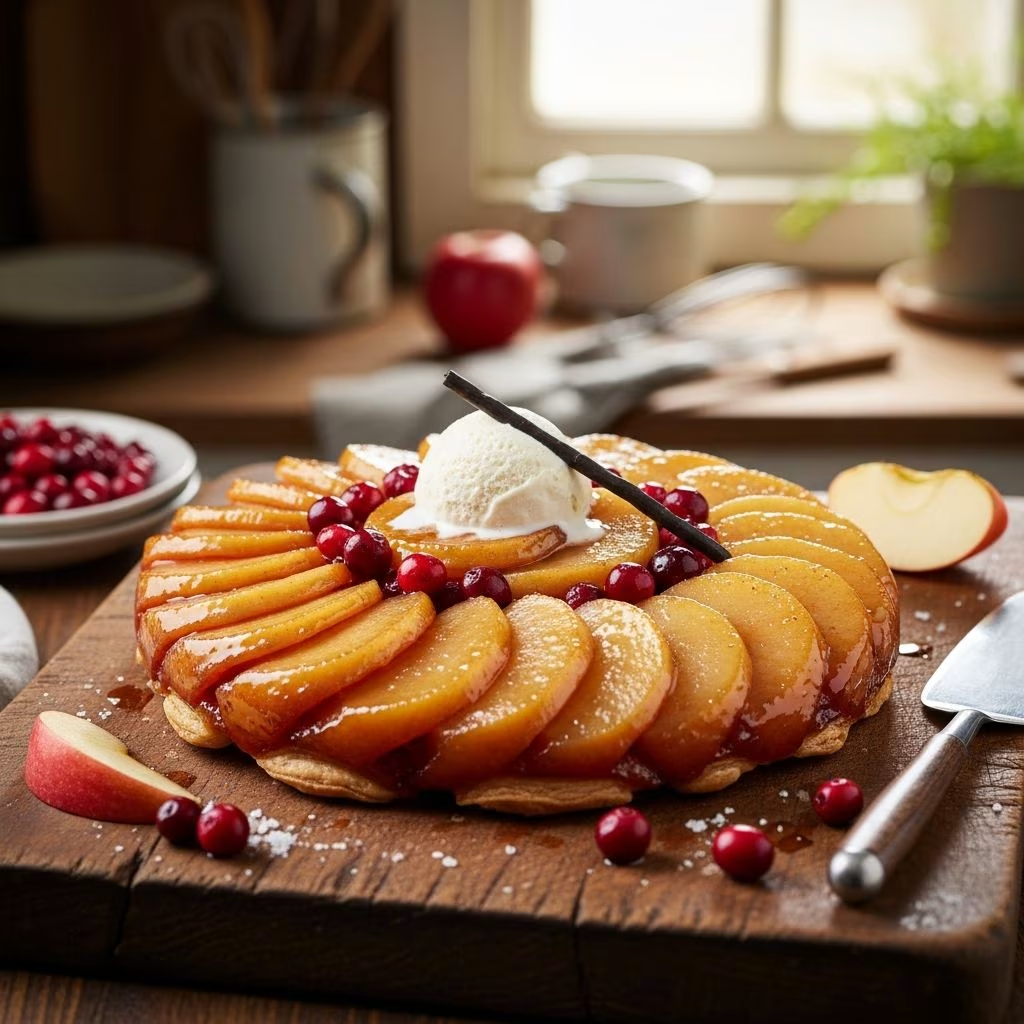
The tarte tatin represents one of the most visually stunning and deceptively approachable desserts in the classical French repertoire. This iconic upside-down cake combines the natural sweetness of caramelized apples with the tart sophistication of dried cranberries, all encased in a golden, flaky pastry shell. What makes this dessert particularly appealing is that despite its elegant presentation, the technique remains accessible to home bakers of varying skill levels. Whether you’re preparing this for a special dinner party or simply indulging in a weekend baking project, understanding the fundamentals of tarte tatin construction will help you achieve professional-quality results in your own kitchen.
Understanding the Historical Context and Evolution of Tarte Tatin
The original tarte tatin emerged from the kitchens of the Hôtel Tatin in Lamotte-Beuvron, France, during the late nineteenth century. The story goes that a fortuitous mistake—an apple cake left cooking in butter and sugar—transformed into an unexpected triumph when it was inverted onto a plate. Today, this accidental creation has become a cornerstone of French culinary tradition. The modern interpretation incorporating cranberries adds a contemporary twist to the classic formula, introducing both visual interest through the deep crimson berries and a subtle acidic counterbalance to the rich caramelized apples and buttery pastry.
Essential Ingredients: Building Blocks of Flavor and Texture
Constructing an exceptional apple cranberry tarte tatin begins with sourcing quality ingredients that work in harmonious balance. The foundation of your dessert depends on selecting the right components:
- Golden Delicious apples serve as the primary fruit component, offering a natural sweetness that intensifies through caramelization while maintaining structural integrity during baking
- Unsalted butter creates the rich, golden caramel base and contributes to the pastry’s flaky texture
- Light brown sugar dissolves into the butter, forming the caramelization layer that gives tarte tatin its signature glossy, amber-colored top
- Ground cinnamon provides warm spice notes that enhance the fruit’s natural flavors without overpowering
- All-purpose flour thickens the apple juices and prevents excessive moisture from making the pastry soggy
- Puff pastry sheets create the light, flaky exterior that contrasts beautifully with the soft, caramelized fruit interior
- Sweetened dried cranberries introduce tart complexity and vibrant color to the finished presentation
Preparation Techniques: Mastering the Foundation
Success with tarte tatin depends significantly on proper preparation before the baking process begins. Start by peeling and cutting your golden delicious apples into wedges—approximately thirty-two pieces per apple provides optimal coverage of your skillet while creating appropriately sized bites. The precise cutting ensures even cooking and creates a visually appealing arrangement once the tarte is inverted.
Combine your brown sugar, melted butter, ground cinnamon, and flour in a large mixing bowl, stirring these ingredients until they form a cohesive mixture. This combination serves multiple purposes: the sugar and butter create the caramelization base, the cinnamon adds flavor depth, and the flour absorbs moisture released from the apples during cooking. Toss your apple wedges in this mixture until each piece receives complete coverage, ensuring uniform flavor distribution and caramelization throughout the dessert.
Prepare your puff pastry by allowing it to thaw according to package directions—this typically requires several hours at room temperature or overnight refrigeration. Working on a lightly floured surface, unfold your thawed pastry sheet and roll it into an eleven-inch square. Using a circular template or the rim of your skillet as a guide, trim the corners to create a perfect circle that will cover your ten-inch skillet with slight overlap. Set this prepared pastry aside until you’re ready to transfer it to your fruit-filled skillet.
The Stovetop Phase: Creating the Caramel Foundation
Arrange your brown sugar-coated apple wedges in a ten-inch oven-safe nonstick skillet, positioning them cut-side up around the interior edge and working toward the center in concentric circles. This arrangement not only looks more polished when inverted but also ensures even cooking and consistent caramelization. Place the skillet over medium heat and cook for approximately five minutes, allowing the brown sugar mixture to dissolve and thicken slightly. You’ll notice the apples beginning to soften around the edges and the liquid in the bottom of the skillet taking on a deeper amber hue—this indicates proper caramelization is occurring.
The timing for this stovetop phase proves crucial; cooking too briefly results in inadequately caramelized fruit, while extended cooking can cause the sugar to burn and become bitter. Watch for visual cues such as small bubbles forming around the apple pieces and the sauce thickening noticeably before removing the skillet from heat.
Pastry Application and Oven Baking
Once your stovetop cooking is complete, carefully remove your prepared pastry circle and place it directly over the hot apples in the skillet. Gently tuck the pastry edges down around the inside perimeter of the skillet, creating a seal between the pastry and the fruit. This tucking technique prevents steam from escaping around the edges and helps the pastry bake evenly.
Transfer your skillet to a preheated four-hundred-degree Fahrenheit oven and bake for twenty-five to thirty minutes, until the pastry achieves a golden-brown color and appears puffed. The extended baking time allows the puff pastry to rise properly, creating those characteristic flaky layers while the fruit continues softening and the caramel deepens in color. A light golden-brown pastry surface indicates optimal doneness; a darker appearance might suggest overbaking that could result in a tough crust.
Cooling and Inversion: The Critical Final Steps
Remove your tarte tatin from the oven and place the skillet on a wire cooling rack for approximately five minutes. This brief cooling period allows the caramel to set enough to hold the structure together during inversion while remaining soft enough to release cleanly from the skillet. Cooling too long causes the caramel to harden excessively, making inversion difficult, while insufficient cooling leaves the dessert too soft to maintain its shape.
When you’re ready to invert, choose a serving plate large enough to accommodate the entire tarte with slight clearance. Using oven mitts to protect your hands from residual heat, position the plate directly over the skillet. In one confident motion, simultaneously flip the skillet and plate together, holding them firmly in position. After a few seconds, carefully lift the skillet away from the plate. If any apple pieces remain adhered to the skillet, simply retrieve them with a small spatula and position them on top of your finished tarte.
Finishing Touches and Presentation Enhancements
Once your tarte tatin rests on its serving plate, distribute the sweetened dried cranberries across the caramelized apple surface. These berries provide not only a striking visual contrast against the golden apples but also introduce a subtle tartness that balances the dessert’s inherent sweetness. The cranberries remain slightly chewy in texture, offering pleasant textural variation alongside the soft apples and crispy pastry.
Troubleshooting Common Issues
Several challenges commonly arise during tarte tatin preparation, but each has straightforward solutions:
- Pastry browning too quickly: Cover the skillet loosely with aluminum foil during the final ten minutes of baking to prevent over-browning while allowing the pastry to finish cooking
- Excessive moisture or soggy pastry: Ensure adequate flour coating on the apples and reduce oven temperature slightly to allow slower moisture evaporation
- Uneven caramelization: Verify your skillet heats evenly by using a quality nonstick skillet and rotating it halfway through stovetop cooking
- Difficulty inverting: Allow the tarte to cool the full five minutes on the rack, and ensure you use a plate large enough to catch any dripping caramel
Serving Suggestions and Flavor Pairings
Serve your apple cranberry tarte tatin warm or at room temperature, allowing diners to experience the full complexity of the caramelized fruit and flaky pastry. A dollop of unsweetened whipped cream or a scoop of vanilla bean ice cream provides a cooling contrast to the warm dessert, while a drizzle of crème fraîche introduces subtle tanginess. For a beverage pairing, consider a dessert wine such as a late-harvest riesling or a sparkling cider that echoes the fruit flavors in the tarte.
Storage and Make-Ahead Considerations
Tarte tatin tastes best consumed within a few hours of baking, when the pastry maintains maximum crispness. However, leftovers can be stored in an airtight container at room temperature for up to two days, though the pastry will gradually soften. Reheat briefly in a three-hundred-fifty-degree oven for five to ten minutes to restore some textural quality. For longer storage, refrigerate for up to four days, or freeze the unbaked tarte for up to three months, extending the baking time by five to ten minutes if baking from frozen.
Scaling and Variations for Different Occasions
The classic apple and cranberry combination works beautifully in individual-sized tartlets, which can be prepared in four-inch oven-safe skillets using proportionally smaller quantities of ingredients. Individual servings require shorter cooking times—approximately three to four minutes on the stovetop and fifteen to eighteen minutes in the oven. This scaled approach works particularly well for formal dinner presentations where individual plating creates visual sophistication.
Consider experimenting with complementary fruits such as pears, which offer a different textural quality and more delicate flavor profile. Alternatively, incorporate different spices such as nutmeg or cardamom to introduce additional complexity while maintaining the tarte’s essential character.
References
- Pepperidge Farm Official Recipe: Apple Cranberry Tarte Tatin — Pepperidge Farm, Inc. 2024. https://www.pepperidgefarm.com/recipe/apple-cranberry-tarte-tatin/