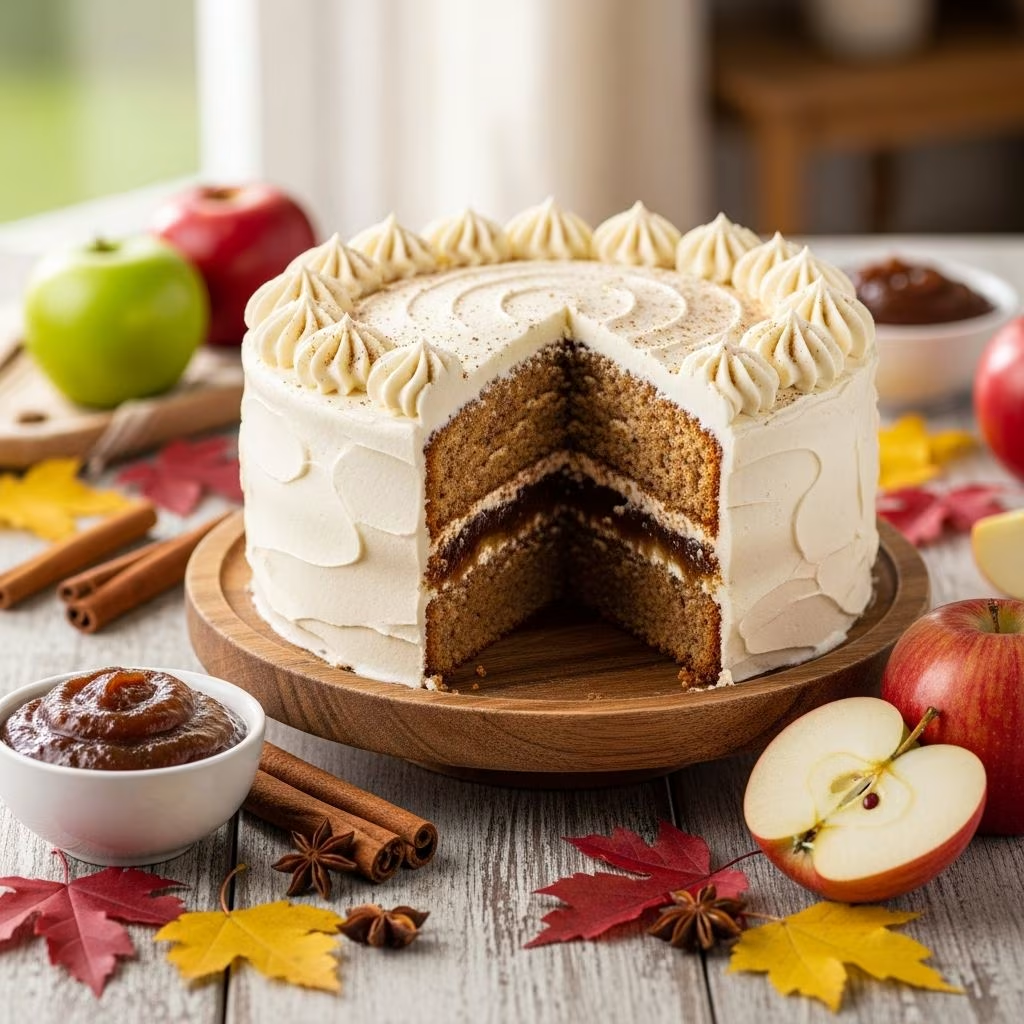
Apple butter spice cake represents a delightful fusion of autumn flavors that brings warmth and comfort to any dessert table. This classic baked good combines the deep, concentrated sweetness of apple butter with a carefully balanced blend of warming spices that create layers of complex flavor. Whether you’re preparing for a seasonal gathering, looking for a way to use homemade apple butter, or simply craving a slice of aromatic cake, this recipe delivers consistent results with minimal technical difficulty.
Understanding Apple Butter and Its Role in Baking
Apple butter serves as the foundation of this cake’s distinctive character. Unlike applesauce, which maintains a lighter texture and fresher apple flavor, apple butter undergoes extended cooking that concentrates the fruit sugars and deepens the color to a rich brown. This transformation creates a dense paste that carries intense apple flavor in every spoonful. When incorporated into cake batter, apple butter provides natural sweetness while contributing moisture that keeps the crumb tender even after cooling.
The ingredient works particularly well in spice cakes because its concentrated flavor complements rather than competes with cinnamon, ginger, and other warming spices. Whether you prepare your apple butter using a stovetop method or a slow cooker approach, the result will enhance your finished cake. Store-bought versions work equally well and offer convenience for bakers who prefer not to make apple butter from scratch.
Essential Ingredients for Your Cake Base
Building a successful apple butter spice cake requires attention to ingredient selection and proper ratios. The foundation consists of all-purpose flour combined with leavening agents that help the cake rise evenly during baking. A blend of both baking soda and baking powder ensures proper rise, as these two leavening agents work through slightly different chemical processes.
The wet ingredient mixture typically includes melted butter and vegetable oil, which work together to create a moist crumb structure. While melted butter contributes rich flavor, vegetable oil adds moisture without the water content that butter contains. Brown sugar features prominently in most recipes, providing deeper, more complex sweetness compared to white sugar, along with molasses undertones that echo the flavors in apple butter.
The Spice Selection Process
The spice profile defines this cake’s character. Ground cinnamon typically serves as the primary spice, providing warmth and familiarity. Ground ginger adds a subtle heat and complexity, while allspice introduces a nuanced flavor that combines notes reminiscent of cinnamon, nutmeg, and clove. Some recipes incorporate individual components like nutmeg and clove for more precise flavor control.
For best results, use freshly ground spices when possible. Pre-ground spices lose potency over time, so checking the purchase date on your spice containers ensures you’re working with flavorful ingredients. A quality spice blend can be the difference between a good cake and an exceptional one.
Preparation and Mixing Techniques
Successful cake baking often hinges on proper mixing sequences and technique. Begin by preheating your oven to the specified temperature, typically between 350°F and 375°F depending on your chosen recipe variation. Preparing your baking vessel—whether a bundt pan, loaf pan, or rectangular cake pan—prevents sticking and ensures even browning.
The Dry Ingredient Strategy
Combining all dry ingredients in a separate bowl before mixing with wet components serves multiple purposes. This method ensures even distribution of leavening agents and spices throughout the batter. Whisking together flour, baking soda, baking powder, cinnamon, ginger, allspice, nutmeg, clove, and salt creates a uniform mixture that prevents lumps and bitter spots that could result from improperly dispersed baking soda.
The Wet Ingredient Combination
In your primary mixing bowl, combine apple butter with melted butter and vegetable oil, whisking until smooth. This creates an emulsified base that helps bind the remaining wet ingredients. Add brown sugar and any additional granulated sugar called for in your recipe, mixing until the sugar begins to dissolve slightly. Introduce eggs one at a time or together depending on your recipe, ensuring thorough incorporation before adding remaining wet components.
Once your wet mixture is well combined, add apple pieces that have been peeled and diced into small, consistent pieces. This distribution step prevents large chunks from creating dense pockets in the finished cake. Some recipes substitute raisins or other dried fruits for fresh apples, allowing flexibility based on ingredient availability and personal preference.
The Critical Folding and Combining Step
When combining wet and dry ingredients, restraint becomes essential. Mix until just combined, being careful not to overmix. Overmixing develops gluten strands that create a dense, tough crumb rather than the tender, moist structure that makes this cake special. A few flour streaks in the batter are preferable to overworking the mixture.
Transfer the batter to your prepared pan, smoothing the top gently with a spatula. For loaf pans or rectangular pans, ensure an even thickness to promote uniform baking. In bundt pans, fill to about two-thirds capacity, allowing room for rise without overflow.
Baking and Doneness Indicators
Baking times vary based on pan size and shape, typically ranging from 30 to 60 minutes. A 9×13-inch rectangular pan bakes faster than a loaf pan, while bundt pans fall somewhere in between. The most reliable doneness indicator involves inserting a cake tester or thin knife into the center of the cake. When the inserted tool comes out clean or with just a few moist crumbs, your cake is done.
Oven temperatures can vary, so relying solely on timing provides less certainty than visual and tactile cues. Begin checking several minutes before the minimum recommended time to prevent overbaking. An overbaked cake becomes dry and loses the moisture that makes this particular cake special.
Cooling and Unmolding Considerations
After removing the cake from the oven, resist the urge to immediately invert it from a bundt pan or remove it from other baking vessels. Allowing it to cool for approximately 10 minutes permits the crumb structure to set while remaining warm enough to release from the pan without sticking. Once cooled slightly, run a thin knife around the edges and invert onto a serving platter or cooling rack.
If using a loaf pan or rectangular cake pan, you may prefer to cool the cake completely in the pan before removing, depending on your preferred presentation style. This extended cooling time also helps the cake firm up enough to slice neatly without crumbling.
Frosting and Topping Options
| Frosting Type | Flavor Profile | Preparation Complexity |
|---|---|---|
| Cream Cheese Frosting | Tangy, rich, complements spices | Moderate |
| Maple Fudge Drizzle | Sweet, earthy, autumn-inspired | Simple |
| Brown Sugar Buttercream | Caramel notes, deep sweetness | Moderate |
| Plain or Lightly Glazed | Lets apple butter shine | Very Simple |
Many bakers prefer topping this cake with whipped cream cheese frosting, which provides a tangy counterpoint to the sweet apple butter and warm spices. A simple cream cheese frosting combines softened cream cheese with butter, powdered sugar, and vanilla extract, beaten until light and fluffy.
For those preferring lighter finishing options, a simple glaze made from powdered sugar and milk creates an elegant presentation that doesn’t overpower the cake’s intrinsic flavors. A maple fudge frosting appeals to those seeking deeper autumn notes, while serving the cake plain allows the spice blend and apple butter to shine without additional sweetness.
Storage and Make-Ahead Strategies
Apple butter spice cake improves with time as flavors meld and deepen. Store cooled cake in an airtight container at room temperature for up to three days, or refrigerate for up to a week. If frosted, refrigerate to prevent frosting breakdown. The cake also freezes exceptionally well for up to two months when wrapped tightly in plastic wrap and stored in an airtight freezer container.
For advance preparation, mix dry ingredients the day before and store in an airtight container. Prepare the wet mixture shortly before baking to ensure leavening agents remain active. This strategy allows you to complete the entire baking process in minimal time when you’re ready to serve.
Customization and Recipe Variations
This recipe accommodates numerous adjustments based on dietary preferences and ingredient availability. Substitute pear butter for apple butter to create a subtly different flavor profile with similar results. Replace some all-purpose flour with spelt or whole wheat flour for added nutrition, though this may slightly alter texture. For those preferring less sweetness, reduce brown sugar by one-quarter cup without significantly impacting the final product.
Additions like chopped walnuts, pecans, or raisins provide textural contrast and additional flavor dimensions. Toast nuts lightly before folding them into batter to enhance their flavor. Reduce the amount of added sugar slightly if incorporating dried fruit, as these additions contribute natural sweetness.
Troubleshooting Common Baking Challenges
If your cake emerges from the oven with a dense texture, you likely overmixed the batter or used expired leavening agents. Ensure baking soda and baking powder haven’t exceeded their expiration dates, as their potency decreases over time. For a cake that’s too dry, verify your oven temperature with an oven thermometer and check the pan size matches your recipe specifications.
A cake that rises unevenly may indicate an oven hot spot or improper pan placement. Position your cake pan in the center oven rack with adequate space around all sides for heat circulation. If the exterior browns too quickly while the interior remains underbaked, cover the top loosely with foil during the latter portion of baking.
Serving Suggestions and Occasions
This cake serves beautifully as a standalone dessert or as part of a composed plate with accompaniments like vanilla ice cream, whipped cream, or a scoop of cinnamon gelato. Its warm spice profile makes it particularly suited to fall and winter gatherings, though it works equally well during any season when you crave comfort food flavors.
Slice and serve for casual family desserts, include on dessert boards at social gatherings, or package individual slices as homemade gifts. The cake’s structure remains intact during transportation, making it an excellent choice for potluck contributions or office celebrations.
Frequently Asked Questions
- Can I make this cake without apple butter?
While apple butter defines this cake’s signature character, applesauce works as a substitute, though the flavor will be lighter and fresher rather than concentrated and deep. - Is it possible to use oil instead of butter?
Most recipes already include both oil and butter. Using only oil is possible but sacrifices the rich flavor butter contributes. Increase oil slightly if eliminating butter entirely. - How should I prepare a bundt pan to ensure clean removal?
Use a bundt pan spray containing flour and oil, or butter and flour the pan separately. Ensure thorough coverage of all ridges and crevices. Cool slightly before inverting. - What’s the difference between baking soda and baking powder in this recipe?
Baking soda requires an acidic ingredient (buttermilk or apple butter) to activate, while baking powder activates with moisture alone. Using both ensures optimal rise and browning. - Can I make mini cakes instead of one large cake?
Yes, divide batter among individual tart pans or muffin cups, reducing baking time to 18-22 minutes. This creates charming individual portions perfect for entertaining.
References
- USDA FoodData Central: Apple Butter — U.S. Department of Agriculture. https://fdc.nal.usda.gov/
- The Science of Baking: Leavening Agents and Chemical Reactions — American Chemical Society. https://www.acs.org/
- Food Safety Guidelines for Home Canning and Preservation — National Center for Home Food Preservation, University of Georgia. https://nchfp.uga.edu/