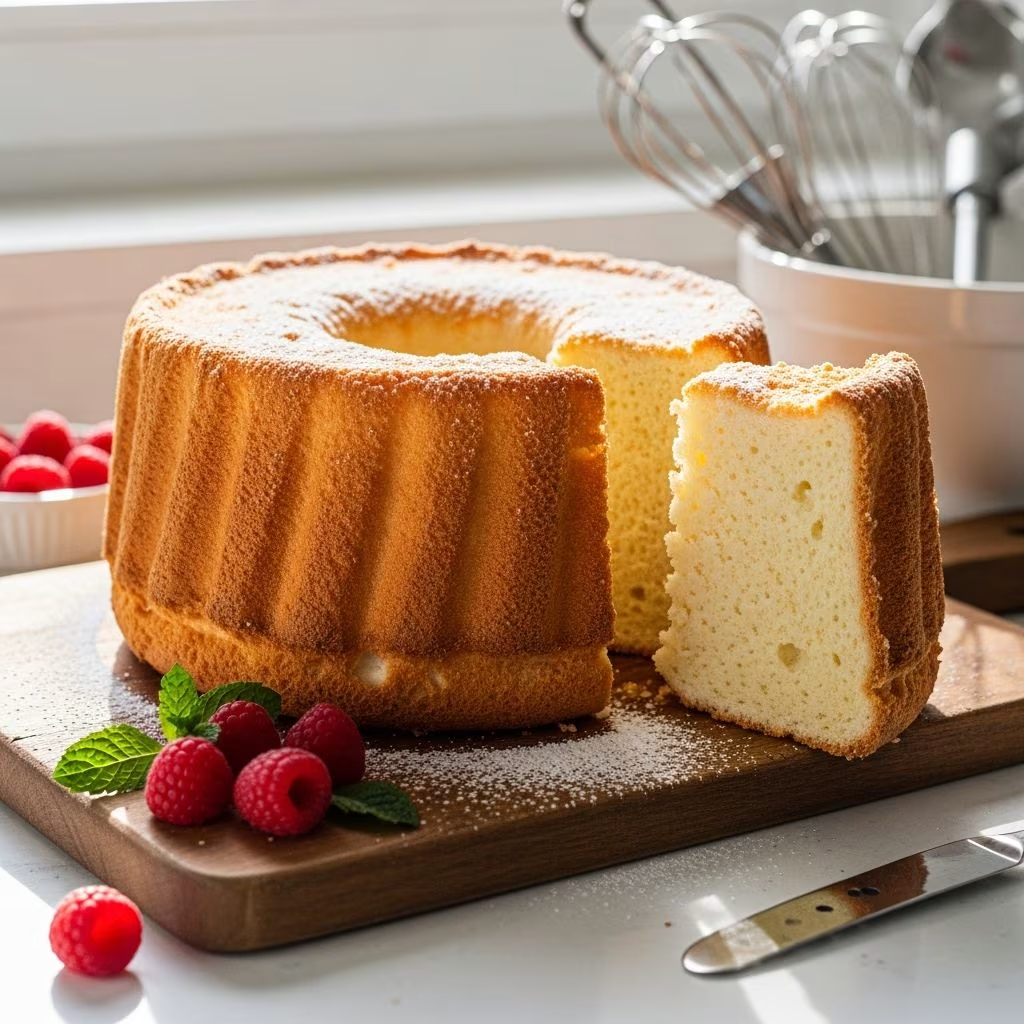
Angel food cake represents one of the most elegant yet deceptively simple desserts in the baking world. This airy, cloud-like confection has graced countless tables for generations, earning its place as a timeless classic through its delicate texture and pure, uncomplicated flavor profile. What makes this cake particularly special is its minimal ingredient list combined with the technical skill required to transform those basic components into something transcendent.
The beauty of angel food cake lies in its stark simplicity and the remarkable results it achieves. Unlike traditional cakes that rely on butter and oil for richness, this version depends entirely on properly whipped egg whites to create its signature lift and airy crumb structure. The result is a cake that feels almost weightless on the palate while delivering sophisticated flavor that pairs beautifully with fresh fruits, sauces, and other accompaniments.
Understanding the Essential Ingredients
Creating a successful angel food cake begins with understanding each ingredient’s role and selecting the correct type for optimal results. The ingredient list is intentionally brief, which means each component carries significant importance in the final outcome.
Egg Whites: The Foundation of Success
The primary ingredient in any angel food cake recipe is egg whites, typically requiring between 10 to 12 large eggs depending on the recipe variation. Room temperature eggs are absolutely critical to achieving proper volume when whipping. Cold egg whites will not incorporate air as efficiently, resulting in a denser, less fluffy cake. Allow your eggs to sit on the counter for approximately 30 minutes before beginning your baking process to ensure they reach optimal temperature.
The freshness of eggs also plays a role in successful whipping. Older eggs, which have higher pH levels, whip to greater volume than very fresh eggs. This is one of the few baking applications where slightly aged eggs actually perform better than extremely fresh ones.
Cake Flour: Achieving the Right Texture
Cake flour serves a fundamentally different purpose than all-purpose flour in angel food cake preparation. Cake flour is milled from soft wheat varieties and contains approximately 6 to 8 percent protein content, which is significantly lower than all-purpose flour. This lower protein content prevents excessive gluten development, resulting in a more tender, delicate crumb structure with superior lift.
Substituting all-purpose flour for cake flour produces noticeably inferior results. The higher protein content in all-purpose flour creates a denser, tougher cake with bread-like qualities rather than the feathery texture characteristic of proper angel food cake. If cake flour is unavailable, it can be approximated by combining all-purpose flour with cornstarch in specific ratios, though using true cake flour remains the ideal choice for best results.
Sugar: Multiple Forms for Different Purposes
Angel food cake recipes typically employ two different types of sugar, each serving distinct functions. Granulated sugar initially undergoes processing to create superfine sugar, which possesses smaller crystals than standard granulated sugar but remains coarser than confectioners’ sugar. This superfine sugar provides optimal structure and integration when added to whipped egg whites.
The distinction between sugar varieties matters considerably. Regular granulated sugar’s larger crystals don’t dissolve efficiently into egg whites, potentially creating a grainy texture in the finished cake. Conversely, confectioners’ sugar, being extremely fine, dissolves so rapidly that it fails to provide adequate structural support to the foam. Superfine sugar strikes the ideal balance, offering both proper dissolution and sufficient structural integrity.
Supporting Ingredients: Salt and Cream of Tartar
Though present in small quantities, cream of tartar and salt play crucial roles in cake development. Cream of tartar, also known as potassium bitartrate, is an acidic compound that stabilizes egg white foam by lowering the pH of the mixture. This stabilization allows egg whites to reach and maintain higher volumes while resisting collapse during mixing and baking.
Salt enhances flavor perception throughout the cake, preventing the finished product from tasting flat or one-dimensional. It also contributes to protein structure stabilization and helps regulate moisture retention in the baked cake.
The Step-by-Step Preparation Process
Success with angel food cake requires following a methodical approach where each step builds upon the previous one. Rushing through the process or skipping steps inevitably compromises the final texture and height.
Initial Ingredient Preparation
Begin by processing granulated sugar until it achieves a fine, powdery consistency resembling superfine sugar. This transformation can be accomplished using either a food processor or high-powered blender. Process for approximately one to two minutes, stopping periodically to check consistency. This step is essential because it ensures even sugar distribution throughout the egg whites and promotes uniform incorporation into the batter.
After processing, divide the superfine sugar into two portions. Set one portion aside to be added to the whipped egg whites later. Combine the remaining sugar with sifted cake flour and salt in your food processor, pulsing the mixture approximately 5 to 10 times. This pulsing action aerates the dry ingredients, incorporating tiny air pockets that contribute to the final cake’s light texture.
Whipping Egg Whites to Proper Peaks
Place room-temperature egg whites in an impeccably clean metal mixing bowl. Even trace amounts of fat or grease will prevent proper whipping, so ensure your bowl and all utensils are completely oil-free. Begin beating the egg whites on medium-low speed until they become foamy in appearance, which typically requires approximately one to two minutes.
Add cream of tartar and salt at this point, continuing to beat on medium speed. Gradually increase the mixer speed to medium-high as the mixture develops. Begin adding the reserved superfine sugar slowly, approximately one tablespoon at a time, allowing each addition to incorporate fully before adding the next portion. This gradual sugar incorporation ensures proper distribution and consistent foam development.
Continue beating until the mixture reaches soft peaks—the stage where peaks form when you lift the beaters but gently fold over at the tips. Soft peaks typically require approximately 5 to 7 minutes of total beating time from when you started. At this point, add vanilla extract or vanilla paste for flavor enhancement.
Folding in Dry Ingredients
This step requires gentle handling to preserve the air you’ve incorporated into the egg whites. Sift the flour-sugar mixture over the egg white foam in three additions, using a large rubber spatula to fold the mixture gently after each addition. Folding involves sliding the spatula down the center of the bowl, across the bottom, and up and over the top in a smooth motion, rotating the bowl as you work.
Continue folding until the flour disappears into the mixture, but do not overmix. Excessive stirring deflates the foam and results in a denser, less airy cake. The goal is to achieve a uniform batter while maintaining as much volume as possible.
Baking Considerations and Techniques
Pan Selection and Preparation
Angel food cake requires a 10-inch tube pan with a removable bottom. The tube pan’s design is fundamental to the cake’s structure, allowing heat to penetrate the dense center batter. Critically, the pan must remain completely ungreased. The batter relies on friction against the pan’s sides to climb upward as it bakes. Greasing the pan causes the batter to slip down the sides rather than rising, resulting in a shorter, denser cake.
If you’ve accidentally greased your pan, wash it thoroughly with hot soapy water and dry it completely before using. Some bakers prefer using the pan exactly as it comes from the store without any preparation whatsoever.
Oven Temperature and Placement
Preheat your oven to 325°F (163°C) and position the rack in the lower-middle section of your oven. This lower placement ensures gentle, even heat distribution that allows the cake to rise gradually without the exterior browning too quickly before the interior bakes through. Higher oven temperatures cause the outside to set before the inside has fully risen, resulting in a cake that doesn’t reach optimal height.
Baking Duration and Doneness Testing
Angel food cake typically bakes for 40 to 45 minutes. The cake is done when a cake tester or thin wooden skewer inserted into the thickest part comes out clean with no batter clinging to it. The top should appear light golden brown with a slightly papery texture, but not dark brown.
Cooling: An Essential Final Step
Immediately upon removing the cake from the oven, invert the pan upside down and allow it to cool in this position for several hours or overnight. This inversion prevents the cake from collapsing under its own weight while cooling. Some tube pans come with feet designed to hold the cake elevated while inverted; if yours doesn’t have feet, balance the pan’s center tube on a glass bottle or similar object.
Only after complete cooling should you attempt to remove the cake from the pan. Run a thin knife around the edges and central tube to loosen it, then turn the pan right-side up and remove the bottom. If the cake adheres to the bottom, use an offset spatula or thin knife to gently separate it.
Common Challenges and Solutions
| Problem | Likely Cause | Solution |
|---|---|---|
| Dense, heavy cake | Overmixing batter or under-beaten egg whites | Beat egg whites to proper soft peaks; fold gently without overmixing |
| Cake collapsed or sank in center | Oven temperature too high or cake cooled upright | Use lower temperature; always invert while cooling |
| Cake sticking to pan | Pan was greased or not properly loosened before removal | Use ungreased pan; run knife around edges before removing |
| Cake didn’t rise properly | Greased pan or eggs not room temperature | Use ungreased pan; allow eggs to reach room temperature |
Serving Suggestions and Flavor Variations
Angel food cake pairs beautifully with numerous accompaniments. Fresh berries, whipped cream, and fruit sauces provide refreshing contrasts to the cake’s delicate flavor. A simple glaze of lemon juice, confectioners’ sugar, and vanilla creates elegant simplicity. Strawberry pie filling layered with pudding and whipped topping creates a stunning no-bake dessert variation.
For subtle flavor variations, add almond extract alongside vanilla, or incorporate fresh lemon or orange zest into the batter before folding in the dry ingredients. These additions enhance the cake without overwhelming its characteristically light nature.
Storage and Shelf Life
Properly stored angel food cake remains fresh for approximately three to four days when kept in an airtight container at room temperature. It does not benefit from refrigeration, as cold storage accelerates drying. For longer storage, freeze the cake wrapped in plastic wrap and aluminum foil for up to three months. Thaw at room temperature before serving.
Frequently Asked Questions
Can I use liquid egg whites instead of fresh eggs?
Liquid egg whites lack the structure-building proteins present in fresh egg whites and generally do not whip to sufficient volume. Fresh eggs are strongly recommended for best results.
What’s the difference between this cake and chiffon cake?
Angel food cake contains only egg whites, while chiffon cake includes egg yolks and oil, resulting in a richer, denser crumb. Both are light cakes but with distinctly different flavors and textures.
Why must the pan be ungreased?
The batter clings to the ungreased pan’s surface as it rises, creating friction that allows upward climbing. Grease prevents this friction, causing the batter to slip downward rather than rise properly.
Can I make angel food cake ahead?
Yes, angel food cake stores well at room temperature for several days or frozen for up to three months, making it excellent for advance preparation.
References
- Cake Flour Definition and Protein Content — Handle the Heat. Accessed April 2026. https://handletheheat.com/angel-food-cake-recipe/
- What to Serve With Angel Food Cake (25 Ideas) — Amish Heritage. Accessed April 2026. https://amish-heritage.org/what-to-serve-with-angel-food-cake-25-ideas/