Chile flakes represent a cornerstone of spice cabinets worldwide, each variety bringing distinct heat, aroma, and cultural heritage to dishes. From the fruity earthiness of Middle Eastern Aleppo pepper to the smoky essence of Korean gochugaru, the citrusy complexity of Japanese shichimi togarashi, and the straightforward punch of standard red chile flakes, these ingredients transform ordinary meals into flavorful adventures. This guide delves into their origins, sensory profiles, heat intensities, and practical applications, empowering cooks to select and substitute with confidence.
Understanding the Diversity of Chile Flakes
At their core, chile flakes are dried and crushed peppers, but regional traditions dictate profound differences in pepper selection, processing, and blending. Traditional red chile flakes, often Italian or American in style, prioritize pure heat from mixed cayenne varieties. In contrast, Aleppo pepper derives solely from the Halaby pepper, sun-dried and lightly oiled for preservation. Gochugaru emphasizes sun-drying Korean chilis for subtle smoke, while shichimi togarashi layers chili with sesame, citrus peel, and nori for a multifaceted kick.
These variations arise from climate, agriculture, and culinary philosophy. Mediterranean climates yield thicker-skinned peppers ideal for slow drying, Asian varieties prioritize fruitiness over ferocity, and blends reflect harmonious flavor layering. Understanding these nuances prevents mismatched substitutions and unlocks authentic global cooking.
Aleppo Pepper: The Fruity Middle Eastern Gem
Aleppo pepper, named after the Syrian city, starts with the Halaby chili—a bulbous red pepper with thin flesh. Peppers are hand-harvested ripe, seeded, sun-dried until brittle, then coarsely ground and tossed with salt and olive oil. This process yields soft, oil-kissed flakes averaging 10,000 Scoville Heat Units (SHU), hotter than many peers yet building gradually rather than striking sharply.
Flavor-wise, Aleppo delivers earthy depth with fruity brightness—notes of sun-dried tomatoes, raisins, and a cumin whisper—making it far more nuanced than basic heat sources. Its moderate spice allows generous use without overwhelming dishes.
Best Uses for Aleppo Pepper
- Meats and Seafood: Sprinkle on grilled lamb, chicken kebabs, or fish for savory lift.
- Dips and Spreads: Essential in muhammara, a walnut-red pepper dip blending sweetness and tang.
- Vegetables and Eggs: Dust roasted eggplant, shakshuka, or deviled eggs for layered warmth.
- Finishing Touch: Garnish yogurt sauces, hummus, or pizzas post-cooking to preserve oils.
Store in a cool, dark place; its oils keep it pungent for months. Compared to red flakes, use twice as much for equivalent heat due to Aleppo’s milder profile.
Gochugaru: Korea’s Smoky Essential
Gochugaru, Korea’s cornerstone chili, comes from sun-ripened red peppers like taeyangcho, dried outdoors to infuse natural smokiness, then flaked or powdered seedlessly for uniform crimson hue. Heat spans 1,500–10,000 SHU across mild (deolmaewoon) and hot (maewoon) grades, milder than many Western counterparts because it omits fiery seeds and membranes.
The result is a sweet-fruity tang with earthy smoke, perfect for building flavors rather than dominating. Finer grind than chunky red flakes aids even dispersion in pastes and marinades.
Signature Gochugaru Applications
- Korean Staples: Core to gochujang paste, kimchi fermentation, and bibimbap sauces.
- Stews and Soups: Adds depth to doenjang jjigae or spicy tofu stews.
- Proteins: Rub on pork belly (samgyeopsal) or coat fried chicken.
- Fusion Twists: Blend into chili oils or spice up ramen.
Sun-drying is non-negotiable for authentic smoke; oven-dried versions lack nuance. For red flake swaps, halve amounts as gochugaru disperses heat more evenly.
Shichimi Togarashi: Japan’s Vibrant Blend
Shichimi togarashi (‘seven-flavor chili’) transcends single-pepper flakes, uniting chili with roasted orange peel, sesame, hemp seeds, nori, ginger, and sansho pepper. Japanese ingenuity creates a citrusy, nutty, umami bomb with variable heat—mild to extra-hot depending on chili ratio, though precise SHU evades easy pinning due to blending.
Bolder than pure gochugaru, it offers savory vibrancy: spicy backbone, citrus zing, and toasty richness. Sansho’s numbing tingle adds thrill.
Versatile Togarashi Deployments
- Udon and Ramen: Shake over noodle soups for instant complexity.
- Tempura and Yakitori: Dusted on fried shrimp or grilled skewers.
- Rice and Popcorn: Elevates plain grains or snacks.
- Western Adaptations: Rim cocktail glasses or season avocado toast.
As a blend, it’s less shelf-stable; refresh annually. Unlike solo flakes, togarashi suits as a table condiment for personalization.
Classic Red Chile Flakes: The Universal Workhorse
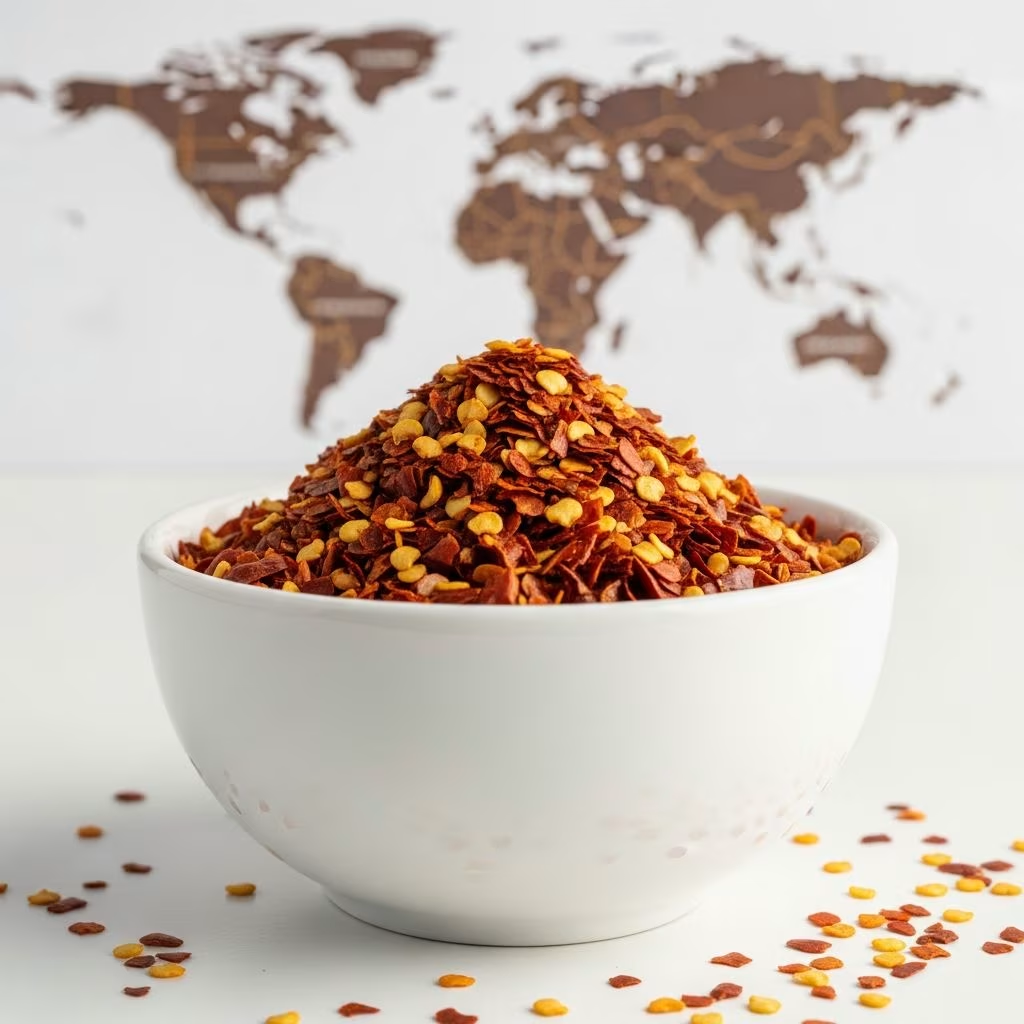
Ubiquitous pizza-shop red flakes derive from cayenne or similar thin-skinned chilis, dried, seeded partially, and crushed coarsely. Speckled with white seeds, they pack 15,000–30,000 SHU—roughly double Aleppo’s intensity—with upfront burn over subtlety. Minimal processing yields pure, aggressive heat with faint vegetal notes.
Ideal for quick spice boosts where flavor depth isn’t paramount, but overuse risks bitterness from capsaicin overload.
Everyday Red Flake Ideas
- Pastas and Pizzas: Canonical on marinara or cheese pies.
- Stir-Fries and Tacos: Quick heat for Asian or Mexican fare.
- Oils and Vinegars: Infuse for custom chili oil.
Comparative Analysis: Heat, Texture, and Flavor
Selecting the right flake hinges on desired outcomes. Below compares key attributes:
| Variety | SHU Range | Texture | Flavor Profile | Best For |
|---|---|---|---|---|
| Aleppo | ~10,000 | Soft, oily flakes | Fruity, earthy, raisin-cumin | Meats, dips, finishing |
| Gochugaru | 1,500–10,000 | Fine, uniform powder/flakes | Smoky, sweet-fruity | Kimchi, stews, marinades |
| Togarashi | Variable (mild-hot) | Coarse blend | Citrusy, nutty, umami | Noodles, tempura, snacks |
| Red Flakes | 15,000–30,000 | Chunky, seedy | Pure heat, minimal nuance | Pizza, quick spice |
Aleppo and gochugaru excel in slow-building warmth; red flakes hit hard and fast. Togarashi stands apart as a flavor orchestra.
Substitution Guidelines and Storage Tips
No perfect swaps exist, but approximations work: For Aleppo, mix red flakes with sumac and salt. Gochugaru nears chipotle powder for smoke. Togarashi? DIY with chili, zest, sesame. Red flakes sub any but halve for Aleppo’s control.
Store airtight, away from light/heat: pure flakes last 2+ years, blends 1 year. Oilier types like Aleppo benefit from fridge post-opening.
Health Benefits and Sourcing Advice
Beyond taste, capsaicin aids metabolism, circulation, and pain relief. Antioxidants in fruity varieties like Aleppo combat inflammation. Source ethically: Look for Turkish/Syrian Aleppo (war disrupted original supply), Korean gochugaru from taeyangcho, authentic shichimi from Japan.
Frequently Asked Questions
What makes Aleppo pepper unique?
Its gradual heat build, fruity-earthy notes from Halaby peppers, and oily texture distinguish it from punchier reds.
Is gochugaru hotter than red pepper flakes?
No—gochugaru tops at 10,000 SHU versus red flakes’ 30,000, thanks to seedless processing.
Can I make shichimi togarashi at home?
Yes: Combine chili flakes, dried orange peel, sesame, nori, ginger, hemp/sansho. Toast for aroma.
How do I use these in baking?
Incorporate into bread doughs, cornbread, or chocolate cookies for savory-spicy twists.
Are these gluten-free and vegan?
Yes, all are naturally so, barring cross-contamination in blends.
Recipe Inspirations to Try Today
Aleppo-Spiced Roasted Carrots: Toss carrots in oil, Aleppo, honey; roast at 425°F for 25 mins.
Gochugaru Tofu Stir-Fry: Marinate tofu in gochugaru, soy, garlic; wok with veggies.
Togarashi Edamame: Boil pods, toss with togarashi salt.
Red Flake Garlic Noodles: Sauté garlic in butter, chili flakes, toss with pasta.
Experiment boldly—these flakes bridge cultures on your plate.
References
- Aleppo Pepper vs Gochugaru: What’s the Difference? — Let’s Foodie. 2023. https://letsfoodie.com/aleppo-pepper-vs-gochugaru/
- How Does Aleppo Pepper Compare To Red Chile Flakes? — Tasting Table. 2023-10-12. https://www.tastingtable.com/1155957/how-does-aleppo-pepper-compare-to-red-chile-flakes/
- Spice Showdown: Gochugaru vs. Togarashi — Chefs Bliss. 2024. https://chefsbliss.com/gochugaru-vs-togarashi/
- Gochugaru Vs. Red Pepper Flakes — Pepper Scale. 2023. https://pepperscale.com/gochugaru-vs-red-pepper-flakes/