Crab rangoon has long been a beloved appetizer at Chinese restaurants and Asian cuisine establishments worldwide. This delectable creation features a combination of creamy filling and crispy exterior that makes it irresistible to many diners. Traditionally prepared through deep frying, crab rangoon now benefits from modern cooking technology. The air fryer offers a healthier alternative that delivers the same satisfying crispness without excessive oil, making this appetizer more accessible for home cooks who want to recreate restaurant-quality results in their own kitchens.
Understanding the Essential Components
Before diving into the cooking process, it’s important to familiarize yourself with the key ingredients that form the foundation of exceptional crab rangoon. Each component plays a crucial role in developing the final dish’s flavor profile and texture.
The Filling Ingredients
The heart of any crab rangoon lies in its filling. The primary ingredient is cream cheese, which provides the rich, creamy base that defines this appetizer. Quality cream cheese should be softened to room temperature before mixing, as this ensures smooth incorporation with other ingredients and prevents lumps in the filling.
Crab meat represents the star protein in this dish. Home cooks can choose between fresh lump crab meat for a premium option or imitation crab (surimi) for a more budget-friendly alternative. Both options work well in air fryer preparation, though fresh crab provides a more authentic seafood flavor.
Flavor enhancement comes from several seasonings and aromatics. Green onions (also called scallions) add a fresh, mild onion taste and subtle sweetness to balance the richness of cream cheese. Worcestershire sauce introduces a savory, umami-forward element that deepens the overall taste profile. Many recipes also incorporate soy sauce for additional salty, complex flavors that complement the seafood component.
Additional flavor boosters may include garlic powder, onion powder, and sometimes a touch of sesame oil for an Asian-inspired dimension. These aromatics work together to create a well-rounded filling that tastes more refined than the sum of its parts.
The Wrapper Selection
Wonton wrappers serve as the crispy exterior that encases the filling. These thin, delicate sheets are typically square in shape and made from wheat flour, eggs, and salt. Finding quality wonton wrappers is essential, as they must be thin enough to fry into a light, crispy texture without becoming tough or burnt. Most supermarkets stock wonton wrappers in the international or Asian foods section.
Preparation: Building Your Filling
The first critical step involves combining your filling ingredients properly. This process requires attention to detail to ensure even distribution of flavors throughout the mixture.
Mixing the Filling Correctly
Begin by adding your softened cream cheese to a small mixing bowl. Break it into smaller pieces to make combining easier. Add your crab meat next, folding it gently into the cream cheese rather than stirring vigorously, which can break apart quality lump crab.
Finely chop your green onions and add them to the mixture. The finer the chop, the better the distribution throughout the filling. Pour in your Worcestershire sauce and any other liquid seasonings, stirring gently but thoroughly until all ingredients are evenly incorporated.
Taste your mixture before filling the wrappers. Adjust seasonings as needed—you may prefer more Worcestershire sauce, additional garlic powder, or a hint of sesame oil. The filling should taste flavorful but not overpowering, as the crispy wrapper will add its own subtle taste.
Assembly Techniques for Perfect Wontons
Proper assembly directly impacts how your crab rangoon will cook in the air fryer. Poorly sealed wontons may open during cooking, losing filling and compromising texture.
Creating the Classic Shape
Lay your wonton wrappers on a clean, dry work surface. Place approximately one to one and a half teaspoons of filling in the center of each wrapper. Precision matters here—too much filling will prevent proper sealing and may leak during cooking, while too little will result in wontons that taste less flavorful.
Lightly moisten the edges of each wrapper with water using your finger or a small brush. This moisture acts as an adhesive to seal the wrapper properly. Fold one corner of the wrapper diagonally across to the opposite corner, creating a triangle shape.
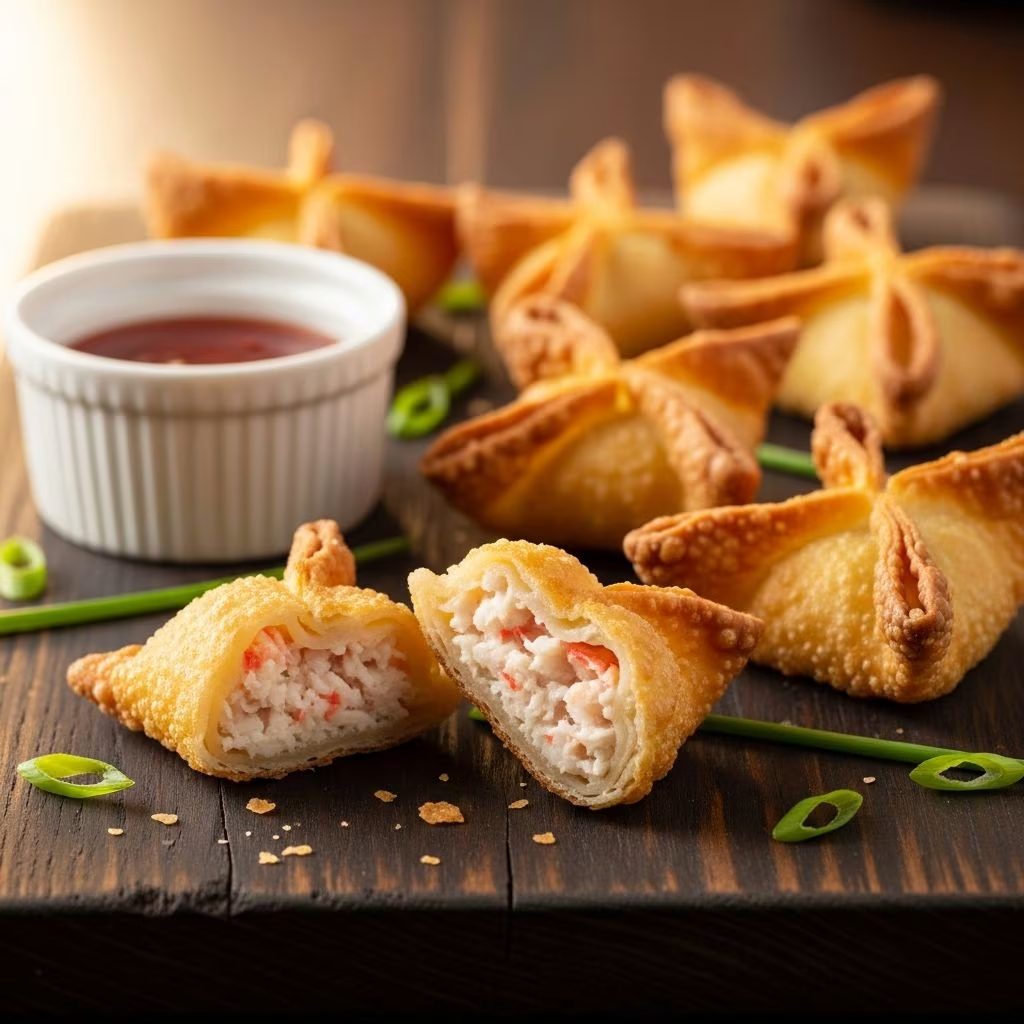
Bring the two opposite corners of the triangle together toward each other, pressing them to seal. This creates the signature purse-like shape that crab rangoon is known for. Finally, bring up the remaining two corners and press them together, creating a sealed, four-pointed shape.
Each wonton should feel secure and firm when properly sealed. If edges feel loose, apply a tiny dab more water and press again. Improperly sealed wontons may fall apart during the air frying process.
Air Fryer Cooking Process
Air frying requires different timing and temperature parameters than traditional deep frying. Understanding your specific air fryer model is crucial, as variations in wattage and design can affect cooking times.
Preparation and Preheating
Start by preheating your air fryer to the appropriate temperature. Most recipes recommend between 350°F and 400°F. Preheating is essential—it ensures the wonton wrappers begin crisping immediately upon contact with the hot air, which is critical for achieving that desirable crispy exterior.
Preheat for at least 5 to 10 minutes with the basket inside the unit. This extra step ensures the basket and all interior surfaces reach optimal temperature, promoting even cooking throughout the batch.
Oiling the Wontons
Lightly spray or brush each assembled wonton with oil on both sides before placing them in the air fryer. This oiling step is not optional—it makes a significant difference in crispiness and browning. Vegetable oil, olive oil spray, or any neutral cooking oil works well. The oil helps the wrappers achieve that golden-brown, crispy texture that mimics traditional deep frying while using a fraction of the oil.
Loading the Air Fryer Basket
Arrange the wontons in a single layer in your air fryer basket. Avoid stacking them or crowding the basket, as this prevents proper air circulation and results in uneven cooking. If you have more wontons than basket space, plan to cook them in batches.
Cooking Times and Temperature
Temperature recommendations vary slightly across recipes, ranging from 300°F to 400°F. A moderate temperature of 350°F to 370°F tends to provide optimal results for most air fryer models. At these temperatures, cooking times typically range from 5 to 12 minutes total.
Many cooks find success with a mid-cook flip. Air fry the wontons for approximately half the total cooking time (around 5 minutes), then flip each one and spray again with oil if desired. Complete cooking for an additional 2 to 5 minutes until they reach your preferred level of golden brown and crispiness.
Monitoring and Adjusting
Air fryers vary significantly in their heating patterns and intensity. Check on your wontons during cooking to ensure they’re browning evenly. If one side appears to be darkening faster than the other, rotate the basket or reposition the wontons to ensure uniform cooking.
Serving Your Crab Rangoon
The moment your crab rangoon emerges from the air fryer, you’ll notice the inviting golden-brown exterior and aromatic seafood filling. Proper serving enhances the eating experience.
Cooling and Dipping Sauces
Remove the finished wontons from the air fryer and place them on a paper towel-lined plate or cooling rack. This allows any excess moisture to drain while keeping them warm. Most crab rangoon is best enjoyed immediately while the exterior remains crispy and the interior is still warm.
Traditional accompaniments include sweet chili sauce, sweet and sour sauce, or soy sauce for dipping. The sweet heat or tangy notes in these sauces complement the creamy, savory filling perfectly. Some diners prefer a simple combination of soy sauce and a touch of sesame oil.
Troubleshooting Common Issues
Even with careful attention, occasional cooking challenges may arise. Understanding potential problems helps you adjust and improve future batches.
Preventing Soggy or Oily Results
If your wontons turn out soggy or excessively oily, likely causes include insufficient oil application or overcrowding the basket. Ensure you’re applying oil to both sides of each wonton and leaving adequate space for air circulation.
Avoiding Undercooked or Overcooked Exteriors
Uneven browning or incomplete cooking may indicate that your air fryer model runs cool compared to the recommended temperature. Consider increasing temperature by 25°F in future batches or extending cooking time by 1-2 minutes.
Preventing Filling Leakage
Wontons that leak filling during cooking typically weren’t sealed properly. Apply more water to wrapper edges and press more firmly when folding. Also ensure you’re not overfilling each wrapper.
Storage and Make-Ahead Options
Preparing crab rangoon ahead of time can simplify entertaining and meal planning. Assembled but uncooked wontons can be frozen for several weeks. Arrange them in a single layer on a baking sheet, freeze until solid, then transfer to freezer bags. Cook directly from frozen, adding just 2-3 minutes to your cooking time.
Leftover cooked crab rangoon can be refrigerated for up to three days in an airtight container. Reheat them in your air fryer at 300°F for 2-3 minutes to restore crispiness.
Variations and Creative Adaptations
While the classic crab rangoon recipe is delicious, numerous variations exist. Some cooks add cream to make the filling extra rich, while others incorporate water chestnuts for textural contrast. Adventurous cooks might experiment with addition of sriracha for heat, wasabi for pungency, or fresh herbs like cilantro for brightness.
Why Air Fryer Crab Rangoon Outperforms Traditional Methods
The air fryer method offers several advantages over deep frying. It requires significantly less oil while achieving similar or superior crispiness. Cooking is faster and produces less mess in your kitchen. Additionally, the even heat circulation of air fryers reduces the likelihood of burnt spots or unevenly cooked wontons. The result is a healthier appetizer that tastes remarkably similar to restaurant versions.
Frequently Asked Questions
How long do air fryer crab rangoon take to cook?
Most air fryer crab rangoon cook in approximately 5 to 12 minutes total, depending on your specific air fryer model and temperature settings. Typically, 5-8 minutes at 350°F produces excellent results.
Can I use frozen crab rangoon in an air fryer?
Yes, frozen crab rangoon can be cooked in an air fryer without thawing. Add 2-3 minutes to your normal cooking time to account for the frozen filling coming to temperature.
What’s the best oil to use for air frying crab rangoon?
Any neutral cooking oil works well, including vegetable oil, canola oil, or olive oil spray. Choose whichever you have on hand or prefer for flavor.
Can I make crab rangoon without an air fryer?
Yes, crab rangoon can be deep fried in oil heated to approximately 350°F for 2-3 minutes until golden brown. They can also be baked at 375°F for 12-15 minutes, though this method produces less crispiness than air frying or deep frying.
How do I prevent wontons from opening during cooking?
Ensure proper sealing by moistening wrapper edges with water and pressing corners firmly together. Avoid overfilling, which makes proper sealing difficult.
References
- Air Fryer Crispy Crab Rangoon — Stay Snatched. Accessed April 2026. https://www.staysnatched.com/air-fryer-crispy-crab-rangoon/
- Air Fryer Crab Rangoon — A Cedar Spoon. Accessed April 2026. https://www.acedarspoon.com/air-fryer-crab-rangoon/
- Air Fryer Crab Rangoon — The Salted Pepper. Accessed April 2026. https://thesaltedpepper.com/crab-rangoon/
- Air Fryer Crab Rangoon — Little House Big Alaska. Accessed April 2026. https://littlehousebigalaska.com/2022/11/crab-rangoon-air-fryer.html
- Easy Air Fryer Crab Rangoon Wontons — Thyme For The Table. Accessed April 2026. https://thymeforthetable.com/air-fryer-crab-rangoon/